

 When one of my co-workers found out about a tiny, orphaned kitten that needed a home a few months ago, he didn’t hesitate to adopt it. He says his new companion helped make the months of COVID-19 isolation at home much less stressful.
He is not alone. Animal shelters and breeders across the country have reported record numbers of dog and cat adoptions in recent months.
But after my co-worker returned to work, he says his adorable kitten started urinating on the kitchen counter while he was away.
Another friend is worried about how her dog will react when she returns to the office. Her big, goofy Labrador retriever follows her everywhere, even to the bathroom. When she leaves to run a quick errand, the dog sits by the back door and whines, awaiting her return.
What should these pet owners do?
The problem with sudden changes in routine
A change in routine, such as suddenly being alone for many hours every day, is a major cause of separation anxiety for both dogs and cats.
Separation anxiety is more than a little whimpering when you head out the door. It’s major, unwanted behavior that happens every time you leave or are away.
For dogs and cats, this can mean excessive pacing, barking or howling, whimpering or self-grooming as you get ready to leave. In some cases it can mean urinating or defecating around the house, often in places where scents linger, such as on bedding or rugs, or destroying household items in your absence. Extreme clinginess or neediness is another symptom.
Separation anxiety won’t go away on its own, and it can be difficult to get rid of entirely. But there are ways to manage it. As a clinical veterinarian and professor, I am often asked to help people find ways to ease their pets’ anxiety.
What not to do
First, it’s important to understand that it’s not about you – it’s about your pet. Your dog or cat is not trying to teach you a lesson or get revenge. Animals don’t act out of spite.
Instead, it’s a signal of extreme distress and frustration that should be approached like any other medical ailment. Your pet doesn’t want to experience separation anxiety any more than you want to experience its consequences.
 For this reason, punishment is never the answer. For one thing, your pet won’t connect the punishment with something that happened hours – or even a few minutes – earlier. And punishment may only exacerbate your pet’s anxiety and stress.
Similarly, going to the opposite extreme by praising or giving affection when your pet is suffering anxiety also will make the problem worse.
The goal is to create a balanced relationship so your pet tolerates being alone. First, get your pet checked out by a veterinarian to rule out physical conditions, such as a urinary tract infection if your pet urinates in inappropriate places.
Next, make sure your pet gets plenty of exercise and mental stimulation. For dogs, this may mean a long run or brisk walk every day. Getting exercise shortly before you leave the house may put your dog in a more relaxed state while you’re gone. It’s harder to feel stressed when the endorphin levels are elevated. For cats, this could mean a change of environment by being outdoors in a safe, enclosed area such as a “catio.”
Treating separation anxiety with behavior change
Here, we’re talking about your behavior. The goal is to make your absence seem like no big deal. Making a fuss over your pet when you leave or arrive home only makes matters worse. If you treat it like it’s routine, your pet will learn to do the same.
Try to figure out when your pet starts to show signs of anxiety and turn that into a low-key activity. If it’s when you pick up your handbag, for example, practice picking it up and putting it back down several times over a few hours. Similarly, get dressed or put on your shoes earlier than usual but stay home instead of leaving right away. Try starting your car’s engine and then turning it off and walking back inside.
Next, practice short absences. When you’re at home, make it a point to spend some time in another room. In addition, leave the house long enough to run an errand or two, then gradually increase the time that you’re away so that being gone for a full day becomes part of the family routine.
Changing the environment
 Boredom makes separation anxiety worse. Providing an activity for your pet while you’re gone, such as a puzzle toy stuffed with treats, or simply hiding treats around the house will make your absence less stressful. Other options for dogs and cats include collars and plug-in devices that release calming pheromones.
To maintain your bond while you’re gone, place a piece of clothing that you have worn recently in a prominent place, such as on your bed or couch, to comfort your pet. Similarly, you can leave the TV or radio on — there are even special programs just for pets — or set up a camera so you can observe and interact with your pet remotely. Some of these come equipped with a laser pointer or treats you can dispense.
Using supplements or medication
In some severe cases, when the animal harms itself or causes property damage, medication or supplements might be necessary. These alter the brain’s neurotransmitters to create a sense of calm.
While some are readily available without a prescription, it’s a good idea to get advice from your veterinarian to determine which are safest and most effective for your pet’s situation. Medication can help reduce the anxiety, making it easier for the pet to learn new coping skills. A behavior modification plan accompanying the use of medication can help manage this problem.
Separation anxiety is difficult for both you and your pet. But a few simple changes can make a huge difference as life returns to some semblance of normal.
About the Author:
Lori M. Teller is a Clinical Associate Professor, Veterinary Telehealth, at Texas A&M University
 At this point, I do not know what to say anymore. I am beyond words. Every experience that we go through, every downloaded message, each cosmic astrological event, every solar event or Mayan time portal, and cosmic gateway, it all keeps rising up to yet another inconceivable level in a matrix of spherical directions. Creation is simply unleashed, and we are riding a wild wave that is not controllable or containable as we once were. I feel I know nothing at all. As I feel like leaping out of myself and into the great unknown, I also feel “The Presence” saying “Wait for it … Please wait for it”. So I dance on the edge of wanting to toss it all and make a run for it.
 But back to this moment … Since the last full moon, it has been simply crazy and overwhelming and we feel lost in time itself. In this month, we are living through 5 retrogrades, with Saturn, Mercury, Jupiter, Neptune and Pluto, in this beyond anything we have experienced to date, solstice energy, (SUMMER SOLSTICE is June 20, 2021 at 11:32 PM EDT) all culminating with one of the most sacred days in the traditional Mayan calendar on June 28th (** More on this Mayan day WAJXAQIB BATZ below). In this collective soup filled with cognitive dissonance that we live in these days, the TRUTH is boldly rising without restraint. It will rise up out of all the noise around us, and a new balance will begin to manifest. I have been told that more “surprises” are to come. This is certainly an incredibly blistering fast time, and it will keep coming with little respite until late October, or later, from what I can see. So we have a good bit of work to do before we plateau again and have a much awaited rest.
 Nurture is Nature…and is our nature. We ignore this at our peril. To nurture our thoughts towards a more loving way may be found in observing how Nature provides unequivocally for all creatures and living things. Yes, that reflects what Jesus is reported to have said; “behold, the lilies of the field, how they neither spin nor sow…” and other metaphors like that.
 Wouldn’t it be wonderful to be able to use colors as a way to make your life healthier? The truth is, you can. Dr. Alexander Wunsch, who is based in Germany, is a world-class expert in the use of light as a therapeutic healing agent, and is a human treasure trove of information on a topic that very few people understand.
 You can implement colored light therapy either by shining light through a colored filter, or by wearing colored glasses, so that the light striking your retina is of a particular color frequency.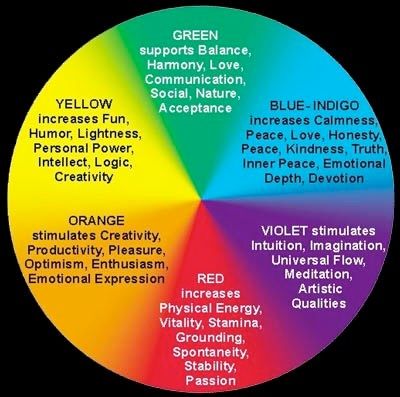
 For years I have been entertained by a YouTube artist who calls himself “zeFrank1”. He (or she?) creates nature videos that resemble the classic nature programs I use to watch growing up. What makes these unique is the combination of biological facts with a strange type of narration that occasionally includes toilet humour. You remember that sort of joke…the kind you heard or even shared when you were a teenager. This video series is entitled “True Facts”, and if you want to learn more about the strangest animals, sea creatures, and insects on our amazing planet, and have a good chuckle at the same time, then go to YouTube, click on the link and see what happens. Who knows, you might even learn something…while grinning.




 About a week after this vision, I wandered into the supplement section of the market. In the homeopathic aisle, I saw a little blue tube labeled Graphites. That’s in pencils, I thought. What do graphites do exactly? According to the homeopathic pamphlet, “Graphites can dissolve toughened skin, scars, boils, and cysts.” Holy Moses! Pencils over eggs! My intuition told me that graphites and similar homeopathic remedies could dissolve Lyme cysts. Graphites became a crucial component of my healing. It was a huge breakthrough.