 In 1896, a man in Dummerston, Vermont, was driven from his beloved home over what should have been a minor family dispute. He generally got along well with his brother-in-law, who lived next door. One day in an argument, however, the brother-in-law—who was a bit of a hothead—threatened to punch him. In reaction, the man had his brother-in-law arrested, which the neighbors saw as a massive overreaction. At the trial, the man acted haughty and “arrogant” toward others, according to newspaper accounts. He became so unpopular for his attitude and actions that, shunned by the local residents, he felt compelled to leave the town he loved, never to return.
This man could certainly have used some advice on keeping things in perspective. One great example, by the poet Rudyard Kipling, was written some months earlier: “If you can keep your head when all about you / Are losing theirs and blaming it on you, / If you can trust yourself when all men doubt you, / But make allowance for their doubting too.” Verse by verse, the poem, titled “If,” dispenses the soundest of counsel on how to keep petty conflict from blowing up into a major life disruption.
Had he heeded that wise poem, the unfortunate man in Vermont would have let the altercation run off him, not overreacted, not talked down to others, repaired his relationship, and gotten on with his life. In fact, he was familiar with “If”: Though the poem was not published until years after the spat, the overreacting man was none other than Kipling himself.
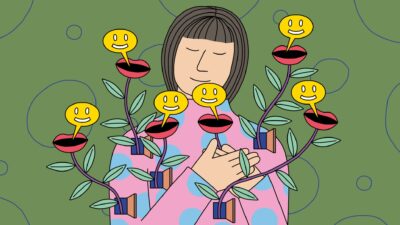
Kipling wasn’t a hypocrite; rather, he simply was unable to take the excellent advice that he had offered others. It’s a version of Solomon’s paradox, named after the wise king from the Bible who failed to live by his own wisdom, leading to the demise of his kingdom. Researchers find that this sort of behavior is strikingly common. Maybe you can relate: For example, although you would counsel a close friend to swallow her pride and reconcile with a family member for the sake of her own happiness, you might struggle to do the same. Or though you would strongly advise a friend against infidelity, knowing that the result will be catastrophic, you might commit it yourself.
But we are not sentenced to live out Solomon’s paradox forever. We can learn to give ourselves good advice and take it as well, and become much happier as a result.
People ask others for advice in order to seek information, validate their beliefs, and process inputs from multiple points of view. Researchers have found that we choose whom to seek out for advice depending on how accessible they are to us, and how trustworthy. When you need help with personal issues, you can find these qualities in a close friend; for medical or professional issues, “trustworthiness” might come instead from a diploma on an office wall.
Following this logic, the reason we don’t take advice might be because we don’t trust the people who give it enough to do so. You are unlikely to take counsel about a work conflict from a friend who has gotten fired eight times, for example. So when we don’t take our own advice, it might be that we don’t trust ourselves.
Our self-mistrust could originate in problems of self-esteem or high anxiety. Scholars in 2005 showed that when people experience these problems, they can give advice they personally don’t take. You might sagely tell a friend who has suffered a nasty breakup to “get back on the horse”; meanwhile, you un-sagely stay single and lonely for years out of a fear of being hurt again.
Even if we trust ourselves, guilt can keep us from really listening to ourselves. In experiments, people tend to choose hedonic options (featuring sensations and experiences) for others, but utilitarian products (which are practical and functional) for themselves. The reason, scholars find, is often guilt: We feel we should make the practical choice. The result is that if you come into an extra $500, which you could use to spend a weekend at the beach or to buy a couch, you might choose the couch because it is more sensible—even if the beach would make you happier.
Many people also tolerate different levels of risk for others than they are willing to endure personally. The pattern can differ depending on what, exactly, the advice is about. In relationships, for example, we play it safe even as we advise others to go for broke. (“Go right back there and give her a piece of your mind!”) But on medical issues, we take risks we wouldn’t allow our friends to. (“I think I’ll just ignore this little lump for the time being.”)
And even as we refuse to take the risks we push our friends toward, we can be less willing to assign ourselves hard work than we are to advise others to do it. Research shows that we tend to advise others based on what we believe is the right or optimal thing to do, not what they want to do. But when making decisions in our own lives, we are more likely to follow the easiest path, regardless of the repercussions. I taught my children to never lie, and I try hard to live up to that standard, but at times I have chosen to cut myself some slack, usually for reasons of convenience. If my kids did the same thing, I would say they are making a mistake—that small lies lead to bigger ones.
Solomon’s paradox is pretty easy to understand. Solving it is a little harder, but it’s possible if we adopt two practices.
1. Give more advice to others.
If you find yourself failing to live by the advice you give others, you might infer that your counsel is poor and decide to give less of it. But research shows that this is the wrong approach. One 2018 paper in the journal Psychological Science, for example, showed that people who struggle with goal achievement are more motivated when they dispense advice to others than when they receive it.
Hearing yourself say wise, affirming things to others can reinforce your own convictions and behavior. This is far from fail-safe—as Kipling might attest—but it helps. It is also of a piece with literature showing that the best way to help yourself is to help others. So when someone close to you is in a conundrum, think about what is truly the best course of action no matter whether you fear that you would do something else. Assuming she is open to receiving advice, offer it to her without hesitation.
2. Treat your advice like it’s someone else’s.
If you’re struggling with a particular issue, seek out others who are having similar troubles and see if you can try to help them. Then, write down what you advised, and exactly why. Finally, consider how the advice you dispensed could apply to your own life.
Say you have a friend who drinks too much—and, well, so do you. You find every excuse in your own life for why you don’t have such a big problem, and anyway, today isn’t the right day to deal with the issue. But you tell your friend the truth: This problem will only get worse and requires urgent action immediately. Write down your advice to your friend, as well as your reasoning. Now substitute yourself into the narrative, and take your advice.
Recent research shows that this kind of reflection leads to intellectual humility, open-mindedness about how situations could unfold, and attempts to integrate diverse viewpoints about personal challenges—all of which puts you in a better mindset to take advice. In other words, looking at yourself in the third person can improve the quality of your judgment and give you better solutions.
Both of these suggestions require making the advice you give yourself a formal task: Your ideas need to be well thought-out and fully formed. If your closest friend asked you for advice that might change his life, you probably wouldn’t shoot from the hip; you’d give it some thought and structure your arguments. The same goes for your advice to yourself. When you have a major decision or problem to solve, treat it like a project, with the seriousness it deserves.
Giving yourself thoughtful advice can create a sense of control in a world where we often feel we have little. Researchers have found that when people give others advice, it enhances their personal sense of power and influence. I have found that this is true for self-advising as well: When I feel powerless due to circumstances I can’t control, giving myself structured, formal counsel changes my mindset. I become more aware of the parts of the situation I can control, and more disposed to take control of my attitude toward my circumstances, which enhances happiness.
Start being Solomon, but short-circuit the paradox. Trust in the wise counsel you give others on how to manage the kingdom of their life. Then use it in your own realm.
Original article here
 Many meditators, healers and people of goodwill are attracted to the idea of distant healing — that in meditation, contemplation and prayer we can help relieve suffering and pain at a distance.
 We may be slowly returning to our offices (more or less), but the strains of the pandemic are hardly over. As we enter a transitional stage after almost two years of trauma and strain, more than ever we need ways to refresh our energies, calm our anxieties, and nurse our well-being. One potentially powerful intervention is rarely talked about in the workplace: The cultivation of experiences of awe. Like gratitude and curiosity, awe can leave us feeling inspired and energized. It’s another tool in your toolkit and it’s now attracting increased attention due to more rigorous research.
 Have you ever gotten into bed at the end of the day and realised that you haven’t spoken out loud to anyone since the day before? Or simply found yourself feeling completely and utterly alone?
 “Those who are emotionally lonely will find it difficult to improve things without tackling the root of the problem,” says Dr. Spelman. “Emotional loneliness is not circumstantial but, rather, comes from within.”
 But situational loneliness doesn’t just arise in those who relocate alone, as social media editor Sarah discovered when she moved countries with her partner. Sarah left her Sydney home in March 2017 to join her partner in London, where he had arrived a month earlier to start a new job and find the pair a home to live in — although she admits that “didn’t mean it was smooth sailing”.
 “It was a really bewildering, lonely time,” she says. “The jump of being plonked into a huge arts school, in just one of hundreds of halls of residence in a sprawling city I didn’t understand, made me retreat into myself and I struggled to make friends in the face of it all.
 We are often told to place ourselves in other people’s shoes – but our empathy is rarely as accurate as we think it is.
  Epley’s team asked pairs of participants, who had not met previously, to discuss questions such as, “If a crystal ball could tell you the truth about yourself, your life, your future or anything else, what would you want to know?”.
 There is so much angst in the air these days that we may all be feeling more sensitive, exhausted or even more despondent than usual. So much so, that I feel a lot of folks are at the end of their tether, overwhelmed by the vast onslaught of confusing emotions and free-floating anxiety in the telluric atmosphere.
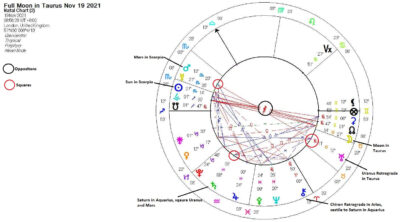 On Friday, November 19th, there will be a partial Lunar Eclipse in Scorpio-Taurus.
 The one message anger can have for us is that our Soul Core is alerting us to some person, situation or thing that violates our sense of Self, or our core values. As such, anger is then your friend, and an ally in helping you in choosing and activating healthy boundaries. In a climate such as we have now, people’s right to say “NO!” is even being taken away. To someone experiencing physical, mental or sexual abuse, we would be appalled if someone were denied the inherent right to say “NO!, that is does not feel good and I will resist!” This is when anger can give us the courage to stand up for ourselves and by saying “no” we are saying “yes” to what feels right and good for us.
 Much of modern economic theory is based around a simple idea: Human beings maximize utility. But what is utility? Many people think of it as happiness or pleasure; British philosopher Jeremy Bentham, the inventor of utilitarianism, conceived of it this way. But this isn’t how modern economists think of the concept. To an economist, utility simply means how much people want something. If an economist observes people working hard and making sacrifices to buy houses, then the conclusion is that houses must have lots of utility to those people.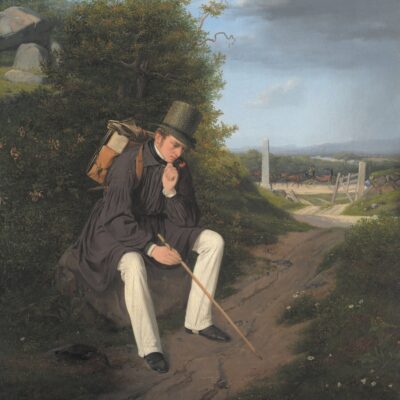
 Don Giovanni – the protagonist of Mozart’s opera Don Giovanni (1787), a legendary seducer who is also sometimes known as Don Juan – is, Kierkegaard suggested, the ultimate archetype of the aesthetic mode because he lives for immediate sexual gratification and sensuality. Don Giovanni is a player. He is handsome, seductive and exciting. Women find him irresistible: he has slept with more than 2,000 women whose names he records in his not-so-little black book. Don Giovanni seeks pleasure above all else, and dances through his hedonistic life.
 Kierkegaard’s leap was guided by the commandment to ‘love thy neighbour’. In Works of Love(1847), written under Kierkegaard’s real name, he proposes that universal love, or agapē, is the secret to happiness because it overcomes the fleetingness and insecurity of aesthetic and ethical relationships. Love is Ariadne’s thread of life because, as long as you love, as long as you commit yourself to being a loving person, you’ll be safe from being hurt and alone. Kierkegaard thought that this sort of unwavering faith reflects a supremely developed human being.
 I’ve been studying, teaching, coaching and writing about transformation for the last 35 years. It fascinates me … always has, even as teenager. How can someone fulfill their potential and become the best of themselves in life?
 I finally realised joy in my life and began to play with effortless abundance. I laugh a lot now and am breathtaken by the beauty of this world and the people and life forms in it. I am undefinable, ever morphing into the next new levels of what is possible for me and for us all. As I do this I realise that I am part of the redesign of what it is is to be human on Earth. I call us Earthians as a new way to talk about loving being alive on Earth while being an infinite creator of possibilities for life. The term Earthian also allows me to feel a kinship with other life forms on Earth, whereas the term human tends, in my view, to make us feel separate from other inhabitants of this wonderful world.