There are some people who are frugal by nature, some who practice frugality as a mandate of their faith, and some, like myself, who embrace frugality by necessity. I live within a limited income as a bulwark against a consumer culture and capitalist agenda that would prefer we consume our way to oblivion—both ours and the planet’s. We are in a quagmire given the conundrum of the capitalist agenda, a system that requires endless consumption and growth to survive, and a planet that is begging we cease. Personally, I’d rather take my instruction from Mother Earth.
Of course, there are those who might disregard my call for frugality. They are the ones who, despite all efforts, will never be able to live within their means even if they wanted to. The working poor are just that—working one, two, or three jobs and still unable to make ends meet. For them and us, advocating for workers’ rights, fair wages, and enacting legislative policies aimed at economic equality is vital. But this is not an either-or position: We can be advocates of economic parity while at the same time turning down the heat on a historically rapacious capitalist economy by becoming producers and consumers in the home economy.
Over the years, I have taught and written about living in a home economy. But this is less a throwback to some 1950s-era domestic ideal than an approach toward undermining an American psyche and economy that has thrown us into unnecessary debt, encouraged us to buy our way to happiness, and all but driven us from our homes.
By “home,” I am not referring to a physical space alone, though we are being driven, evicted, and displaced from our homes more and more these days, which is why we have become homeless in both form and function. I’m talking about the transiency and dependency that defines and supports the capitalist consumer culture. With neither the skills nor the inclination to stay in place or do for ourselves, we turn to the marketplace for our needs. (Not for nothing, there is an irony to all this talk of place-making when no one wants to stay in place anymore.) This dependency has a long history. It is not for naught that we have become, for all intents and purposes, indentured servants, living on credit and owing our soul to the company store. This is how the system is intended to work. The indentured make docile workers, and Amazon would be happy to bring you into its fold.
Beyond that, there is value and comfort in the making of a home. My respect for “home,” or the type of work that living in a home economy suggests, is due, in part, to my childhood. Growing up as the daughter of two immigrant parents who moved to New York following World War II, I understood, or saw, what utility born of frugality looked like. My father worked as a tailor and my mom worked to make a home in a railroad flat shared with relatives and boarders, and later in our own apartment in the Bronx.
Together, my parents sewed our clothes, made curtains and bedspreads, mended, repaired, cooked every meal at home, and basically did for themselves or did without. But, more significantly, they offered a sense of home, security, and comfort that was tangible to me as a child; one that I have carried forward as an adult. And yet, despite all my skills, my knowledge, and my refusenik underpinnings, I do not have what my parents had. In fact, many of us do not have this: the relationships bound by the need and a commitment to make a self-sufficient home.
It was the ancient Greeks who first coined the term “economics,” or “oikonomia,” as a system of household (oikos) management (nomia). So economics refers to the management system that serves your home. What that home is may vary—the planet, your body, the marketplace, or where you live—but knowing how you define it should determine how you manage it. It is overly simplistic to think that home economics deals exclusively with making cupcakes or jam. It is the serious effort toward creating a management system that works to support the needs of your home.
For me, this includes working in and with seasons, putting up the harvest, avoiding packaging, and cooking my meals from the “stores” I have at season’s end. It includes doing without or making do by repairing, mending, and being grateful for the blessings I have been given, and, of course, being frugal—radically frugal. But it also means living in community with what I call the “new farm family,” that distillate of days gone by when generations lived and worked together to care for each other, and an ethic and lifestyle I embraced following my time as a small-business owner.
Running a business these days requires the sort of branding and niche marketing that can feel more competitive than cooperative. Besides that, as a one-time small-business owner, I know how beholden we are to institutions (banking, insurance, etc.) and goods that either come from, or are regulated by, international markets or organizations. Moreover, if you calculate the amount of carbon used on the build-outs and equipment required to launch and run most businesses, you’ll quickly understand how unsustainable “local” can be.
Still, I understand the theory of “buy local.” Shopping locally allows our dollars to circulate more within the community, and to support the people and businesses we care about. But this is no panacea, particularly when attempting to live within your budget.
As I like to point out, many people are lucky to be earning $15 an hour, but we are living in a $100-an-hour world. Every time we step out and into the marketplace, we are faced with the costs of goods and services that have outpaced our income.
I’m not advocating for cheaper goods, however. We haven’t been paying the true cost of anything for quite some time. Still, you don’t have to be a rocket scientist to know where living outside your income will lead. We can’t spend money we do not have to support local businesses, but if we don’t take part in the local economy, we tend to feel guilty.
Which is why, when a friend of mine still running a small business once told me, “Your frugality is killing my business,” I was heartsick. I knew what she was saying. It is not easy to be a business owner these days, but I’m very careful with my “disposable” income, and, well, with a planet begging for limits to growth (or no growth), I can’t help wondering when we will begin to take it seriously, and how we will respond.
One of our responses can be the type of collective living that this new farm family implies. And yet, we moderns have become addicted to an ethos of independent living, uprooting ourselves from our home communities to chase better jobs or schools elsewhere. We do not “need” each other as we once did. Our modern anything-anytime consumer culture has made our need to rely upon others near-obsolete.
This is why living collectively seems such a challenge. Mired in the mindset of independence, collective living is seen by many as primarily a means to keep rent cheap, which makes it fickle, temporary, and resistant to the larger commitment of turning down the heat on this capitalist monster. Without asking or learning the functional and emotional skills necessary to live in a home economy, our experiment in collectivity will do little to effect permanent change.
In speaking of farm families, however, I admit to waxing poetic on a lifestyle that, from a historical perspective, was more complex and compromised. Farmers were victimized, in the Great Depression and afterward, as the capitalist system demanded bigger economies of scale. “Get big or get out” was the call, and many farmers perished in attempting to take it on. More soberly, many landowners in this romanticized past were responsible for the displacement and genocide of cultures that only today we are willing to acknowledge, even if we’re not doing more than speaking about it.
But survival is an impartial taskmaster. The plight of the immigrants coming to America isn’t pretty. Neither is the story of slavery or genocide or the feeding frenzy of those who came from England to gain access to land and resources for the crown. Dang it if Jefferson’s “nation of farmers,” a rallying cry for many small farmers today, has not been overly simplified for easy reading.
But there is a movement of young farmers returning to the land, and they, too, are attempting the audacious act of living outside the tethers of the capitalist system. This makes us bedfellows in a movement, which is what home economics is really about: an effort to stand up against an economy that is doing its best to steal the best this life has to offer, a place to call home, in both form and function.
But believing in the virtues of a home economy will not magically change our values, nor will it immediately bestow the skills or intention for living in the seasons or turn us into people who would rather make, repair, sow, grow, or stow our foods than buy them from the store.
And it will not immediately turn us into capitalist refuseniks, or even someone who wants to save whatever resources and time we have to support the efforts of young farmers.
But with time, our lives as consumers in the capitalist economy will appear frail when compared to a life in the home economy. And eventually, we’ll come to understand that this is about more than making cupcakes. A lot more.
Original article here
 Some people are incredibly likable because of the things they do. Some people are incredibly charismatic because of the things they do.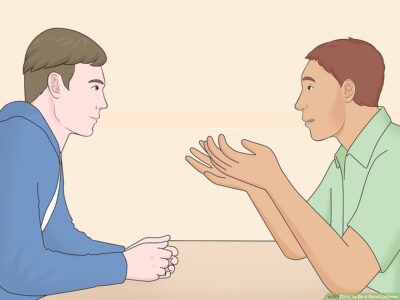
 Self-regulation, within the space of wellbeing, is actually emotional self-regulation. In other words, the capacity of managing our emotions on a daily basis. During the day, we experience a range of different emotions, from joy, love, and peace to anger, frustration, anxiety — and the way we respond to events will determine our state of being. The important point here is that we have a choice, we always have a choice: we can choose to give free rein to negative emotions and dwell on them, or we can choose to acknowledge these emotions, find a solution, and move on.
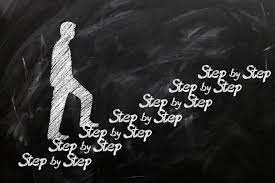
 The third step is when consciousness comes into play. When I say “consciousness” I am talking about that inner awareness of being more than flesh, being part of something larger, where we are one and unique, where there is peace and there is freedom. As conscious beings we know that our inner self plays a role in our wellbeing, and if we are able to go to that internal place, then we can receive the benefits of understanding that everything comes from within and that we are in charge of our own life.
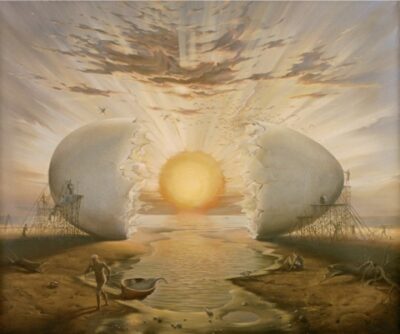 Welcome to Summer! Welcome to Winter! Completely depends on whether you’re in the Northern or Southern Hemispheres, doesn’t it? Still, happy Solstice to one and all.
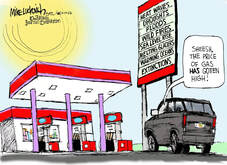 We are currently the only species on this planet in which everyone must “earn” their living. Do you even ever question that assumption? I do…a lot. Jobs were created when the Industrial Age started. Before that everyone had a trade or vocation. People specialized, whether they were the baker, butcher, or candlestick maker. Everyone was sort of an entrepreneur. Before that, we lived in cooperative communities in which everyone contributed to the mutual welfare and survival of all the members of the group. Concepts such as hoarding and “not enough” were unknown. Yes, there were tough times; when the hunting was poor, or there was a drought. But the fluctuations were part of the planetary ecosphere evolving, not because someone somewhere saw a way to make a quick buck speculating in the commodities market. We might well ask what changed to cause us to abandon the natural equilibrium we had with Nature and when and how did it change. Is what we see in front of us now really fair and working for you and me?
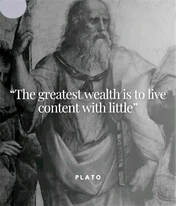 A new thought teacher by the name of Catherine Ponder once said, “abundance is having just enough to share.” When we share from our blessings, no matter how meager, we are sending out a message to the Universe. We have cast our “bread on the waters” which will return to us when we may be in need. As we give to others, we give to ourselves.
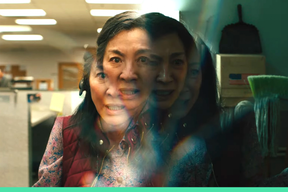 Yes, I have blatantly plagiarized the title of a recently released film starring Michelle Yeoh. I’ve not even had the pleasure of seeing this work of cinematic art yet, but I am familiar enough with the plot to know that the central character could represent any one of us. If you’ve seen it, you will know what Michelle’s character is facing. An audit by the Internal Revenue Service, and dilapidated laundry business barely able to provide a living for her and her bumbling husband, and strangers popping in from the future asking for her help to save the world. All in a day’s work I’d say!
 The other side of this circus is the possible reality that unity consciousness might bring to us if we had every barrier to it suddenly lifted. We just might flame out and disappear with the sheer immensity of seeing, knowing, and feeling everything, everywhere, all at once. Is that what Spirit/God/Goddess/All That Is experiences? How can one know for sure? How in the heck does the Great Spirit cope with all that anyway? These are some of the questions that I entertain when I wake up in the middle of the night.
 On June 11th at 11:51pm BST (10:51pm UT) transiting Venus meets up with and kisses Uranus at 16 degrees of Taurus. Can you say “unusual” or “unconventional” when it comes to sexual loving, flings with the opposite or same sex, and coming to terms with what our true natural values and needs are as regards our sexuality? I knew you could. This transit is brief but can certainly upend your own status quo regarding sexuality, which may lead you into unusual encounters with possible partners or with society at large (“…that is indecent and immoral, and you need to stop that now!”). You get my drift. Judgment always crops up when Uranus is in town and is wearing a bull costume. You may also have unusual and possibly revelatory experiences with your own sexual nature. Uranus encourages exploration and trying new things, so this weekend could be interesting! If you in fact have any aspects to anything at 16 degrees of Taurus, Scorpio, Aquarius or Leo, you may feel this “hit home”. The potential stinger in this conjunction could be a further eroding of the value of Bitcoin, fiat currencies (paper money), and digital money (the M3 money supply). The almost hyperinflation happening is definitely tied to Uranus in Taurus, as is the deflation of cryptocurrency values.



 In summary, I feel this eclipse cycle will usher in a resurgence of individual willpower, a will to not just resist an imposed order from the past, but to work in concert with a wider global awareness that if we can stand up for ourselves adequately, we can work in cooperation with others more effectively. The gaps are widening in many areas of our human family, and it will be necessary to remember that differences of opinion of mindset does not obviate the reality of our inherent oneness or divine origins.

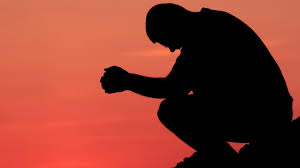 Forgiveness is often viewed as the “happily ever after” ending in a story of wrongdoing or injustice. Someone enacts harm, the typical arc goes, but eventually sees the error of their ways and offers a heartfelt apology. “Can you ever forgive me?” Then you, the hurt person, are faced with a choice: Show them mercy — granting yourself peace in the process — or hold a grudge forever. The choice is yours, and it’s one many of us assume starts with remorse and a plea for grace.
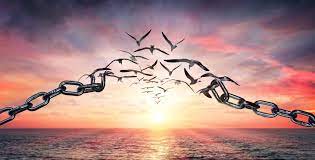 Enright defines forgiveness as a moral virtue. Moral virtues (like kindness, honesty, and patience) are typically focused on how they benefit others; these are things you do primarily for another person’s sake, regardless of whether or not they have “earned” it.
 Enright has studied forgiveness extensively. He says his research group at the University of Wisconsin Madison was the first to publish a scientific study on forgiveness, in 1989; in 1993, they became the first to publish a scientific study of forgiveness therapy. Their research has led to the development of a step-by-step process for forgiveness, which can happen in therapy (ideally with someone who is trained in forgiveness therapy), or through a self-guided process using his workbook.