


Picture it — a colleague asks if you can chair a new committee they’re starting. Without even pausing to think, the first words out of your mouth are, “Sure. I’d love to!” Flash forward, and you’re looking at emails piling up in your inbox and a flurry of appointments on your calendar. It suddenly hits you that you’re spread too thin. You know you need to say no after saying yes, but you’re hesitant to back out of the obligation after you’ve already given your word.
Saying no is never easy, but it’s particularly challenging after you’ve already said yes to a commitment. You may worry that backing out will burn bridges, cause you to be perceived as flaky or unreliable, or lead to you being labeled a poor team player. These fears are heightened for “sensitive strivers” — highly sensitive high-achievers — who tend to overthink situations and have a hard time setting boundaries.
If you can relate, then the thought of retracting your agreement and facing the brunt of another person’s disappointment or anger at you may be too much to bear. This reaction makes sense, since studies show that the brain makes no distinction between possible social rejection and physical pain. Instead, you grit your teeth and follow through with the commitment — sometimes at the expense of your own wellbeing, which backfires. Not only does it result in excess stress for you, but others may be able to sense that you’re distracted, overwhelmed, or resentful.
Whether you have overbooked yourself, realized you have a conflict, or otherwise can’t or don’t want to participate in a project, it’s essential to uncommit gracefully. Doing so will keep your reputation intact and your relationships strong. Here’s how to go about saying no after you’ve already said yes with tact and professionalism.
Consider the cost.
Before you deliver the news, make sure that backing out is in fact the right decision. Consider the opportunity cost. For example, let’s say you’ve said yes to a new initiative from your boss, but now you’re having second thoughts about participating. Evaluate how crucial the project is to key business priorities. If the initiative would give you exposure to other parts of the company or allow you to build social capital or new skills, then it may be worth the sacrifice. However, if the costs outweigh the benefits (such as the impact on your personal life or your current projects), then it’s better to withdraw.
Shift your perspective.
If you’re paranoid that saying no after you’ve already said yes will make you appear irresponsible, embrace the fact that it would be selfish and inappropriate to follow through on the task knowing you couldn’t complete it. You may feel like you’re being generous and helpful by agreeing, but if you can’t follow through on your promises, it’s not a recipe for high performance, personal happiness, or strong relationships. Plus, consider the positive traits you display when you back out gracefully. You exemplify strong prioritization, time management, and transparent communication — all qualities of powerful leadership.
Be diplomatic but truthful.
When it comes time to deliver your message, be assertive and clear without overexplaining. In other words, aim to be direct, thoughtful, and above all else, honest. For example, if you were pulling out of your friend’s committee, here’s what you might say: “When I said I could join the committee last month, I fully believed I had enough bandwidth to do a great job. After taking a closer look at my calendar, I realized I’ve overextended myself and there are several professional commitments I can’t move. This means I won’t be able to participate as chair.”
Providing a short explanation or justification as to your reasoning can help your withdrawal be better received. For instance, you could explain, “I know we talked about me joining as committee chair, but when I agreed I didn’t expect a big project would be assigned to me at work. Because of that, I need to decline.” In the case of backing out of the initiative with your boss, you could share, “I’ve had the chance to review my priorities and this new project would stop me from contributing to my core job responsibilities at the highest level. That wouldn’t be the right — or best — decision for myself or the team, so I have to respectfully change my yes to a no.”
Preserve the relationship.
It’s appropriate to apologize and take responsibility for any mistake, misunderstanding, or simply overextending yourself. After all, the other person was counting on you and may have been making plans around your participation. In the case of withdrawing from the committee, you could say, “I’m sorry for any inconvenience this causes. It means a lot that you thought of me for this opportunity and I’m rooting for it to be a success. I can’t wait to hear how everything goes.” Expressing gratitude and ending on a positive tone shows care and compassion.
Offer an alternative.
Propose a different timeline or to reschedule to a new date if you genuinely want to help. Take a rain check and leave the door open to say yes in the future by saying, “After revisiting my schedule, I need to change my decision and decline this invitation right now. But please keep me in mind for the future. Would you reach out again in a few months?”
You can also avoid leaving the person in a lurch by suggesting an alternative. Perhaps you offer to introduce the person to a coworker who can help or a contractor they could hire. Maybe you redirect the person to a resource that can help them such as a community, podcast, or training material that can meet their needs or solve their problem.
Learn from it.
Backing out of commitments isn’t fun or comfortable, but it can provide a valuable lesson and an impetus to overcome people-pleasing tendencies that may be standing in your way of being more successful. Use this as a learning opportunity to build greater discernment around what you do — or don’t — agree to in the future. Going forward, try to say yes only to opportunities that excite you, and ones you have room for.
No matter how thoughtful you are, you may need to occasionally go back on a promise you’ve made or change your mind. Don’t make it a habit but do approach the situation with sensitivity and consideration to get the best possible outcome.
Original article here


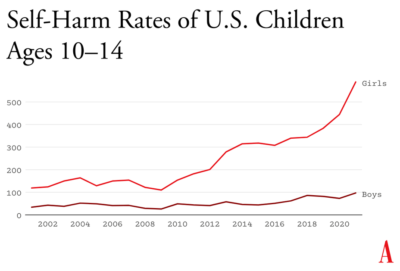


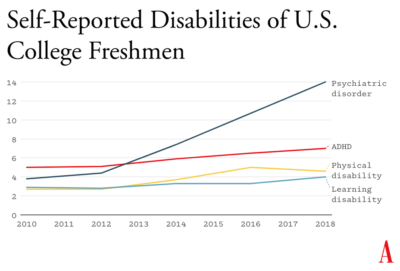
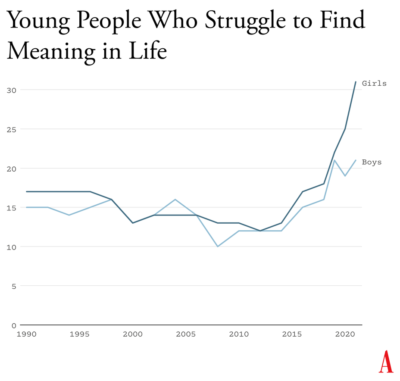
 In recent decades, however, Congress has not been good at addressing public concerns when the solutions would displease a powerful and deep-pocketed industry. Governors and state legislators have been much more effective, and their successes might let us evaluate how well various reforms work. But the bottom line is that to change norms, we’re going to need to do most of the work ourselves, in neighborhood groups, schools, and other communities.
 Have you been feeling more fearful lately? Between a lingering pandemic, news of global warming, divisive politics, and beyond, there are plenty of things that spark fear in us these days. And while it doesn’t sound “cool” to admit that, yes, you’ve probably been afraid of something over the past few years, experts stress that fear is a perfectly normal emotion — and one that is even helpful in some situations.
 Nicole Catenazzi, a life coach and the creator of the Fearless Heart Method for Living Bravely, challenges people to examine their fears with compassion. Ask yourself questions like “What is this fear protecting me from?” and “What is this fear preventing me from?” “This can help you decipher whether your fear serves you or constrains you,” she explains. Once you understand fear’s effects, you may become more apt to challenge it. And go easy on yourself. Everyone deals with fear in some capacity — from humans to chimpanzees and even insects!
 If there’s one thing we as humans seem to have in common, it’s that most of us have felt lonely at one time or another. But is the pain that comes with feeling socially isolated simply a part of being human? Why does the world seem so different when we’re feeling lonely?
 However, given the design of the study, it’s unclear whether the findings suggest loneliness causes this way of thinking or if considering fictional characters in this way causes people to feel lonely. And there’s always the possibility that a third factor causes both outcomes.
 Time is one of those things that most of us take for granted. We spend our lives portioning it into work-time, family-time and me-time. Rarely do we sit and think about how and why we choreograph our lives through this strange medium. A lot of people only appreciate time when they have an experience that makes them realise how limited it is.
 On 26 February 2015, Cates Holderness, a BuzzFeed community manager, posted a picture of a dress, captioned: ‘There’s a lot of debate on Tumblr about this right now, and we need to settle it.’ The post was accompanied by a poll that racked up millions of votes in a matter of days. About two-thirds of people saw the dress as white and gold. The rest, as blue and black. The comments section was filled with bewildered calls to ‘go check your eyes’ and all-caps accusations of trolling.
 Lastly, consider dreams. In a 1958 survey, Fernando Tapia and colleagues reported that only about 9 per cent of respondents indicated that their dreams contained colour. Other surveys done around this time reported similarly low proportions. A decade later, the tide turned and a large majority reported dreaming in colour. The philosopher Eric Schwitzgebel considers several explanations for this discrepancy. One possibility is that black-and-white photographs and television changed the content of dreams. As colour TV came to dominate, colour returned to people’s dreams (‘returned’ because, in a few studies from the more distant past, people did not claim to dream in black and white).
 Sci-fi author Brian Herbert once wrote, “The only guarantee in life is death, and the only guarantee in death is its shocking unpredictability.” These words ring true to researchers who investigate what happens in a person’s final moments—and the frustration that comes with these studies. One big problem almost always gets in the way: How do you ask people what dying feels like when they’re no longer here?
 When these comatose patients were taken off their ventilators, they could not breathe on their own. But, using EEGs, Borjigin noticed two people showed a surge in gamma brainwaves as their bodies started shutting down. Gamma brainwaves are usually a sign of consciousness, because they are mostly active when someone is awake and alert.