

While navigating the treacherous world of dating, the concept of “attachment theory” often crops up. You can identify your own attachment style by taking online quizzes like those used to identify the Enneagram or the Myers-Briggs personality types. Unlike those quizzes, however, the theory of attachment styles is widely accepted in the academic psychology community.
When I first heard of the theory, after my divorce at age 24, it made sense to me that early childhood bonding patterns and trauma would drive how we seek intimacy and solve conflict as adults. I recognized that my own attachment style had evolved significantly over time and wanted to understand why that was, and learn how to intentionally develop a more secure attachment style.
Here, five experts in the mental health and social services fields help unpack the theory to help explain each attachment style, why people of certain styles tend to be drawn to each other, and how to become more secure in your relationships.
What is attachment theory?
Attachment theory comes from the work psychoanalyst John Bowlby and psychologist Mary Ainsworth (whom Bowlby mentored) did together in the ‘60s and ’70s. As part of their larger focus on the effects of family bonds on the emotional development of children, they researched the behavior of infants who were separated from their mothers and how they behaved once reunited.
Based on their observations, they surmised that during the first year of a child’s life, children learn how to connect with others and express their needs. Those whose caregivers are consistently responsive, mirror emotions back to them, meet their needs and provide comfort help them form a “secure” attachment style. According to Bowlby and Ainsworth, this means that they’re more easily able to form connections later in life, express what they need, and ask for help without fear of abandonment or criticism.
But if this key period of childhood development is consistently disrupted, it may tamper with the development of secure attachment. This gives rise to the other attachment styles: anxious and avoidant, sometimes referred to as maladaptive attachment styles. Laura Young, a social worker in Charlottesville, VA, points out that minor fluctuations during the first year of a child’s life won’t doom them to a non-secure attachment style. “The research varies some, but ‘good enough’ parenting is typically classified as being tuned in to your child — if it’s an infant, soothing them to full calm — 50 to 70 percent of the time,” she says. (This statistic comes from a study that came out in Child Development in 2020.)
As psychology as a field has shifted from Freudian methods and theories, attachment theory has become a foundational theory for much of contemporary psychology, taught almost universally in Psych 101 courses (the experts interviewed for this piece all reported first encountering attachment theory in undergrad classes). It has become a useful system for thinking about myriad relationship dynamics, for reexamining early childhood traumas, for improving communication between family members and couples, and for helping individuals choose the right romantic partners.
So, what exactly is secure attachment?
Ainsworth posited that 70 percent of people have secure attachment styles, and 15 percent of people have each anxious and avoidant styles. A study by Cindy Hazan and Phillip Shaver at the University of Denver found that just over half (56 percent) of participants had a secure attachment style, while the other two attachment styles were split fairly evenly (25 percent avoidant and 19 percent anxious/ambivalent). The book Attached: The New Science of Adult Attachment and How It Can Help You Find – and Keep – Love by Amir Levine and Rachel S.F. Heller simplifies things a bit, and states that roughly 50 percent of people are secure, and the rest of the population is split evenly between avoidant and anxious styles. Regardless of which statistic is most accurate, the point is, it’s likely that the majority of the population is able to securely attach to others. Furthermore, those with secure attachments may positively influence those with whom they’re in relationships.
Young explains that “while primary attachment styles are formed in the first 12 months of a child’s life, childhood is full of literally millions of cycles of rupture/distress and repair/soothing between parents and children. Attachment is formed in the repair, too.” (She attributes this idea to Edward Tronick, who writes about the rupture/repair dynamic in his book The Neurobehavioral and Social-Emotional Development of Infants and Children, and an experiment he did called “the Still Face.”) A secure attachment style, therefore, isn’t so much about absence of trauma, but about having needs met and emotions validated by the child’s primary caregiver. In adulthood, a secure attachment style in a partner relationship means someone is “attuned to their partner’s emotional and physical cues and know[s] how to respond to them,” as Levine and Heller write in Attached. Noncrisis levels of tension in a relationship don’t make the securely attached person totally shut down or react with an activated or outsized fight or flight response.
Christina Tesoro, a therapist in Brooklyn who specializes in sex education and works with primarily LGBTQIA+ clients, affirms that secure attachment is more about self-regulation and being unafraid of open communication than about a childhood free of trauma. “[Secure attachment is] not so much about not experiencing ‘negative’ emotions in the relationship, but it’s about… being able to communicate [negative] feelings to their partner or partners from a grounded place with self-awareness, especially around things like projection,” she says.
If you can see yourself clearly and are able to stay grounded and talk through difficult things in an open manner without getting emotionally flooded or shut down, you probably have a secure attachment style. Baltimore-based therapist Mary Rimi says, “Someone with secure attachment is more likely to look at situations more objectively, without overindulging in self-blame, while still being able to take ownership of mistakes.”
For me, feeling the sense of a secure attachment is usually about knowing that things that make me anxious are safe to bring up in a relationship without the fear of negative reactions to my vulnerability. It doesn’t mean that there’s no conflict or difficulty working through things, but it means that conflict produces greater intimacy, security, and growth, rather than a contact high of codependent enmeshment or a total shutdown of intimacy.
What are the anxious and avoidant attachment styles?
Then, we have the other attachment styles: avoidant and anxious. These two variant attachment styles exist on more of a spectrum rather than as black and white opposites, explains Esther Ehrensaft, a practicing psychologist in San Francisco. As attachment theory grew in popularity, practitioners found the assumption of someone being only secure, avoidant, or anxious to be less than accurate. The current understanding of attachment styles is more nuanced and includes mixed, or hybrid, attachment styles.
Avoidant attachment results when a child gives up on reassurance and assumes that their primary attachment object is not reliable, so they learn to fend for themselves, avoiding both connection and vulnerability. Tesoro notes that there are two variations of the avoidant attachment style: fearful and dismissive. Of the former, she says, “Fearful avoidant shows up in adulthood in individuals who feel driven to abandon their partners or pull away before their partners can pull away or reject them. They can respond to intimacy by feeling helpless or anxious and feel distrustful of others. You see this with folks who possibly grew up with abusive caregivers or, sadly, caregivers who were struggling with unprocessed trauma of their own.”
A dismissive avoidant attachment style may manifest as people who “have a really hard time being vulnerable with others,” Tesoro explains. “They’re used to doing things on their own, may rely too much on themselves for self-soothing, have difficulty interrelating, need a lot of space, and give a lot of space to others rather than turning toward and seeking intimacy.” According to her, this may be a result of neglect from early caregivers.
On the other hand, anxious attachment shows itself when the child is constantly monitoring their caregiver to reassure themselves that their primary attachment object is not going to abandon them. This can display in adulthood, for example, as the adult who texts their friends “Are you mad at me?” after a period of prolonged silence. Rimi explains, “Adults with anxious attachment are often seeking to please others, while constantly feeling like they fall short. There is often a preoccupation with how they are relating to others, and constant fear of being left, rejected, or abandoned.”
While sometimes these fears are unnecessary, when a relationship does happen to end, those with an anxious attachment style often see it as evidence that they were right to believe they were going to be left all along, according to Rimi. This may trigger a cycle of ongoing preoccupation and self-blame. “Someone who is anxious in attachment will often overpersonalize conflict,” she says, “particularly in close relationships.”
Ehrensaft tells Allure that understanding how someone was raised is important for knowing what their responses might be to intimacy and insecurity. From this contextual knowledge, we can learn what works for others: Do they like to have long conversations to process emotions, or are they more pragmatic and direct? Do they get emotionally overwhelmed easily? Asking these kinds of questions about someone you’re getting to know romantically is vital — it takes time and intimacy to accurately evaluate where a person’s attachment style falls along this spectrum.
Changing your attachment style is possible
Young always makes it clear to her clients that these attachment styles are not fixed forever, despite their deep roots in the early formation of the psyche. “They can be shifted,” she says. “If you have attachment wounds, they do not have to determine the course of your life or sentence you to miserable relationships. The brain is incredibly flexible; it can adapt to new information with repeated, gentle exposure to new ways of being grounded in a relationship with self and others.”
Compassion is crucial when dealing with maladaptive attachment styles. The solution to moving yourself or someone else toward a more secure way of relating is often about learning to ask the right questions and having some empathetic imagination: What might be causing these specific behaviors, and what might you or this person actually need? Ehrensaft says that with her clients, often adoptive parents and their adopted children who are struggling to forge a bond, she coaches the parent to imagine what the child may have experienced prior to adoption that’s prompting their anxious or avoidant reaction.
Before my divorce, I would have nightmares about my husband happily being in relationships with other women. Although he wasn’t actually cheating on me, these dreams caused me to experience frequent anxiety and panic attacks. I knew the end of our marriage was inevitable. When I started dating again, after my divorce, I didn’t want to repeat my earlier mistakes. Learning how to maintain that balance between asking for reassurance and self-soothing was the first step in applying attachment theory to my day-to-day relationships. I had to start small, practicing this with my close friends, siblings, and coworkers until I felt confident enough to really start dating again over a year later.
Tesoro affirms this experience, saying, “Thinking about what your needs are, how they’re being met, and how you feel if they’re not being met or unable to be met in these relationships…is a useful framing to understand the history of our attachment. Also, asking yourself how you might remain ‘over your own center of gravity,’ or rely on yourself when necessary, to act from a place of groundedness, is helpful.”
Whether it’s a therapist, a friend, or a partner, having secure figures in your life can change everything. Jessee Lovegood, an MFT candidate in the East Bay area in California, does a lot of reparative work with clients who have attachment trauma, and often serves as such a person. “[When] I work with my clients who have so much attachment trauma, the most important thing to me is to show up consistently for them,” Lovegood says. “Be there when I say I will, apologize when I’m not, continue to be a warm and calm presence in their lives. The most important thing is to show up for them.”
Finding the right partner for you
Not only is it tempting to go with what’s familiar, it can sometimes feel unavoidable, and relationships between anxious and avoidant people are extremely common. After all, this pairing replicates a lot of the patterns created in childhood. But once you’re aware of your patterns and behaviors, it becomes possible to change them. And while finding a partner who makes you feel safe will go a long way to help, it can only supplement the work you’re able to do on your own.
Pairings where two people are avoidant may feel safe, because there’s often less vulnerability involved — insecurities are rarely discussed or examined — but these couplings are typically unsatisfying to both parties, because there’s not much space for building intimacy and trust. But Rimi points out that it isn’t impossible: “I would encourage each partner to talk to the other about what sort of affirmations they need, as well as what they can offer. This is a particular dynamic [with] space for understanding, but the reverse response of that could be to trigger further anxiety. Partners can learn each other’s needs and signals to help them feel more comfortable and safe in the relationship.”
While the idea of maladaptive attachment styles might suggest that these are less than desirable traits in a partner, Rimi asserts that this is not the case. There may be some challenges, but these can be worked through if both parties are self-aware and invested in effective communication and growth. Finding secure friends who have been consistently invested in my well-being over the years has helped me learn to communicate in ways that don’t make independence feel like abandonment. And those with avoidant attachment may find that someone who is present and calm — who listens with openness and patience — can allow them to be vulnerable without feeling the need to run away and hide afterwards.
Of course, this is a long, slow process. Unlearning maladaptive attachment styles has to start with compassion for yourself, as these habits were formed to protect yourself as a child. They likely kept you safe, alert to untrustworthy bonds, and served you well. But in adulthood, you don’t need to use these behaviors any longer; it’s time to thank them for looking out for your emotional safety and ask them to take a rest.
Original article here

 What rules are meaningful and valuable; which ones perpetuate inequality? At what point do we substitute deference to authority with our own autonomous consideration—and what might emerge if we were to choose our own distinct path? To hone our capacity for independent judgment, political scientist James Scott urges a daily practice of “anarchist calisthenics,” a form of small-scale rebellious action that cuts against the grain of authority; he envisions minor acts of law-breaking, in cases where this would not endanger others or undermine social well-being. Hierarchies that bring with them pogroms and violence, oppression and exploitation, are not easily overturned: such recognition of the stability of unjust systems requires him to “confront the paradox of the contribution of law-breaking and disruption to democratic political change”; law-breaking is needed to break the stranglehold of unjust rule. In Scott’s assessment, “Most of the great political reforms of the nineteenth and twentieth centuries”—among which he describes those for racial equality and civil rights—“have been accompanied by massive episodes of civil disobedience, riot, law-breaking, the disruption of public order, and, at the limit, civil war.” But, in societies defined by hierarchy, how do we develop the skills for anything else? Scott advises carefully chosen confrontations with imposed laws to assert and practise independence and autonomy without inflicting harm upon others.
 Mostly, the work of non-human entities—animal, plant, fungus, mineral, element—remains illegible to us. This is not for lack of effort: ecologists and physiologists and statisticians map territories and count offspring and track mates, overlay mealtimes and prey densities, measure brain activity and body fat and stomach enzymes. The result is ordered groups and categories of activity, confidently enumerated and named and labelled in terms of productivity. Least flycatchers engaged in aerial acrobatics to snag insects on the wing is sustenance, from this perspective, not entertainment. Wilson’s warblers hopping in the shrub birch branches, munching on little green inchworms, are engaged in functional foraging and not gustatory pleasure. The spruce grouse my black lab flushes from the woods is fleeing for survival, not searching for solitude and hermetic peace. But are we really seeing these lives in their entirety? The porcupine trundling along the trail; the lynx with its unhurried paces along the road; the moose, when not browsing willow, not surveying for wolves, just standing in the brush looking out at the mountains?

 World Journey stories teach us to overcome adversity, but more importantly, they teach us how to experience adversity in the first place. Successful myths, religious texts, and fairy tales — and modern screenplay and film — do not skirt the issue of hardship and conflict, nor do they encourage us to finish the hard work as quickly as possible. The characters in J.K. Rowling’s Harry Potter do not face obstacles and beasts simply to advance the plot, but to develop the inner courage and tenacity needed to grow as individuals within society. Mythic stories put us squarely in the middle of the hardest tasks we can imagine, and they force us to work hard, to guess, to take leaps of faith, and to test ourselves to the limit.
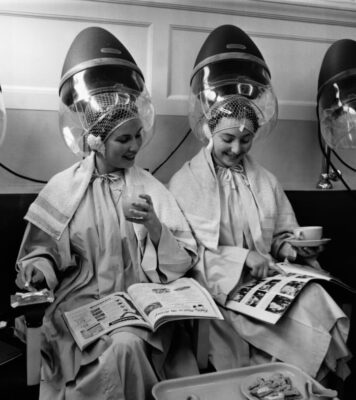 Hindmarch is not the first writer to wax lyrical about shampoo as therapy. I first discovered this life philosophy in the oeuvre of that national treasure of sunlounger fiction, Jilly Cooper. When a Cooper heroine is having a bad day – perhaps her lover is a double-crossing bastard, or the roof of the conservatory is falling in – she doesn’t crawl back to bed. She washes her hair, knocks back a stiff drink and cracks on. The scent of freshly washed hair is always a harbinger of good news in Cooper’s world. And she was on to something, because how you shampoo your hair might matter more than how you style it. “The mistake most people are making is using products that are too rich, and letting them build up,” says Northwood. “Healthy hair starts with getting it properly clean.” A professional will always wash your hair twice, because the first shampoo loosens the dirt, while the rinse-and-repeat gets it really clean.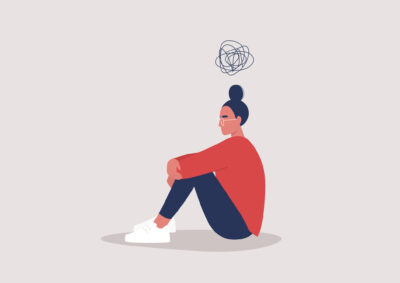
 This makes such feelings doubly unwelcome. Most of us can tolerate negative emotions if we see them as instrumental to something desirable—we do not run to a therapist to treat a fear if we think that it holds us back from doing something obviously risky. But unlike fear, what Heidegger calls anxiety and what Heid’s article describes do not protect us from anything specific. No wonder why Sigmund Freud called anxiety a “riddle.”
 Potts stresses that his “mum brought me up good and proper” – but as a teenager growing up in Salford, he started getting into trouble. “We’ve had our hard times with Stuart, but a lot of it was typical boy stuff,” his mum, Pat Malone, said. “We used to say he was a lovable rogue.” Potts went to prison several times in his late teens and 20s, including an 18-month stint for beating up a burglar who had broken into a friend’s house. After he got out, he had a chequered career: working in factories, as a cobbler, locksmith and painter and decorator. But gradually, life stabilised. He got married, moved into a comfortable council house, and had three kids. Then, in 2016, after more than 15 years, the marriage broke down.