


There are some people who are frugal by nature, some who practice frugality as a mandate of their faith, and some, like myself, who embrace frugality by necessity. I live within a limited income as a bulwark against a consumer culture and capitalist agenda that would prefer we consume our way to oblivion—both ours and the planet’s. We are in a quagmire given the conundrum of the capitalist agenda, a system that requires endless consumption and growth to survive, and a planet that is begging we cease. Personally, I’d rather take my instruction from Mother Earth.
Of course, there are those who might disregard my call for frugality. They are the ones who, despite all efforts, will never be able to live within their means even if they wanted to. The working poor are just that—working one, two, or three jobs and still unable to make ends meet. For them and us, advocating for workers’ rights, fair wages, and enacting legislative policies aimed at economic equality is vital. But this is not an either-or position: We can be advocates of economic parity while at the same time turning down the heat on a historically rapacious capitalist economy by becoming producers and consumers in the home economy.
Over the years, I have taught and written about living in a home economy. But this is less a throwback to some 1950s-era domestic ideal than an approach toward undermining an American psyche and economy that has thrown us into unnecessary debt, encouraged us to buy our way to happiness, and all but driven us from our homes.
By “home,” I am not referring to a physical space alone, though we are being driven, evicted, and displaced from our homes more and more these days, which is why we have become homeless in both form and function. I’m talking about the transiency and dependency that defines and supports the capitalist consumer culture. With neither the skills nor the inclination to stay in place or do for ourselves, we turn to the marketplace for our needs. (Not for nothing, there is an irony to all this talk of place-making when no one wants to stay in place anymore.) This dependency has a long history. It is not for naught that we have become, for all intents and purposes, indentured servants, living on credit and owing our soul to the company store. This is how the system is intended to work. The indentured make docile workers, and Amazon would be happy to bring you into its fold.
Beyond that, there is value and comfort in the making of a home. My respect for “home,” or the type of work that living in a home economy suggests, is due, in part, to my childhood. Growing up as the daughter of two immigrant parents who moved to New York following World War II, I understood, or saw, what utility born of frugality looked like. My father worked as a tailor and my mom worked to make a home in a railroad flat shared with relatives and boarders, and later in our own apartment in the Bronx.
Together, my parents sewed our clothes, made curtains and bedspreads, mended, repaired, cooked every meal at home, and basically did for themselves or did without. But, more significantly, they offered a sense of home, security, and comfort that was tangible to me as a child; one that I have carried forward as an adult. And yet, despite all my skills, my knowledge, and my refusenik underpinnings, I do not have what my parents had. In fact, many of us do not have this: the relationships bound by the need and a commitment to make a self-sufficient home.
It was the ancient Greeks who first coined the term “economics,” or “oikonomia,” as a system of household (oikos) management (nomia). So economics refers to the management system that serves your home. What that home is may vary—the planet, your body, the marketplace, or where you live—but knowing how you define it should determine how you manage it. It is overly simplistic to think that home economics deals exclusively with making cupcakes or jam. It is the serious effort toward creating a management system that works to support the needs of your home.
For me, this includes working in and with seasons, putting up the harvest, avoiding packaging, and cooking my meals from the “stores” I have at season’s end. It includes doing without or making do by repairing, mending, and being grateful for the blessings I have been given, and, of course, being frugal—radically frugal. But it also means living in community with what I call the “new farm family,” that distillate of days gone by when generations lived and worked together to care for each other, and an ethic and lifestyle I embraced following my time as a small-business owner.
Running a business these days requires the sort of branding and niche marketing that can feel more competitive than cooperative. Besides that, as a one-time small-business owner, I know how beholden we are to institutions (banking, insurance, etc.) and goods that either come from, or are regulated by, international markets or organizations. Moreover, if you calculate the amount of carbon used on the build-outs and equipment required to launch and run most businesses, you’ll quickly understand how unsustainable “local” can be.
Still, I understand the theory of “buy local.” Shopping locally allows our dollars to circulate more within the community, and to support the people and businesses we care about. But this is no panacea, particularly when attempting to live within your budget.
As I like to point out, many people are lucky to be earning $15 an hour, but we are living in a $100-an-hour world. Every time we step out and into the marketplace, we are faced with the costs of goods and services that have outpaced our income.
I’m not advocating for cheaper goods, however. We haven’t been paying the true cost of anything for quite some time. Still, you don’t have to be a rocket scientist to know where living outside your income will lead. We can’t spend money we do not have to support local businesses, but if we don’t take part in the local economy, we tend to feel guilty.
Which is why, when a friend of mine still running a small business once told me, “Your frugality is killing my business,” I was heartsick. I knew what she was saying. It is not easy to be a business owner these days, but I’m very careful with my “disposable” income, and, well, with a planet begging for limits to growth (or no growth), I can’t help wondering when we will begin to take it seriously, and how we will respond.
One of our responses can be the type of collective living that this new farm family implies. And yet, we moderns have become addicted to an ethos of independent living, uprooting ourselves from our home communities to chase better jobs or schools elsewhere. We do not “need” each other as we once did. Our modern anything-anytime consumer culture has made our need to rely upon others near-obsolete.
This is why living collectively seems such a challenge. Mired in the mindset of independence, collective living is seen by many as primarily a means to keep rent cheap, which makes it fickle, temporary, and resistant to the larger commitment of turning down the heat on this capitalist monster. Without asking or learning the functional and emotional skills necessary to live in a home economy, our experiment in collectivity will do little to effect permanent change.
In speaking of farm families, however, I admit to waxing poetic on a lifestyle that, from a historical perspective, was more complex and compromised. Farmers were victimized, in the Great Depression and afterward, as the capitalist system demanded bigger economies of scale. “Get big or get out” was the call, and many farmers perished in attempting to take it on. More soberly, many landowners in this romanticized past were responsible for the displacement and genocide of cultures that only today we are willing to acknowledge, even if we’re not doing more than speaking about it.
But survival is an impartial taskmaster. The plight of the immigrants coming to America isn’t pretty. Neither is the story of slavery or genocide or the feeding frenzy of those who came from England to gain access to land and resources for the crown. Dang it if Jefferson’s “nation of farmers,” a rallying cry for many small farmers today, has not been overly simplified for easy reading.
But there is a movement of young farmers returning to the land, and they, too, are attempting the audacious act of living outside the tethers of the capitalist system. This makes us bedfellows in a movement, which is what home economics is really about: an effort to stand up against an economy that is doing its best to steal the best this life has to offer, a place to call home, in both form and function.
But believing in the virtues of a home economy will not magically change our values, nor will it immediately bestow the skills or intention for living in the seasons or turn us into people who would rather make, repair, sow, grow, or stow our foods than buy them from the store.
And it will not immediately turn us into capitalist refuseniks, or even someone who wants to save whatever resources and time we have to support the efforts of young farmers.
But with time, our lives as consumers in the capitalist economy will appear frail when compared to a life in the home economy. And eventually, we’ll come to understand that this is about more than making cupcakes. A lot more.
Original article here
 Over the course of human history, scientists believe that humans have cultivated more than 6,000 different plant species. But over time, farmers gravitated toward planting those with the largest yields. Today, just three crops – rice, wheat and corn – provide nearly half of the world’s calories.
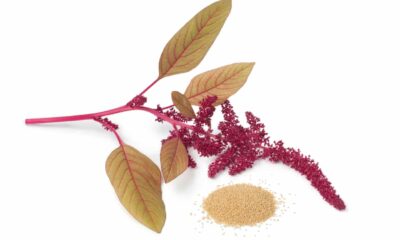 From leaf to seed, the entirety of the amaranth plant is edible. Standing up to eight feet tall, amaranth stalks are topped off with red, orange or green seed-filled plumes. Across Africa and Asia, amaranth has long been eaten as a vegetable – whereas Indigenous Americans also ate the plant’s seed: a pseudo-cereal like buckwheat or quinoa.
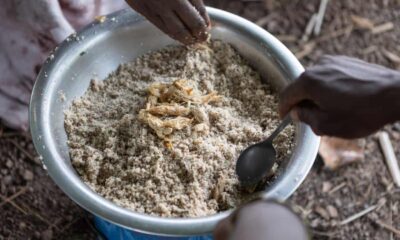 For thousands of years, farmers across West Africa have cultivated fonio – a kind of millet that tastes like a slightly nuttier couscous or quinoa. Historically, fonio is considered to be Africa’s oldest cultivated cereal and was regarded by some as the food of chiefs and kings. In countries such as Senegal, Burkina Faso and Mali, fonio would be served on holy days, like at weddings and during the month of Ramadan.
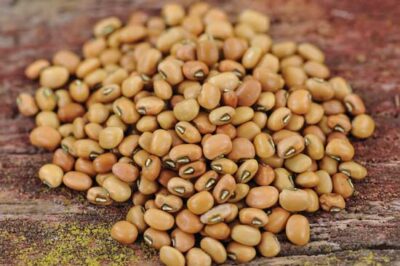 In the 1940s, more than 5m acres of cowpeas were grown in the US – the majority, as their name suggests, for hay to feed livestock. But long before cowpeas – also called southern peas or black-eyed peas – came to the Americas, they were grown for human consumption in West Africa. Although cowpea production has declined in the US in recent decades, the crop is hugely important in much of Africa. Nigeria is the world’s largest cowpea producer.
 In the tropics of Southeast Asia and Polynesia, taro has long been grown as a root vegetable, not unlike the potato. But as rising temperatures threaten cultivation of the crop in its natural habitat, farmers in the continental US are trying to adapt the tropical perennial to grow as a temperate annual, because it cannot survive the cold of US winters.
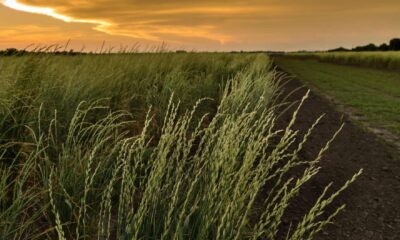 While many alternative crops are just plants that were grown somewhere else in the world generations ago, others have been cultivated specifically to withstand climate change.















 Yes, I know there are many realities, but let’s just for a moment distinguish them as two … normal reality and NEW reality.
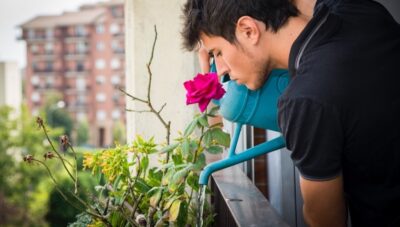 Small changes go a long way in creating a healthier planet for years to come. Whether you rent an apartment or an entire house, there are several ways you can lead a more sustainable lifestyle.
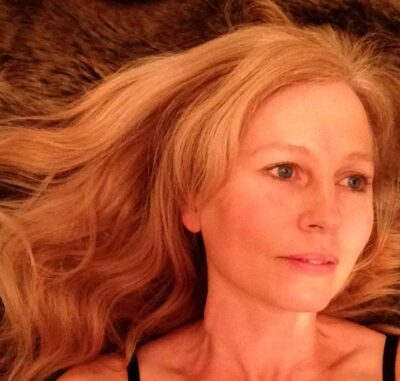



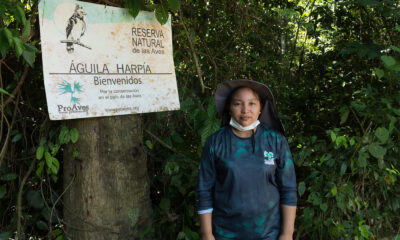 Sara Inés Lara, leader of Colombia-based bird conservation organization Fundación ProAves, got her first taste of conservation’s potential more than 30 years ago. She grew up in one of the most biodiverse places in the world, seeking refuge in the forests, mountains, and pools of the Andes. Then, in 1998, she learned about the yellow-eared parrot.
 Women for Conservation also faced resistance from its peers in the environmental world. Lara remembers other conservation leaders telling her that working with women was nice, but it was not a priority. Whenever she spoke about the link between a growing population, increasing poverty, and environmental impacts, she was told to avoid talking about population.