
1 Exercise on a Monday night (nothing fun happens on a Monday night).
2 On the fence about a purchase? Wait 72 hours before you buy it.
3 Tip: the quickest supermarket queue is always behind the fullest trolley (greeting, paying and packing take longer than you think).
4 Bring fruit to work. Bring fruit to bed!
5 Consider going down to four days a week. It’s likely a disproportionate amount of your fifth day’s work is taxed anyway, so you’ll lose way less than a fifth of your take-home pay.
6 Everyone has an emotional blind spot when they fight. Work out what yours is, and remember it.
7 Plant spring bulbs, even if they’re just in a pot.
8 Send a voice note instead of a text; they sound like personal mini podcasts.
9 Keep a bird feeder by a window, ideally the kitchen. It’ll pass the time when you’re washing up.
10 Always bring ice to house parties (there’s never enough).
11 Get the lighting right: turn off the overhead one, turn on lots of lamps (but turn off when you leave the room).
12 Sharpen your knives.
13 Feeling sluggish at work? Try the Pomodoro technique: 25 minutes on, five-minute break, and repeat.
14 Buy a cheap blender and use it to finely chop onions (it saves on time and tears).
15 Keep your children’s drawings and paintings. Put the best ones in frames.
16 Set aside 10 minutes a day to do something you really enjoy – be it reading a book or playing Halo.
17 Don’t be weird about how to stack the dishwasher.
18 Reuse all plastic bags – even bread bags. Much of the packaging you can’t reuse can be taken to larger branches of supermarkets for recycling.
19 Take a photo of the tag you are given when leaving your coat in a cloakroom.
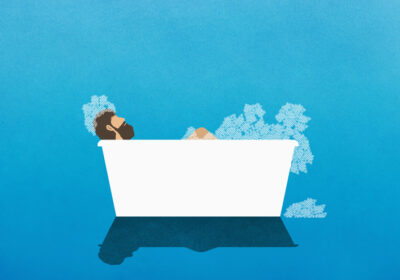
20 Can’t sleep? Try a relaxing soak with lavender bath oil before bed.
21 Add the milk at least one minute after the tea has brewed.
22 Laugh shamelessly at your own jokes.
23 It might sound obvious, but a pint of water before bed after a big night avoids a clanger of a hanger.
24 Start a Saturday morning with some classical music – it sets the tone for a calm weekend.
25 Look closely.
26 Set time limits for your apps. Just go to the settings on your smartphone and add a limit – for example, if you have an iPhone turn on Screen Time.
27 If possible, take the stairs.
28 Always be willing to miss the next train.
29 Eat meat once a week, max. Ideally less.
30 Be polite to rude strangers – it’s oddly thrilling.
31 Ask questions, and listen to the answers.
32 Connect with nature: stand outside barefoot for a few minutes – even when it’s cold.
33 Join your local library – and use it.
34 Go for a walk without your phone.
35 Eat salted butter (life’s too short for unsalted).
36 Stretch in the morning. And maybe in the evening.
37 If you’re going less than a mile, walk or cycle. About half of car journeys are under two miles, yet these create more pollution than longer journeys as the engine isn’t warmed up yet.
38 Sleep with your phone in a different room (and buy an alarm clock).
39 Send postcards from your holidays. Send them even if you’re not on holiday.
40 Instead of buying new shoes, get old ones resoled and buy new laces.
41 Buy a plant. Think you’ll kill it? Buy a fake one.
42 Don’t have Twitter on your phone.
43 If you find an item of clothing you love and are certain you will wear for ever, buy three.
44 Try taking a cold shower (30 seconds to two minutes) before your hot one. It’s good for your health – both physical and mental.
45 Text to say thank you.
46 Read a poem every day. Keep a compendium, such as A Poem for Every Day of the Year, by your bed.
47 Take out your headphones when walking – listen to the world.
48 Buy secondhand.
49 Buy in person!
50 Learn how to floss properly.
51 If something in the world is making you angry, write (politely) to your MP – they will read it.
52 Say hello to your neighbours.
53 Learn the basics of repairing your clothes.
54 Always bring something – wine, flowers – to a dinner/birthday party, even if they say not to.
55 Learn the names of 10 trees.
56 Call an old friend out of the blue.
57 Every so often, search your email for the word “unsubscribe” and then use it on as many as you can.
58 Buy a newspaper. (Ideally this one.)
59 Always have dessert.
60 Drop your shoulders.
61 Make something from scratch. Works best if it’s something you’d normally buy, such as a dress or a bag.
62 Go to bed earlier – but don’t take your phone with you.
63 Volunteer. Go to gov.uk/government/get-involved for ideas.
64 Dry your cutlery with a cloth (it keeps it shiny).
65 Instead of buying a morning coffee, set up a daily transfer of £2 from a current into a savings account and forget about it. Use it to treat yourself to something different later.
66 Don’t save things for “best”. Wear them – enjoy them.
67 Sing!
68 Think about your posture: don’t slouch, and don’t cross your legs.
69 Hang your clothes up. Ideally on non-wire hangers (it’s better for them).
70 Skinny-dip with friends.
71 Switch your phone off on holiday (or at least delete your work email app).
72 Always use freshly ground pepper.
73 Thank a teacher who changed your life.
74 Respect your youngers.
75 Keep your keys in the same place.
76 Ditch the plastic cartons and buy milk in glass bottles.
77 Rent rather than buy a suit/dress for that forthcoming wedding (even if it’s your own).
78 Always book an extra day off after a holiday.
79 Ignore the algorithm – listen to music outside your usual taste.
80 Mute or leave a WhatsApp group chat.
81 Learn a TikTok dance (but don’t post it on TikTok).
82 Cook something you’ve never attempted before.
83 Join a local litter-picking group.
84 Handwash that thing you’ve never cleaned.
85 Don’t get a pet/do get a pet.
86 Nap.
87 Learn how to breathe deeply: in through the nose, out through the mouth, making the exhale longer than the inhale.
88 Buy a bike and use it. Learn how to fix it, too.
89 Politely decline invitations if you don’t want to go.
90 If you do go, have an exit strategy (can we recommend a French exit, where you slip out unseen).
91 If in doubt, add cheese.
92 Don’t look at your phone at dinner.
93 Do that one thing you’ve been putting off.
94 Give compliments widely and freely.
95 Set up an affordable standing order to a charity.
96 Keep a book in your bag to avoid the temptation to doomscroll.
97 Listen to the albums you loved as a teenager.
98 Make a friend from a different generation.
99 Staying over at a friend’s place? Strip the bed in the morning.
100 For instant cheer, wear yellow.
Original article here


 After that gig ended, Thomas was back to square one. But during the search process he’d reconnected with a couple of old friends and colleagues in similar straits who had pooled office space and launched freelance advisory businesses that allowed them to generate some income while searching for the next thing. Thomas collaborated with them on two start-up ideas, but neither really took off, so he and his family made some adjustments: His wife ramped up her career, and they moved to a less costly city and invested in profit-generating rental properties.
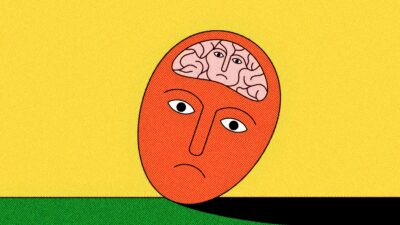 Ever had someone tell you to just cheer up? Did it drive you crazy? Well, turns out that someone telling you to “be happy” isn’t just annoying—it’s also wildly unhelpful.
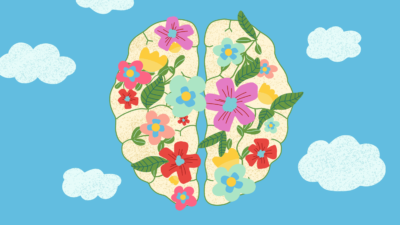 I think the good thing about meditation—mindfulness, concentrating on the present, detaching—is as good anti-anxiety, anti-anger tools. But one of the costs of accepting fate, accepting that you can’t go on and do something good in the future, correlates highly with physical illness, shorter life span, less accomplishment at work. So, it’s a good anti-anxiety tool often, but it’s got a lot of costs as well.
 Whenever I am faced with life’s uncertainty, I ask myself the following questions: Why is this happening? What can I do to make it go away? How can I navigate this effectively? What can I learn from this experience?
 The chorus of the theme song for the movie Fame, performed by actress Irene Cara, includes the line “I’m gonna live forever.” Cara was, of course, singing about the posthumous longevity that fame can confer. But a literal expression of this hubris resonates in some corners of the world—especially in the technology industry. In Silicon Valley, immortality is sometimes elevated to the status of a corporeal goal. Plenty of big names in big tech have sunk funding into ventures to solve the problem of death as if it were just an upgrade to your smartphone’s operating system.
 The researchers also found that with age, the body’s response to insults could increasingly range far from a stable normal, requiring more time for recovery. Whitson says that this result makes sense: A healthy young person can produce a rapid physiological response to adjust to fluctuations and restore a personal norm. But in an older person, she says, “everything is just a little bit dampened, a little slower to respond, and you can get overshoots,” such as when an illness brings on big swings in blood pressure.
 If you want to learn something about change there is no better place to look than evolution. Nothing represents a continuous and unrelenting cycle of order, disorder, and reorder on a grander scale. For long periods of time, Earth is relatively stable. Sweeping changes—warming, cooling, or an asteroid falling from space, for example—occur. These inflection points are followed by periods of disruption and chaos. Eventually, Earth, and everything on it, regains stability, but that stability is somewhere new.
 The more you define yourself by any one activity, the more fragile you become. If that activity doesn’t go well or something changes unexpectedly, you lose a sense of who you are. But with self-complexity, you have develop multiple components to your identity.
 In approximately one month and 10 days, I’ll be on my way to making one of the larger decisions of my adult life (so far, anyway); I’m moving to Austin, Texas, approximately 2,000 miles and one hell of a road trip away from my family and almost my entire friend group back in New York. While I have many questions about my move—chief among them, “How much should a mattress cost?” and “Will everyone hate me for being a Brooklyn transplant?”—nothing has loomed larger in my mind than the question of friendship, or, more specifically, how a full-grown adult goes about making new friends with no partner or kids to act as built-in buffers.
 For Hannah Smith, 27, friendship began at home—quite literally—when she moved to San Francisco in 2019 without knowing anyone. Smith sublet three different rooms through Craigslist before she finally signed a month-to-month lease in the perfect place (which she also found through Craigslist), eventually turning a roommate from her final apartment into one of her best friends. “Low-commitment living situations can be a great way to get to know people in a new place,” says Smith, although she adds that this strategy might be somewhat complicated by the ongoing effects of COVID-19.
 We’re surrounded by negativity everywhere we turn. The news we read, social media we peruse, and conversations we have and overhear. We absorb stress from our family, friends, and coworkers. And, it’s taking a toll.
 Watch what you say out loud. Negative language is particularly insidious and potent. Be mindful of what you’re thinking and saying. Yes, those around you influence you and your mood, but we have more control over our thoughts and feelings than anyone else. And what we say out loud also carries significant weight. According to Trevor Moawad, a mental conditioning coach who works primarily with elite athletes, it’s ten times more damaging to our sense of thriving if we verbalize a thought than if we just think it.
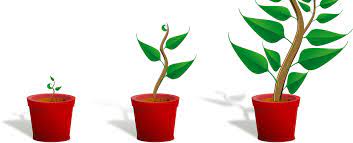 Manage your energy. You can also increase your resilience in the face of negativity and encourage thriving by exercising, eating well, and getting enough sleep — all things we know we’re supposed to do but we often fail to when we’re bombarded with negativity. When we exercise, our muscles pump “hope molecules” into our bodily systems that are good for our mental and physical health. You can amplify these effects by exercising outside, with others, or to music.
 Need to know