

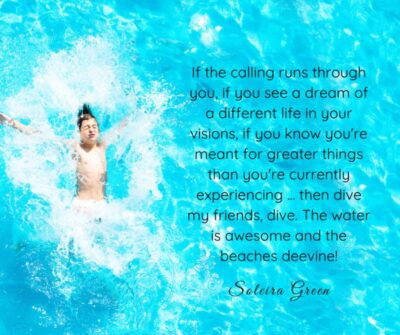
Eight years ago my husband and I gave away pretty much all that we owned and headed off on a year and a half of travel round the world. This was the third time in my life that I had let go of a version of my life and leapt into the abyss without knowing where I’d land. In all three instances they were the best thing I could have done … as each of those leaps led me to here. And here is a destination so far beyond my earlier life reckoning of who I was and what I could be up to, that I am even now still astounded by it.
My point: If the calling runs through you, if you see a dream of a different life in your visions, if you know you’re meant for greater things than you’re currently experiencing … then dive my friends, dive. The water is awesome and the beaches deevine!
About the Author:

Soleira Green is a visionary author, quantum coach, ALLchemist & future innovator. She has been creating leading edge breakthroughs in consciousness, quantum evolution, transformation, innovation, intelligence and more over the past 25 years, has written and self-published eleven books, and taught courses all over the world on these topics.

 We should probably pin down what we mean by loneliness, as opposed to solitude, aloneness, social isolation, disconnectedness etc. For Henry Rollins, the former Black Flag frontman turned writer, it’s something that “adds beauty to life. It puts a special burn on sunsets and makes night air smell better.” I’m going to file that under Poetic Nonsense. The Campaign to End Loneliness (CEL), more usefully, defines it as “a subjective, unwelcome feeling of lack or loss of companionship. It happens when there is a mismatch between the quantity and quality of the social relationships that we have, and those that we want.”
 Not only do animals provide us with unconditional love and support; they also help to give structure to our days and even encourage us to get out and connect with others. Interaction with pets is also shown to help reduce stress levels.
 It was about three years ago, as I recall, that a fellow called into my radio/TV program to suggest that a great way to slow aging and normalize weight was an intermittent fasting program called the 5:2 diet.
 Through a process called autophagy, such zombie (senescent) cells are broken down, and their raw materials recycled for use by new and functional cells. It’s like a major housecleaning of the body, resulting in greater metabolic efficiency and less of a burden on the body’s systems.






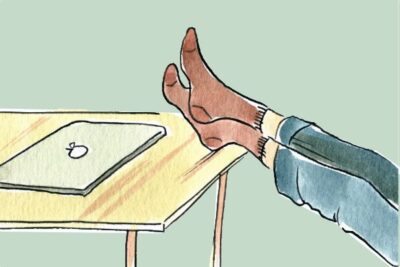 What rules are meaningful and valuable; which ones perpetuate inequality? At what point do we substitute deference to authority with our own autonomous consideration—and what might emerge if we were to choose our own distinct path? To hone our capacity for independent judgment, political scientist James Scott urges a daily practice of “anarchist calisthenics,” a form of small-scale rebellious action that cuts against the grain of authority; he envisions minor acts of law-breaking, in cases where this would not endanger others or undermine social well-being. Hierarchies that bring with them pogroms and violence, oppression and exploitation, are not easily overturned: such recognition of the stability of unjust systems requires him to “confront the paradox of the contribution of law-breaking and disruption to democratic political change”; law-breaking is needed to break the stranglehold of unjust rule. In Scott’s assessment, “Most of the great political reforms of the nineteenth and twentieth centuries”—among which he describes those for racial equality and civil rights—“have been accompanied by massive episodes of civil disobedience, riot, law-breaking, the disruption of public order, and, at the limit, civil war.” But, in societies defined by hierarchy, how do we develop the skills for anything else? Scott advises carefully chosen confrontations with imposed laws to assert and practise independence and autonomy without inflicting harm upon others.
 Mostly, the work of non-human entities—animal, plant, fungus, mineral, element—remains illegible to us. This is not for lack of effort: ecologists and physiologists and statisticians map territories and count offspring and track mates, overlay mealtimes and prey densities, measure brain activity and body fat and stomach enzymes. The result is ordered groups and categories of activity, confidently enumerated and named and labelled in terms of productivity. Least flycatchers engaged in aerial acrobatics to snag insects on the wing is sustenance, from this perspective, not entertainment. Wilson’s warblers hopping in the shrub birch branches, munching on little green inchworms, are engaged in functional foraging and not gustatory pleasure. The spruce grouse my black lab flushes from the woods is fleeing for survival, not searching for solitude and hermetic peace. But are we really seeing these lives in their entirety? The porcupine trundling along the trail; the lynx with its unhurried paces along the road; the moose, when not browsing willow, not surveying for wolves, just standing in the brush looking out at the mountains?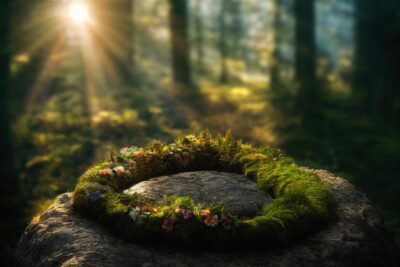
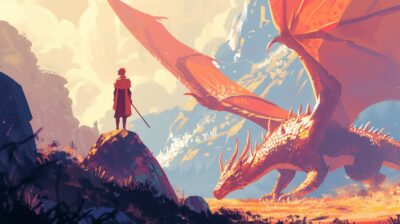 World Journey stories teach us to overcome adversity, but more importantly, they teach us how to experience adversity in the first place. Successful myths, religious texts, and fairy tales — and modern screenplay and film — do not skirt the issue of hardship and conflict, nor do they encourage us to finish the hard work as quickly as possible. The characters in J.K. Rowling’s Harry Potter do not face obstacles and beasts simply to advance the plot, but to develop the inner courage and tenacity needed to grow as individuals within society. Mythic stories put us squarely in the middle of the hardest tasks we can imagine, and they force us to work hard, to guess, to take leaps of faith, and to test ourselves to the limit.

 Hindmarch is not the first writer to wax lyrical about shampoo as therapy. I first discovered this life philosophy in the oeuvre of that national treasure of sunlounger fiction, Jilly Cooper. When a Cooper heroine is having a bad day – perhaps her lover is a double-crossing bastard, or the roof of the conservatory is falling in – she doesn’t crawl back to bed. She washes her hair, knocks back a stiff drink and cracks on. The scent of freshly washed hair is always a harbinger of good news in Cooper’s world. And she was on to something, because how you shampoo your hair might matter more than how you style it. “The mistake most people are making is using products that are too rich, and letting them build up,” says Northwood. “Healthy hair starts with getting it properly clean.” A professional will always wash your hair twice, because the first shampoo loosens the dirt, while the rinse-and-repeat gets it really clean.