
Al Herpin of Trenton, New Jersey, died on January 3, 1947. He was 94. Herpin spent a large chunk of his adult life making a peculiar claim: that he never slept.
It’s unclear whether Herpin had a sleep disorder, or was confused, or was just a weirdo liar, but he made headlines regardless. “The man’s story is sustained by physicians who have examined him,” The New York Times first reported in 1904. This admittedly came at the tail end of the Yellow Journalism era, but let’s for a moment entertain the idea that Herpin never slept. How’d he manage that? And why are the rest of us, even though we (presumably) don’t share Herpin’s purported superpower, so dang tired all the time?
There are two universally dependable subjects of small talk: the weather, and complaining about perpetual exhaustion. In your teenage years, that manifests itself as some iteration of “OH MY GOD I’M SO DEAD” in between classes; in adulthood, it takes the form of the subtle head nod exchanged when you and a co-worker converge at the coffee machine to gorge yourselves on caffeine and talk about…the weather. Everyone, everywhere is officially resigned to perpetual sleepiness. Here’s what we know about why this problem exists, and what you can do about it.
The science of sleep
This part you probably know: To be less tired, you need a consistent amount of sleep. Not necessarily eight hours, but that’s ideal, and it must be uninterrupted, complete with several REM cycles. Otherwise, you’ll accumulate sleep debt, which is like credit card debt, except physically draining instead of financially ruinous.
This part you might not know: The typical sleep schedule for humans in WEIRD countries (Western, educated, industrialized, rich, and democratic) is wildly different than it was throughout the rest of human history, according to David Samson, Ph.D., a sleep anthropologist at the University of Toronto. By default, early primates adhered to a rigid system that involved falling asleep when the sun went down and waking up when the sun rose. Hunter-gatherers figured out how to use fire and thus weren’t as beholden to passing out at dusk, but they often slept in shifts to watch for predators. Only since the mid-19th century have post-industrial humans aligned their sleep around the ol’ nine-to-five day at the office.
“When you want to look at ‘normal’ sleep, you can’t look at us,” Samson says. “In our society, where we have 24/7 access to light and to temperature regulation, we have basically just muted our circadian amplitude.” In other words, we’ve stuffed nature’s blueprints for sleeping in the trash, which could have something to do with why we’re so bad at it.
No one knows for sure, though. “It might be that post-industrial sleep is by far the healthiest way to sleep,” Samson says. And by comparing WEIRD-country data to data collected from studies of the world’s few remaining hunter-gatherer groups, researchers are reasonably sure that on balance, our ancestors indeed got fewer ZZZs than we do; they had more napping opportunities during what Samson estimates to be a roughly 18-hour “work week,” but weren’t keen on long, monophasic blocks of uninterrupted sleep. They also didn’t have comfy mattresses at their disposal.
Samson is sympathetic about the whole Ugh, I’m exhausted thing—to a point, because relatively speaking, we’ve got it pretty good. Mouse lemurs, for instance, sleep 15 hours a day. “Being a mouse lemur would probably make you feel way more tired than you do as a human,” Samson says. “We’re reliant on high-quality sleep, but we’re remarkably resilient to sleep deprivation.”
Get enlightened
To slow down the accumulation of sleep debt, wear blue-wave-light-blocking glasses, which can help promote sleep onset at night, Samson says. Any method of reducing the amount of light around you at night is a smart approach, actually; he even tried an experiment where he walked around his home only by candlelight, which worked pretty well, although he admits it wasn’t so practical.
What about at work? “There’s some evidence that if you want to keep your circadian rhythm nice and tight, actually getting some exposure to your environment—going outside, sitting out there for a half an hour in the sunlight, even if it’s cold out—is good for strengthening your circadian rhythm,” Samson says. Light and temperature are the two biggest factors that affect how tired you are on a day-to-day basis. Keep tabs on them, and you’ve got a fighting chance.
Naps: not just for kindergartners
Around 3 P.M., our body temperature starts to drop, and we get super sleepy. When that happened to our ancestors, they shamelessly curled up and passed out. But in order to achieve MAXIMUM WORKER PRODUCTIVITY, the United States has generally pooh-poohed this tendency, which is a shame. When you start to fade, a nap is always helpful, should you have the luxury of being able to take one; the practice is normal and not a sign of laziness, unless you’re doing it to put off all the errands you have to do on a Sunday afternoon. And even then, you probably deserve it.
Blame your parents
To a certain extent, your drowsiness isn’t totally within your control, because humans encode their preferred sleep schedules in their children. “If you look at things like REM, it’s very heritable,” Samson says. “Things like homeostasis—whenever you’re sleep-deprived, and how strong your drive is to go back to sleep—are 90 percent heritable. Your chronotype, and where you are on the ‘lark versus owl’ continuum? That’s moderately to highly heritable.” Next time you nod off at work, remember that it’s really mom and dad’s fault. Your boss can’t argue with science.
The promise (?) of a less sleepy future
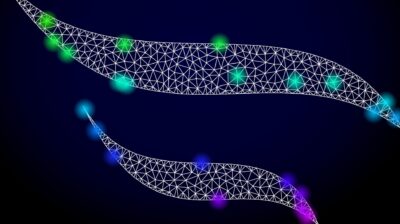
David Prober, Ph.D., a professor of biology and biological engineering at Caltech, is studying zebrafish—these little guys—as part of an effort to improve sleep for humans who suck at it. “Their brains are structurally and anatomically similar to ours but much simpler and smaller, and we can use them to identify genes and neurons that regulate sleep,” he explains.
What Prober has uncovered thus far is that specific neuropeptides in zebrafish brains—and probably our brains—regulate whether it’s time to go to sleep or not. “Activating” the neurons that produce these neuropeptides, he says, made the zebrafish get sleepier. Prober believes in 10–20 years, it’ll be possible to identify which neuropeptides have the same effects on humans. “If we can target pathways that specifically regulate sleep, hopefully we’ll be able to mimic a natural sleep state and get the benefits of sleep without the side effects that you might get from something like Ambien.”
Prober cautions that while sleep disorders might be treatable, a Herpin-like, Limitless-esque goal for everyone is highly unlikely. “It could very well be that sleep is doing many beneficial things,” he says, “and it may not be possible to find one drug that will take care of all those things without us having to spend eight hours asleep. I think that’s pretty far in the future, if ever.”
This unfortunate reality check is one of many things that call Al Herpin’s story into question. “Humans have always had better things to do than sleep,” says Samson—but that doesn’t mean we don’t need it. “I bet he was getting microsleeps throughout the day. He’d get deep delta sleep for 15 seconds and then wake up. But you can’t not sleep.” To those who wish otherwise: Keep dreaming.
Original article here
 It was about three years ago, as I recall, that a fellow called into my radio/TV program to suggest that a great way to slow aging and normalize weight was an intermittent fasting program called the 5:2 diet.
 Through a process called autophagy, such zombie (senescent) cells are broken down, and their raw materials recycled for use by new and functional cells. It’s like a major housecleaning of the body, resulting in greater metabolic efficiency and less of a burden on the body’s systems.
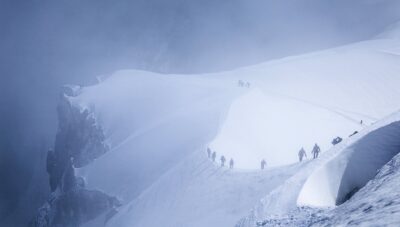

 World Journey stories teach us to overcome adversity, but more importantly, they teach us how to experience adversity in the first place. Successful myths, religious texts, and fairy tales — and modern screenplay and film — do not skirt the issue of hardship and conflict, nor do they encourage us to finish the hard work as quickly as possible. The characters in J.K. Rowling’s Harry Potter do not face obstacles and beasts simply to advance the plot, but to develop the inner courage and tenacity needed to grow as individuals within society. Mythic stories put us squarely in the middle of the hardest tasks we can imagine, and they force us to work hard, to guess, to take leaps of faith, and to test ourselves to the limit.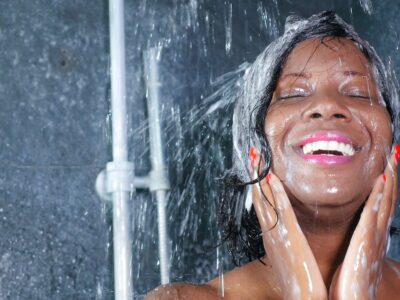
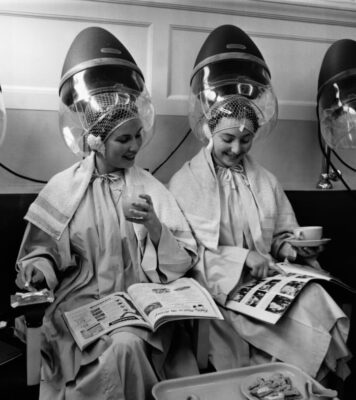 Hindmarch is not the first writer to wax lyrical about shampoo as therapy. I first discovered this life philosophy in the oeuvre of that national treasure of sunlounger fiction, Jilly Cooper. When a Cooper heroine is having a bad day – perhaps her lover is a double-crossing bastard, or the roof of the conservatory is falling in – she doesn’t crawl back to bed. She washes her hair, knocks back a stiff drink and cracks on. The scent of freshly washed hair is always a harbinger of good news in Cooper’s world. And she was on to something, because how you shampoo your hair might matter more than how you style it. “The mistake most people are making is using products that are too rich, and letting them build up,” says Northwood. “Healthy hair starts with getting it properly clean.” A professional will always wash your hair twice, because the first shampoo loosens the dirt, while the rinse-and-repeat gets it really clean.
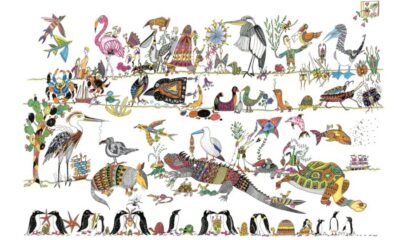
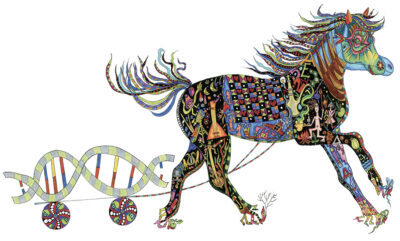
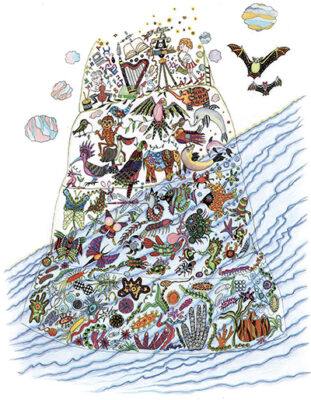
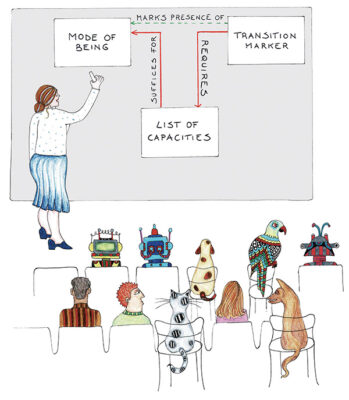 A consensus list of consciousness capacities is a step forward, but identifying each and every capacity may be difficult, and a list does not tell us how they interact to form a conscious being. If we could find a single system-property — an evolutionary marker of consciousness — that indicates that the organism has evolved all the capacities in the consensus list, we would be in a much better position. Finding such a single, diagnostic transition marker would make it possible to identify the simplest evolved conscious being, reconstruct the processes and structures that underlie it, and figure out how they interact. If we can follow the evolution of the marker and therefore the evolution of consciousness, we can discover when and how the conscious mode of being originated.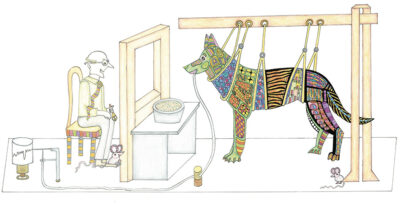
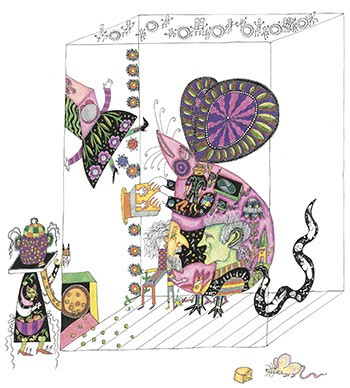 The study of associative learning today includes the investigation of the underlying cognitive and neurobiological mechanisms in ecologically relevant conditions such as the social conditions in which animals learn from each other. It is a rich and productive research program, which is no longer constrained by the behaviorists’ maxims. There is an irony in our (qualified) return to the 19th-century suggestion that open-ended associative learning is an evolutionary transition marker of consciousness, the very term that behaviorists tried to purge from psychology.
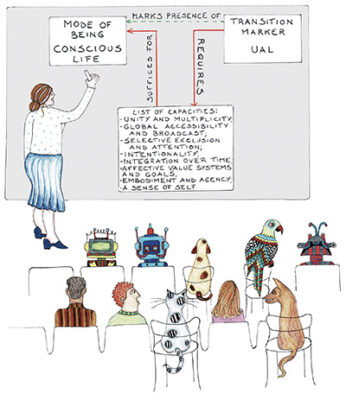 (i) It can distinguish between novel complex patterns of stimuli and actions. For example, it can learn to navigate in a new terrain — to discriminate between different types of animals, between different routes leading to food and shelter. The learned patterns are genuinely novel: they are not reflex-eliciting patterns, nor have they been learned in the past.
 Animals that could mitigate the high costs of UAL without giving up its benefits would have a great advantage. The evolutionary elaboration of the ubiquitous stress response and the evolution of active forgetting are some of the ameliorating mechanisms that we expect to find in all associatively learning animals, and in particular, in UAL animals. Suffering was not eliminated, but it became more controlled.
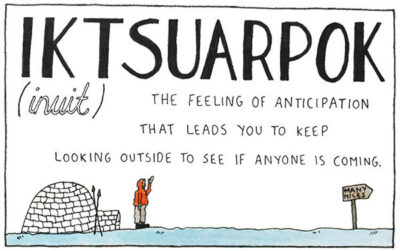 Sometimes we must turn to other languages to find le mot juste. Here are a whole bunch of foreign words with no direct English equivalent.