


“The farther away I go,” Alex wrote, “the closer I’ll be to you.”
A week later, she lay dead on the floor of a middle school bathroom in Thailand. That was three years after she had shown up late for dinner with a black eye from her first seizure. It was eight years after our first date climbing trees in Central Park.
“That breeze, that tickled your ear?” she wrote once, when there was just an ocean between us. “That was me.”
Her final letter ended with a question. “How long until we see each other again?”
It was the night of her funeral when it happened. She was there, waiting on the far bank of a raging river, radiant with red hair flying. I began to wade across, but the black current swept me away before I could reach her. She came again another night, as I slept, trapped behind thick glass we pressed our palms against. Then, another dream—this time of Alex in a hospital waiting room. “It isn’t her,” the nurse insisted, summoning security. Unable to contemplate nothingness, the mind can only shape the contours of the void. Death becomes an uncrossable river, a wall of unbreakable glass, an obvious lie.
I dreamed of Alex for years. Each dream was different, yet the theme was immutable: She could not be reached. Then, one night, I went lucid, and everything changed.
* * *
Dr. Keith Hearne, a psychologist, defines lucid dreaming as becoming “fully aware of being in a dream.” This realization is instantly transformative: Rather than a dream being something that simply happens to you, suddenly you can influence the dream’s content and direction.
As his wife sleeps unsuspectingly beside him, Liam flies through an endless cosmos of beckoning planets searching for sex.
Aristotle documented the phenomenon, as did the Buddha Shakyamuni. Depictions of lucid dreaming appear in Egyptian hieroglyphics and in the oral traditions of Australian aborigines. In a conceit shared by many modern practitioners, the Upanishads from the sixth century B.C. equate lucid dreaming with godhood. “Up and down in his dream, the god makes manifold shapes for himself, either rejoicing together with women, or laughing, or seeing terrible sights.”
Among scientists, the concept was widely considered a myth until Hearne proved otherwise. At 8:07 a.m. on April 12, 1975, research subject Alan Worsley sent a message to Hearne from within a lucid dream. Our bodies are paralyzed during REM sleep, except our unseeing eyes, which still flit around behind sealed lids, like captive butterflies. While an EEG confirmed that Worsley slept, the dreamer performed a series of choreographed eye movements, akin to Morse code. “The signals were coming from another world—the world of dreams,” Hearne wrote, “and they were as exciting as if they were coming from another solar system.”
For many lucid dreamers, or “oneironauts,” inner space and outer space converge. At the moment of lucidity, Clare Johnson delights in backflipping out of her current dream and landing in an infinite void. Felicity Doyle often begins by exploring a galaxy of “soap bubbles,” all portals to exotic locales. Another man, who asked to go by a pseudonym due to the nature of what he shared, summons a universe. As his wife sleeps unsuspectingly beside him, Liam, as we will call him, enacts the two most common lucid dream motifs: He flies through an endless cosmos of beckoning planets searching for sex.
“I usually take the approach that the women have been waiting for me,” Liam explained. “I transmit that thought to them ahead of time, telepathically, ‘I’m your long-lost love.’ ”
They couple—in ruined castles, on red sand beaches, in luminescent wilderness—and then he flies away, never to return. “There is only one particular woman that I search for again and again,” he confessed. “I’ll think, ‘Oh, maybe there’s something in that bed,’ and I’ll pull back the covers and sure enough, there she is. Maybe half the time, I’m successful.”
In waking life, the woman is a family friend—someone Liam knows through his wife. Objectively, they have never shared more than casual conversation, but in dreams, she is the ultimate lover, even boldly initiating sex with Liam in front of his wife and family. “I love those moments,” he grinned. “It’s almost like bragging—bragging to myself about my own lucidity. I’m so strong, I can do it in front of my own mother-in-law.”
In the morning, Liam feels no guilt. “This is a safe space to explore anything taboo,” he concludes. Other lucid dreamers report going even further, carrying out acts of rape, pedophilia, incest, and murder with impunity.
I first met Liam at a private gathering organized by Doyle. Over a light lunch, 10 oneironauts discussed recent nocturnal adventures: turning into animals, conversing with historical figures, shooting heroin. Some spoke about cutting through the fabric of dreams to see what lies beyond. Others advised the more reckless to tie silver cords to their dream bodies first, to keep them from wandering too far and being lost forever.
While a recent study found that 47 percent of respondents have had at least one lucid dream, Doyle’s guests reported frequent and prolonged experiences. It is unclear why certain individuals are predisposed to lucidity, but research suggests that oneironauts tend to possess a greater puzzle-solving ability. It was also evident, from my conversations with dreamers, that training is critical for developing any innate potential.
As lunch progressed, the discussion turned to matters of willpower. While even novice oneironauts are usually able to exert minimal control over their dream environments (levitating a handkerchief, for instance), more impressive feats are often stymied. The dream world possesses a kind of perverse and shifting logic. Concessions can often be made. If the dreamer cannot fly, for example, she might consider manifesting a magic carpet. If a dreamer wanted to move a mountain, she might first have to rig an atomic bomb.
As far back as Doyle can remember, this world of dreams always seemed “more real” than her waking one. “It’s brighter and more vibrant there. Everything sparkles,” she insists. “It’s crystal clear in all directions.” Other dreamers report synesthesia, viewing scenes from multiple angles simultaneously, and ethereal music beyond the capability of any earthly instrument. Jared Zeizel regularly visits an orchard bearing surreal fruit more delicious than any meal he has ever tasted.
“As a child,” Doyle later told me, “I had extreme social anxiety.” We sat amid the clutter of her suburban San Francisco home, eating oranges as her lively 8-year-old practiced piano across the room. “My parents got divorced when I was 3, and then my mom got divorced again when I was 15. There was fighting at home and at school. Kids threw their lunches at me, and shoved me into lockers. Dreams were my only escape.” Yet, even there, securely inside her own mind, the suffering continued.
“There is this boy, and we are blissfully in love,” Doyle began, describing a recurrent dream that has persisted for decades. His appearance changes from night to night, but his essence is the same. “Our love is deeper and stronger than any I’ve ever known, and in every dream, we are torn apart. I go questing after him—just bizarre scenes like climbing telephone poles in the desert to peer into the distance, or asking a series of giants, ‘Have you seen him?’ Or, I remember a wardrobe of uninhabited bodies—just skins on coat hangers, and I was desperately searching through, ‘Not him, not him,’ just sobbing and sobbing. I would wake up and be wrecked for weeks.”
At 19, Doyle lost a leg in a motorcycle crash. “I shattered my pelvis,” she whispered, to spare her daughter the details, “and my femur broke, and I severed my femoral artery. At that point, I had no pulse. They didn’t expect me to survive.”
“As far as the leg,” she continued, gesturing at her stump, “I find it a very useful tool. You may not be able to discern the difference between your physical body and your spiritual one, but I know what it feels like all the time.” Where her leg once was, Doyle now experiences a phantom limb permanently bent in the exact position the leg had been that day, straddling her motorcycle, at the moment of impact.
She has long since become accustomed to life on crutches, but every now and then, she will open a door in a dream and see herself across the threshold, back in the intensive care unit, suspended in a web of tubes and wires, somewhere between life and death. “I’ve learned to close that door, and walk away,” she stated. And, when she walks away in dreams, she walks on two legs.
In her dreams, the 47-year-old is young again. And she runs, over hills and rooftops, through houses. She leaps over fences. The last time Doyle saw her dream lover standing there with their daughters, she ran to them too. “I instantly knew them,” she explained. “Our wedding, the births of our children—I knew my dream family more than I ever knew my waking one.” They wept with joy at their reunion, but all too soon Doyle felt the harrowing sensation of being pulled back into a body. Her family begged her to stay. She clutched at them with all her strength.
Doyle awoke beside her real husband. “He has no interest in dreams,” she admits, though like her, he has his own double life. Among other revelations too painful to utter, Doyle discovered just three months ago that her husband has a cigarette habit. “He lied to me for nine years,” she confessed. “I’d smell it on him and he’d say things like, ‘I must have been standing next to a smoker.’ ”
The resulting marital crisis has provoked an enduring insomnia. Doyle juggles a pharmacopeia of sleeping pills, but the sleep is never deep enough to go lucid. Now, at a time when she needs her inner world the most, she is an exile.
* * *
Meanwhile, in a clinic outside L.A., Dr. Joseph Green works with patients suffering from the opposite problem. Many of them are terrified of falling asleep. The psychologist specializes in post-traumatic stress disorder, particularly the intrusive nightmares so characteristic of that disorder. Green teaches lucidity techniques that allow clients to re-engineer their nightmares from the inside.
While skepticism creates lucidity, faith is required to sustain it. Among oneironauts, the concept takes on an almost religious tone.
The therapist begins by advising patients to document their dreams—the first step to lucidity. Journaling helps strengthen the connection between the conscious and subconscious mind, and the dream material can be studied for recurring themes. Each theme is an opportunity to perform the vital task of reality testing. “For example,” Green explained, “I’ve always had cops in my dreams, so whenever I see a cop during the day, I ask myself, ‘Are you dreaming?’ ” Eventually, the subject asks that question in a dream. Some practitioners test reality by pushing an index finger through the palm of their hand, some pinch their noses and try to breathe, others jump to see if they can levitate. Confirmation instantly subverts reality.
While skepticism creates lucidity, faith is required to sustain it. Among oneironauts, the concept takes on an almost religious tone. As London-based lucid dreaming therapist Dr. Clare Johnson explains, “If you’re afraid there’s a monster around the next corner, lo and behold, there is. If you’re worried that a door won’t open, lo and behold, it’s locked.” If you believe you can fly, you can fly. If you begin to doubt it, though, down you go. Here, in the dream, the mind’s role in creating reality is absolute.
Johnson and Green train clients to reflect extreme confidence within dreams. Rather than flee from one’s nightmares, the dreamer is encouraged to engage. “Everything in the dream is part of you,” Johnson notes. Everything is alive, and everything has a message. “Instead of running from a monster, turn and face it. Try sending love. Try giving it a gift. Try asking what it wants.”
Green described a Vietnam veteran whose best friend died beside him in a firefight. The veteran relived the episode in eruptive nightmares for half a century until the therapist taught him how to rewrite the script. When the dream returned, the veteran became lucid. “Get up,” he told his dying comrade. “The war is over. We’re going home.” The stricken soldier smiled, and the two men strolled off the battlefield arm in arm. The veteran never had that nightmare again.
Christina Cha was 10 years old when her favorite aunt, Theresa, was raped and murdered. In a recent essay, Cha imagined herself as the girl she had been, addressing the deceased. “It was 1982. Purple is my favorite color, and rainbows and unicorns are important to me.” She had just been the flower girl at her aunt’s wedding. “When you are found, you wear black and white with red. … [C]loth pieces lying on the ground, empty of you. … Your body, dumped in a parking lot in Little Italy.”
The murder, Cha confided, sent “a nuclear blast” through her family. “This heavy seriousness descended—this heavy silence, just full of rage and sadness. Suddenly, I had to be tough. Being cute was a death sentence. Being girly was shameful. My father began teaching me martial arts. I became hypervigilant. I tried to be invisible.”
These therapeutic methods are so beneficial that, having vanquished all naturally occurring nightmares, some oneironauts begin creating their own.
As hard as she tried, however, she could not hide from her nightmares. Theresa had been strangled by her own scarf, and now on a nightly basis, so was Cha. Again and again, she dreamed of serial killers. Sometimes, Theresa appeared as well, only to greet her niece with a ghastly face-warping grin. Cha’s epiphany came one night as she lay bound in a dark basement somewhere in the depths of her own subconscious. A terrifying figure loomed over her. As always, she was to be raped and murdered—except this time, Cha became lucid. “I just started making fun of my captor,” she recalled. “ ‘Do it!’ I shouted. ‘Fucking kill me!’ And then, he couldn’t. He couldn’t even get an erection. It was ridiculous and disgusting, but it felt wonderful. I actually said, ‘Is that all you’ve got?’ ” That was the last serial killer dream Cha would ever have.
According to Johnson and Green, the successes of Cha and the veteran are common. “If you think of a dream as a subconscious message trying to reach your conscious mind,” Green explained, “when you lucid dream, the message is delivered. After that, there’s no reason for the dream to return, and that’s what we find time and time again.”
These therapeutic methods are so beneficial that, having vanquished all naturally occurring nightmares, some oneironauts begin creating their own. One of Jared Zeizel’s favorite methods is to summon a negative version of himself to embody his fears and shameful impulses. “I call him Dark Jared,” Zeizel expounded. “He’s a very gaunt-looking, shadowy clone. When Dark Jared is there, I embody Light Jared, and I’m able to separate the negative elements of myself from the positive elements.”
The summoning ability Zeizel demonstrates is integral to another important clinical process—bereavement. “If we dream of a deceased loved one,” Johnson believes, “it can help us maintain a connection with them and trust that they’re OK.” In the years I have spent collecting thousands of dreams from around the world, that theme is prevalent. When the dead appear, they are usually joyful and vibrant. The elderly return to the prime of life. The cancer patient has a full head of hair. The victim of dementia remembers everything.
* * *
That is how it was with Alex—at least initially. Seeing her began to instantly trigger lucidity. I could then overcome the barriers between us, leaping rivers, shattering glass walls with an operatic high note, or pummeling her wardens into submission. For a while, she was impervious to touch. My hand would pass through hers, but we persevered. It helped when she donned gloves. The sense of closure was visceral—even just to say “I love you” again and hear it back in her exquisite voice contoured by her conspiratorial smile.
Eventually, though, the process began to break down. I could not find Alex so easily anymore. She would appear only as a sound or a fragrance. I would try to fly to her, but a scrum of dream characters would pin me down. I would summon her, but a pile of bones or cured meat would appear instead. It was like a subconscious immune response had been activated.
Nobel Prize–winning physicist Richard Feynman reported something similar in his own lucid experiments in the 1940s. After months of progress, Feynman had a dream in which he realized that his lucidity was caused by sleeping on a brass rod, which had disturbed his visual cortex. After casting off the rod in that dream, he was never able to go lucid again. His brain, Feynman theorized, was tired of him interfering with the natural sleeping process and had “invented some false reasons as to why I shouldn’t do it anymore.”
We are often told that dreams are not real, but Einstein’s experience subverts this idea.
Feynman’s fascination with the intersection of dreams and reality was shared by several of his colleagues, including Wolfgang Pauli and Albert Einstein. In adolescence, Einstein had a momentous dream that he would always remember. “I was sledding with my friends at night,” he recounted. “I started to slide down the hill, but my sled started going faster and faster. I was going so fast that I realized I was approaching the speed of light. I looked up at that point and I saw the stars. They were being refracted into colors I had never seen before. I was filled with a sense of awe. I understood in some way that I was looking at the most important meaning in my life.” The experience would eventually inspire his theory of relativity. “My entire scientific career has been a meditation on my dream,” he reflected in his later years.
We are often told that dreams are not real, but Einstein’s experience subverts this idea. Ultimately, his dream represents a deeper and more enduring reality. That belief is echoed by many oneironauts, paying out their silver cords, as they venture further and further into the dream world. For them, the distinction between waking life and dream life has become meaningless. Doyle, for example, is unable or unwilling at times to acknowledge a boundary between her worlds. “I truly believe that I could regrow my leg,” she insists, “if I absolutely, and 100 percent beyond the shadow of a doubt, believed that I could.”
Thomas Peisel recalled his own journey with lucidity, which culminated in him converting to Buddhism. “Lucid dreaming is like an amusement park. When you first get lucid, you want to go on all the rides. After being in the park a thousand times, though, the rides begin to lose their appeal. You start to wonder, ‘Who built this park and why?’ ”
For Peisel, one of his most profound dreams hints at the answer. “I could see an entire city before me—the people and buildings were crystal clear all the way to the horizon. I remember thinking—not only am I in this dream, but this dream is inside me.” It is a return to the Upanishads. Everything is God, the text claims—God hiding from himself in the form of a cloud, a tree, you, me.
In the end, Alex died twice. First, in waking life, then gradually in dreams—one reality reflecting another. “You have gone too deep,” she once warned, in a particularly vivid dream, “you shouldn’t be here.” After that, Alex began to appear less frequently, and only in peripheral roles: a supernumerary, a silhouette in a window. Eventually, a kind of amnesia arose. In a jostling crowd, we collided softly, apologized, and carried on without recognition. It was the last time we ever spoke.
Even though she has vanished again, the memories from my dreams have relieved the sense of loss. I think about how she once wrote, in life, about measuring distances by the degree to which we can comprehend them. The more I comprehend, the more the distance collapses, and the more the dreams become real. For a little while, we were there together inside of the illusion—two separate beings generated by a single sleeping mind.
Original article here

 I fast once a month. It’s hard. Even though I’ve been doing it for years, I start dreading my fast day the night before; fretting about how I’m going to be able to pass through the discomfort. And where I’m typically not hungry until around 11am, on a fasting day I wake up hungry. Then, I stumble through what I need to get done as best as I can, given how lousy I’m feeling. Even though I know what to expect, it never seems to get easier.
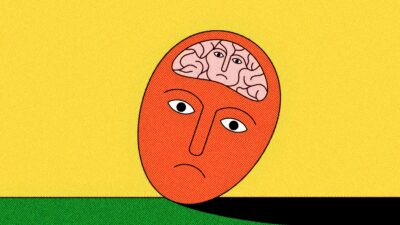 Ever had someone tell you to just cheer up? Did it drive you crazy? Well, turns out that someone telling you to “be happy” isn’t just annoying—it’s also wildly unhelpful.
 I think the good thing about meditation—mindfulness, concentrating on the present, detaching—is as good anti-anxiety, anti-anger tools. But one of the costs of accepting fate, accepting that you can’t go on and do something good in the future, correlates highly with physical illness, shorter life span, less accomplishment at work. So, it’s a good anti-anxiety tool often, but it’s got a lot of costs as well.
 Whenever I am faced with life’s uncertainty, I ask myself the following questions: Why is this happening? What can I do to make it go away? How can I navigate this effectively? What can I learn from this experience?
 The chorus of the theme song for the movie Fame, performed by actress Irene Cara, includes the line “I’m gonna live forever.” Cara was, of course, singing about the posthumous longevity that fame can confer. But a literal expression of this hubris resonates in some corners of the world—especially in the technology industry. In Silicon Valley, immortality is sometimes elevated to the status of a corporeal goal. Plenty of big names in big tech have sunk funding into ventures to solve the problem of death as if it were just an upgrade to your smartphone’s operating system.
 The researchers also found that with age, the body’s response to insults could increasingly range far from a stable normal, requiring more time for recovery. Whitson says that this result makes sense: A healthy young person can produce a rapid physiological response to adjust to fluctuations and restore a personal norm. But in an older person, she says, “everything is just a little bit dampened, a little slower to respond, and you can get overshoots,” such as when an illness brings on big swings in blood pressure.
 Many people cheat on taxes — no mystery there. But many people don’t, even if they wouldn’t be caught — now, that’s weird. Or is it? Psychologists are deeply perplexed by human moral behavior, because it often doesn’t seem to make any logical sense. You might think that we should just be grateful for it. But if we could understand these seemingly irrational acts, perhaps we could encourage more of them.
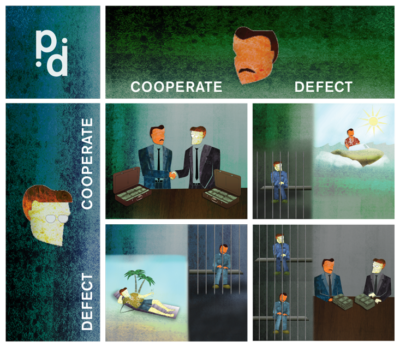
 When it comes to getting people to cooperate more, Rand’s work brings good news. Our intuitions are not fixed at birth. We develop social heuristics, or rules of thumb for interpersonal behavior, based on the interactions we have. Change those interactions and you change behavior.
 If you want to learn something about change there is no better place to look than evolution. Nothing represents a continuous and unrelenting cycle of order, disorder, and reorder on a grander scale. For long periods of time, Earth is relatively stable. Sweeping changes—warming, cooling, or an asteroid falling from space, for example—occur. These inflection points are followed by periods of disruption and chaos. Eventually, Earth, and everything on it, regains stability, but that stability is somewhere new.
 The more you define yourself by any one activity, the more fragile you become. If that activity doesn’t go well or something changes unexpectedly, you lose a sense of who you are. But with self-complexity, you have develop multiple components to your identity.
 In approximately one month and 10 days, I’ll be on my way to making one of the larger decisions of my adult life (so far, anyway); I’m moving to Austin, Texas, approximately 2,000 miles and one hell of a road trip away from my family and almost my entire friend group back in New York. While I have many questions about my move—chief among them, “How much should a mattress cost?” and “Will everyone hate me for being a Brooklyn transplant?”—nothing has loomed larger in my mind than the question of friendship, or, more specifically, how a full-grown adult goes about making new friends with no partner or kids to act as built-in buffers.
 For Hannah Smith, 27, friendship began at home—quite literally—when she moved to San Francisco in 2019 without knowing anyone. Smith sublet three different rooms through Craigslist before she finally signed a month-to-month lease in the perfect place (which she also found through Craigslist), eventually turning a roommate from her final apartment into one of her best friends. “Low-commitment living situations can be a great way to get to know people in a new place,” says Smith, although she adds that this strategy might be somewhat complicated by the ongoing effects of COVID-19.
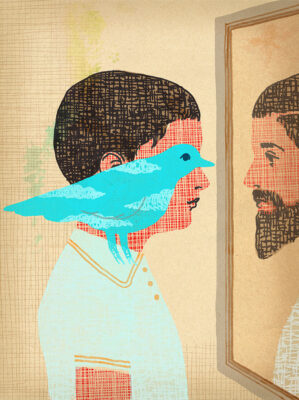 We called them fairy rocks. They were just colorful specks of gravel—the kind you might buy for a fish tank—mixed into my preschool’s playground sand pit. But my classmates and I endowed them with magical properties, hunted them like treasure, and carefully sorted them into piles of sapphire, emerald, and ruby. Sifting the sand for those mystical gems is one of my earliest memories. I was no older than 3 at the time. My memory of kindergarten has likewise been reduced to isolated moments: tracing letters on tan paper with pink dashed lines; watching a movie about ocean creatures; my teacher slicing up a giant roll of parchment so we could all finger-paint self-portraits.