
 Many meditators, healers and people of goodwill are attracted to the idea of distant healing — that in meditation, contemplation and prayer we can help relieve suffering and pain at a distance.
But how exactly do we do this? I will share with you one golden rule, briefly list the most well-known techniques and then describe the strategy that I prefer.
First, The Golden Rule
This is simple: Distant healing must always be done in a relaxed, calm and loving way. Otherwise, you may be sending agitated vibrations and energies. In particular, you need to monitor that you do not have any neediness that there be a healing.
If we are needy for healing, then we radiate neediness. Not useful. So stay calm. The keynote is compassionate equanimity.
The most well-known distant healing strategies are:
- Kind thoughts
- Sending healing energy (keep to the golden rule above and check you are not interfering)
- Praying for help and intercessions from whichever tradition, gods, spirits, angels, saints, gurus, etc., who are in your culture.
Then there is the heart-opening strategy that I prefer to use.
I like it because it is relevant to both suffering and the causes of suffering. It is also realistic about the fact that some illnesses and distress are chronic and long term, and that death is an inevitability.
This strategy is simple. It is in a sense, a visualization, a calm expectation that the hearts open of those who are suffering.
In the same way, the hearts open of those who create suffering.
In a calm state of compassionate contemplation, bring any person or situation of suffering into your loving awareness.
May your heart be open. May your heart be open. May your heart be open.
When someone’s heart opens, they move into a different mood. They connect with the benevolent flow of the universe. Their emotions and minds become more accepting and kinder. Healing at all levels becomes more accessible. Space is created for waves of grace.
There are other ways of practicing this that may better suit you.
If for example you have a Christian background, then you may prefer some wording like this, which has the same effect: May the Christ within you awaken. Or May the Christ consciousness in you be fully awake.
From a Buddhist background, you might feel more at home with: May the Buddha within you awaken. Or May the Buddha consciousness in you be fully awake.
Of course, you are free to adapt the wording in whatever way works best for you.
Within the Buddhist tradition there is also the foundation prayer of Om Mani Padme Hum often translated as “the Jewel in the Lotus.” In many respects, this is a heart awakening mantra. Each of us is a lotus, a beautiful flower with stems beneath the water and roots deep into the earth. And within us is a jewel. Perceive it. Let it be fully present.
Again, this is congruent with the Hindu greeting of Namaste. I greet the soul within you. I greet your soul. I greet the Christ within you. The Buddha within you. The Goddess within you. All of these facilitate heart-opening.
Some people may prefer to work with the chakra system. You can sense-visualize-imagine the love petals of someone’s heart chakra opening with compassion and wisdom.
I use this heart-opening approach when, in meditation, I send healing to the dictators and politicians who are oppressing their peoples. I sense their hearts opening. May your heart be open. I greet your soul.
Similarly, I use this strategy when contemplating those who are suffering with pain and fear.
May your hearts be open. I greet your soul. Om mani padme hum.
Softly, gently, empathically, connect with suffering and sense heart-opening.
As always, you as an individual practitioner can explore and feel your way into the approach that is authentic for you.
Remember, too, to practice basic health and safety. Your fuel, inspiration and safety come from your connection with spirit, by whatever name you call it. At the end of any healing, bring your focus fully home to your own body and close your energy field like a flower at night closing its petals.
I honor and respect activists who work on the front lines to relieve suffering and create safe space for all life to grow and fulfill.
I also honor and support the meditators, contemplatives and prayer-workers who work with distant healing.
About the Author:
William Bloom is Britain’s leading author and educator in the mind-body-spirit field with over thirty years of practical experience, research and teaching in modern spirituality. He is founder and co-director of The Foundation for Holistic Spirituality and the Spiritual Companions project. Visit www.williambloom.com
Original article here
 It’s probably been a long time since you lay on your back in the grass, looked up and wondered, Why is the sky blue? Or since you took the time to consider a question as difficult as, Where does the universe begin, and where does it end?
 We are often told to place ourselves in other people’s shoes – but our empathy is rarely as accurate as we think it is.
  Epley’s team asked pairs of participants, who had not met previously, to discuss questions such as, “If a crystal ball could tell you the truth about yourself, your life, your future or anything else, what would you want to know?”.
 All over the world, people are awakening to the fact that we are more than bones and flesh. We sense that there is more to life than what we see. The word “consciousness” is losing its unreachable meaning, and we look for ways to go inside ourselves and find inner peace.
 There is so much angst in the air these days that we may all be feeling more sensitive, exhausted or even more despondent than usual. So much so, that I feel a lot of folks are at the end of their tether, overwhelmed by the vast onslaught of confusing emotions and free-floating anxiety in the telluric atmosphere.
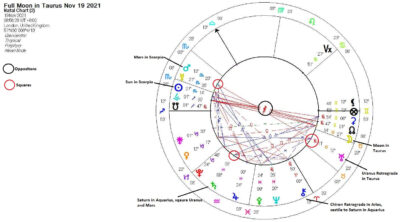 On Friday, November 19th, there will be a partial Lunar Eclipse in Scorpio-Taurus.
 The one message anger can have for us is that our Soul Core is alerting us to some person, situation or thing that violates our sense of Self, or our core values. As such, anger is then your friend, and an ally in helping you in choosing and activating healthy boundaries. In a climate such as we have now, people’s right to say “NO!” is even being taken away. To someone experiencing physical, mental or sexual abuse, we would be appalled if someone were denied the inherent right to say “NO!, that is does not feel good and I will resist!” This is when anger can give us the courage to stand up for ourselves and by saying “no” we are saying “yes” to what feels right and good for us.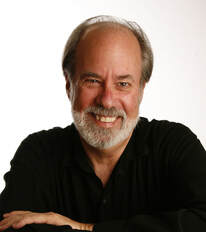
 It was powerful beyond time to enter that great living pulsing stony timeless being of light. It was vast beyond my understanding, as it seemed to extend beyond the sky into the stars that night. As I stood in the entrance to the great pyramid giving thanks for being there I learned more in that 1 minute passing through the entrance of the great Pyramid then I had accumulated in my entire life. Everything was shown to me in an instant like a life review and then the slate was cleared empty, awaiting being filled again. I entered the Great Pyramid as pure as a Virgin stripped of everything she once knew herself to be. The empty chalice of me at that moment in timelessness was ready to fill with the gifts of the great pyramid, which were beyond my ability to fully consume.
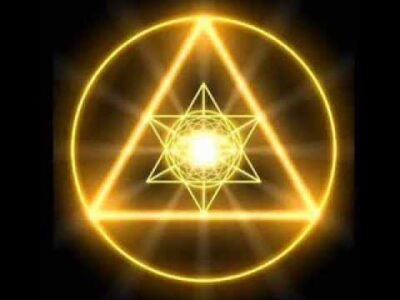 Everything on earth is defined by a numerical configuration. All life can be reduced and explained by numbers. The currents of these numerical sequences bring into alignment a series of new considerations that will help earth to adjust and balance. Each numerical infusion is tailored to fit the needs of each human. As the brain adjusts to these new energies a lifting occurs allowing the individual to exit the human/animal ratio and be lifted into the human/light equation. Numbers and humans go hand in hand. From the beginning of time known we have been defined by a numerical equation whether age, birth date, weight, or the number of wives and camels we have. Numbers have always seemed to be our not so silent partners.
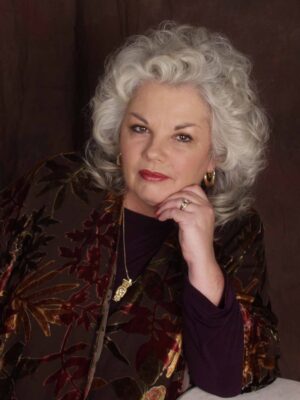 Gillian Macbeth Louthan is a Visionary, a Seer, born with the gift of knowing. She is a clairvoyant psychic with advanced channeling abilities since an early age. She has been a Metaphysical Teacher, Messenger and world known Trance-Channel, for over 40 years She works with the Councils of Light, Mary Magdalene, Merlin, White Buffalo Calf Woman, Mother Mary, the Pleiadians and many other energies of the Christ Light.
 Last year, I met an extremely gifted medium in California: Allie Barkalow. If you don’t know what a medium is, it’s a person who communicates with spirits from the other side. I heard about Allie from my dear friend, Carolyn Miller, who is a psychic and known for her amazing tarot and aura photography readings. Carolyn told me that Allie is one of the best psychics she knows, and I figured if she’s anything like Carolyn I had to meet her.
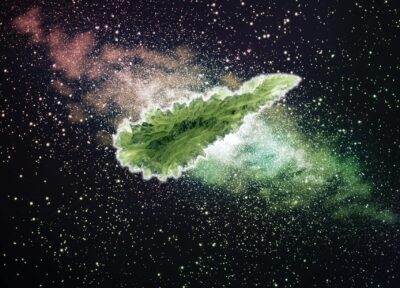 Moldavite is a member of the tektite group, a glassy mixture of silicon dioxide, aluminum oxide and other metal oxides, with a hardness of 5.5 to 6. Its crystal system is amorphous. The color of most specimens is a deep forest green, though some pieces are pale green and others, especially those from Moravia, are greenish brown. A few rare gem grade pieces are almost an emerald green.
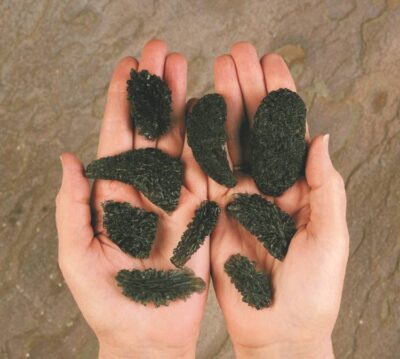 People who hold moldavite for the first time most often experience its energy as warmth or heat, usually felt first in one’s hand and then progressively throughout the body. In some cases, there is an opening of the heart chakra, characterized by strange (though not painful) sensations in the chest, an upwelling of emotion and a flushing of the face. This has happened often enough to have earned a name — the “moldavite flush.” Moldavite’s energies can also cause pulsations in the hand, tingling in the third eye and heart chakras, a feeling of light-headedness or dizziness, and occasionally the sense of being lifted out of one’s body. Most people feel that moldavite excites their energies and speeds their vibrations, especially for the first days or weeks, until they become acclimated to it.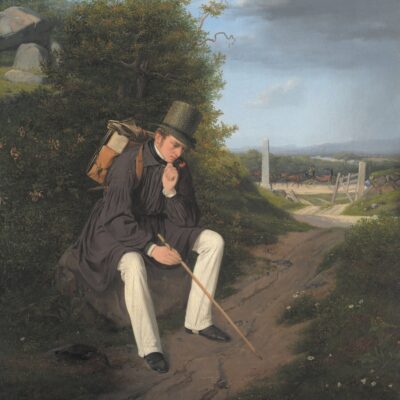
 Don Giovanni – the protagonist of Mozart’s opera Don Giovanni (1787), a legendary seducer who is also sometimes known as Don Juan – is, Kierkegaard suggested, the ultimate archetype of the aesthetic mode because he lives for immediate sexual gratification and sensuality. Don Giovanni is a player. He is handsome, seductive and exciting. Women find him irresistible: he has slept with more than 2,000 women whose names he records in his not-so-little black book. Don Giovanni seeks pleasure above all else, and dances through his hedonistic life.
 Kierkegaard’s leap was guided by the commandment to ‘love thy neighbour’. In Works of Love(1847), written under Kierkegaard’s real name, he proposes that universal love, or agapē, is the secret to happiness because it overcomes the fleetingness and insecurity of aesthetic and ethical relationships. Love is Ariadne’s thread of life because, as long as you love, as long as you commit yourself to being a loving person, you’ll be safe from being hurt and alone. Kierkegaard thought that this sort of unwavering faith reflects a supremely developed human being.
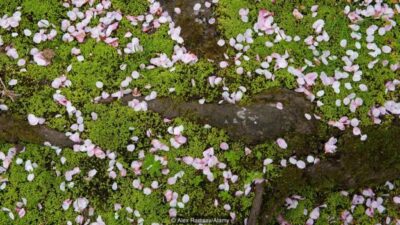 Withdrawing my hands reluctantly from the slowly spinning bowl, I watched its uneven sides slowly come to a stop, wishing I could straighten them out just a little more. I was in the ancient pottery town of Hagi in rural Yamaguchi, Japan, and while I trusted the potter who convinced me to let it be, I can’t say I understood his motives.
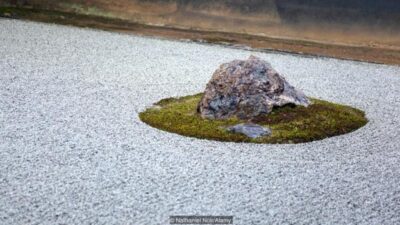 Wabi, which roughly means ‘the elegant beauty of humble simplicity’, and sabi, which means ‘the passing of time and subsequent deterioration’, were combined to form a sense unique to Japan and pivotal to Japanese culture. But just as Buddhist monks believed that words were the enemy of understanding, this description can only scratch the surface of the topic.
 It is the inevitable mortality embound in nature, however, that is key to a true understanding of wabi-sabi. As author Andrew Juniper notes in his book Wabi Sabi: The Japanese Art of Impermanence, “It… uses the uncompromising touch of mortality to focus the mind on the exquisite transient beauty to be found in all things impermanent”. Alone, natural patterns are merely pretty, but in understanding their context as transient items that highlight our own awareness of impermanence and death, they become profound.
 “You have different feelings when you’re young – everything new is good, but you start to see history develop like a story. After you’ve grown up, you see so many stories, from your family to nature: everything growing and dying and you understand the concept more than you did as a child.”