
 I am the mother of twins, a lovely daughter and a sweet son. They will be 19 years old in August. They are starting to live independent lives, one is going to university and the other one is already working.
Of course, I am proud of them. However, as a mother my heart aches a bit when I think that the outside world can be hard at times. Like every mother, I would love for them to avoid suffering and struggles, but of course this is not possible. Struggles and problems are part of life, of this physical field, and we need to find ways to navigate them the best we can.
When growing up, I remember being very emotional every time I encountered a bump in the road. Problems always seem to be huge and with no solution at all, in my teenage mind, everything was terrible and sad. Naturally, this is part of that phase of life, but I wish someone would have let me know that there is always light at the end of the tunnel, especially when I was in the middle of the emotional storm.
Do not get me wrong, my parents were very supportive, however in those years it was not common to provide children with tools to deal with the process of growing up. Basically, you were expected to put up with whatever and that was that.
Nowadays, we have many resources to go to, life is more complex, I guess, and young people are more exposed to global conditions than when I was growing up, where the word “local” was prevalent.
 My spiritual path has allowed me to share with my kids those internal powers we all have, and I have made sure to repeat myself many times over. Of course, on several occasions I get those teenage looks and eyes rolling, but I know that one day, they will remember my words and tools and apply them.
I want to share with you a few of these techniques and words:
- I frequently say that everything is transitory and it will pass. Life moves on, even if it doesn’t look like it.
- Elevate your vibration! Dwelling on emotions that are not beneficial for us does not help. Acknowledge those emotions and then change your attention to finding solutions. A good way to elevate your vibration is to go out in nature, close your eyes, feel and listen to the sounds of nature. Your mind will clear.
- Connect with your heart and speak from there. Talking to others in an angry manner makes the problem deeper.
- Practice gratitude. This not only means to be grateful for the good things in our lives; I am actually referring to being grateful for the good and the bad of our existence in this world, because everything allows us to grow and expand.
- Just a short daily meditation produces a ripple effect of goodness in you and in the way you vibrate.
There are many paths we can show to our kids and loved ones. However, the most important aspect of this is for us to be able to stay open to communicate with them, to create a loving environment where they can go anytime, without judgment, willing to listen and hugging tightly.
In a profound and invisible way, this is the “legacy” I am leaving to them. One day I will not be in this world anymore, any material goods will have no importance at all, but my children will remember my words, the meditations I taught them, the pineal gland exercises I showed them, the times I share with them, listening to their tribulations and happy moments, the many occasions we hugged, laughed and told each other, “I love you”.
This is why I keep repeating myself, because repetition creates habits and good habits create easiness in life. But most importantly, they will understand that LOVE is always the answer…
About the Author:

Veronica Sanchez De Darivas is Chilean-Australian, now living in the UK and a proud mother of teenage twins. A spiritual awakening teacher, bestselling author, pineal gland (third eye) activator and Certified Instructor for the Cyclopea Method, Veronica is currently the only instructor in the world teaching the Cyclopea Method in English.
 Forgiveness is often viewed as the “happily ever after” ending in a story of wrongdoing or injustice. Someone enacts harm, the typical arc goes, but eventually sees the error of their ways and offers a heartfelt apology. “Can you ever forgive me?” Then you, the hurt person, are faced with a choice: Show them mercy — granting yourself peace in the process — or hold a grudge forever. The choice is yours, and it’s one many of us assume starts with remorse and a plea for grace.
 Enright defines forgiveness as a moral virtue. Moral virtues (like kindness, honesty, and patience) are typically focused on how they benefit others; these are things you do primarily for another person’s sake, regardless of whether or not they have “earned” it.
 Enright has studied forgiveness extensively. He says his research group at the University of Wisconsin Madison was the first to publish a scientific study on forgiveness, in 1989; in 1993, they became the first to publish a scientific study of forgiveness therapy. Their research has led to the development of a step-by-step process for forgiveness, which can happen in therapy (ideally with someone who is trained in forgiveness therapy), or through a self-guided process using his workbook.
 A friend of mine spends 20 to 30 minutes a day solving Sudoku puzzles. He says it improves his speed of mental processing and makes him, well, smarter.


 No matter what is or isn’t happening in the world right now, you and I and all of Creation is loved beyond belief. No matter what is or isn’t happening in your life right now, you are loved beyond belief. No matter what will happen or won’t happen, it does not matter…we are loved beyond belief. No matter what, we are that Love, and we emerged from that Love by choice-desire-curiosity.

 In 1896, a man in Dummerston, Vermont, was driven from his beloved home over what should have been a minor family dispute. He generally got along well with his brother-in-law, who lived next door. One day in an argument, however, the brother-in-law—who was a bit of a hothead—threatened to punch him. In reaction, the man had his brother-in-law arrested, which the neighbors saw as a massive overreaction. At the trial, the man acted haughty and “arrogant” toward others, according to newspaper accounts. He became so unpopular for his attitude and actions that, shunned by the local residents, he felt compelled to leave the town he loved, never to return.
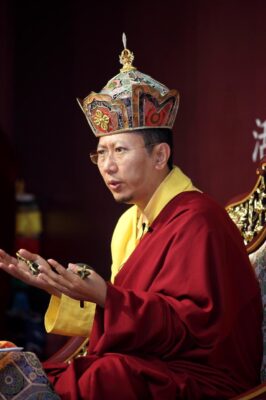
 Last year, I had the pleasure and honour to meet His Eminence Shyalpa Tenzin Rinpoche, first via the platform Clubhouse, then via WhatsApp and phone calls. Finally, last September, H. E. Rinpoche stopped in the UK after touring the US.
 Veronica: Why is it important to build a Universal Peace Sanctuary and what is the inspiration behind this wonderful project?