 All over the world, people are awakening to the fact that we are more than bones and flesh. We sense that there is more to life than what we see. The word “consciousness” is losing its unreachable meaning, and we look for ways to go inside ourselves and find inner peace.
How do I connect with my higher self, you may be asking? There are different ways, I will tell you about a few here.
Practicing yoga is very good for your physical body, but also for your soul. There are different types of yoga; all work, and their benefits are widely known and studied by science. If yoga is not for you, practicing Pilates is an excellent alternative. It has helped me with my body and my soul.
Meditation is one of the most powerful tools that exists to connect us with our higher self, with divinity or God, if you want to call it that. I will teach you a very simple way to start meditating:
- Sit comfortably, preferably on a chair
- Close your eyes and start counting your exhalations every time you breathe
- Breathe normally, count to ten and start again
- If you lose count, start over
- Let thoughts pass and keep counting
- Do this for at least 10 minutes a day.
You will see that each time, your attention and concentration improve, and a sense of peace and calm comes over you.
Praying is another way to connect with the divine. Repeating a prayer every day will have the same results as a meditation. It does not have to be a formal prayer; it can be a deep conversation with the divinity. This is also a way of praying.
Mantras are words or phrases that are repeated as litanies to support meditation or to connect with the higher realms. They are used in Hinduism and Buddhism. One of the best-known mantras used by many spiritual leaders, who attribute numerous spiritual benefits to reciting it, is “Om Mani Padme Hum”.
Do you like to sing? Music is a powerful way of connecting with your soul. Of course I mean calm, joyful and restorative music. I know people who go around humming a tune all day, and coincidentally they are always optimistic people.
Activate your inner powers by learning different activation methods, like pineal gland activation and heart activation and breathing techniques. One good and simple breathing technique to start with is to sit down and inhale through your nose in a deep and slow way and exhale slowly through your mouth, relax your shoulders and expand your chest. Do this for 3 to 5 minutes.
What is most important with all of these tools is to stop in your daily life and reflect on where and what we pay our attention to. The important things are within us. We are energy beings, and it is from this knowing that we create our world. Becoming aware of it will necessarily lead us to correct mistakes and create a better world for ourselves.
Take that step ahead. The time is always now.
About the Author:

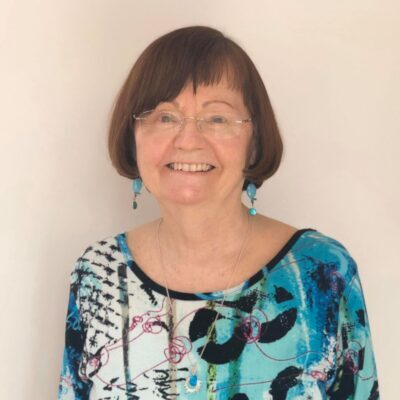
Veronica Sanchez De Darivas is Chilean-Australian, now living in the UK and a proud mother of teenage twins. A spiritual awakening teacher, bestselling author, pineal gland (third eye) activator and Certified Instructor for the Cyclopea Method, Veronica is currently the only instructor in the world teaching the Cyclopea Method in English.
 There is so much angst in the air these days that we may all be feeling more sensitive, exhausted or even more despondent than usual. So much so, that I feel a lot of folks are at the end of their tether, overwhelmed by the vast onslaught of confusing emotions and free-floating anxiety in the telluric atmosphere.
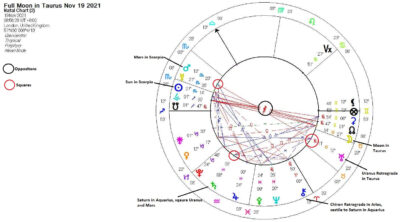 On Friday, November 19th, there will be a partial Lunar Eclipse in Scorpio-Taurus.
 The one message anger can have for us is that our Soul Core is alerting us to some person, situation or thing that violates our sense of Self, or our core values. As such, anger is then your friend, and an ally in helping you in choosing and activating healthy boundaries. In a climate such as we have now, people’s right to say “NO!” is even being taken away. To someone experiencing physical, mental or sexual abuse, we would be appalled if someone were denied the inherent right to say “NO!, that is does not feel good and I will resist!” This is when anger can give us the courage to stand up for ourselves and by saying “no” we are saying “yes” to what feels right and good for us.
 Last year, I met an extremely gifted medium in California: Allie Barkalow. If you don’t know what a medium is, it’s a person who communicates with spirits from the other side. I heard about Allie from my dear friend, Carolyn Miller, who is a psychic and known for her amazing tarot and aura photography readings. Carolyn told me that Allie is one of the best psychics she knows, and I figured if she’s anything like Carolyn I had to meet her.
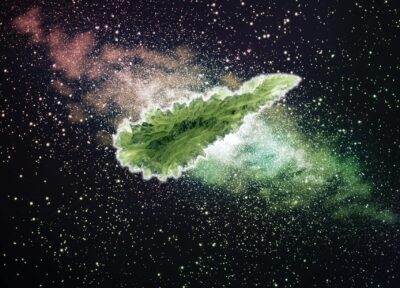 Moldavite is a member of the tektite group, a glassy mixture of silicon dioxide, aluminum oxide and other metal oxides, with a hardness of 5.5 to 6. Its crystal system is amorphous. The color of most specimens is a deep forest green, though some pieces are pale green and others, especially those from Moravia, are greenish brown. A few rare gem grade pieces are almost an emerald green.
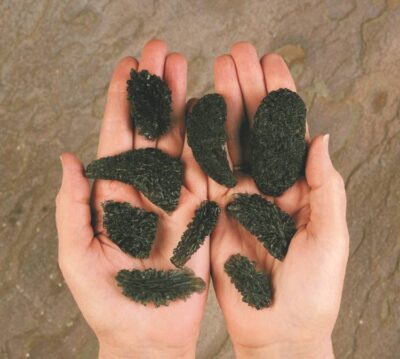 People who hold moldavite for the first time most often experience its energy as warmth or heat, usually felt first in one’s hand and then progressively throughout the body. In some cases, there is an opening of the heart chakra, characterized by strange (though not painful) sensations in the chest, an upwelling of emotion and a flushing of the face. This has happened often enough to have earned a name — the “moldavite flush.” Moldavite’s energies can also cause pulsations in the hand, tingling in the third eye and heart chakras, a feeling of light-headedness or dizziness, and occasionally the sense of being lifted out of one’s body. Most people feel that moldavite excites their energies and speeds their vibrations, especially for the first days or weeks, until they become acclimated to it.
 Much of modern economic theory is based around a simple idea: Human beings maximize utility. But what is utility? Many people think of it as happiness or pleasure; British philosopher Jeremy Bentham, the inventor of utilitarianism, conceived of it this way. But this isn’t how modern economists think of the concept. To an economist, utility simply means how much people want something. If an economist observes people working hard and making sacrifices to buy houses, then the conclusion is that houses must have lots of utility to those people.
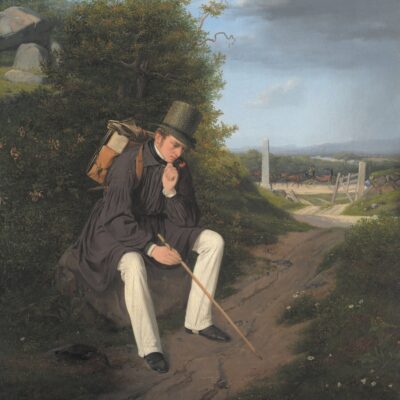
 Don Giovanni – the protagonist of Mozart’s opera Don Giovanni (1787), a legendary seducer who is also sometimes known as Don Juan – is, Kierkegaard suggested, the ultimate archetype of the aesthetic mode because he lives for immediate sexual gratification and sensuality. Don Giovanni is a player. He is handsome, seductive and exciting. Women find him irresistible: he has slept with more than 2,000 women whose names he records in his not-so-little black book. Don Giovanni seeks pleasure above all else, and dances through his hedonistic life.
 Kierkegaard’s leap was guided by the commandment to ‘love thy neighbour’. In Works of Love(1847), written under Kierkegaard’s real name, he proposes that universal love, or agapē, is the secret to happiness because it overcomes the fleetingness and insecurity of aesthetic and ethical relationships. Love is Ariadne’s thread of life because, as long as you love, as long as you commit yourself to being a loving person, you’ll be safe from being hurt and alone. Kierkegaard thought that this sort of unwavering faith reflects a supremely developed human being.
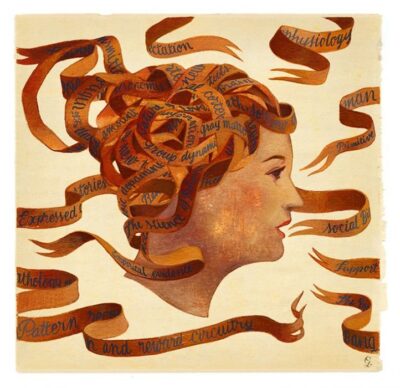 We are all storytellers; we make sense out of the world by telling stories. And science is a great source of stories. Not so, you might argue. Science is an objective collection and interpretation of data. I completely agree. At the level of the study of purely physical phenomena, science is the only reliable method for establishing the facts of the world.
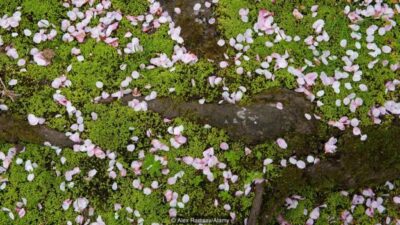 Withdrawing my hands reluctantly from the slowly spinning bowl, I watched its uneven sides slowly come to a stop, wishing I could straighten them out just a little more. I was in the ancient pottery town of Hagi in rural Yamaguchi, Japan, and while I trusted the potter who convinced me to let it be, I can’t say I understood his motives.
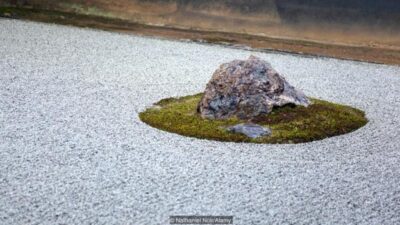 Wabi, which roughly means ‘the elegant beauty of humble simplicity’, and sabi, which means ‘the passing of time and subsequent deterioration’, were combined to form a sense unique to Japan and pivotal to Japanese culture. But just as Buddhist monks believed that words were the enemy of understanding, this description can only scratch the surface of the topic.
 It is the inevitable mortality embound in nature, however, that is key to a true understanding of wabi-sabi. As author Andrew Juniper notes in his book Wabi Sabi: The Japanese Art of Impermanence, “It… uses the uncompromising touch of mortality to focus the mind on the exquisite transient beauty to be found in all things impermanent”. Alone, natural patterns are merely pretty, but in understanding their context as transient items that highlight our own awareness of impermanence and death, they become profound.
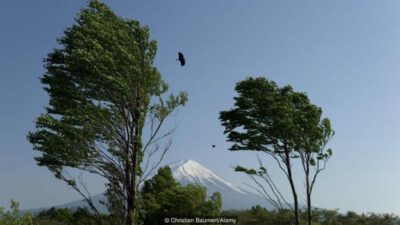 “You have different feelings when you’re young – everything new is good, but you start to see history develop like a story. After you’ve grown up, you see so many stories, from your family to nature: everything growing and dying and you understand the concept more than you did as a child.”
 I’ve been studying, teaching, coaching and writing about transformation for the last 35 years. It fascinates me … always has, even as teenager. How can someone fulfill their potential and become the best of themselves in life?
 I finally realised joy in my life and began to play with effortless abundance. I laugh a lot now and am breathtaken by the beauty of this world and the people and life forms in it. I am undefinable, ever morphing into the next new levels of what is possible for me and for us all. As I do this I realise that I am part of the redesign of what it is is to be human on Earth. I call us Earthians as a new way to talk about loving being alive on Earth while being an infinite creator of possibilities for life. The term Earthian also allows me to feel a kinship with other life forms on Earth, whereas the term human tends, in my view, to make us feel separate from other inhabitants of this wonderful world.