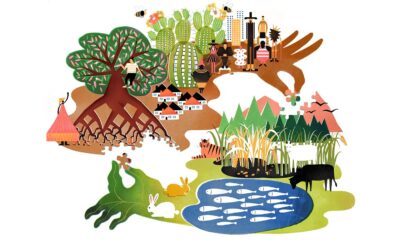
A society based on natural ecology might seem like a far-off utopia — yet communities everywhere are already creating it.
by Jeremy Lent
As a new, saner administration sets up shop in Washington, D.C., there are plenty of policy initiatives this country desperately needs. Beyond a national plan for the COVID-19 pandemic, progressives will strive to focus the administration’s attention on challenges like fixing the broken health care system, grappling with systemic racial inequities, and a just transition from fossil fuels to renewables.
These are all critically important issues. But here’s the rub: Even if the Democratic administration were resoundingly successful on all fronts, its initiatives would still be utterly insufficient to resolve the existential threat of climate breakdown and the devastation of our planet’s life-support systems. That’s because the multiple problems confronting us right now are symptoms of an even more profound problem: The underlying structure of a global economic and political system that is driving civilization toward a precipice.
Take a moment to peer beyond the day-to-day crises capturing our attention, and you quickly realize that the magnitude of the looming catastrophe makes our current political struggles, by comparison, look like arguing how to stack deck chairs on the Titanic.
The climate emergency we’re facing is far worse than most people realize. While it was clearly an essential step for the United States to rejoin the 2015 Paris Agreement on climate change, the collective pledges on greenhouse gas emissions from that agreement are woefully insufficient. They would lead to a dangerous temperature rise of more than 2 degrees Celsius this century—and many nations are failing to make even these targets. We are rapidly approaching—if we haven’t already passed—climate tipping points with reinforcing feedback loops that would lead to an unrecognizable and terrifying world.
Even if the climate crisis were somehow brought under control, our current growth-oriented economic juggernaut will bring us face-to-face with a slew of further existential threats in future decades. As long as government policies emphasize growth in gross domestic product and transnational corporations relentlessly pursue shareholder returns, we will continue accelerating toward global catastrophe.
We’re rapidly decimating the Earth’s forests, animals, insects, fish, fresh water—even the topsoil we need to grow our crops. We’ve already transgressed four of the nine planetary boundaries that define humanity’s safe operating space, and yet global GDP is expected to triple by 2060, with potentially calamitous consequences. In 2017, more than 15,000 scientists from 184 countries issued an ominous warning to humanity that time is running out: “Soon it will be too late,” they wrote, “to shift course away from our failing trajectory.”
We need to forge a new era for humanity—one that is defined, at its deepest level, by a transformation in the way we make sense of the world, and a concomitant revolution in our values, goals, and collective behavior. In short, we need to change the basis of our global civilization. We must move from a civilization based on wealth accumulation to one that is life-affirming: an ecological civilization.
A Life-Affirming Civilization
Without human disruption, ecosystems can thrive in rich abundance for millions of years, remaining resilient in the face of adversity. Clearly, there is much to learn from nature’s wisdom about how to organize ourselves. Can we do so before it’s too late?
This is the fundamental idea underlying an ecological civilization: using nature’s own design principles to reimagine the basis of our civilization. Changing our civilization’s operating system to one that naturally leads to life-affirming policies and practices rather than rampant extraction and devastation.
An ecological civilization is both a new and ancient idea. While the notion of structuring human society on an ecological basis might seem radical, Indigenous peoples around the world have organized themselves from time immemorial on life-affirming principles. When Lakota communities, on the land that is now the U.S., invoke Mitakuye Oyasin(“We are all related”) in ceremony, they are referring not just to themselves but to all sentient beings. Buddhist, Taoist, and other philosophical and religious traditions have based much of their spiritual wisdom on the recognition of the deep interconnectedness of all things. And in modern times, a common thread linking progressive movements around the world is the commitment to a society that works for the flourishing of life, rather than against it.
6 Rules for Humans Rejoining the Natural World
- Diversity

A system’s health depends on differentiation and integration. When this principle of natural ecology is applied to human society, we see it as affirmation of different groups — self-defined by ethnicity, gender, or any other delineation. Such as:
- Community self-determination
- Indigenous rights
- Restorative justice
- Social equity for LGBTQ communities
Deciphering Nature’s Design Principles
There is a secret formula hidden deep in nature’s intelligence, which catalyzed each of life’s great evolutionary leaps over billions of years and forms the basis of all ecosystems. It’s captured in the simple but profound concept of mutually beneficial symbiosis: a relationship between two parties to which each contributes something the other lacks, and both gain as a result. With such symbiosis, there is no zero-sum game: The contributions of each party create a whole that is greater than the sum of its parts.
Whenever you go for a walk in the woods, eat a meal, or take a dip in the ocean, you’re experiencing the miracle of nature’s symbiosis. Plants transform sunlight into chemical energy that provides food for other creatures, whose waste then fertilizes the soil the plants rely on. Underground fungal networks contribute essential chemicals to trees in return for nutrients they can’t make for themselves. Pollinators fertilize plants, which produce fruit and seeds that nourish animals as they carry them to new locations. In your own gut, trillions of bacteria receive nutrition from the food you enjoy, while reciprocating by producing enzymes you need for digestion.
In human society, symbiosis translates into foundational principles of fairness and justice, ensuring that the efforts and skills people contribute to society are rewarded equitably. In an ecological civilization, relationships between workers and employers, producers and consumers, humans and animals, would thus be based on each party gaining in value rather than one group exploiting the other.
Because of symbiosis, ecosystems can sustain themselves almost indefinitely. Energy from the sun flows seamlessly to all the constituent parts. The waste of one organism becomes the sustenance of another. Nature produces a continuous flow where nothing is squandered. Likewise, an ecological civilization, in contrast to our current society built on extracting resources and accumulating waste, would comprise a circular economy with efficient reuse of waste products embedded into processes from the outset.
Nature uses a fractal design with similar patterns repeating themselves at different scales. Fractals are everywhere in nature — you see them in the patterns of tree branches, coastlines, cloud formations, and the bronchial system in our lungs. Ecologies are themselves fractal, with the deep principles of self-organized behavior that perpetuate life shared by microscopic cells, organisms, species, ecosystems, and the entire living Earth. This form of organization is known as a holarchy, where each element — from cells on up — is a coherent entity in its own right, while also an integral component of something larger. In a holarchy, the health of the system as a whole requires the flourishing of each part. Each living system is interdependent on the vitality of all the other systems.
- Balance
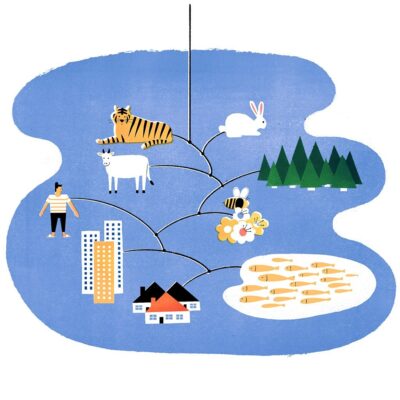
Every part of a system is in a harmonious relationship with the entire system. When this principle of natural ecology is applied to human society, we see it as competition and cooperation in balance and an equitable distribution of wealth and power. Such as:
- Global wealth tax
- Multibillionaires proscribed
- Abolition of offshore tax havens
- Legal support for co-ops and the commons
Based on this crucial precept, an ecological civilization would be designed on the core principle of fractal flourishing: the well-being of each person is fractally related to the health of the larger world. Individual health relies on societal health, which relies in turn on the health of the ecosystem in which it’s embedded. Accordingly, from the ground up, it would foster individual dignity, providing the conditions for everyone to live in safety and self-determination, with universal access to adequate housing, competent health care, and quality education.
In the fractal design of an ecosystem, health arises not through homogeneity, but through each organism contributing to the whole by fulfilling its own unique potential. Correspondingly, an ecological civilization would celebrate diversity, recognizing that its overall health depended on different groups — self-defined by ethnicity, gender, or any other delineation — developing their own unique gifts to the greatest extent possible.
In a natural ecology, the type of exponential growth that characterizes our global economy could only occur if other variables were out of balance, and would inevitably lead to the catastrophic collapse of that population. The principle of balance would accordingly be crucial to an ecological civilization. Competition would be balanced by collaboration; disparities in income and wealth would remain within much narrower bands, and would fairly reflect the contributions people make to society. And crucially, growth would become just one part of a natural life cycle, slowing down once it reaches its healthy limits—leading to a steady-state, self-sustaining economy designed for well-being rather than consumption.
Above all, an ecological civilization would be based on the all-encompassing symbiosis between human society and the natural world. Human activity would be organized, not merely to avoid harm to the living Earth, but to actively regenerate and sustain its health.
An Ecological Civilization in Practice
The overriding objective of an ecological civilization would be to create the conditions for all humans to flourish as part of a thriving, living Earth. Currently, the success of political leaders is assessed largely by how much they increase their nation’s GDP, which merely measures the rate at which society transforms nature and human activities into the monetary economy, regardless of the ensuing quality of life. A life-affirming society would, instead, emphasize growth in well-being, using measures like the Genuine Progress Indicator, which factors in qualitative components such as volunteer and household work, pollution, and crime.
For more than a century, most economic thinkers have recognized only two domains of economic activity: markets and government. The great political divide between capitalism and communism was structured accordingly, and even today the debate continues along similar lines. An ecological civilization would incorporate government spending and markets, but — as laid out by visionary economist Kate Haworth —would add two critical realms to this framework: households and the commons.
- Fractal Organization

The small reflects the large, and the health of the whole system requires the flourishing of each part. When this principle of natural ecology is applied to human society, we see it as individual dignity and self-determination. Such as
- Universal Basic Income
- Universal access to housing, health care, education
- Cities redesigned for walking
- Community interaction
- Education for life-fulfillment
- Cosmopolitanism
In particular, the commons would become a crucial part of economic activity. Historically, the commons referred to shared land that peasants accessed to graze livestock or grow crops. But more broadly, the commons refers to any source of sustenance and well-being that has not yet been appropriated by the state or private ownership: the air, water, sunshine, as well as human creations like language, cultural traditions, and scientific knowledge. It is virtually ignored in most economic discussion because, like household work, it doesn’t fit into the classic model of the economy. But the global commons belongs to all of us, and in an ecological civilization, it would once again take its rightful place as a major provider of human welfare.
The overwhelming proportion of wealth available to modern humans is the result of the cumulative ingenuity and industriousness of prior generations going back to earliest times. However, as a consequence of centuries of genocide and slavery, systemic racism, extractive capitalism, and exploitation by the Global North, that wealth is highly unevenly distributed. Once we realize the vast benefits of the commons bequeathed to us by our ancestors — along with the egregiously uneven wealth distribution —it transforms our conception of wealth and value. Contrary to the widespread view that an entrepreneur who becomes a billionaire deserves his wealth, the reality is that whatever value he created is a pittance compared to the immense bank of prior knowledge and social practices — the commonwealth — that he took from. An ecological civilization, recognizing this, would fairly reward entrepreneurial activity, but severely curtail the right of anyone to accumulate multiple billions of dollars in wealth, no matter what their accomplishments.
Conversely, it is the moral birthright of every human to share in the vast commonwealth bestowed on us. This could effectively be achieved through a program of unconditional monthly cash disbursements to every person on the planet, creating a foundation for the dignity and security required for society’s fractal flourishing. It would also begin to address the moral imperative to remedy the extreme exploitation and injustices visited upon Indigenous and Black communities worldwide — historically and to this day.
Research has shown repeatedly that such programs — known as Universal Basic Income — are remarkably effective in improving quality of life in communities around the world, in both the Global North and South. Programs consistently report reduction in crime, child mortality, malnutrition, truancy, teenage pregnancy, and alcohol consumption, along with increases in health, gender equality, school performance — and even entrepreneurial activity. Work is not something people try to avoid; on the contrary, purposive work is an integral part of human flourishing. Liberated by UBI from the daily necessity to sell their labor for survival, people would reinvest their time in crucial sectors of the economy — in households and commons — that naturally lead to life-affirming activity.
The transnational corporations that currently dominate every aspect of global society would be fundamentally reorganized, and made accountable to the communities they purportedly serve. Corporations above a certain size would only be permitted to operate with charters that required them to optimize social and environmental well-being along with shareholder returns. Currently, these triple bottom-line charters are voluntary, and very few large corporations adopt them. If, however, they were compulsory—and strictly enforced by citizen panels comprising representatives of the communities and ecosystems covered in the company’s scope of operations—it would immediately transform the intrinsic character of corporations, causing them to work for the benefit of humanity and the living Earth rather than for their demise.
In place of vast homogenized monocrops of industrial agriculture, food would be grown using principles of regenerative agriculture, leading to greater crop biodiversity, improved water and carbon efficiency, and the virtual elimination of synthetic fertilizer. Manufacturing would be structured around circular material flows, and locally owned cooperatives would become the default organizational structure. Technological innovation would still be encouraged, but would be prized for its effectiveness in enhancing symbiosis between people and with living systems, rather than minting billionaires.
- Life Cycles
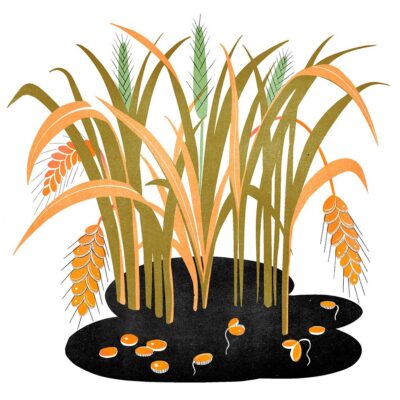
Regenerative and sustainable flourishing into the long-term future. When this principle of natural ecology is applied to human society, we see it as economic growth halting once it reaches healthy limits. Such as:
- Steady-state economies
- A triple bottom line for corporations
Cities would be redesigned on ecological principles, with community gardens on every available piece of land, essential services within a 20-minute walk, and cars banned from city centers. The local community would be the basic building block of society, with face-to-face interaction regaining ascendance as a crucial part of human flourishing. Education would be re-envisioned, its goal transformed from preparing students for the corporate marketplace to cultivating in students the discernment and emotional maturity required to fulfill their life’s purpose as valued members of society.
Local community life would be enriched by the global reach of the internet. Online networks with scale, such as Facebook, would be turned over to the commons, so that rather than manipulating users to maximize advertising dollars, the internet could become a vehicle for humanity to develop a planetary consciousness. Cosmopolitanism — an ancient Greek concept meaning “being a citizen of the world” — would be the defining characteristic of a global identity. It would celebrate diversity between cultures while recognizing the deep interdependence that binds all people into a single moral community with a shared destiny.
Governance would be transformed with local, regional, and global decisions made at the levels where their effects are felt most (known as subsidiarity). While much decision-making would devolve to lower levels, a stronger global governance would enforce rules on planetwide challenges such as the climate emergency and the sixth great extinction. A Rights of Nature declaration, recognizing the inalienable rights of ecosystems and natural entities to persist and thrive, would put the natural world on the same legal standing as humanity, with personhood given to ecosystems and high-functioning mammals, and the crime of ecocide — the destruction of ecosystems — prosecuted by a court with global jurisdiction.
Daring to Make It Possible
It doesn’t take more than a glance at the daily headlines to realize how far we are from this vision of a society that fosters fractal flourishing. Yet, just like the underground fungal network that nourishes trees in a forest, innumerable pioneering organizations around the world are already laying the groundwork for virtually all the components of a life-affirming civilization.
In the United States, the visionary Climate Justice Alliance has laid out guidelines for a just transition from an extractive to a regenerative economy that incorporates deep democracy with ecological and societal well-being. A network of more than 70 grassroots and frontline movements, the Alliance works collectively for a just transition toward food sovereignty, energy democracy, and ecological regeneration.
- Subsidiarity
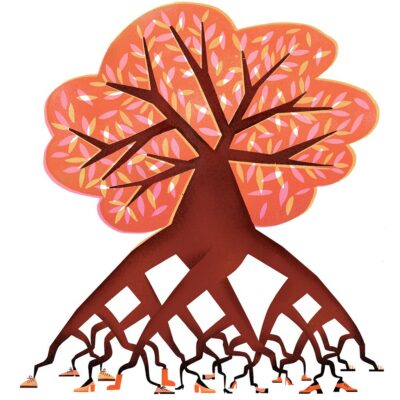
Issues at the lowest level affect health at the top. When this principle of natural ecology is applied to human society, we see it as grassroots self-autonomy and deep democracy:
- Decision-making at the lowest possible levels
- Horizontalism
- Cooperatives
In Bolivia and Ecuador, traditional ecological principles of buen vivirandsumak kawsay(“good living”) are written into the constitutions. While mechanisms for enforcement still need considerable strengthening, these principles establish a powerful alternative to extractive practices, offering a legal and ethical platform for legislation based on harmony—both with nature, and between humans.
In Europe, large-scale thriving cooperatives, such as the Mondragón Cooperative in Spain, demonstrate that it’s possible for companies to prosper without utilizing a shareholder-based profit model. With roughly a hundred businesses and 80,000 worker-owners producing a wide range of industrial and consumer goods, Mondragón proves that it’s possible to succeed while maintaining a people-focused, shared community of life-affirming values.
A new ecological worldview is spreading globally throughout cultural and religious institutions, establishing common ground with the heritage of traditional Indigenous knowledge. The core principles of an ecological civilization have already been laid out in the Earth Charter—an ethical framework launched in The Hague in 2000 and endorsed by more than 50,000 organizations and individuals worldwide. In 2015, Pope Francis shook the Catholic establishment by issuing his encyclical, Laudato Si’, a masterpiece of ecological philosophy that demonstrates the deep interconnectedness of all life, and calls for a rejection of the individualist, neoliberal ethic.
Economists, scientists, and policymakers, recognizing the moral bankruptcy of the current economic model, are pooling resources to offer alternative frameworks. The Wellbeing Economy Alliance is an international collaboration of changemakers working to transform our economic system to one that promotes human and ecological well-being. The Global Commons Alliance is similarly developing an international platform for regenerating the Earth’s natural systems. Organizations such as the Next System Project and the Global Citizens Initiative are laying down parameters for the political, economic, and social organization of an ecological civilization, and the P2P Foundation is building a commons-based infrastructure for societal change. Around the world, an international movement of transition towns is transforming communities from the grassroots up by nurturing a caring culture, reimagining ways to meet local needs, and crowdsourcing solutions.
Most importantly, a people’s movement for life-affirming change is spreading globally. Led by young climate activists like Greta Thunberg, Vanessa Nakate, Mari Copeny, Xiye Bastida, Isra Hirsi, and others, millions of schoolchildren worldwide are rousing their parents’ generation from its slumber. A month after Extinction Rebellion demonstrators closed down Central London in 2019, the U.K. Parliament announced a “climate emergency,” which has now been declared by nearly 2,000 local and national jurisdictions worldwide, representing more than 12% of the global population. Meanwhile, the Stop Ecocide campaign to establish ecocide as a crime prosecutable under international law is making important strides, gaining serious consideration at the parliamentary level in France and Sweden, with a panel of legal experts convened to draft its definition.
- Symbiosis
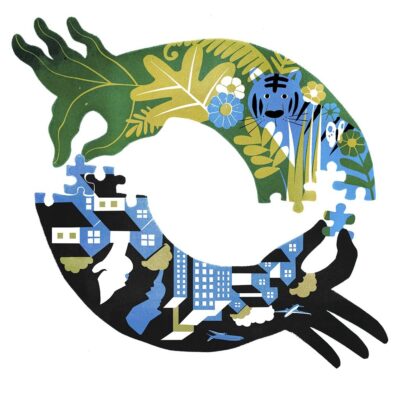
Relationships that work for mutual benefit. When this principle of natural ecology is applied to human society, we see it as fairness and justice, regenerative economies, and circular energy flows. Such as:
- Measuring well-being instead of GDP
- Regenerative agriculture
- Permaculture principles
- Circular economies and manufacturing processes
- Rights of Nature and personhood for nonhumans
When we consider the immensity of the transformation needed, the odds of achieving an ecological civilization might seem daunting — but it’s far from impossible. As our current civilization begins to unravel on account of its internal failings, the strands that kept it tightly wound also get loosened. Every year that we head closer to catastrophe — as greater climate-related disasters rear up, as the outrages of racial and economic injustice become even more egregious, and as life for most people becomes increasingly intolerable — the old narrative loses its hold on the collective consciousness. Waves of young people are looking for a new worldview — one that makes sense of the current unraveling, one that offers them a future they can believe in.
It’s a bold idea to transform the very basis of our civilization to one that’s life-affirming. But when the alternative is unthinkable, a vision of a flourishing future shines a light of hope that can become a self-fulfilling reality. Dare to imagine it. Dare to make it possible by the actions you take, both individually and collectively—and it might just happen sooner than you expect.
About the Author:
Jeremy Lent is author of The Patterning Instinct: A Cultural History of Humanity’s Search for Meaning. His upcoming book, The Web of Meaning: Integrating Science and Traditional Wisdom to Find Our Place in the Universe, will be published in June.
Illustrations by Delphine Lee/YES! MAGAZINE
 Many countries in the world have been going through lockdown and quarantine. In some places this has been the norm for almost a year now. During this period, I have been reflecting on the good and bad things about it.
 There are many effects or influences occurring that we can observe in the world now.
 Thoughts, influences, and experiences shape our perceptions. If we are unawares of how we are aligning, or entraining to anything, then we may unknowingly behave as the creators of those influences wish us to behave. Marketing and advertising have achieved untold levels of leverage over human consciousness via digital means. We know that via documentaries such as “The Social Dilemma.” What we need to become even more aware of is how we are influenced or imprinted on other levels of our mind, even in our own bodies. Entrainment, resonance, and imprinting is the way mammals operate and learn from each other. Unfortunately, these beautiful traits are now being used against humanity.
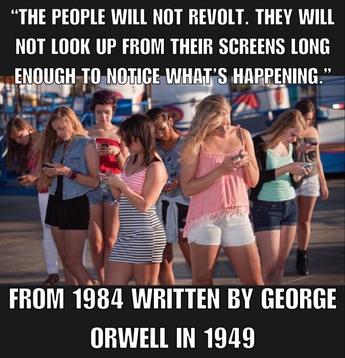 Witnessing the chaotic patterns and disintegration of patterns in our world now is difficult. So many seem so hypnotized, or plain lost. Millions have no other concern other than simply surviving. Did we really want it to be this way? Our understanding of how human consciousness works and interacts is the key to extricating ourselves. Creation is born out of chaos and resonance by informed choice, arrived at by meditation/spiritual hygiene, critical thought, and practical action, is necessary to reverse the direction we are now finding our world going towards. The disintegration of the old order must continue, even as there seems to be no new framework to rely upon to replace it. The old consciousness is simply unable to offer any solution to the problems it has created.
 Lastly, fastidiously monitor your interactions and usage of electricity and technology. Currently the Dual-Headed Gods are Science (orthodox) and Technology (digital), but they are false gods. How they came to dominate our world is a story for another time. Our task for now is to take responsibility for allowing it to happen thus far by compassionately understanding how we have been sleepwalking with it for so long…and then taking the necessary steps to change ourselves, and by extension, create the potential world we would all like to create and inhabit. Where everyone is healthy, where everyone thrives, where loving kindness, cooperation and creativity are paramount.
 Practices like cleaning your home, rearranging furniture, organizing your closet, and getting rid of objects that are cluttering your space can have a profound impact on your mind, body, and spirit. It is this feeling of “cleaning house” that we lean into during this season so that we may fully embody true change, not just intellectualize it.
 Incarnated in this lifetime as a clairsentient,
  To believe that things that happen to us come from outside, alien to our intervention, shows how easily we fall into a comfortable area of thinking that we are powerless against those circumstances.
 Fear and love are opposites because when we live in fear we are not loving — and when we don’t love, the word hate comes into play. Why do people hate something? Because they feel fear. Therefore, to really experience love, we have to erase the fears that right now are controlling our life. How? By having the courage to tackle them, one by one, until they disappear.
 We are in the midst of a struggle for our future, the future of countless species, and indeed future of this Planet. Much is at stake. Even so, there are very good reasons that we are at this juncture, and it is first and foremost an opportunity to remember what is essential about us, and all of Life.
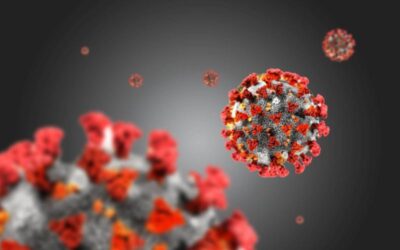 I have been noticing and observing that the predominant preoccupation with the Age of Science and Medicine is to classify micro-components of the natural world as hostile to human biology, when in fact our biology exists in a symbiotic relationship with trillions of bacteria and other organisms. There is mounting evidence that when we introduce toxins of any type into the natural order, these microorganisms will attempt to rid themselves of the toxicity, and in turn, this may appear in biology as illness, or dis-ease. When this happens, it should alert us that something has changed in the equilibrium, the balance of Nature within and without. Instead, we treat the manifestation of illness as an invader, mercilessly and coldly attacking us and killing some of us. The only question that remains is to identify and remove the sources of toxicity, whether it be in our air, water, food, or within our minds and emotions.
 We can no longer afford this sort of indulgence, not when we face multiple challenges in simultaneity. Even though the lockdowns during 2020 seemingly provided a brief respite, the collapse of the ecosystem is still accelerating. The Pandemic of 2020 has captivated most of human focus, drawing away attention to the looming crisis of the collapse of capitalism as we’ve known it, and the poverty that is being created because of it. There is a stated desire by the world’s most influential persons to establish a single digital transaction system to replace the currencies and through a digital “smart” infrastructure, manage most aspects of every human being’s life in the near future. Is this what we really want, or need?
 Challenge your own assumptions. Protect yourself and your loved ones from over-exposure to artificial EMF’s. Buy a water filter for your home. Learn deep breathing techniques, and perhaps grow a small veg garden. Dance more, make love…to everything. Meditate, reflect, spend time in Nature. Self-care is essential…always!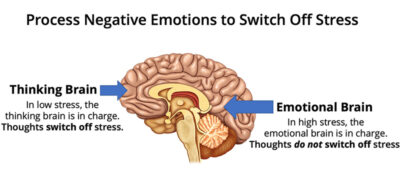

 At the start of this year, Maryam shared her energy forecast for 2021. This channeled forecast mentioned not explaining your divine self, equal energy exchange, landing on your feet, owning the room, and forgiveness, but what came in strong from Spirit was this concept of HIGHER LEVELS OF DISCERNMENT.