
 The sky was a classic California cloudless blue. The light, February soft. The sea breeze, easy, fragrant, and chilly. The waves, mellow laps against the rocky arch at the Natural Bridges State Marine Reserve, about 75 miles south of San Francisco.
As the students, bundled up in hoodies and beanies, gathered in this classroom without walls, I wondered if they were seeing this beach day as time off, a brief vacation from their usual university programming, rather than a taste and a reminder of their birthright and their most important work as human beings in these times.
My childhood-friend-turned-illustrious-professor had invited me to give a guest lecture for his class at the University of California, Santa Cruz. We grew up in Caracas, playing in the branches of juicy mango trees and in the turquoise waves of the Caribbean. I said yes right away since it was Rasmus Winther asking—and also because of the name of his course: Blue Humanities. The undergraduate class merges science with the more philosophical disciplines to explore how we might effect positive change on our troubled oceans. Such an outcome will, of course, require the efforts of many, so with my brief 90-minute visit, my intention was to add my little droplet to this great current.
My Droplet
The droplet I chose to offer—a guided practice on how we might deepen our relationship with nature—is what I see at the very core of the widespread restoration and regeneration we are longing for. All of our wildest dreams: reef restoration, biodiversity renewal, deplastification, dam removal, climate resilience, water cleanliness, overcoming our petroleum addiction, exercising kindness toward wildlife, rematriation—all of this—is an ordinary, expected, natural outcome of our commitment to be in respectful, reciprocal relationship with the Earth.
Just like with human relationships, the more respectful we are with each other, the better things go for all of us. But collectively, we have become so critically estranged from the natural world that it’s common to struggle with the basics of what “intentional relationship with nature” even means.
For starters, our entire physiology is made to be outside, but people in the U.S. spend 95% of their lives indoors. Even students who are working toward Earth-centered careers or professionals in environmentally oriented jobs often spend most of their time in buildings and on computers away from, and out of direct relationship with, the very nature they are interested in protecting and restoring. In this sense, much of the personal and planetary dis-ease that we are experiencing stems from this normalized condition of humans living in captivity.
That’s why I wanted to help the circle of students on this stunning shore of the Pacific get a lived experience of the root of the matter. I wanted to facilitate a space for them to re-member, to start to reconnect with and repair their own personal vital relationship with nature—an intimate relationship that has endured for hundreds of thousands of years of human history before this brief and recent detour. I offered them an initial taste for how we might begin on this journey, so that we might come to unleash the vast potential for healing that is ours to bring forth.
The first signs of personal healing came quickly for the students. Their reflections ranged from simple to serious to soul stirring. One noted that they felt lighter. Another said they need to be by the ocean more. “I feel that who I am is affirmed by nature, and that I am held and accepted,” wrote one student.
By the end of the session, the students reported the following:
- 96% felt significantly calmer
- 96% experienced significantly more clarity
- 96% were significantly able to wake up a sense of love for nature
These numbers, while anecdotal, are consistent with the results I have seen from doing similar practices with hundreds of people from around the world. And the more calm, clarity, and sense of connection with nature you experience, the more conscious, creative, and courageous you become in engaging with the otherwise seemingly overwhelming work at hand.
That’s why these days I prioritize helping people develop their own personal, daily, nature-centered well-being practice, based on their lifestyle, interests, aspirations, heritage, and spiritual tradition. This way, they can then apply it to their own area of work, from child-raising to scientific exploration, farming, teaching, policymaking, art-making, and beyond, in a way that will be more meaningful and authentic for them.
Accessible for All
The simple example of nature practice I shared with the students is something you can do on your own, with your beloved, or with a group of friends, colleagues, or little ones. You can do it in public without anyone even knowing it. You can deepen your relationship with nature on your terrace, in your backyard, on the neighborhood park bench. You can adapt it to be done from a hospital window or in a prison courtyard.
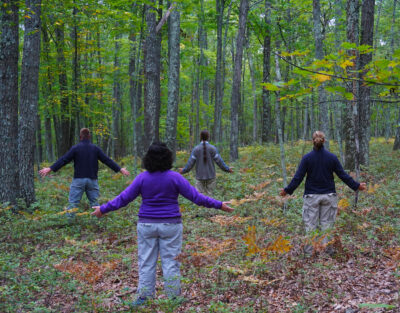 Doing it before school or work would be a beautifully irreverent and rebellious thing to do: to remind yourself that this is our most important work as human beings, rather than something that is done after our jobs or homework or housework are complete, and only then if we are not yet completely weighed down by exhaustion.
In many years of studying with the Dalai Lama, he taught me that when it comes to developing a personal well-being practice, consistency is key. It’s better to do 10 minutes a day than an hour on Friday. So, if you don’t have much of a regular practice at all, start with 10 minutes per day. Stop before you want to; give yourself the sensation of wanting more. That will make it more likely that you will come back the next day. After a week or so, reward yourself with a few more daily minutes until you are consistently practicing 25 minutes per day.
That 25 minutes, while a small fraction of the overall day, would increase the average outdoor time of an American by a meaningful 50%. And because it’s so physically pleasurable, emotionally comforting, mentally calming, and spiritually satisfying, chances are that it could inspire you to take further steps in restoring this vital relationship.
As I write this, the U.S. Centers for Disease Control and Prevention has just released its bleakest report to date on the emotional state of our young people. As a mother and future ancestor, I can’t think of anything more important or urgent to teach and model for our next generation of Earth guardians and water protectors than nature practice.
An Example of Nature Practice
Here are simple instructions you can follow.
- To start, get clear on your intention. Why are you outside? Why are you taking the time to do this practice? Why are you interested in deepening your relationship with nature? It may be something to do with calming yourself down, getting unstuck with a thought pattern that is tormenting you, or healing your relationship with the ocean.
Rather than making it an intellectual exercise, notice what is alive for you in this moment. Let yourself revel in that sense of purpose and commitment welling up in you.
- Then, receive consent. One of the foundational gestures of respect you can offer to the land (and to the ocean) is to request permission to enter the space. Native Hawaiian Kumu Mikilani Young emphasized this for me one time when we were doing a prayerful walk across the Golden Gate. She says it’s like knocking on a friend’s door and waiting to be invited in, rather than barging in. Pay attention and wait until you feel welcome.With the students, we waited in the parking lot, quietly attuning to a sense of being welcomed. Some felt it in a cool, gentle breeze, others heard it in the birdsong. I saw a couple of monarch butterflies fly over us. We attuned individually until we had a consensus of feeling welcome to proceed down to the beach..
- Now, awaken your senses. Your senses are the foundation of how you relate to nature. The problem is that indoors, we don’t really have much use for our senses, and so they become numbed. We don’t really need our eyesight other than to see our screen or the person in front of us. We don’t use our hearing other than for our earpods or for the person speaking to us. Indoors, we don’t want to feel too hot or too cold. We actually prefer not to feel anything at all. Or smell anything either. Tragically, the more your senses are numbed, the more you are estranging yourself from the natural world.
So, as we enter the core of the practice, I invite you to find a comfortable position and find stillness with a soft, open-eyed gaze. One by one, slowly ask yourself these questions: What do I feel on my skin? What do I hear? What do I smell? What do I taste? What do I see? Attune to the nature around you through your senses, as if you were stretching out your hand to a long-lost friend. Repeat for a few rounds and then release the questions to simply attune.
- Next, follow the trail of beauty. Nature offers you myriad examples of how to “walk in beauty,” as my Diné (Navajo) teacher Wally Brown says. In this practice, we are developing greater familiarity with one of the most basic ways that nature relates to us: the language of beauty.
Find stillness and notice what aspect of beauty is calling your attention. Is it the way the light is dancing on the sand? The way the baby seagulls are playing with the waves? The sensation of the sun below your bare feet? Engage (within reason, of course) by going toward the beauty, and as you approach it, let it be a mirror for you. Behold yourself in that mirror and notice what it is reflecting about you. Enjoy. Then, repeat for a few rounds.
- To end, dedicate the goodness. To close your practice, consider any benefits that you have received. Dedicate any calm, clarity, courage, etc. to the benefit of all beings for generations to come. Try to transition with grace, in order to extend the quality of your practice into the rest of your day.
Ultimately, nature practice is about rediscovering what’s important to you, and then building a nature-centered system of rituals and routines, like this one, around those priorities, so that they can infuse every aspect of your life, from your relationship with yourself, to your relationship with others and your relationship with the Earth.
We know that transformational change comes from making courageous decisions. In our wild pursuit of innovation, how poetically absurd is it that one of the most courageous decisions that we are being called to make is to prioritize quality time at the beach!
Original article here

 “The core features of social anxiety were not evident in loneliness,” Lieberz said. Those results suggest, she said, that treating loneliness simply by telling lonely people to go out and socialize more (the way you can treat a phobia of snakes with exposure) will often not work because it fails to address the root cause of the loneliness. In fact, a recent meta-analysis confirmed that simply providing lonely people with easier access to potential friends has no effect on subjective loneliness.
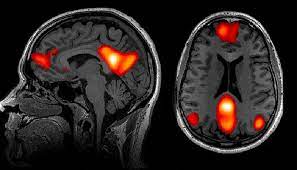
 Bzdok and his team showed that some regions of the default network are not only larger in chronically lonely people but also more strongly connected to other parts of the brain. Moreover, the default network seems to be involved in many of the distinctive abilities that have evolved in humans — such as language, anticipating the future and causal reasoning. More generally, the default network activates when we think about other people, including when we interpret their intentions.
 Primate studies and the results of the Neumayer III polar station experiment show that experience and social environment can exert a powerful influence on the structure of an individual’s brain, hard-wiring the changes that loneliness can cause. On the other hand, studies of twins have shown that loneliness is partly heritable: Almost 50% of the variation in individuals’ feelings of loneliness can be explained by genetic differences.
 The good life is the simple life. Among philosophical ideas about how we should live, this one is a hardy perennial; from Socrates to Thoreau, from the Buddha to Wendell Berry, thinkers have been peddling it for more than two millennia. And it still has plenty of adherents. Magazines such as Real Simple call out to us from the supermarket checkout; Oprah Winfrey regularly interviews fans of simple living such as Jack Kornfield, a teacher of Buddhist mindfulness; the Slow Movement, which advocates a return to pre-industrial basics, attracts followers across continents.
 Somewhat paradoxically, then, the case for living simply was most persuasive when most people had little choice but to live that way. The traditional arguments for simple living in effect rationalise a necessity. But the same arguments have less purchase when the life of frugal simplicity is a choice, one way of living among many. Then the philosophy of frugality becomes a hard sell.
 As a teenager, I remember being moved almost to tears by the sound of a family member chewing muesli. A friend eating dumplings once forced me to flee the room. The noises one former housemate makes when chomping popcorn mean I have declined their invitations to the cinema for nearly 20 years.
 Only about 14% of the UK population are aware of misophonia, according to the King’s College London paper. Perhaps one of the reasons, Gregory suggests, is simply that it is hard to talk about. “You are essentially telling someone: ‘The sound of you eating and breathing – the sounds of you keeping yourself alive – are repulsing me.’ It’s really hard to find a polite way to say that.” Maybe the movie Tár will help: its protagonist, played by Cate Blanchett, has an extreme reaction to the sound of a metronome.
 Ask people what they think they’ll look like in 25 years, and chances are they’ll mention how their parents looked at that age. And while genetics certainly play a part, research shows there’s more to the story. Only about 30% of what we see as aging is inherited, explains John Rowe, M.D., Julius B. Richmond Professor of Health Policy and Aging at Columbia Mailman School of Public Health.
 Many people see this as their best decade. During our 30s, we’re likely getting more settled in our careers and families, and according to one study our happiness levels are still actively increasing. This is also when making real lifestyle changes can help stave off long-term issues.
 Everything seems to come together when you hit your 40s. While your family life and career are likely at a high point, caring for aging parents and planning for the future can make it a stressful time.
 As your children head off to high school and college, now is when you think about how you would like to spend your time. Whether you focus on a new hobby, a volunteer project, or a career change, this decade is all about starting to concentrate on your own wants and needs.
 Welcome to a new concept: freedom! Whether it’s thanks to becoming an empty nester, being newly retired, or just shaking off societal expectations, it’s all about you from now on. Here’s to prioritizing your mental and physical well-being!

 Medicine is not the only field where left-right errors can make the difference between life and death: it’s possible that a steersman turning the ship right instead of left was a contributing factor in the sinking of the Titanic.
 For most of my adult life, exercise was an ordeal. Even mild workouts felt grueling and I left the gym in a fouler mood than when I’d arrived. The very idea of the runner’s high seemed like a cruel joke.
 We all want to feel inner peace. We look for it throughout our entire lives, as being at peace allows us to dream and to actually follow those dreams. When we are at peace with ourselves, we are more understanding and loving towards others, we are able to embody the concept of being One, and therefore we create deeper and more meaningful connections with family, friends and people in general.
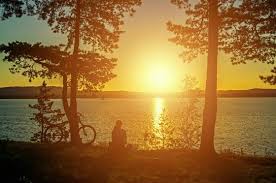 Meditation has been found to have numerous scientific benefits. For example, it reduces stress, improves concentration, boosts creativity, and increases happiness. Meditation affects our mental health in a positive manner, decreasing anxiety and depression, improving sleep, and enhancing self-awareness


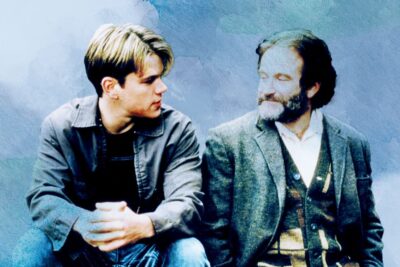 Brian was just a kid when he first saw the movie Good Will Hunting and wasn’t thinking about therapy or his mental health. The 29-year-old engineer was mostly just fascinated by stories about repressed geniuses and Matt Damon’s background story of being a Harvard dropout. He also thought it was pretty rad that the original script was intended to be a spy-thriller.