
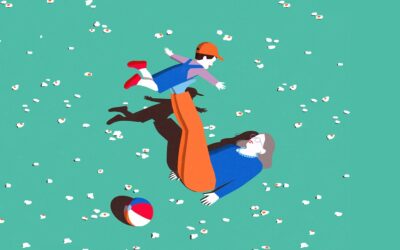
 Pandemic life had a way of revealing our weaknesses. For those of us of a certain age, I mean that literally. If you are feeling like certain household activities — toting groceries, hoisting children, moving furniture, carrying laundry — are more difficult than they were in the past, you aren’t alone. And you aren’t imagining it.
This isn’t a new phenomenon; it just wasn’t until the 1800s that many of us lived long enough to experience this decline. For me, it started a few years ago, when I noticed that lifting an air conditioner, carrying a child up to bed or bringing in a load of firewood seemed harder than they once did. I summoned excuses for each difficulty (“Darned kid gained 20 pounds today!”), but now, at age 54, I’m ready to concede: I simply can’t lift as much as I once could.
Starting sometime in our 30s (the data aren’t precise), we lose up to 8 percent of our muscle mass per decade, a decline called sarcopenia, along with up to 30 percent of our strength and power. This leaves us weaker, less mobile and — especially after we cross age 50 — more vulnerable to injury from falls and similar accidents.
But it doesn’t have to be that way. Men and women can regain some of that lost muscle mass and, importantly, stay strong enough to enjoy youthful activities well into their winter years, experts say. The key is strength training.
“I have people who start in their 60s, 70s and even 80s,” says Jordan Metzl, a sports medicine physician at Hospital for Special Surgery in New York. “Building and maintaining strength is one of the most important things you can do at any stage of life, and it’s extremely important after age 50.”
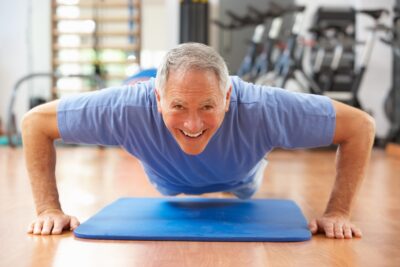 Why? Strength training improves your “economy of movement,” Metzl says, meaning the amount of energy you expend to complete a task, and it “offloads joints, so you can do the same amount of work with less pain and lower risk of injury. You’re essentially getting more juice out of your muscles.” Metzl is personally vested in this quest: He has run 35 marathons and competed in Iron Man triathlons, and he says he aspires, even as he approaches his mid-50s, “to keep going forever.”
But what if your marathons are measured in Netflix episodes or you just need to jump-start an engine that’s been accumulating rust for years? Again, you’re not alone, says Dixie Stanforth, associate professor of instruction in the University of Texas at Austin’s Department of Kinesiology and Health Education.
“Most people are professional sitters,” she says. As a result, many muscles in the front of our bodies — namely our hip flexors and chest muscles — become short and tight. That shuts off signals to their corresponding anterior muscles — the glutes and upper back — to keep working, so those areas become weak and inhibited. All the sitting we’re doing at home could be making things worse.
The first thing to do if you’re starting or resuming strength training, says Stanforth, a 60-year-old personal trainer and “avid athlete,” is to target major muscle groups, especially the glutes and back.
“Glutes are tremendously important, because they activate the ‘rear chain’ of the body and can produce a lot of power for movement,” Stanforth says. Rear chain muscles are critical for posture, balance, running, jumping and — yes — lifting heavy things. To strengthen those muscles, Stanforth says squats, rows and leg presses are all good, because they engage the core and require movement in multiple joints.
She advises strengthening front-facing muscles (chest, abs, biceps and quadriceps, for example), but also devoting extra time to stretching them because of how tight they become in our daily, deskbound lives. “Many people might consider a 1:2 ratio of exercises” — that is, double your strengthening time for rear-chain muscles — “but all of the major muscles [including biceps, calves and triceps] should be trained.”
And, before you even ask: Just about every exercise you can do in a gym you can do at home — albeit with some modification. Homebound strength exercises that don’t require equipment include squats (with or without weight); chair dips; pushups; pullups; planks; lunges; burpees; and step-ups. If you have canned goods or empty milk or drink containers (a gallon of water weighs approximately eight pounds), you can use them for strength training.
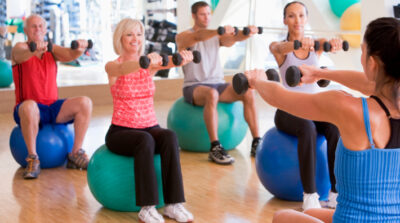 Both Stanforth and Metzl recommend building muscle by performing a high number of reps of a lighter weight — i.e., one you can lift at least 15 times before failure, the fitness term for can’t . . . do . . . one . . . more.
Data show that straining to perform fewer repetitions of much heavier weights greatly increases the risk of injuries to cartilage, tendons and ligaments, without offering much benefit over lighter weights. A 2017 meta-analysis of 21 studies, published in the Journal of Strength and Conditioning Research, found that people who engaged in strength training regimens for at least six weeks, performing exercises to failure, showed similar muscle cell growth regardless of whether they did high reps of low weights or fewer reps of heavy weights.
“Fatigue is fatigue no matter how you get there,” Stanforth says. “I recommend [sets of] a significant number of reps — 15, 20, 30 — and you’ll see all the gains that you would with heavier weights.” Encouragingly, studies also show that you’ll reap most of the gains from just one set of each exercise, so you can safely skip the oft-recommended second and third sets.
As for how often to train, the weekly guidelines for generally healthy people age 50 and older aren’t any different from those for other demographics: Strength train two to three days, engage in aerobic activity at least five days at moderate intensity, or at least three days a week at high intensity, and perform a stretching routine at least two days a week.
Metzl takes this up a notch by incorporating high-intensity interval training, or HIIT — short, punishing bursts of activity usually lasting 30 to 90 seconds with recovery breaks in between. “I do HIIT with people in their 70s and 80s,” he tells me. “We all change over the decades, but I don’t want people to be afraid of intensity.”
In fact, Metzl says, people should be increasing intensity as we age to “better stimulate all the cells in our bodies.” He cited a 2017 study published in the journal Cell Metabolism that showed that high-intensity training significantly improved how the body converts macronutrients into energy. But, he said: “For some people, a sprint is intense. For others, it’s walking up the stairs.”
For those who can perform them, Metzl suggests burpees, jump squats and lunges, which he says deliver full-body functional training. “Burpees utilize every muscle in your body. They’re high intensity and tremendously effective.” And, Metzl says, you’ll still reap a benefit from burpees if you opt to step — not jump — your feet back when dropping into the push-up position at the nadir of the exercise.
Stuart Phillips, director of the Physical Activity Center of Excellence at McMaster University in Hamilton, Ontario, says that older people who regularly strength train can expect to see significant gains in strength and power, but not necessarily muscle mass. Still, the benefits of a training regimen — and the extended period of physical independence that comes with them — should be enough to motivate us all, he adds. “It’s about quality of life, and that’s not a function of muscle mass, but of strength/power.”
And, as Stanforth says, “exercise is better than any drug” in sustaining bone and countering the increased risk of osteoporosis that comes with age. “It helps tremendously. But we do have to be smarter about how we apply the dose as we age.” So, do it right, and we’ll feel stronger, and smarter for it, every day — and have one less thing to worry about.
Original article here
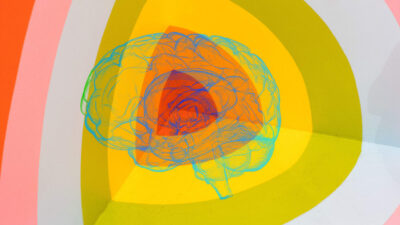 You might think that the impact of aging on the brain is something you can’t do much about. After all, isn’t it an inevitability?



 Dr. James McGaugh remembers that day too. At the time, he was director of UC Irvine’s Center for the Neurobiology of Learning and Memory, the research institute that he founded in 1983. In her email, Jill Price said that she had a problem with her memory. McGaugh responded almost immediately, explaining that he worked at a research institute and not a clinic, and that he’d be happy to direct her to somewhere she could find help.
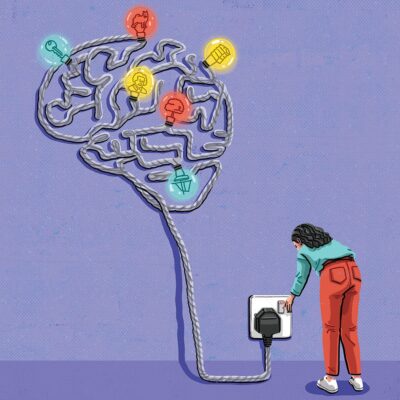 Still, he started from a position of scepticism. “In interrogating her, I started with the scientific assumption that she couldn’t do it,” he told me. And even though Price showed that she could, repeatedly, McGaugh was still unmoved. “Yeah, it got my attention, but I didn’t say, ‘Wow.’ We had to do a lot more. So we did a lot more.” (In Price’s recollection, however, her ability to remember “really freaked Dr McGaugh out.”)
 In May 2012, the journal Neurobiology of Learning and Memory published a follow-up study by UCI neuroscience graduate student Aurora LePort and neurobiologist Dr Craig Stark, then the director of the UCI Center for the Neurobiology of Learning and Memory. It was now nearly 12 years since Price first reached out to McGaugh, but researchers were only fractionally closer to finding the answer she was looking for.
 For both Price and Petrella, there is a specific point in their lives that they feel triggered their ability to remember things with extraordinary clarity. For Petrella, it was when he was seven years old and playing a deliriously fun game in his backyard with a childhood friend. The next day, Petrella invited his friend over to play it again, but they only played for a few minutes before getting bored. Petrella realised then that nothing ever stays the same and that it was important that he remember things before they changed. For Price, it was her family’s traumatic move to the West coast. In each case, Price and Petrella say they already had strong memories before this decisive moment, but after it, their ability to remember was transformed.
 I love my family. I was brought up in a very close family. Of course we fight, but we also laugh together. We share everything — all the joys and the pains. And I know the pain I am feeling, my family will feel the same thing. We confide in each other and find comfort in that. When I want to be happy, my family is always there for me.
 I’ve been working in rural areas for the last ten years. And in the women, peasants and farmers I’ve met there, I’ve found another kind of genius. They help me understand that the future is possible.

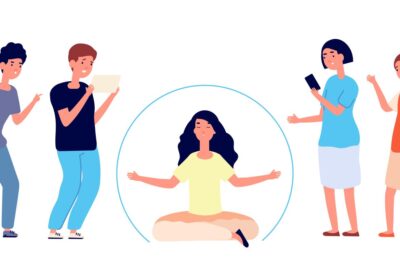
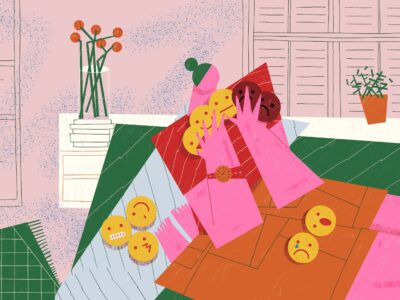 It’s common to wonder whether talking to yourself is “normal.” Let me be the first to tell you—it’s what got me through the pandemic.
 At first, I was reluctant. I asked my body audibly, “How are you feeling?” when my migraines worsened. Often, my body would flood with anxiety or freeze up with stress. When that happened, I’d ask, “What do you need in order to feel more relaxed?” I would wait and listen, then act on what my body “said” back to me. If my body felt tired, I would nap. If I was anxious, I would meditate. If I needed more information about what my body needed, I asked follow-up questions.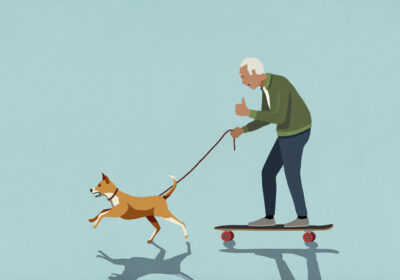
 Being the most talkative person in the room may be a good way to get people’s attention, but it doesn’t necessarily mean you have the best ideas.
 Here’s how managers can create an introvert-friendly workplace:
 Chances are, you learned to walk when you were just a toddler and you haven’t really thought about it much since. It’s easy to nerd out on other fitness activities, like running or weight lifting. But, walking is something we often take for granted.