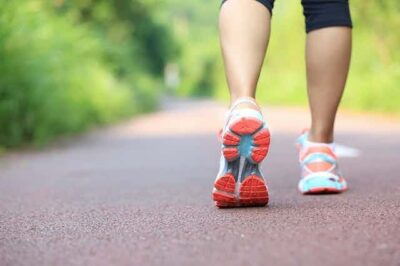
 Walking doesn’t require any special equipment or gym memberships, and best of all, it’s completely free. For most of us, walking is something we do automatically. It doesn’t require conscious effort, so many of us fail to remember the benefits of walking for health. But what happens if we stop walking on autopilot and start challenging our brains and bodies by walking backwards? Not only does this change of direction demand more of our attention, but it may also bring additional health benefits.
Physical activity doesn’t need to be complicated. Whether you’re regularly active or not, even a brisk ten-minute daily walk can deliver a host of health benefits and can count towards the World Health Organization’s recommended minimum of 150 minutes of aerobic activity a week.
Yet walking is more complicated than many of us realise. Remaining upright requires coordination between our visual, vestibular (sensations linked to movements such as twisting, spinning or moving fast) and proprioceptive (awareness of where our bodies are in space) systems. When we walk backwards, it takes longer for our brains to process the extra demands of coordinating these systems. However, this increased level of challenge brings with it increased health benefits.
One of the most well studied benefits of walking backwards is improving stability and balance. Walking backwards can improve forward gait (how a person walks) and balance for healthy adults and those with knee osteoarthritis. Walking backwards causes us to take shorter, more frequent steps, leading to improved muscular endurance for the muscles of the lower legs while reducing the burden on our joints.
Adding changes in incline or decline can also alter the range of motion for joints and muscles, offering pain relief for conditions such as plantar fasciitis – one of the most common causes of heel pain.
The postural changes brought about by walking backwards also use more of the muscles supporting our lumbar spine – suggesting backwards walking could be a particularly beneficial exercise for people with chronic lower back pain.
Walking backwards has even been used to identify and treat balance and walking speed in patients with neurological conditions or following chronic stroke.
But the benefits of changing direction aren’t just therapeutic – an interest in backwards movement has led researchers to discover various other benefits.
While normal walking can help us maintain a healthy weight, walking backwards may be even more effective. Energy expenditure when walking backwards is almost 40% higher than walking at the same speed forwards (6.0 Mets versus 4.3 Mets – one metabolic equivalent (Met) is the amount of oxygen consumed while sitting at rest), with one study showing reductions in body fat for women who completed a six-week backwards walk or run training programme.
When we become confident with travelling backwards, progressing to running can enhance the demands further. While often studied as a rehabilitation tool, backward running increases the strength of crucial muscles involved with straightening the knee, which not only carries over to injury prevention but also our ability to generate power and athletic performance.
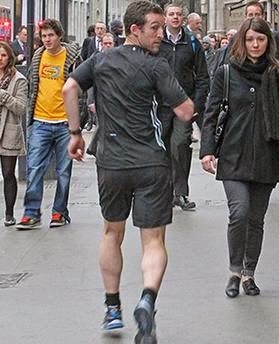 Sustained backward running decreases the energy we expend when we run forwards. These improvements in running economy are even beneficial for experienced runners with an already economical running technique.
If walking backwards seems too easy, but space limitations affect your ability to run backwards, another way to increase the challenge further is to start dragging weights. Increasing the overall load increases the recruitment of the knee extensor muscles while placing heavy demands on your heart and lungs in a short space of time.
Loading a sledge and dragging it backwards carries a low risk of injury, as the most likely outcome if we’re too tired is that the sledge won’t move. But with lighter weights, this kind of exercise can produce an appropriate level of resistance to stimulate significant improvements in lower limb power, with dragging weights as little as 10% of total body weight leading to improved sprint times among young athletes.
How to get started
Walking backwards is simple, but that doesn’t mean it’s easy. So, how can you add walking backwards into your exercise regimen?
When walking backwards, we’re more likely to miss obstacles and hazards that we could crash into or fall over, so in the interest of safety, it’s best to start indoors where you won’t crash into someone or outside in a flat, open area.
Resist the urge to contort your body and look over your shoulder. Keep your head and chest upright while reaching back with your big toe for each step, rolling through the foot from toe to heel.
Once you become more confident walking backwards, you can begin to speed things up and even transition to a treadmill, being sure to use the guide rails when necessary. If using weights, start light. Focus on multiple sets rather than prolonged distances, and remember to maintain the integrity of your technique over no more than a 20-metre distance to begin with.
Original article here
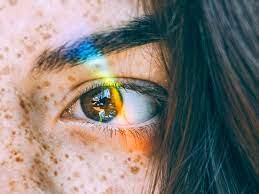 On 26 February 2015, Cates Holderness, a BuzzFeed community manager, posted a picture of a dress, captioned: ‘There’s a lot of debate on Tumblr about this right now, and we need to settle it.’ The post was accompanied by a poll that racked up millions of votes in a matter of days. About two-thirds of people saw the dress as white and gold. The rest, as blue and black. The comments section was filled with bewildered calls to ‘go check your eyes’ and all-caps accusations of trolling.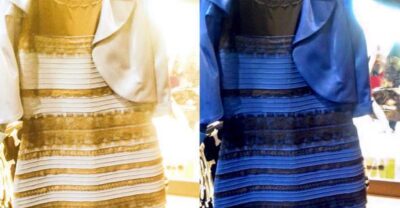
 Lastly, consider dreams. In a 1958 survey, Fernando Tapia and colleagues reported that only about 9 per cent of respondents indicated that their dreams contained colour. Other surveys done around this time reported similarly low proportions. A decade later, the tide turned and a large majority reported dreaming in colour. The philosopher Eric Schwitzgebel considers several explanations for this discrepancy. One possibility is that black-and-white photographs and television changed the content of dreams. As colour TV came to dominate, colour returned to people’s dreams (‘returned’ because, in a few studies from the more distant past, people did not claim to dream in black and white).
 Sci-fi author Brian Herbert once wrote, “The only guarantee in life is death, and the only guarantee in death is its shocking unpredictability.” These words ring true to researchers who investigate what happens in a person’s final moments—and the frustration that comes with these studies. One big problem almost always gets in the way: How do you ask people what dying feels like when they’re no longer here?
 When these comatose patients were taken off their ventilators, they could not breathe on their own. But, using EEGs, Borjigin noticed two people showed a surge in gamma brainwaves as their bodies started shutting down. Gamma brainwaves are usually a sign of consciousness, because they are mostly active when someone is awake and alert.
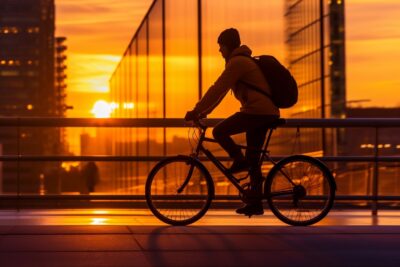 I bike the same route to my job every morning. Turn right, over a bridge, gentle left, hard left, hard right, check for cars at the 4-way stop, left turn, gentle right, huff and puff up the same long hill… and on I go. I can recite the entire route from memory. Same streets, same houses, same trees, same lake, same parks, all whizzing by as I focus on the road ahead, keeping up my speed to get a good workout and get to work on time.
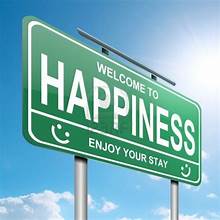 I was asked recently how we can find happiness in this world that contains so much conflict and suffering. I find happiness because I look for it, right where I am, just like Joanne did. There are tiny flowers on the ground and funny bumper stickers on people’s cars. The person who walks past me has a face, and it might smile if I smile at them. When I look as a beginner looks — as if I haven’t already seen a million flowers, read all the bumper stickers, passed so many faces in my lifetime — I experience these little joys.




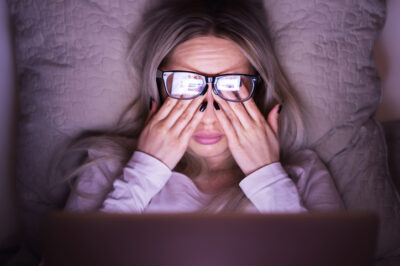 How close is the smartphone or laptop you’re reading this on from your eyes? Probably just a few inches. How long have you spent looking at a screen today? If you’re close to the average it’s likely to be over nine hours.
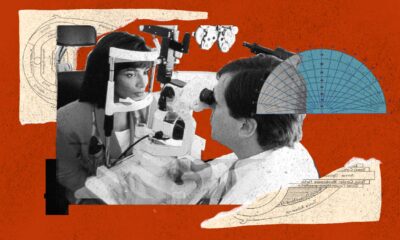 Straining vision introduces a host of eye-related health problems. And it’s more than just kids needing prescriptions. “People say ‘oh, it’s just glasses,’” says Dr Aaron Miller, a pediatric ophthalmologist at Houston Eye Associates. “The nearsighted have much higher chances of retina tears and glaucoma, bigger issues secondary to nearsightedness. It’s the long game we worry about.”
 Everything was pretty straightforward for Sarah until the age of 34. Happily married with a beautiful girl and pregnant with her son, she was healthy, fit and enjoying her pregnancy. She couldn’t have asked for more.