
Anya Hindmarch launched her first company as a teenager. At 53, she is an award-winning fashion designer with five children, a successful business and a CBE. One of those types. Which is why it is cheering that the secret of her success isn’t doing rocket yoga at 5am or leaving parties after 10 minutes or intermittent fasting at a standing desk, or any of that boilerplate alpha guff. Her most precious life advice – and the title of her new book – is If in Doubt, Wash Your Hair.
A good scrub with shampoo, she says, “makes me calmer and more confident and therefore better able to cope. That moment of me standing under the shower, eyes closed, not looking at my phone, is when I have some of my best ideas. It’s a bit meditative, for me – a fresh start, a new day.”
The life-changing magic of washing your hair is having a moment. While salons were closed over lockdown, lots of us dialed up our at-home hair care in an attempt to look presentable while overdue for a cut and colour. Sales of Olaplex, an intensive conditioner that has diversified from a salon treatment to rinse-at-home use, doubled in 2020, while specialist purple shampoos for bringing luminosity to silver hair multiplied, as women embraced their newly exposed greys, and learned how to look after them.
Jamila Lee-Smikle, a 27-year-old fashion publicist from London, launched an Instagram account, @girlfreethefro, to share what she was learning about caring for her afro hair at home, debating the merits of rose water and hair butters, and cautioning about removing rings so that they don’t snag on hair as you wash. “Before lockdown I usually went to the salon, but I’ve learned to really enjoy the process,” she says. “Now I wash my hair every Sunday morning. I make a tea, put some music on, and really take my time. Then I style my hair and I feel ready for the week ahead. It’s like therapy.”
George Northwood, stylist to Alexa Chung and the Duchess of Sussex, launched a range of home hair care products, Undone, this year. “The ‘skinification’ of hair care has really changed how people think about shampoo and conditioner,” he says. “We named one of our products Moisturising Cream because the language of skincare is starting to filter through to hair care.” In his reopened salon, clients are savouring being shampooed instead of doing it themselves, and how that brings the cared-for feeling of an experience connected with childhood. A friend of mine left her first post-lockdown appointment almost overwhelmed by the bliss of a professional wash and scalp massage. Hug-starved after spending lockdown alone, 10 minutes at the sink “was the perfect re-entry level of human intimacy,” she says. “I’m not sure I’m ready for hugs, even though I miss them. Having my hair washed was sensual, but also practical, so I didn’t have to feel weird about it.”
 Hindmarch is not the first writer to wax lyrical about shampoo as therapy. I first discovered this life philosophy in the oeuvre of that national treasure of sunlounger fiction, Jilly Cooper. When a Cooper heroine is having a bad day – perhaps her lover is a double-crossing bastard, or the roof of the conservatory is falling in – she doesn’t crawl back to bed. She washes her hair, knocks back a stiff drink and cracks on. The scent of freshly washed hair is always a harbinger of good news in Cooper’s world. And she was on to something, because how you shampoo your hair might matter more than how you style it. “The mistake most people are making is using products that are too rich, and letting them build up,” says Northwood. “Healthy hair starts with getting it properly clean.” A professional will always wash your hair twice, because the first shampoo loosens the dirt, while the rinse-and-repeat gets it really clean.
Long before I ever heard the phrase “self-care”, I knew that washing my hair was the best way to turn a day around. Bubble baths make me hot and bored. Dry body brushing, jade-roller facials, foot exfoliation: all of those sound like chores to me. But washing my hair is a reset button for the day. It is cathartic, like having a good cry. (When needs must, you can do both at the same time, and not end up puffy-faced.) There is the olfactory rush of lemon or grapefruit or rose, the purifying sluice of water rinsing a bad day down the plughole, the satisfying chemistry-lab alchemy of bubbles and lather. Should you still need convincing that a hairwash can be spine-tingling, the scene in Out of Africa where Robert Redford gives Meryl Streep an alfresco shampoo is guaranteed to convert you.
One of the chapters in Hindmarch’s book is called Put Your Own Oxygen Mask on First. “A lot of women my age work as hard as our dads did, while at the same time feeling like we should be doing all the things our mums did. We end up doing so much for everyone else that we don’t have the time or energy to look after ourselves, and that’s when things start to fall apart.” Taking the time to wash your hair before a big day rather than picking up other people’s crusty cereal bowls is one way of putting your own oxygen mask on first. It is about recognising that taking care of the person who takes responsibility for everyone else is essential, not an indulgence. “This has felt especially necessary recently,” says Hindmarch, “when it has felt to me that women have borne the brunt of a lot of the last year, often taking on the home schooling, even if both parents were working.”
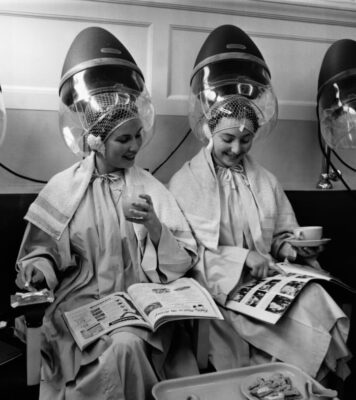
Hindmarch is celebrating her book launch with a popup wash-and-blow-dry bar. “I saw a photo of a woman sitting under one of those old-fashioned salon dryers, with the sun on her face, drinking a cup of coffee. And I thought – after the year we’ve had, that’s where I want to be.” Before too long, touch wood, parties might happen again. But still, I might stay in and wash my hair.
Original article here

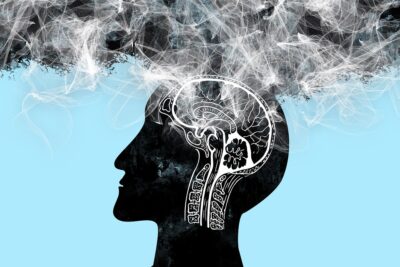
 This makes such feelings doubly unwelcome. Most of us can tolerate negative emotions if we see them as instrumental to something desirable—we do not run to a therapist to treat a fear if we think that it holds us back from doing something obviously risky. But unlike fear, what Heidegger calls anxiety and what Heid’s article describes do not protect us from anything specific. No wonder why Sigmund Freud called anxiety a “riddle.”



 LalalaLetMeExplain is an anonymous relationships expert and social worker, and the author of Block, Delete, Move On, a book she describes as not trying to teach anybody how to find love but “how to avoid the toxic ones”. The book was inspired by her own struggles to set boundaries in the era of dating apps.
 I am having one of those days where my thoughts are leaning towards anticipating negative scenarios and engaging in the “what if’s” the mind is so compelled to do. And while, at this point, I know enough of the machinations of the mind to not go down those rabbit holes, it still can nag away at me as it was doing on this particular day.
 Potts stresses that his “mum brought me up good and proper” – but as a teenager growing up in Salford, he started getting into trouble. “We’ve had our hard times with Stuart, but a lot of it was typical boy stuff,” his mum, Pat Malone, said. “We used to say he was a lovable rogue.” Potts went to prison several times in his late teens and 20s, including an 18-month stint for beating up a burglar who had broken into a friend’s house. After he got out, he had a chequered career: working in factories, as a cobbler, locksmith and painter and decorator. But gradually, life stabilised. He got married, moved into a comfortable council house, and had three kids. Then, in 2016, after more than 15 years, the marriage broke down.



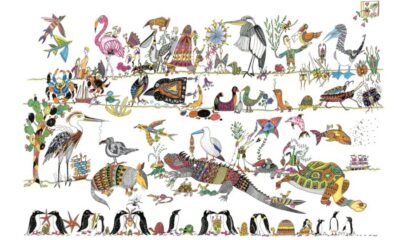

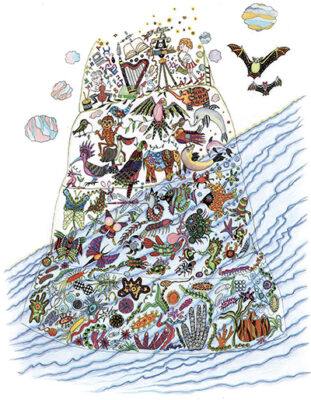
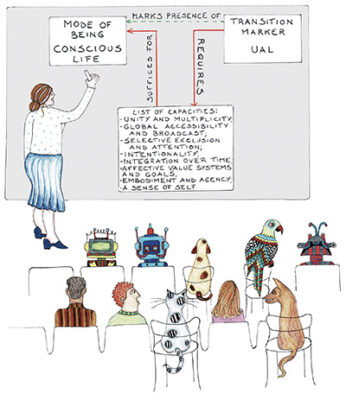
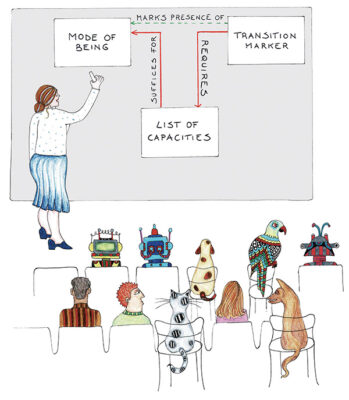 A consensus list of consciousness capacities is a step forward, but identifying each and every capacity may be difficult, and a list does not tell us how they interact to form a conscious being. If we could find a single system-property — an evolutionary marker of consciousness — that indicates that the organism has evolved all the capacities in the consensus list, we would be in a much better position. Finding such a single, diagnostic transition marker would make it possible to identify the simplest evolved conscious being, reconstruct the processes and structures that underlie it, and figure out how they interact. If we can follow the evolution of the marker and therefore the evolution of consciousness, we can discover when and how the conscious mode of being originated.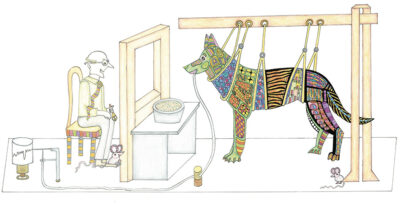
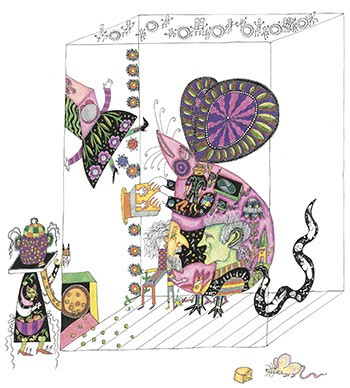 The study of associative learning today includes the investigation of the underlying cognitive and neurobiological mechanisms in ecologically relevant conditions such as the social conditions in which animals learn from each other. It is a rich and productive research program, which is no longer constrained by the behaviorists’ maxims. There is an irony in our (qualified) return to the 19th-century suggestion that open-ended associative learning is an evolutionary transition marker of consciousness, the very term that behaviorists tried to purge from psychology.
 (i) It can distinguish between novel complex patterns of stimuli and actions. For example, it can learn to navigate in a new terrain — to discriminate between different types of animals, between different routes leading to food and shelter. The learned patterns are genuinely novel: they are not reflex-eliciting patterns, nor have they been learned in the past.
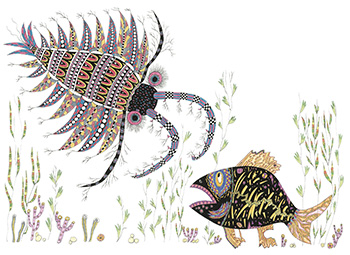 Animals that could mitigate the high costs of UAL without giving up its benefits would have a great advantage. The evolutionary elaboration of the ubiquitous stress response and the evolution of active forgetting are some of the ameliorating mechanisms that we expect to find in all associatively learning animals, and in particular, in UAL animals. Suffering was not eliminated, but it became more controlled.