
 The tantalising theory that a fifth force of nature could exist has been given a boost thanks to unexpected wobbling by a subatomic particle, physicists have revealed.
According to current understanding, there are four fundamental forces in nature, three of which – the electromagnetic force and the strong and weak nuclear forces – are explained by the standard model of particle physics.
However, the model does not explain the other known fundamental force, gravity, or dark matter – a strange and mysterious substance thought to make up about 27% of the universe.
Now researchers have said there could be another, fifth, fundamental force of nature.
Dr Mitesh Patel, from Imperial College London, said: “We’re talking about a fifth force because we can’t necessarily explain the behaviour [in these experiments] with the four we know about.”
The data comes from experiments at the Fermilab US particle accelerator facility, which explored how subatomic particles called muons – similar to electrons but about 200 times heavier – move in a magnetic field.
Patel says the muons behave a bit like a child’s spinning top, in rotating around the axis of the magnetic field. However, as the muons move, they wobble. The frequency of that wobble can be predicted by the standard model.
But the experimental results from FermiLab do not appear to match those predictions.
Prof Jon Butterworth of University College London, who works on the Atlas experiment at the Large Hadron Collider (LHC) at Cern, said: “The wobbles are due to the way the muon interacts with a magnetic field. They can be calculated very precisely in the standard model but that calculation involves quantum loops, with known particles appearing in those loops.
“If the measurements don’t line up with the prediction, that could be a sign that there is some unknown particle appearing in the loops – which could, for example, be the carrier of a fifth force.”
The findings follow previous work from FermiLab that showed similar results.
But Patel said there was a “fly in the ointment”, noting that between the first results and the new data, uncertainty has increased around the theoretical prediction of the frequency.
That, he said, could shift the situation. “Maybe what they are seeing is standard scientific thinking – the so-called standard model,” Patel said.
There are other issues. Butterworth said: “If the discrepancy is confirmed, we will be sure there is something new and exciting but we won’t be sure exactly what it is.
“Ideally the discrepancy would inform new theoretical ideas that would lead to new predictions – for example, of how we might find the particle that carries the new force, if that’s what it is. The final confirmation would then be building an experiment to directly discover that particle.”
The experiments at Fermilab are not the only ones to suggest the possibility of a fifth force: work at the LHC has also produced tantalising findings, albeit with a different type of experiment looking at the rate at which muons and electrons are produced as certain particles decay.
But Patel, who worked on the LHC experiments, said those results were now less coherent.
“They are different experiments, measuring different things, and there may or may not be a connection,” he said.
Butterworth added that the unexpected frequency of the muons’ wobbles was one of the longest-standing and most significant discrepancies between a measurement and the standard model.
“The measurement is a great achievement, and very unlikely to be in error now,” he said. “So if the theory predictions get sorted out, this could indeed be the first confirmed evidence for a fifth force – or something else strange and beyond the standard model.”
Original article here
 In approximately one month and 10 days, I’ll be on my way to making one of the larger decisions of my adult life (so far, anyway); I’m moving to Austin, Texas, approximately 2,000 miles and one hell of a road trip away from my family and almost my entire friend group back in New York. While I have many questions about my move—chief among them, “How much should a mattress cost?” and “Will everyone hate me for being a Brooklyn transplant?”—nothing has loomed larger in my mind than the question of friendship, or, more specifically, how a full-grown adult goes about making new friends with no partner or kids to act as built-in buffers.
 For Hannah Smith, 27, friendship began at home—quite literally—when she moved to San Francisco in 2019 without knowing anyone. Smith sublet three different rooms through Craigslist before she finally signed a month-to-month lease in the perfect place (which she also found through Craigslist), eventually turning a roommate from her final apartment into one of her best friends. “Low-commitment living situations can be a great way to get to know people in a new place,” says Smith, although she adds that this strategy might be somewhat complicated by the ongoing effects of COVID-19.
 We called them fairy rocks. They were just colorful specks of gravel—the kind you might buy for a fish tank—mixed into my preschool’s playground sand pit. But my classmates and I endowed them with magical properties, hunted them like treasure, and carefully sorted them into piles of sapphire, emerald, and ruby. Sifting the sand for those mystical gems is one of my earliest memories. I was no older than 3 at the time. My memory of kindergarten has likewise been reduced to isolated moments: tracing letters on tan paper with pink dashed lines; watching a movie about ocean creatures; my teacher slicing up a giant roll of parchment so we could all finger-paint self-portraits.
 We’re surrounded by negativity everywhere we turn. The news we read, social media we peruse, and conversations we have and overhear. We absorb stress from our family, friends, and coworkers. And, it’s taking a toll.
 Watch what you say out loud. Negative language is particularly insidious and potent. Be mindful of what you’re thinking and saying. Yes, those around you influence you and your mood, but we have more control over our thoughts and feelings than anyone else. And what we say out loud also carries significant weight. According to Trevor Moawad, a mental conditioning coach who works primarily with elite athletes, it’s ten times more damaging to our sense of thriving if we verbalize a thought than if we just think it.
 Manage your energy. You can also increase your resilience in the face of negativity and encourage thriving by exercising, eating well, and getting enough sleep — all things we know we’re supposed to do but we often fail to when we’re bombarded with negativity. When we exercise, our muscles pump “hope molecules” into our bodily systems that are good for our mental and physical health. You can amplify these effects by exercising outside, with others, or to music.
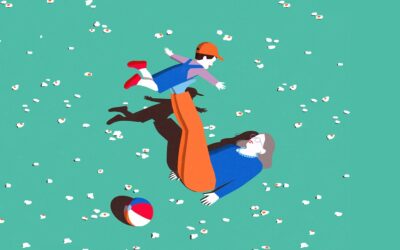 Pandemic life had a way of revealing our weaknesses. For those of us of a certain age, I mean that literally. If you are feeling like certain household activities — toting groceries, hoisting children, moving furniture, carrying laundry — are more difficult than they were in the past, you aren’t alone. And you aren’t imagining it.
 Why? Strength training improves your “economy of movement,” Metzl says, meaning the amount of energy you expend to complete a task, and it “offloads joints, so you can do the same amount of work with less pain and lower risk of injury. You’re essentially getting more juice out of your muscles.” Metzl is personally vested in this quest: He has run 35 marathons and competed in Iron Man triathlons, and he says he aspires, even as he approaches his mid-50s, “to keep going forever.”
 Both Stanforth and Metzl recommend building muscle by performing a high number of reps of a lighter weight — i.e., one you can lift at least 15 times before failure, the fitness term for can’t . . . do . . . one . . . more.
 If Socrates was the wisest person in Ancient Greece, then large language models must be the most foolish systems in the modern world.
 And bullshit is dangerous, warned Frankfurt. Bullshit is a greater threat to the truth than lies. The person who lies thinks she knows what the truth is, and is therefore concerned with the truth. She can be challenged and held accountable; her agenda can be inferred. The truth-teller and the liar play on opposite sides of the same game, as Frankfurt puts it. The bullshitter pays no attention to the game. Truth doesn’t even get confronted; it gets ignored; it becomes irrelevant.
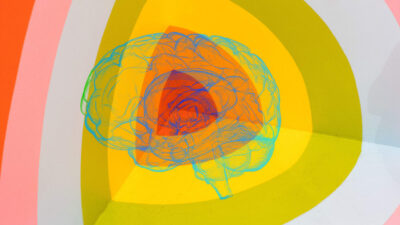 You might think that the impact of aging on the brain is something you can’t do much about. After all, isn’t it an inevitability?
 You might think that after centuries of studying light, we know pretty much everything about it. It’s true we’ve had breakthrough after breakthrough in using it, from illumination to communication, from examining the micro- and macro-universes to scanning our own bodies. We understand that light is an electromagnetic wave, thanks to James Clerk Maxwell, whose equations established that in 1865; and that it also appears as quantum packets of electromagnetic energy called photons, as Albert Einstein recognized in 1905. But the more we look into light, the more we see and the more we learn. The classical view of light as a wave still produces new science as light waves interact with artificial “metamaterials”; and we are still exploring light as a quantum particle. Both approaches provide ways to manipulate light that were once only science fiction. Here are five recent marvels.
 In ghost imaging, one of each of a swarm of entangled photon pairs interacts with the object and encounters a detector that simply registers its arrival. A second beam of the corresponding entangled partners never touches the object but goes straight to a sensitive multi-pixel detector. Computer analysis of the correlations between the two detector results creates a high-quality image of the object, even with weak illumination. This approach has uses such as converting images covertly taken by invisible infrared light to visible images detected by a high-resolution camera; or obtaining good quality X-ray images from a patient exposed to a low, relatively safe X-ray dose.
 Need to know