

“Sticks and stones may break my bones, but names shall never hurt me,” was an old adage way back in the early 1800s. For over 200 years it soothed and encouraged many a bullied student and adult. But no longer.
Today, it seems we are the walking wounded, insulted by everything. Names hurt us. Not being honored with the right pronoun hurts us. Not getting enough “Likes” on a social media post hurts us. Someone offering information we don’t agree with hurts us. Seeing historical statues of former slave owners hurts us. Our skins are thin. Suffering has become a badge of honor. And the more we publicly acclaim our suffering, the more there seems to be of it. (In other words, what we focus on materializes right in front of us.)
This is not to dismiss the reality of trauma. The world is full of it. Child abuse. Sexual abuse. Emotional abuse. Racial abuse. Gender abuse. Deliberate ritual abuse. Hunger. Starvation. War. Famine. Humanity carries the heavy epigenetic burden of all of these things—inherited ancestral patterns that take the form of thoughts, choices, and actions aligned with pain and suffering, lack, judgment and subjugation.
But humanity also carries the possibility of greatness. We also carry the inherited ancestral patterns of strength and courage, forgiveness and compassion, fairness and justice, a desire for change and evolution, love, and respect, mutual support and community. These higher emotions and strengths more than outweigh our shortcomings … but only when we choose to focus on them. We move into greater and greater possibilities and integrity only if we commit to those things, claim these traits as our own, and proudly live them.
Understanding Metapatterns
As the word implies, metapatterns are major patterns that affect many. Nationalism is a metapattern. Economics is a metapattern. Religion is a metapattern, and so is victimization. There isn’t a person, a family, a community, a government, a nation in the world that hasn’t seen suffering, abuse and inequality at one time or another. We have all been victims. There is nothing special about it. What is special is rising above it.
It is the nature of all systems — a family system, political system, religious system, a business system — that patterns within the system that are suppressed, excluded, and unacknowledged keep repeating. Abuse is a perfect example. For hundreds of years, societies suppressed acknowledgment of abuses perpetrated on people — women, indigenous peoples, people of color, pagans, Jews, Muslims, Christians, gays. As a result, the abuses kept on repeating with increasing prevalence and force. Which is exactly what we’re seeing now.
It is an incredibly healthy thing that we are now in the process of getting these deeply traumatic abuses and wounds out into the light and are discussing them. However, unless handled wisely, we run the danger of becoming the victims of past victimization by turning on perceived perpetrators and victimizing them. The old “eye for an eye and a tooth for a tooth” philosophy unconsciously lives in a lot of people’s thinking. That, too, is an inherited pattern. A pattern destined to leave us all blind and toothless unless we can turn it around and realize one very important point: The opposite of being a victim is not being a perpetrator.
The opposite of being a victim is mastering your world, mastering your patterns of thoughts, feelings and actions. The opposite of being a victim is stepping into authenticity, self-expression and joyous creativity, freed from the patterns that shackle us to the past.
Moving Beyond The Victim Pattern
So, how do we go about going beyond the victim metapattern? First, we need to understand that generational symptoms — patterns of thoughts, emotions, choices, and actions — are inherited. Clinical studies have proven that emotional trauma experienced by our parents and grandparents (and even further back in our genetic line), leave physical markers on our genes, affecting gene expression. These markers make us prone to the same kinds of trauma, over and over again.
The patterns of victimization — unconscious ways of thinking, feeling, and acting that attract abuse — are literally passed down epigenetically from generation to generation. This is what is termed “emotional DNA.” The same holds true for abusers/perpetrators. How many times do we find that an abusive parent was also subjected to violence as a child? Too often. The inherited pattern of being an abuser is also passed down.
The next thing we need to do is see that abuse and victimization are not serving our personal growth, happiness, or overall social advancement. We need to understand that anger and outrage, lashing out, seeking punishment, and reparations for old sins is simply a continuation of the very dynamic we’re hurt by and angry about.
Metapatterns are in us. And they are destined to unconsciously drive us and run our lives (from one side of the issue or the other) until we see them, acknowledge them, and choose to change and elevate their shape and effect. Only then can we move beyond them.
Symptoms Of Victim/Perpetrator
How do you recognize when a pattern or metapattern is affecting you? It shows up in our language and as symptoms: discomfort, irritation, a block to some desire, boredom, a lack of progress, ill health. Sometimes it manifests as a variety of symptoms. When it comes to the metapatterns of victimization, some generational symptoms passed down epigenetically from one generation to the next are:
- Seeing oppression everywhere
- Hatred for the perceived oppressors
- Seeing discrimination even when it isn’t intended or doesn’t exist
- A sense of not being seen and respected
- Clinging to past wounds, past actions
- Unworthiness
- A sense of always being put down
- Inability to prosper
As well, there are generational symptoms of perpetration passed down epigenetically from one generation to the next. It’s interesting to note that some symptoms of past victimization and past perpetration are the same. Some of these symptoms are:
- Guilt
- A subconscious desire to be punished or to fail
- Self-sabotage
- Anger and the continued desire to inflict pain and suffering
- A sense of unworthiness
- Apologizing for everything, even when no harm is done
- Inability to prosper
In a quick example to show how this works, Hua Ming (a pseudonym) came to the US on a university exchange scholarship from China. After graduation, she chose to stay in America and became a citizen in order to continue her work at a prestigious laboratory as a geneticist. In time, she recognized she felt blocked. She was frightened by her growing responsibilities at work. She was frightened by the increasing expectations of her American fiancé and her upcoming marriage — frightened to the point she was considering throwing it all away and moving back to China.
When Hua Ming decided to pursue professional guidance for her anxiety, she realized it was really more an issue of not being able to live up to Western people’s assessment of her value. She couldn’t understand how she was suddenly worthy. “I can’t do what they’re asking of me,” she thought. “My boss expects me to lead this next team project. My fiancé thinks I should go for my PhD and an even higher position. Who do they think I am?”
Looking at Ming’s family heritage, it wasn’t hard to uncover the pattern of unworthiness grounded in her ancestral pattern of gender discrimination. Her parents had been terribly disappointed to have a girlchild. Low expectations had plagued her all her life. Despite her determination to rise above those low opinions of her — a determination that had carried her far from her homeland — the unconscious inherited sense of unworthiness as a woman and lack of value was dragging her down.
Through an understanding of emotional DNA, family patterns, and metapatterns, she finally got to see that the unworthiness she was feeling wasn’t really hers, but rather inherited emotions piled on top of a negative upbringing. She was able to work through those negative emotions.
Instead of remaining a victim to the old patterns, she was able to see how far she’d come because of them and what she had to offer. She turned the negative into the positive. She saw her true strength and courage. She thanked her ancestors for the gift of unworthiness that had fired her determination to become more, and given her the opportunity to change the past patterns of victimization that were plaguing not only her but her whole native country.
Time To Shine
It’s time for humanity to choose to move on from the victim mindset. Past abuses are past. The only reason they continue to plague us in the present is because we are unconsciously repeating the old patterns that are begging to change. Our deep system-wide unrest, bitter unhappiness, and intolerance of abuse and discrimination in all forms is a joyous red flag waving saying, “Let go of the bitterness. Let go of the intolerance for the intolerant! Let go the judgment of the judges! Let go of victimizing past perpetrators. That’s all part of the old pattern. Let go!”
Focus on the adventure and possibilities. Possibilities open hearts and doors. People are craving a bigger reality that allows them to participate in and co-create a happier, more fulfilling, and exciting world. Steve Jobs summed it up best when he said, “Blessed are the crazy ones who believe they can change the world. Because, indeed, they can.”
Original article here
 I fast once a month. It’s hard. Even though I’ve been doing it for years, I start dreading my fast day the night before; fretting about how I’m going to be able to pass through the discomfort. And where I’m typically not hungry until around 11am, on a fasting day I wake up hungry. Then, I stumble through what I need to get done as best as I can, given how lousy I’m feeling. Even though I know what to expect, it never seems to get easier.


 Ever had someone tell you to just cheer up? Did it drive you crazy? Well, turns out that someone telling you to “be happy” isn’t just annoying—it’s also wildly unhelpful.
 I think the good thing about meditation—mindfulness, concentrating on the present, detaching—is as good anti-anxiety, anti-anger tools. But one of the costs of accepting fate, accepting that you can’t go on and do something good in the future, correlates highly with physical illness, shorter life span, less accomplishment at work. So, it’s a good anti-anxiety tool often, but it’s got a lot of costs as well.
 An estimated 23.5 million Americans, including my husband, suffer from an autoimmune condition — and their numbers are growing, though researchers don’t know why. You’ve likely heard of the most common autoimmune diseases — including type 1 diabetes, rheumatoid arthritis, multiple sclerosis, lupus, celiac disease, psoriasis, inflamatory bowel disease and Crohn’s disease — but you might be unaware that there are more than 80 named but lesser-known types. Through working as a nutritionist and living with my husband, I’ve learned the importance of diet in battling these disorders.
 Whenever I am faced with life’s uncertainty, I ask myself the following questions: Why is this happening? What can I do to make it go away? How can I navigate this effectively? What can I learn from this experience?
 The chorus of the theme song for the movie Fame, performed by actress Irene Cara, includes the line “I’m gonna live forever.” Cara was, of course, singing about the posthumous longevity that fame can confer. But a literal expression of this hubris resonates in some corners of the world—especially in the technology industry. In Silicon Valley, immortality is sometimes elevated to the status of a corporeal goal. Plenty of big names in big tech have sunk funding into ventures to solve the problem of death as if it were just an upgrade to your smartphone’s operating system.
 The researchers also found that with age, the body’s response to insults could increasingly range far from a stable normal, requiring more time for recovery. Whitson says that this result makes sense: A healthy young person can produce a rapid physiological response to adjust to fluctuations and restore a personal norm. But in an older person, she says, “everything is just a little bit dampened, a little slower to respond, and you can get overshoots,” such as when an illness brings on big swings in blood pressure.
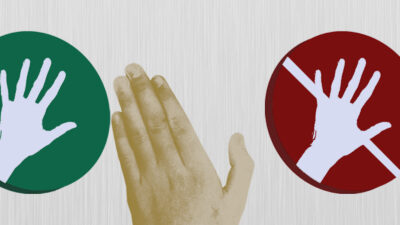 Many people cheat on taxes — no mystery there. But many people don’t, even if they wouldn’t be caught — now, that’s weird. Or is it? Psychologists are deeply perplexed by human moral behavior, because it often doesn’t seem to make any logical sense. You might think that we should just be grateful for it. But if we could understand these seemingly irrational acts, perhaps we could encourage more of them.
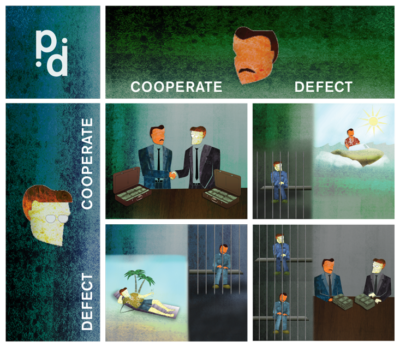
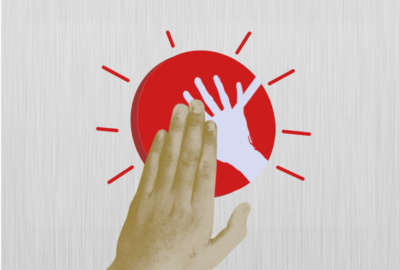 When it comes to getting people to cooperate more, Rand’s work brings good news. Our intuitions are not fixed at birth. We develop social heuristics, or rules of thumb for interpersonal behavior, based on the interactions we have. Change those interactions and you change behavior.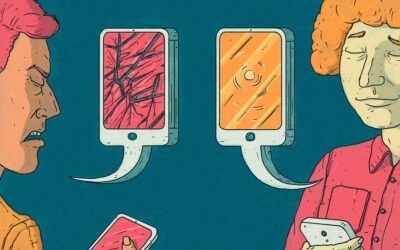
 If you want to learn something about change there is no better place to look than evolution. Nothing represents a continuous and unrelenting cycle of order, disorder, and reorder on a grander scale. For long periods of time, Earth is relatively stable. Sweeping changes—warming, cooling, or an asteroid falling from space, for example—occur. These inflection points are followed by periods of disruption and chaos. Eventually, Earth, and everything on it, regains stability, but that stability is somewhere new.
 The more you define yourself by any one activity, the more fragile you become. If that activity doesn’t go well or something changes unexpectedly, you lose a sense of who you are. But with self-complexity, you have develop multiple components to your identity.