

Artist Statement:
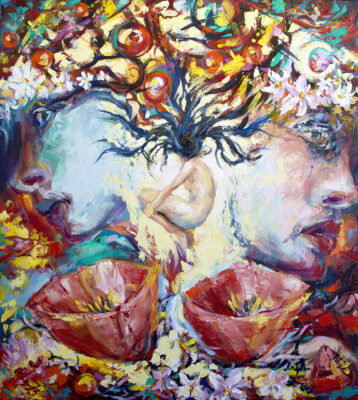
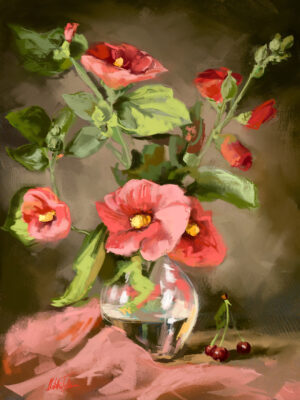
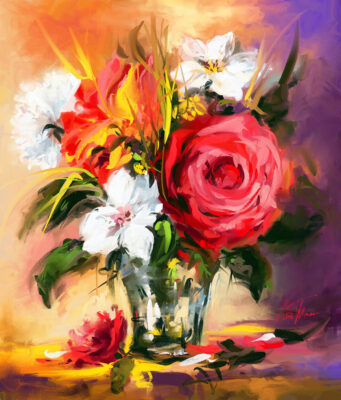
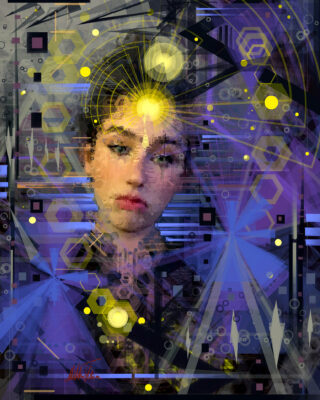
 I’m a self-taught artist from Finland, working in many different traditional mediums and digital art. I especially like to create digital art that feels as if it’s made in a traditional medium.
It feels that such thoughts give paintings more of a deep and emotional charge on so many levels.
My art creativity gravitates to symbolism, mysterious landscapes and music of color.
I aspire to understand the essence of nature, the world in philosophical-mystical relation to me. Always try to open harmony of the world in details or the generalized compositions.
Our world is so beautiful, and I try to capture all that magic in canvas and thought that brings all that beauty and joy to people.
I have participated in numerous exhibitions around Finland, Monaco, Russia, France, Spain, Italy and England. My work has received many international High Recognition Awards, and my works are in private collections around the world.
Connect with me:
https://mishelangello.blogspot.com/
https://twitter.com/MikkoTyllinen
http://www.instagram.com/mishelangello/
http://www.facebook.com/artofmikkotyllinen/


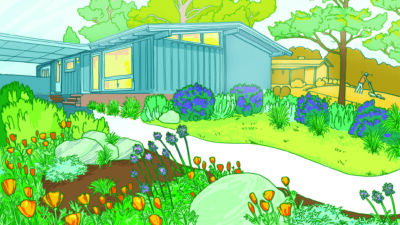
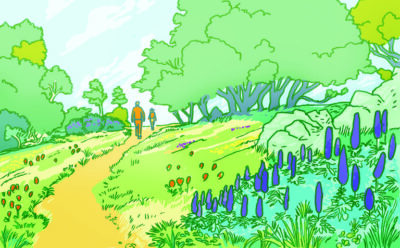 The great likelihood is that you’re going to be adapting to the conditions you already have. Those conditions might not appear to be “optimal” in the traditional horticultural sense. But plants grow in the wild without fertilizer. Survivors adapt, learning to love even marginal soil. They also forge relationships with other plants, animals, and the microbiology of the soil. These relationships become the foundation of a sustainable and resilient landscape.
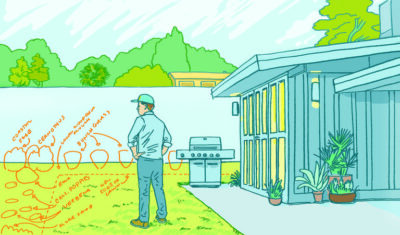 Now that you’ve observed, ask…What plants will thrive in my yard? In other words, what does nature want? And what do I want? Where these desires meet will be the foundation of your design.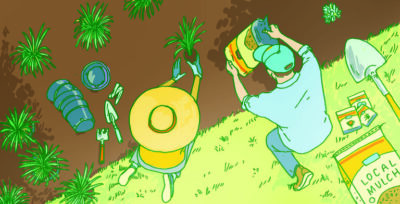
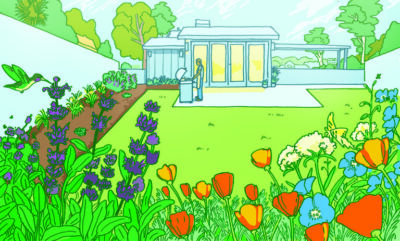 Watch how the landscape evolves. “Don’t be discouraged if some of the plants in your palette don’t do well, even though you did the research,” says Max Kanter, cofounder of Saturate, an ecologically minded gardening company in Los Angeles. Some might not be placed quite right, while others will thrive in ways you didn’t expect. “Start to practice the idea that the garden is a process,” he says. It’s not an installation or a transaction; it’s a relationship.

 In the run-up to marriage, many couples, particularly those of a more progressive bent, will encounter a problem: What is to be done about the last name?
 In a forthcoming study, Kristin Kelley, a doctoral student working with Powell, presented people with a series of hypothetical couples that had made different choices about their last name, and gauged the subjects’ reactions. She found that a woman’s keeping her last name or choosing to hyphenate changes how others view her relationship. “It increases the likelihood that others will think of the man as less dominant—as weaker in the household,” Powell says. “With any nontraditional name choice, the man’s status went down.” The social stigma a man would experience for changing his own last name at marriage, Powell told me, would likely be even greater.
 That’s what legendary Vietnamese Zen Buddhist monk, teacher, and peace activist Thich Nhat Hanh (October 11, 1926–January 22, 2022) explored in How to Love — a slim, simply worded collection of his immeasurably wise insights on the most complex and most rewarding human potentiality.
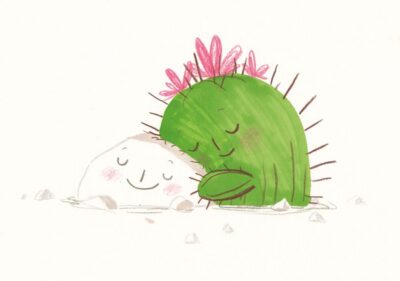 And yet because love is a learned “dynamic interaction,” we form our patterns of understanding — and misunderstanding — early in life, by osmosis and imitation rather than conscious creation. Echoing what Western developmental psychology knows about the role of “positivity resonance” in learning love, Nhat Hanh writes:
 In 2007, a group of researchers began testing a concept that seems, at first blush, as if it would never need testing: whether more happiness is always better than less. The researchers asked college students to rate their feelings on a scale from “unhappy” to “very happy” and compared the results with academic (GPA, missed classes) and social (number of close friends, time spent dating) outcomes. Though the “very happy” participants had the best social lives, they performed worse in school than those who were merely “happy.”
 Life has sped up. A never-ending stream of stimuli is vying for your attention every minute of the day. Some of it is fabulous and some of it is time wasting.
 In a world where it is almost impossible to lose contact with friends, thanks to the likes of social media, this regret may seem irrelevant. You can send someone a text to say you’re thinking of them, comment on their Facebook feed or Instagram photo, or chat via Messenger. But how long is it since you’ve really connected with these people in real life? How long since you’ve laughed together, cried together, eaten together or just hung out?