

Did you know that dancing is not just about grooving to the rhythm but can also be a profound tool for manifesting our desires?
When we surrender ourselves to the music and let our bodies sway, we create a harmonious connection between our physical and energetic selves.
By moving our bodies through dance, we unlock a realm of boundless potential and we:
- Amplify our energy. Dancing raises our vibrations to align with the frequencies of our desires. As we lose ourselves in the rhythm, our movements become a physical representation of our intentions, sending powerful signals to the universe.
- Embody our visualizations. With each step, twirl, or leap, we can imagine ourselves already living our desired reality. This visualization helps to reinforce our intentions and brings them closer to manifestation.
- Release our emotions. When we dance, we tap into our deepest feelings, allowing any stagnant energy or limiting beliefs to be released. By releasing what no longer serves us, we create space for abundance and positive transformations.
- Align through joy. When we move our bodies freely, we connect with our true essence and align ourselves with the frequency of joy. Joy is a powerful magnet for manifesting our desires, attracting experiences that resonate with our happiness.
Use These 8 Steps To Boost Your Manifestations Through Dance
- Set Your Intention. Clarify what it is that you want to manifest. Write it down or hold it firmly in your mind.
- Choose Uplifting Music. Select music that resonates with your intention and uplifts your spirits.
- Create Sacred Space. Find a quiet and comfortable space where you can move freely without distractions.
- Tune Into Your Body. Close your eyes, take a few deep breaths, and center yourself. Allow yourself to be fully present and become aware of any sensations or emotions within you.
- Let the Music Guide You. Start playing your chosen music and let the rhythm guide your movements. Trust your body’s natural instincts and let it express itself authentically.
- Visualize Your Intention. As you dance, visualize your intention as if it has already manifested. See yourself living the reality you desire. Imagine the details and emotions, and immerse yourself fully in the visualization.
- Express Emotion and Gratitude. Allow yourself to express your emotions through movement, whether joy, passion, sadness, or frustration. Also, use the dance to express gratitude for the manifestation already on its way.
- Close with Stillness. After your dance, take a moment to stand still and absorb the energy you’ve created. Reflect on the experience and feel the vibrations of your intention radiating throughout your body.
So, let the music guide your intentions, and start moving, shaking, and swirling to get your manifestations in motion.
Original article here

 Amid the human crush of Old Delhi, on the edge of a medieval bazaar, a red structure with cages on its roof rises three stories above the labyrinth of neon-lit stalls and narrow alleyways, its top floor emblazoned with two words: birds hospital.
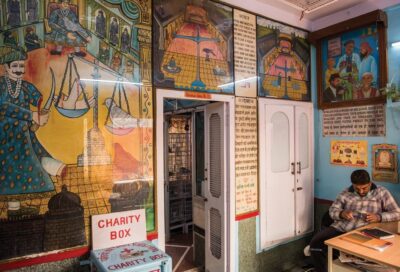 I’d come to the bird hospital, and to India, to see firsthand the Jains’ moral system at work in the world. Jains make up less than 1 percent of India’s population. Despite millennia spent criticizing the Hindu majority, the Jains have sometimes gained the ear of power. During the 13th century, they converted a Hindu king, and persuaded him to enact the subcontinent’s first animal-welfare laws. There is evidence that the Jains influenced the Buddha himself. And when Gandhi developed his most radical ideas about nonviolence, a Jain friend played philosophical muse.
 In the West, consciousness was long thought to be a divine gift bestowed solely on humans. Western philosophers historically conceived of nonhuman animals as unfeeling automatons. Even after Darwin demonstrated our kinship with animals, many scientists believed that the evolution of consciousness was a recent event. They thought the first mind sparked awake sometime after we split from chimps and bonobos. In his 1976 book, The Origin of Consciousness in the Breakdown of the Bicameral Mind, Julian Jaynes argued that it was later still. He said the development of language led us, like Virgil, into the deep cognitive states capable of constructing experiential worlds.
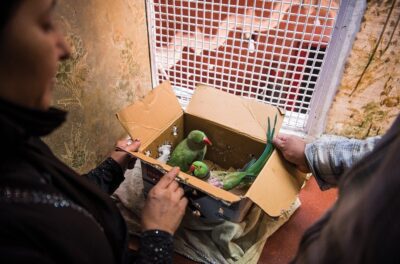
 Crows are not among the shoulder-perchers, but Singh sometimes sees former crow patients hovering around the hospital. They might be looking for him. Crows recognize individual human faces. They are known to blare vicious caws at people they dislike, but for favored humans, they sometimes leave gifts—buttons or shiny bits of glass—where the person will be sure to notice, like votive offerings.
 The trail was only 50 miles from Gir National Park, where, the day before, I’d seen two Asiatic lions, nearly indistinguishable cousins of Africa’s lions. Once the region’s apex predator, the Asiatic lion almost went extinct during the British empire’s colonization of India, when no viceroy could visit a maharaja’s palace without a hunt in the local forest. Even today, the Asiatic lion still ranks among the rarest of the large feline predators, rarer even than its neighbor to the north, the snow leopard, which is so scarce that a glimpse of one padding down a jagged Himalayan crag is said to consummate a spiritual pilgrimage.
 The monk was a white dot some six switchbacks up by the time I hopped off the wall and continued the climb, my legs stiffened by the break. I reached the entrance to the temple complex with only 15 minutes to spare. Its marble courtyard shone brilliant white, as though bleached by the mountain sun.
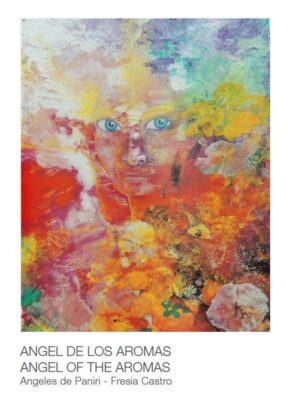 I believe in angels. I feel their presence in my life every hour, minute and second, I know they are with me, with us, but how? From a rational point of view, it is probably impossible to explain their existence, however I can say that they are part of my experience.
 Self-regulation, within the space of wellbeing, is actually emotional self-regulation. In other words, the capacity of managing our emotions on a daily basis. During the day, we experience a range of different emotions, from joy, love, and peace to anger, frustration, anxiety — and the way we respond to events will determine our state of being. The important point here is that we have a choice, we always have a choice: we can choose to give free rein to negative emotions and dwell on them, or we can choose to acknowledge these emotions, find a solution, and move on.
 The third step is when consciousness comes into play. When I say “consciousness” I am talking about that inner awareness of being more than flesh, being part of something larger, where we are one and unique, where there is peace and there is freedom. As conscious beings we know that our inner self plays a role in our wellbeing, and if we are able to go to that internal place, then we can receive the benefits of understanding that everything comes from within and that we are in charge of our own life.


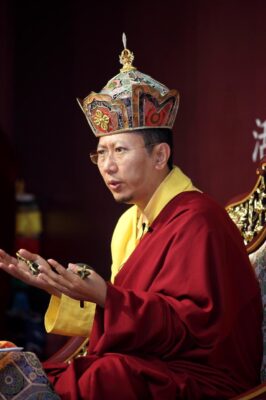
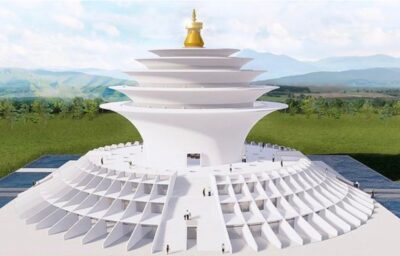 Last year, I had the pleasure and honour to meet His Eminence Shyalpa Tenzin Rinpoche, first via the platform Clubhouse, then via WhatsApp and phone calls. Finally, last September, H. E. Rinpoche stopped in the UK after touring the US.
 Veronica: Why is it important to build a Universal Peace Sanctuary and what is the inspiration behind this wonderful project?
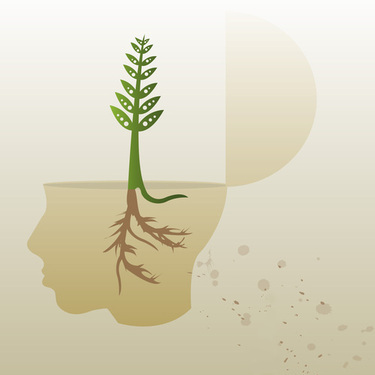 All over the world, people are awakening to the fact that we are more than bones and flesh. We sense that there is more to life than what we see. The word “consciousness” is losing its unreachable meaning, and we look for ways to go inside ourselves and find inner peace.
 Last year, I met an extremely gifted medium in California: Allie Barkalow. If you don’t know what a medium is, it’s a person who communicates with spirits from the other side. I heard about Allie from my dear friend, Carolyn Miller, who is a psychic and known for her amazing tarot and aura photography readings. Carolyn told me that Allie is one of the best psychics she knows, and I figured if she’s anything like Carolyn I had to meet her.
 Moldavite is a member of the tektite group, a glassy mixture of silicon dioxide, aluminum oxide and other metal oxides, with a hardness of 5.5 to 6. Its crystal system is amorphous. The color of most specimens is a deep forest green, though some pieces are pale green and others, especially those from Moravia, are greenish brown. A few rare gem grade pieces are almost an emerald green.
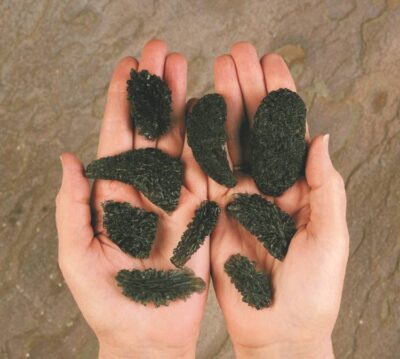 People who hold moldavite for the first time most often experience its energy as warmth or heat, usually felt first in one’s hand and then progressively throughout the body. In some cases, there is an opening of the heart chakra, characterized by strange (though not painful) sensations in the chest, an upwelling of emotion and a flushing of the face. This has happened often enough to have earned a name — the “moldavite flush.” Moldavite’s energies can also cause pulsations in the hand, tingling in the third eye and heart chakras, a feeling of light-headedness or dizziness, and occasionally the sense of being lifted out of one’s body. Most people feel that moldavite excites their energies and speeds their vibrations, especially for the first days or weeks, until they become acclimated to it.