

Not long ago, I went on one of my favorite podcasts — The Ezra Klein Show — to talk about burnout, workism, and our relationship to labor. In our conversation, I invoke the idea of “LARPing” your job, a phrase my partner uses to describe the way we try and show evidence that LOOK, OVER HERE, I AM WORKING. (‘LARP’= Live Action Role Playing).
You can LARP your job in person (holding lots of meetings, staying late and getting there early as a show of ‘presentism’) and digitally (sending lots of emails, spending a lot of time on Slack, or whatever group chat platform your organization uses). This piece from Vox does a good job of outlining how Slack, marketed as a “productivity tool” and “email killer” is often neither.
It’s something I’ve thought about a lot as a remote employee: how do I show that “in the office” when I’m far away, and two time zones behind the vast majority of my team? By dropping links to articles (to show that I’m reading); by commenting on other people’s links (to show that I’m reading Slack); by participating in conversations (to show that I’m engaged). Evidencing that I’m doing work instead of, well, doing work.
To be clear, I do think that Slack (and video chats) makes it possible for me to 1) Live in Montana and 2) Collaborate with my editors to publish pieces. And I also love bullshitting or discussing articles with my coworkers, and I know that my editors would say that there is no need to compulsively perform on Slack. But I think that people who do “knowledge work” — whose products are often largely ineffable — struggle with the feeling that there’s little to show, little tangible evidence, of the hours of work that they sit in front of their computers.
Hence: LARPing your job. The compulsion, I think, is heightened for those of us who worked, jobsearched, or were laid off during the post-2008 recession: we’re desperate to show that we’re worthy of a salaried job, so eager to demonstrate just how much labor and engagement we’re willing to give in exchange for full-time employment and health insurance. That’s certainly the case for me, especially in a field like culture writing, where full-time gigs are incredibly rare.
The problem, then, is that “knowledge work” rarely fits the standard, 40-hour-a-week capitalist paradigm. In “traditional” jobs, 40 hours means 40 hours of service (childcare, elder care, waiting tables, cleaning streets, making deliveries) or 40 hours of production (stamping metal, performing quality control, flipping boards, framing houses). If you want to produce 1000 widgets, you can figure out how many hours it takes to produce each widget, and how many employees you need to pay to put in those hours.
This falls apart with knowledge work. How many hours does it take to write a sermon, to figure out a legal strategy, to edit a book or write a piece of music? There’s the visible labor (the amount of time you sit at the desk, typing words that actually end up in your piece) and the invisible labor (the amount of time you spend thinking about it, the amount of paragraphs that get erased, the number of interviews you do that never make their way into the final piece). Lawyers have figured out a way to charge for the invisible labor by turning it into “billable hours,” incrementalized into 15-minute chunks. Some freelancers (for PR, graphic design, web design and other jobs that bill by the hour) do the same.
There’s a whole different set of problems that arise when you work under this “billable hours” paradigm: every hour could, theoretically, be one that you’re working and billing. But I do think that freelancers in particular have less of a compulsion to LARP their job, because who are you LARPing it for? Yourself? You already know how hard you work. Time LARPing is better spent, well, working.
The compulsion to LARP is for those who have to feel accountable to some larger salary god, one who takes earthly shape in the form of our manager, our manager’s manager, and/or our coworkers, all of whom are constantly deciding whether or not we deserve the salaried, privileged position in which we’ve found ourselves. This is largely bullshit, of course: yes, our managers do think about how much we’re producing, but only the worst of them are clocking how many hours our green dot is showing up on Slack. Most of our coworkers are too worried about LARPing their own jobs to worry about how much you’re LARPing yours.
We’re performing, in other words, largely for ourselves. Justifying to ourselves that we deserve the place that we’ve found ourselves. Justifying to ourselves that writing for the internet is a vocation that deserves steady payment. At heart, this is a manifestation of a general undervaluing of our own work: we still navigate the workplace as if getting paid to produce knowledge means we’re getting away with something, and have to do everything possible to make sure no one realizes they’ve made a massive mistake.
Of course, there are myriad cultural and societal forces that have led us to this point of disbelief. Every time someone made fun of my undergrad degree, or my dissertation, or my Ph.D. Every time someone made fun of BuzzFeed, or denigrated writing about celebrities or pop culture generally. Every time someone at a family gathering said something like “must be fun to get paid to go to the movies?” All of those messages come together to tell me that my work is either easy or pointless. No wonder I spend so much time trying to communicate how hard I work.
The thing about writing is sometimes it’s easy and sometimes it’s difficult, and sometimes that easiness is a product of years and years of thinking about a topic and sometimes that difficulty is a product of the very same thing. Sometimes there’s 14 hours of work to do in a day and sometimes there’s two. Sometimes I’m far more productive if I’m on a hike, without my phone or Slack, but just hanging out in my own mind; sometimes I’m more productive after goofing off on Twitter. When you’re working remotely, how do you “show” that you’re reading? That you’re thinking?
The best evidence of working hard has and always will be the quality of the end product. But the quality of knowledge work is often so difficult to quantify and parse that, as knowledge workers, we find ourselves doing two different jobs: the job that produces the work, and a second, shadow job of performing our labor, of making the case for our own employment, for our entire vocation, over and over again. Writing this newsletter is a great pleasure for me, but it’s also, subconsciously and consciously, part of that project.
How do we get away from this paradigm? Understanding that there are so many different types of labor, and none more or less important than any other — that’s part of it. Being a doctor is hard, being a writer is hard, but so is being a nanny or being a full-time mom or bartending or being a forest ranger. But the other key, and the most applicable for this discussion, is cultivating a workplace that’s less dependent on employees checking boxes of what “working” looks like, and more flexible to the ways that (good) work actually gets done — including (gasp) working less.
That’s the hardest thing, at least in our culture, to fathom, the hardest thing to change: that fewer working hours might produce more value. That maybe the person with less of a societally and workplace-enforced compulsion to prove themselves will produce the work that does it for them.
Original article here
 If you’re anything like me, the think-pieces you’ve read on how to spot red flags or deal with a friend’s trauma dumping will have become imprinted on your brain. However, it’s also true that sometimes we need to look at the relationship we have with ourselves before analysing the relationships we have with others.
 You struggle with self-care and putting your needs first

 LalalaLetMeExplain is an anonymous relationships expert and social worker, and the author of Block, Delete, Move On, a book she describes as not trying to teach anybody how to find love but “how to avoid the toxic ones”. The book was inspired by her own struggles to set boundaries in the era of dating apps.
 Potts stresses that his “mum brought me up good and proper” – but as a teenager growing up in Salford, he started getting into trouble. “We’ve had our hard times with Stuart, but a lot of it was typical boy stuff,” his mum, Pat Malone, said. “We used to say he was a lovable rogue.” Potts went to prison several times in his late teens and 20s, including an 18-month stint for beating up a burglar who had broken into a friend’s house. After he got out, he had a chequered career: working in factories, as a cobbler, locksmith and painter and decorator. But gradually, life stabilised. He got married, moved into a comfortable council house, and had three kids. Then, in 2016, after more than 15 years, the marriage broke down.


 There’s nothing more frustrating than people who try to gaslight you.
 Tina was at a crossroads. Her daughter had recently left for college, and her husband had his own pursuits. And although she’d once enjoyed banking, she now bore little interest in her work. For some time, she had been asking herself whether she should quit. But what would her colleagues and bosses think of her?
 If there is too great a discrepancy between the “true” and the “false” self, it will make for a vulnerable sense of identity. And if we are unable to acquire a stable sense of identity—we may end up one day unraveling as Tina did. After a lifetime of complying to others’ expectations, Tina was experiencing what Erikson would call a delayed identity crisis. At a certain point in her life, it became difficult for her keep up the lie.
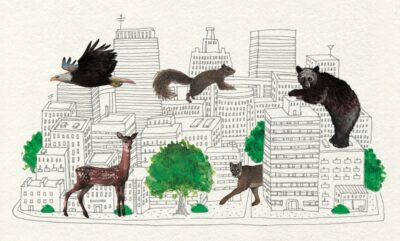
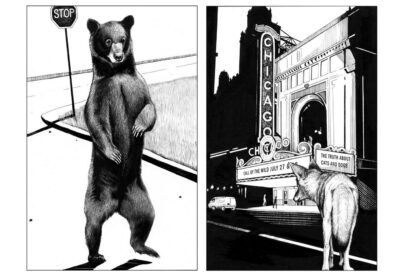 These domesticated animals then get cleared out by the late 19th and early 20th centuries, leading to this period from about 1920 to 1950 where there are fewer wild animals living in urban areas, particularly in North America, than really at any time before or since. This is a period in which some of the greatest thinkers about urban life were doing their writing, and almost everybody assumed that cities weren’t going to have animals in them.
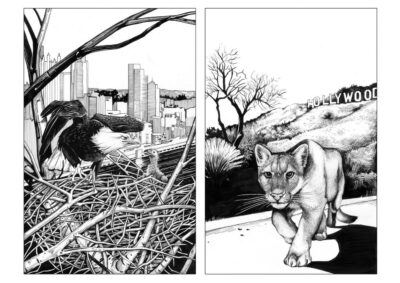 But these examples are exceptions, not the rule. And this is very time-dependent: Although there are a small number of creatures that can adapt very quickly, for most others, this would take a long period of time — much longer than it takes for their populations to go extinct. And so the problem is [talking] about this as a solution to the fact that we’re rearranging and degrading ecosystems in ways that make the world a much harder place to live for the vast majority of species out there.
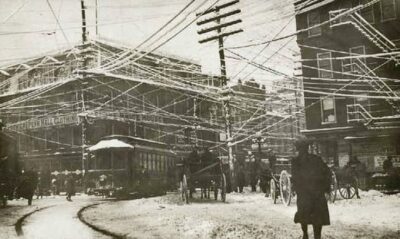 During these times the views of Louis Pasteur and Dr. Antoine Bechamp came into heated confrontation with one other. Pasteur maintained the new epidemics were caused by microorganisms, or viruses (literal translation — poisons). Bechamp claimed that they were the result of unsanitary living conditions of the times — contaminated water supplies, bad waste management, poor diet, etc. The debate went quiet after Pasteur’s death, with most western medical authorities aligning with his theories. The French medical authorities probed Pasteur’s legacy and found most of his findings were based on prejudicial opinions and thin on facts and proof. Many of his experiment’s results were found to be fraudulent. On Pasteur’s deathbed he declared Bechamp’s Terrain theory as everything and his own theory “as nothing.”
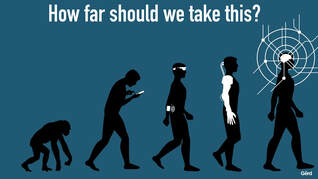 “The dream of the individual that his life could run automatically like an efficient machine, has begun to assume the proportions of a corporate nightmare in which automation unleashes its suffocating powers of standardization, over-regimentation, and depersonalization. Arthur Miller’s trenchant remark that we live in an “air-conditioned nightmare,” implies the unhappy co-existence of technological progress and spiritual regress. Like real nightmares, it takes place within a profound collective sleep therefore offering little chance of discovering either its cause or its cure. Technology can have an anaesthetic effect on man, dulling his moral consciousness and his capacity to enter fundamental, meditative thinking.”
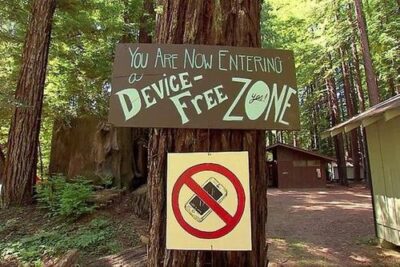 If you’re getting tired of the drudge of it all, then there is only one option. Opting out and going off grid. That may become a necessity as the new digital currency systems are rolled out, making all transactions trackable and not as anonymous as we are told. Everything will be stored in your digital I.D., and I do mean everything. Social credit systems are coming to the West courtesy of China’s experiment with it, and that is the stated agenda in the World Economic Forum’s “Great Reset”. It is possible to create a parallel economy, and it’s been done before, back before the 20th Century. The nightmarish artwork to the right was created by an A.I. program. It exemplifies everything that John Lash ascribes to Archontic consciousness…chaos is the agenda (link below). Is this what we truly want our lives to be ensconced in?