
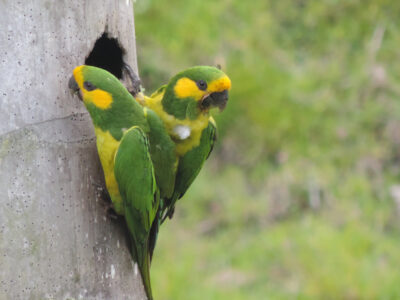
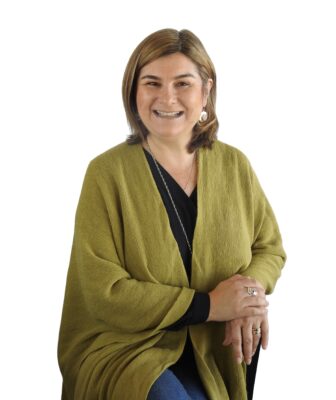
 Sara Inés Lara, leader of Colombia-based bird conservation organization Fundación ProAves, got her first taste of conservation’s potential more than 30 years ago. She grew up in one of the most biodiverse places in the world, seeking refuge in the forests, mountains, and pools of the Andes. Then, in 1998, she learned about the yellow-eared parrot.
It was once a common bird near her hometown and across the Colombian Andes, but its population had dwindled to a flock of 81 individuals. Captivated by the fate of the little bird, she abandoned her career as a civil engineer and, along with British ornithologist and her now-husband Paul Salaman and a group of other conservationists, founded ProAves to protect it.
With the help of nearby communities, especially local women, the group successfully fought for an end to the logging of wax palms—the bird’s nesting and feeding site—and hunting of the parrot for sport. The yellow-eared parrot was adopted as a regional emblem. Soon, the population started growing rapidly. Today, there are more than 2,800 individuals, and a couple of years ago, a flock of two dozen parrots was spotted near Lara’s hometown.
It was a huge win, and it taught Lara an important lesson: Women are instrumental in conservation. Women often feel the adverse effects of environmental degradation hardest, and their participation in ProAves’ work quickly demonstrated that they were essential to the success of community-based conservation projects. In many rural communities in Colombia, women are responsible for meeting their families’ most basic needs from nature, including water, firewood, and food—all of which become increasingly difficult as the environment suffers. But the women she encountered needed support, too.
“Many of the women I met were exhausted from childbearing, they did not have any food to feed their children, and they were desperate to have access to family planning,” says Lara.
In 2004, Lara founded Women for Conservation to increase access to public health, family planning, economic opportunities, and environmental conservation. The nonprofit organization aims to build the health of the communities bordering nature reserves, so they can be more economically independent and better able to protect their local environment. The organization runs workshops and trainings, ranging from environmental education to sustainable livelihoods and family planning, for women in 10 communities. It became independent of ProAves in late 2019, and reports that it has since directly reached more than 2,200 people, mostly women and young girls.
Women for Conservation also teaches women to produce wildlife-friendly artisan crafts to replace dependence on cattle ranching and prevent deforestation. In Puerto Pinzón, for example, as part of a broader project to protect the blue-billed curassow, the organization taught women to collect tagua nuts, the seeds of palm trees that are known as “vegetable ivory,” and to produce jewelry that they can sell on the market. Women for Conservation also encouraged the local community to ban hunting, use fuel-efficient stoves to decrease deforestation, and start a tree nursery.
Women for Conservation also runs workshops aimed at training women for careers in conservation and ecotourism.
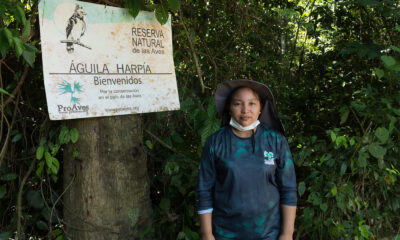
Ninfa Estella Carinialli was the first woman forest ranger trained and sponsored by Women for Conservation and ProAves. She obtained the International Ranger Award from the International Union for Conservation of Nature in 2021, and she works in the Águila Harpía ProAves Reserve, which is located in the eastern Colombian state of Guainía.
Carinialli’s first few years as a forest guard were hard. “My son drowned and my husband passed away from COVID,” she remembers. But, as it had with Lara, the forest proved a refuge. “I felt a deep sadness, but I am thankful for the memories I have with them, and for the opportunity to work in conservation, which makes me happy and fills me with peace.”
Overcoming Myths and Barriers
One of the most important—and sensitive—tasks Women for Conservation has taken on is a focus on reproduction and family planning in local communities. Lara initially had to deal with pushback from local communities. “When we started talking about family planning, we had a couple of incidents where women were severely beaten up for participating in our workshops,” she says. “I learned in a hard way that we need to present women’s empowerment not as a threat, but as a benefit for the family.”
In partnership with the reproductive and family health organization Profamilia, Women for Conservation organizes reproductive health workshops and provides family planning services. Since the beginning of the pandemic, the organization reports it has facilitated 360 contraceptive implants and 27 surgical procedures, including tubal ligations and vasectomies.
The ability to plan pregnancies becomes vital for women and girls when they can’t depend on the natural environment for basic survival needs, says Kelly Donado, who organizes logistics for the family planning brigades at Women for Conservation.
“When there’s ever-less food, jobs, and water, it scares me to think of bringing more babies into the world,” she says. “What kind of situation are we bringing them into? When girls have unplanned pregnancies, they cannot be adequate carers, and often, they’re not able to provide for their babies.”
Donado is leading a campaign in Zona Bananera, a municipality of Santa Marta, which suffers from water scarcity due to diversion for banana and palm growing. Her sister is a local nurse and has offered her home as a center for the clinics and workshops, as there are no medical clinics in the area. Ana Marquis, an 18-year-old from the area, is one of those who participated and decided to get a contraceptive implant.
“It lets me decide when to have my children,” she says in Spanish. She lost two pregnancies in recent years. “Right now, I’m looking after myself so that I can study and not have to worry about getting pregnant.”
In February 2022, Women for Conservation provided 72 women in Zona Bananera with contraceptive implants, in addition to offering cancer screenings, follow-ups, and reproductive education workshops. By the time the group’s representatives returned in March for checkups, more than 190 women and girls had added their names to the waiting list. Men also began requesting contraception from Women for Conservation, which resulted in the first vasectomy procedures in the Zona Bananera region in February 2022.
“Family planning has myriad social, economic, and environmental benefits: It improves the livelihoods and well-being of people and the planet and relieves population pressures on the natural environment, as well as on food production and water scarcity,” says Catriona Spaven-Donn, the Empower to Plan project coordinator for the British charity Population Matters, which supports Women for Conservation.
While Women for Conservation has made significant progress destigmatizing family planning, resistance remains. Marquis says her family forbid her from getting the implant until she was 18, as they have for her 16-year-old sister.
Some families believe that denying teenagers access to contraceptive resources will prevent them from engaging in sexual activity, a belief that has been widely debunked.
 Women for Conservation also faced resistance from its peers in the environmental world. Lara remembers other conservation leaders telling her that working with women was nice, but it was not a priority. Whenever she spoke about the link between a growing population, increasing poverty, and environmental impacts, she was told to avoid talking about population.
That’s a trend in recent decades among development, environmental, and reproductive rights community groups. The focus is instead on sexual and reproductive health, choice, and rights of individuals, rather than addressing demographic factors.
“In the past, people wasted a lot of time stereotyping our planetary crises, asking whether the main problem is population or consumption,” says Phoebe Barnard, professor of global change science and futures at the University of Washington, and founding director of the global Stable Planet Alliance, which aims to stabilize and reduce consumption and global population. “Well, of course, it’s not either–or. It’s both. Investing in women’s education, leadership, and opportunities remains a really powerful way to bring benefits not only for women, but for families and children, nature, and the future of our whole civilization.”
Still, even the issues of reproductive health and women’s rights can be difficult to raise among poor, rural Colombian women living in communities where maternity and a large number of children are often viewed positively, and where men may feel a loss of control over women’s sexuality when women use modern contraceptives. In such contexts, contraception is sometimes seen as undermining the traditional gender roles and the stability of the couple and is therefore not trusted or not used.
What’s clear is the close tie between women’s empowerment and environmental outcomes. Recent research found that 80% of people displaced by climate change are women. The U.N. made gender equality an integral part of its Sustainable Development Goals, from equal access to education to family planning.
That link has pushed Women for Conservation beyond family planning to providing basic services to ensure Colombian women are healthy and safe. Breast cancer is the most diagnosed form of cancer in Colombia, so last year, the NGO started providing mammograms and training women on how to conduct a self breast exam. With a drastic increase in calls to domestic violence hotlines during the pandemic, Lara has also started leading workshops and education on the subject.
Original article here

 “People think of laws being so objective and serious, and almost separate from the social norms,” says investigative climate journalist Amy Westervelt. “But it’s really just a handful of people’s beliefs that have gotten baked into law.”
 And it might just be working. She says the proof is in the pushback.
 No matter what is or isn’t happening in the world right now, you and I and all of Creation is loved beyond belief. No matter what is or isn’t happening in your life right now, you are loved beyond belief. No matter what will happen or won’t happen, it does not matter…we are loved beyond belief. No matter what, we are that Love, and we emerged from that Love by choice-desire-curiosity.

 With tonight’s Mercury station direct, we have another equally substantial event: the Sun is conjunct Saturn at the midpoint of Aquarius. This is a combination of aspects that says: Slow Down and Pay Attention. Many more celestial events argue for the same approach.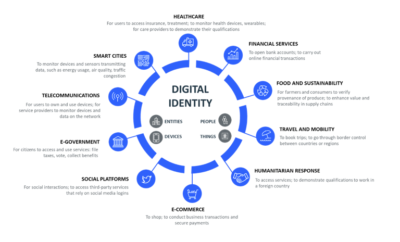
 These involve two things that are really one: social patterns, and the imposition of technology upon us. Aquarius is about electricity, and we now live in an entirely electrical society. We also live in a digital society. The patterns of our lives are now all but dictated by cellular technology. The “net” or the “web” now encompasses everything.
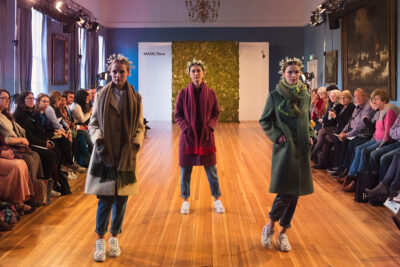 In the U.S., millions of shoppers pack clothing stores, excited to key into the newest trends while paying low prices. On the other side of the world, low-wage workers—many of them young girls— are crushed under the hammer of “fast fashion” (the mass production of cheap, poor quality, disposable clothing), laboring without safety protections or adequate rights. Fast fashion’s impacts on both the environment and human rights are evident, and slow fashion may just be the only solution to a greener future.
 It was powerful beyond time to enter that great living pulsing stony timeless being of light. It was vast beyond my understanding, as it seemed to extend beyond the sky into the stars that night. As I stood in the entrance to the great pyramid giving thanks for being there I learned more in that 1 minute passing through the entrance of the great Pyramid then I had accumulated in my entire life. Everything was shown to me in an instant like a life review and then the slate was cleared empty, awaiting being filled again. I entered the Great Pyramid as pure as a Virgin stripped of everything she once knew herself to be. The empty chalice of me at that moment in timelessness was ready to fill with the gifts of the great pyramid, which were beyond my ability to fully consume.
 Everything on earth is defined by a numerical configuration. All life can be reduced and explained by numbers. The currents of these numerical sequences bring into alignment a series of new considerations that will help earth to adjust and balance. Each numerical infusion is tailored to fit the needs of each human. As the brain adjusts to these new energies a lifting occurs allowing the individual to exit the human/animal ratio and be lifted into the human/light equation. Numbers and humans go hand in hand. From the beginning of time known we have been defined by a numerical equation whether age, birth date, weight, or the number of wives and camels we have. Numbers have always seemed to be our not so silent partners.
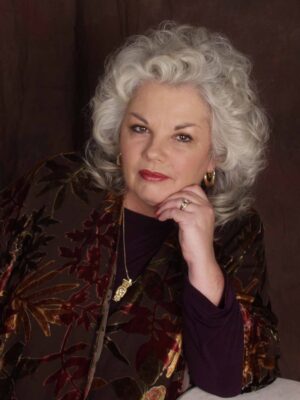 Gillian Macbeth Louthan is a Visionary, a Seer, born with the gift of knowing. She is a clairvoyant psychic with advanced channeling abilities since an early age. She has been a Metaphysical Teacher, Messenger and world known Trance-Channel, for over 40 years She works with the Councils of Light, Mary Magdalene, Merlin, White Buffalo Calf Woman, Mother Mary, the Pleiadians and many other energies of the Christ Light.
 Well, I’m back…sort of. Technically still on sabbatical until Monday, August 23rd, but there are too many things popping that need some attention. The main one is the upcoming second Full Moon in Aquarius in less than a month. It bookends the one that occurred on July 23rd at the 1st degree of Aquarius. This Sunday, the 22nd of August, the second one will be at the 29th degrees of Leo and Aquarius. The famous (or infamous) Anaretic degrees are compelling moments in any astrology timeline. Here’s an excerpt from The Dilemma of the 29th DEGREE: Thor’s Hammer or a Cornucopia? by Eileen Nauman, DH(UK):
 The little-known dwarf planet Sedna is currently also at the 29th Degree of Taurus and is being squared by the Sun and Moon at 29 Leo and Aquarius this Saturday. Some say that Sedna represents the soul’s destiny and has a hand in illumination and new consciousness. Sedna’s orbital path takes over 11,000 years to complete one revolution around our Sun, and she is way out there beyond the orbit of Pluto, so that last time Sedna was parked at the last degree of Taurus was at the end of the last Ice Age. Sedna was a goddess of the sea and intuitive feelings that belongs to the Inuit Indians of the Arctic regions.
 Isaac George