
A global mental health crisis is on the horizon — dementia.
It is a condition that can be caused by a number of diseases that gradually destroy nerve cells and damage the brain, resulting in a decline in cognitive functions, according to the World Health Organization.
With the advancement of medicine, science and technology, people are living longer lives and the world’s aging population is growing at an unprecedented rate, raising the risk of a larger cohort of people living with dementia.
“As the global population of older adults continues to rise, the number of people living with dementia is also expected to grow, reaching approximately 139 million dementia cases by the year 2050,” according to a recent report. As of 2023, there were more than 55 million people with dementia globally, according to the WHO.
By 2050, the population of people aged 65 and older will double to 2.1 billion, according to the World Health Organization.
Dementia risks
“Dementia is currently the seventh leading cause of death and one of the major causes of disability and dependency among older people globally,” according to the WHO, with nearly 10 million new cases of dementia every year.
Although there is no cure for the condition, according to research published in 2023 by the WHO, psychologists and researchers are working to prevent its onset.
While age is still the strongest known risk factor for dementia, researchers have found a set of 12 “potentially modifiable risk factors,” according to The Lancet Commission’s 2020 report:
- Less education
- Hypertension
- Hearing impairment
- Smoking
- Obesity
- Depression
- Physical inactivity
- Diabetes
- Low social contact
- Excessive alcohol consumption
- Traumatic brain injury
- Air pollution
“Together the 12 modifiable risk factors account for around 40% of worldwide dementias, which consequently could theoretically be prevented or delayed,” according to The Lancet.
While socioeconomic status and education levels can impact the onset of dementia, particularly in early life, several other risks can be avoided, according to the study.
“What we currently know is — what’s good for your heart is good for your brain, and that’s because there are a lot of vascular risk factors for dementia,” Timothy Singham, clinical psychologist and adjunct senior lecturer at the National University of Singapore, told CNBC Make It.
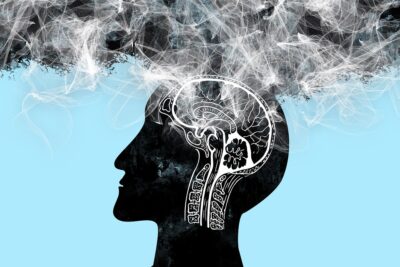
So, a lack of physical exercise, eating unhealthy foods, not getting enough sleep, drinking alcohol excessively as well as smoking puts a strain on your brain and risks developing future impairments, just like these pose a risk to one’s heart, said Singham.
While a healthy body can mitigate dementia risks, a healthy mind is no less important.
“We do know [that] people who have cumulative mental health symptoms during their lifetime, actually [have] an increased risk of dementia,” said Singham.
“If we see symptomatic improvement [to one’s mental health] throughout the life course, then that can decrease your chances of having dementia eventually.”
How to cut risks
Here are five key “protective factors” or things people can do to help prevent the onset of dementia:
- Regular physical activity
- Eating healthy
- Building a healthy support network
- Having good sleep hygiene
- Find ways to regulate stress and emotions
It can be easy to get wrapped up in the quick pace of daily life, so it’s important to take breaks.
“Your mental health suffers really quickly if you’re not — physically active, you don’t get to breathe, you don’t get to see nature much, you’re cooped up in the office or at home all day,” Singham said.
Additionally, it is crucial to build a healthy support network, not just online, but also in-person.
“I think a lot of young people are [leaning on their] online social networks — but we need to not give up the face-to-face [meetups] with friends,” Ng Ai Ling, deputy director and principal counsellor at Viriya Community Services told CNBC Make It.
“The other thing I would encourage young people to do is have a very disciplined, good sleep hygiene because our brains really really need to rest,” Ng said. She suggests getting at least seven hours of sleep every night.
Lastly, finding ways to regulate emotions and stress is crucial. Finding professional help when required or leaning on your support network are ways to protect your mental health, in addition to the daily upkeep of maintaining a healthy diet, exercise and sleep.
Loved ones’ struggle
As dementia cases continue to rise, mental health professionals expect its impact to extend beyond just those who are directly affected.
“The caregiver themselves are struggling to understand the illness — you lose someone to the illness, and the person who you used to be able to relate to and communicate [with] is no longer the same,” Ng said.
Caregivers and loved ones may risk developing mental health problems such as anxiety, depression and insomnia, Ng explained.
“Suddenly — someone you’re familiar with, and that person is forgetting you, and [they are] unable to perform as [they did] before the illness … There is this emotional distress that you go through,” she said.
Given the challenging situation, it is also important for people around a dementia patient to take care of their own mental and physical health as well, experts said.
Original article here



 This makes such feelings doubly unwelcome. Most of us can tolerate negative emotions if we see them as instrumental to something desirable—we do not run to a therapist to treat a fear if we think that it holds us back from doing something obviously risky. But unlike fear, what Heidegger calls anxiety and what Heid’s article describes do not protect us from anything specific. No wonder why Sigmund Freud called anxiety a “riddle.”

 I am having one of those days where my thoughts are leaning towards anticipating negative scenarios and engaging in the “what if’s” the mind is so compelled to do. And while, at this point, I know enough of the machinations of the mind to not go down those rabbit holes, it still can nag away at me as it was doing on this particular day.
 Potts stresses that his “mum brought me up good and proper” – but as a teenager growing up in Salford, he started getting into trouble. “We’ve had our hard times with Stuart, but a lot of it was typical boy stuff,” his mum, Pat Malone, said. “We used to say he was a lovable rogue.” Potts went to prison several times in his late teens and 20s, including an 18-month stint for beating up a burglar who had broken into a friend’s house. After he got out, he had a chequered career: working in factories, as a cobbler, locksmith and painter and decorator. But gradually, life stabilised. He got married, moved into a comfortable council house, and had three kids. Then, in 2016, after more than 15 years, the marriage broke down.





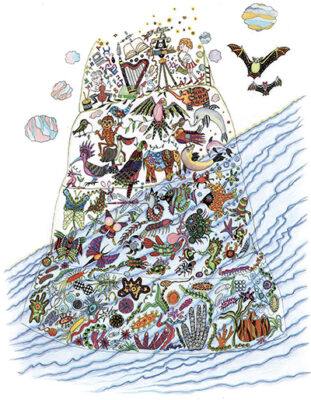
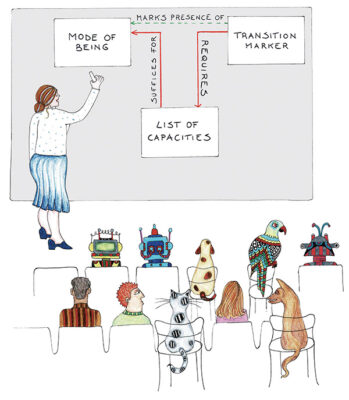 A consensus list of consciousness capacities is a step forward, but identifying each and every capacity may be difficult, and a list does not tell us how they interact to form a conscious being. If we could find a single system-property — an evolutionary marker of consciousness — that indicates that the organism has evolved all the capacities in the consensus list, we would be in a much better position. Finding such a single, diagnostic transition marker would make it possible to identify the simplest evolved conscious being, reconstruct the processes and structures that underlie it, and figure out how they interact. If we can follow the evolution of the marker and therefore the evolution of consciousness, we can discover when and how the conscious mode of being originated.
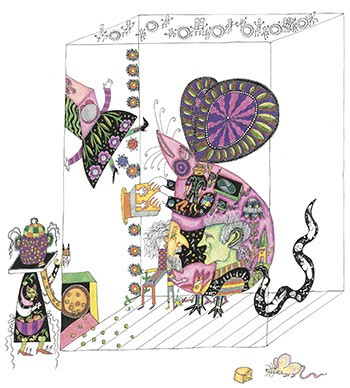 The study of associative learning today includes the investigation of the underlying cognitive and neurobiological mechanisms in ecologically relevant conditions such as the social conditions in which animals learn from each other. It is a rich and productive research program, which is no longer constrained by the behaviorists’ maxims. There is an irony in our (qualified) return to the 19th-century suggestion that open-ended associative learning is an evolutionary transition marker of consciousness, the very term that behaviorists tried to purge from psychology.
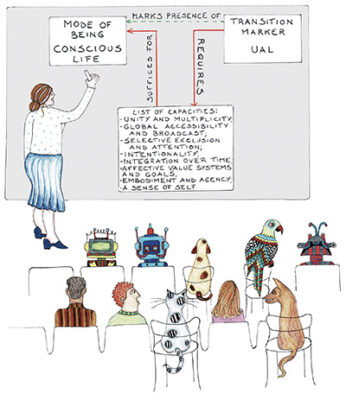 (i) It can distinguish between novel complex patterns of stimuli and actions. For example, it can learn to navigate in a new terrain — to discriminate between different types of animals, between different routes leading to food and shelter. The learned patterns are genuinely novel: they are not reflex-eliciting patterns, nor have they been learned in the past.
 Animals that could mitigate the high costs of UAL without giving up its benefits would have a great advantage. The evolutionary elaboration of the ubiquitous stress response and the evolution of active forgetting are some of the ameliorating mechanisms that we expect to find in all associatively learning animals, and in particular, in UAL animals. Suffering was not eliminated, but it became more controlled.