
 Sci-fi author Brian Herbert once wrote, “The only guarantee in life is death, and the only guarantee in death is its shocking unpredictability.” These words ring true to researchers who investigate what happens in a person’s final moments—and the frustration that comes with these studies. One big problem almost always gets in the way: How do you ask people what dying feels like when they’re no longer here?
Because we haven’t yet figured out how to communicate with the dead, the best-case scenario is talking to people who have had a close brush with death. They often mention seeing bright lights, their life flashing before their eyes, or visions of deceased loved ones. Some have even reported spotting the Grim Reaper by their bedside. It’s a paradoxical situation, says Kevin Nelson, a professor of neurology at the University of Kentucky: A few perceptions are common—a shining light, for instance—but the near-death experience is unique to each individual.
There’s still a lot of mystery when it comes to the cause, but the field is progressing thanks to people who have allowed scientists to study their brains in these situations. People who have survived these close calls say the encounter can be life-changing. One thing is certain: medical experts say near-death experiences are not a figment of the imagination.
And figuring out the mechanisms behind this phenomenon goes beyond general curiosity. One goal is to better understand how cardiac arrests happen. It could also potentially save lives, because doctors would have more knowledge for when to continue resuscitations after a patient’s heart stops.
“The research not only benefits our understanding of consciousness, but also in understanding the importance of the heart, lung, and brain in our everyday physiology,” says Jimo Borjigin, an associate professor of neurology at the University of Michigan Medical School.
Unreal recall
A near-death experience can happen to anyone. In fact, 1 in 10 people have reported sharper senses, slowed time, out-of-body sensations or other features associated with near-death, despite not being in grave danger. Research shows that near-death experiences come in four types: emotional, cognitive, spiritual and religious experiences, and supernatural. Of the four, people often recall supernatural activity, particularly the feeling of detaching from a physical body.
About 76 percent of people report an out-of-body experience during a near-death experience. While some people may attribute this to a spiritual experience, this is actually a sensory deception caused by the brain, which scientists have successfully replicated in people who are asleep. Research has shown that direct electrical stimulation of a brain area normally inactive in REM sleep can provoke an out-of-body experience. “Like a flip of a switch, you can literally throw somebody out of their body and back into their body,” Nelson says.
Often, though, people with cardiac arrest will recall near-death experiences. “About a quarter of people who suffer and survived cardiac arrest have memories about some aspect of near-death experience, Borjigin says. This is because people with cardiac arrest have decreasing blood pressure, she says. With the heart unable to pump properly, oxygen is unable to travel to the rest of the body, which is essential for every single cell in your body to survive. When a brain is alerted to a sudden decline in oxygen, your brain undergoes certain changes that contribute to the perceptual distortions that accompany a near-death experience.
Electrical surges in the brain
Ten years ago, Borjigin and her team observed that rats in simulated cardiac arrest still had fully active brains even 30 seconds after their hearts stopped. What’s more, their brains increased in electrical activity. To confirm whether this happens in humans, Borjigin recently tested the brains of four people who were critically ill and removed from life support.
 When these comatose patients were taken off their ventilators, they could not breathe on their own. But, using EEGs, Borjigin noticed two people showed a surge in gamma brainwaves as their bodies started shutting down. Gamma brainwaves are usually a sign of consciousness, because they are mostly active when someone is awake and alert.
“We’ve shown the brain has a unique mechanism that deals with a lack of oxygen because oxygen is so essential for survival that even an acute loss massively activates the brain and could lead to a near-death experience,” Borjigin explains.
The boost in gamma waves occurred in a brain area called the temporo-parieto-occipital (TPO) junction. This is responsible for blending information from our senses, including touch, motion, and vision, into our conscious selves. It’s impossible to know if the increased brain activity was related to any visions they may have had, because, sadly, the two patients died. But Borjigin suggests activation of this area suggests people may likely pick up sounds and understand language. “They might hear and perceive the conversation around them and form a visual image in their brain even when their eyes are closed.”
Hidden consciousness
In one of the largest studies of near-death experiences, an international team of doctors has linked the surge in brain activity to what they called a hidden consciousness immediately following death. In the study, people who were brought back to life through CPR after cardiac arrest could recall memories and conversations while they were seemingly unconscious.
Between May 2017 and March 2020, the team tracked 567 people who underwent a cardiac arrest. They used EEGs and cerebral oxygenation monitoring to measure electrical activity and brain oxygen levels during CPR. To study auditory and visual awareness, the team used a tablet showing one of 10 images on the screen, and five minutes after, it would play a recording of fruit names: pear, banana, and apple, for another five minutes.
Only 53 people of the original 567 participants were successfully resuscitated. Initially, they showed no signs of brain activity and were considered dead. But during the CPR, the team noticed bursts of activity. These spikes included gamma waves and others: delta, theta, alpha, and beta waves—all electrical activity that signals consciousness.
Twenty-eight of those 53 patients were cognitively capable of having an interview. Eleven people recalled being lucid during CPR, being aware of what was happening or showing perceptions of consciousness like an out-of-body experience. No one could recall the visual image but when asked to randomly name three fruit, one person correctly named all the fruits in the audio recording—though the authors note this could have been a random lucky guess.
The study authors also included self-reports of 126 other survivors of cardiac arrests not involved in the study and what they remembered from almost dying. Common themes included the pain and pressure of chest compressions, hearing conversations from doctors, out-of-body experiences, and abstract dreams that had nothing to do with the medical event.
The findings debunk the idea that an oxygen-deprived brain stays alive for only five to ten minutes. They also raise the question whether doctors can save people already determined to be dead. “These patients were actually alive within, as seen in the positive waves on the EEG, but externally they were dead,” says Chinwe Ogedegbe, an emergency trauma center section chief and coauthor of the study.
Beyond the brain’s resilience to the lack of oxygen, the authors propose an alternative “braking system” that could explain the distorted perceptions of consciousness. The brain normally filters and inhibits unneeded information when you’re awake. In this unconscious state, however, the braking system is gone, which could allow dormant brain pathways to activate and access a deeper realm of consciousness containing all of your memory, thoughts, and actions. “Instead of being hallucinatory, illusory or delusional, this appears to facilitate lucid understanding of new dimensions of reality,” the authors write in their paper.
Unfortunately, with only a small number of participants surviving their cardiac arrest, it’s unclear whether this altered consciousness is more visual or auditory. Ogedegbe is working to increase the number of participants in the next trial to 1,500. Doing so will give researchers a better idea of the type of brain activity that goes on when someone is at death’s door, and potentially provide comfort that their loved ones can sense them in their final moments.
Original article here
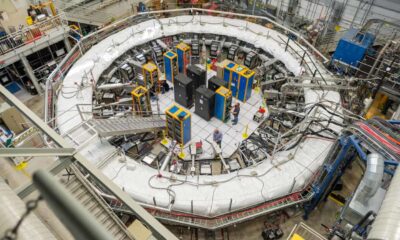 The tantalising theory that a fifth force of nature could exist has been given a boost thanks to unexpected wobbling by a subatomic particle, physicists have revealed.
 You might think that after centuries of studying light, we know pretty much everything about it. It’s true we’ve had breakthrough after breakthrough in using it, from illumination to communication, from examining the micro- and macro-universes to scanning our own bodies. We understand that light is an electromagnetic wave, thanks to James Clerk Maxwell, whose equations established that in 1865; and that it also appears as quantum packets of electromagnetic energy called photons, as Albert Einstein recognized in 1905. But the more we look into light, the more we see and the more we learn. The classical view of light as a wave still produces new science as light waves interact with artificial “metamaterials”; and we are still exploring light as a quantum particle. Both approaches provide ways to manipulate light that were once only science fiction. Here are five recent marvels.
 In ghost imaging, one of each of a swarm of entangled photon pairs interacts with the object and encounters a detector that simply registers its arrival. A second beam of the corresponding entangled partners never touches the object but goes straight to a sensitive multi-pixel detector. Computer analysis of the correlations between the two detector results creates a high-quality image of the object, even with weak illumination. This approach has uses such as converting images covertly taken by invisible infrared light to visible images detected by a high-resolution camera; or obtaining good quality X-ray images from a patient exposed to a low, relatively safe X-ray dose.
 Atomic clocks, combined with precise astronomical measurements, have revealed that the length of a day is suddenly getting longer, and scientists don’t know why.
 A comparison between these estimates and an atomic clock has revealed a seemingly ever-shortening length of day over the past few years.
 How do you see our collective future unfolding?
 While the internet had been in existence for some time, it was around the year 2000 that it became globally available to the world. Right around that time I found myself calling into play the sentience of this newly emerging global internet consciousness.
 Infinity: I sure can. I can give you several. For example, do you know that the whales of the world communicate not only with one another as a pack mind across the oceans of the planet, but they also have been communicating with life in other forms throughout the galaxy? I’m not talking here about extraterrestrials soaring in in spaceships. I’m talking about the seed of life that is contained within every living thing. Inside that seed is a spark, a life surge if you will. That spark is a communication device unlike anything that humans have yet understood. It’s how the mycelium networks work in communication with the trees, leaves and grasses of the world. It’s how the oceans are one mind, weaving and dancing their awesome endeavours into many facets to aid life wherever it is needed.
 In 1905, the 26-year-old Albert Einstein proposed something quite outrageous: that light could be both wave or particle. This idea is just as weird as it sounds. How could something be two things that are so different? A particle is small and confined to a tiny space, while a wave is something that spreads out. Particles hit one another and scatter about. Waves refract and diffract. They add on or cancel each other out in superpositions. These are very different behaviors.
 I believe in angels. I feel their presence in my life every hour, minute and second, I know they are with me, with us, but how? From a rational point of view, it is probably impossible to explain their existence, however I can say that they are part of my experience.
 I am always careful when using phrases and sentences saying something like, “Be you”, “Discover yourself “, or “Be authentic”. I admit that this kind of statement puts me off. However, sometimes it is difficult to express experiences that happen to us at a deep inner level, and I have come to the conclusion that, no matter what, words are here to be used the way we know and when adding the feeling from which they are expressed, any word gets validated.
 Everything is energy and science has been talking about it for quite some time now: think of Einstein and his famous formula, E=mc2. Remember Nikola Tesla as well, who said, “If you want to find the secrets to the universe, think in terms of energy, frequency and vibration.”