

1 Exercise on a Monday night (nothing fun happens on a Monday night).
2 On the fence about a purchase? Wait 72 hours before you buy it.
3 Tip: the quickest supermarket queue is always behind the fullest trolley (greeting, paying and packing take longer than you think).
4 Bring fruit to work. Bring fruit to bed!
5 Consider going down to four days a week. It’s likely a disproportionate amount of your fifth day’s work is taxed anyway, so you’ll lose way less than a fifth of your take-home pay.
6 Everyone has an emotional blind spot when they fight. Work out what yours is, and remember it.
7 Plant spring bulbs, even if they’re just in a pot.
8 Send a voice note instead of a text; they sound like personal mini podcasts.
9 Keep a bird feeder by a window, ideally the kitchen. It’ll pass the time when you’re washing up.
10 Always bring ice to house parties (there’s never enough).
11 Get the lighting right: turn off the overhead one, turn on lots of lamps (but turn off when you leave the room).
12 Sharpen your knives.
13 Feeling sluggish at work? Try the Pomodoro technique: 25 minutes on, five-minute break, and repeat.
14 Buy a cheap blender and use it to finely chop onions (it saves on time and tears).
15 Keep your children’s drawings and paintings. Put the best ones in frames.
16 Set aside 10 minutes a day to do something you really enjoy – be it reading a book or playing Halo.
17 Don’t be weird about how to stack the dishwasher.
18 Reuse all plastic bags – even bread bags. Much of the packaging you can’t reuse can be taken to larger branches of supermarkets for recycling.
19 Take a photo of the tag you are given when leaving your coat in a cloakroom.
20 Can’t sleep? Try a relaxing soak with lavender bath oil before bed.
21 Add the milk at least one minute after the tea has brewed.
22 Laugh shamelessly at your own jokes.
23 It might sound obvious, but a pint of water before bed after a big night avoids a clanger of a hanger.
24 Start a Saturday morning with some classical music – it sets the tone for a calm weekend.
25 Look closely.
26 Set time limits for your apps. Just go to the settings on your smartphone and add a limit – for example, if you have an iPhone turn on Screen Time.
27 If possible, take the stairs.
28 Always be willing to miss the next train.
29 Eat meat once a week, max. Ideally less.
30 Be polite to rude strangers – it’s oddly thrilling.
31 Ask questions, and listen to the answers.
32 Connect with nature: stand outside barefoot for a few minutes – even when it’s cold.
33 Join your local library – and use it.
34 Go for a walk without your phone.
35 Eat salted butter (life’s too short for unsalted).
36 Stretch in the morning. And maybe in the evening.
37 If you’re going less than a mile, walk or cycle. About half of car journeys are under two miles, yet these create more pollution than longer journeys as the engine isn’t warmed up yet.
38 Sleep with your phone in a different room (and buy an alarm clock).
39 Send postcards from your holidays. Send them even if you’re not on holiday.
40 Instead of buying new shoes, get old ones resoled and buy new laces.
41 Buy a plant. Think you’ll kill it? Buy a fake one.
42 Don’t have Twitter on your phone.
43 If you find an item of clothing you love and are certain you will wear for ever, buy three.
44 Try taking a cold shower (30 seconds to two minutes) before your hot one. It’s good for your health – both physical and mental.
45 Text to say thank you.
46 Read a poem every day. Keep a compendium, such as A Poem for Every Day of the Year, by your bed.
47 Take out your headphones when walking – listen to the world.
48 Buy secondhand.
49 Buy in person!
50 Learn how to floss properly.
51 If something in the world is making you angry, write (politely) to your MP – they will read it.
52 Say hello to your neighbours.
53 Learn the basics of repairing your clothes.
54 Always bring something – wine, flowers – to a dinner/birthday party, even if they say not to.
55 Learn the names of 10 trees.
56 Call an old friend out of the blue.
57 Every so often, search your email for the word “unsubscribe” and then use it on as many as you can.
58 Buy a newspaper. (Ideally this one.)
59 Always have dessert.
60 Drop your shoulders.
61 Make something from scratch. Works best if it’s something you’d normally buy, such as a dress or a bag.
62 Go to bed earlier – but don’t take your phone with you.
63 Volunteer. Go to gov.uk/government/get-involved for ideas.
64 Dry your cutlery with a cloth (it keeps it shiny).
65 Instead of buying a morning coffee, set up a daily transfer of £2 from a current into a savings account and forget about it. Use it to treat yourself to something different later.
66 Don’t save things for “best”. Wear them – enjoy them.
67 Sing!
68 Think about your posture: don’t slouch, and don’t cross your legs.
69 Hang your clothes up. Ideally on non-wire hangers (it’s better for them).
70 Skinny-dip with friends.
71 Switch your phone off on holiday (or at least delete your work email app).
72 Always use freshly ground pepper.
73 Thank a teacher who changed your life.
74 Respect your youngers.
75 Keep your keys in the same place.
76 Ditch the plastic cartons and buy milk in glass bottles.
77 Rent rather than buy a suit/dress for that forthcoming wedding (even if it’s your own).
78 Always book an extra day off after a holiday.
79 Ignore the algorithm – listen to music outside your usual taste.
80 Mute or leave a WhatsApp group chat.
81 Learn a TikTok dance (but don’t post it on TikTok).
82 Cook something you’ve never attempted before.
83 Join a local litter-picking group.
84 Handwash that thing you’ve never cleaned.
85 Don’t get a pet/do get a pet.
86 Nap.
87 Learn how to breathe deeply: in through the nose, out through the mouth, making the exhale longer than the inhale.
88 Buy a bike and use it. Learn how to fix it, too.
89 Politely decline invitations if you don’t want to go.
90 If you do go, have an exit strategy (can we recommend a French exit, where you slip out unseen).
91 If in doubt, add cheese.
92 Don’t look at your phone at dinner.
93 Do that one thing you’ve been putting off.
94 Give compliments widely and freely.
95 Set up an affordable standing order to a charity.
96 Keep a book in your bag to avoid the temptation to doomscroll.
97 Listen to the albums you loved as a teenager.
98 Make a friend from a different generation.
99 Staying over at a friend’s place? Strip the bed in the morning.
100 For instant cheer, wear yellow.
Original article here

 Some utilities now offer incentives to customers in exchange for the ability to control the smart thermostat when power demand is high. The utility’s control is often minimal and customers can typically override the utility setting, but a utility in Colorado recently locked thousands of customer thermostats during an “energy emergency.” If you enroll in this kind of program, be sure you understand what you may give up as a participant.





 The sky was a classic California cloudless blue. The light, February soft. The sea breeze, easy, fragrant, and chilly. The waves, mellow laps against the rocky arch at the Natural Bridges State Marine Reserve, about 75 miles south of San Francisco.
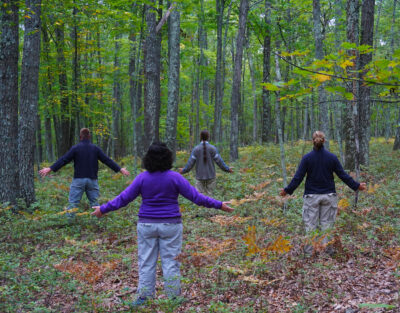 Doing it before school or work would be a beautifully irreverent and rebellious thing to do: to remind yourself that this is our most important work as human beings, rather than something that is done after our jobs or homework or housework are complete, and only then if we are not yet completely weighed down by exhaustion.
 The good life is the simple life. Among philosophical ideas about how we should live, this one is a hardy perennial; from Socrates to Thoreau, from the Buddha to Wendell Berry, thinkers have been peddling it for more than two millennia. And it still has plenty of adherents. Magazines such as Real Simple call out to us from the supermarket checkout; Oprah Winfrey regularly interviews fans of simple living such as Jack Kornfield, a teacher of Buddhist mindfulness; the Slow Movement, which advocates a return to pre-industrial basics, attracts followers across continents.
 Somewhat paradoxically, then, the case for living simply was most persuasive when most people had little choice but to live that way. The traditional arguments for simple living in effect rationalise a necessity. But the same arguments have less purchase when the life of frugal simplicity is a choice, one way of living among many. Then the philosophy of frugality becomes a hard sell.
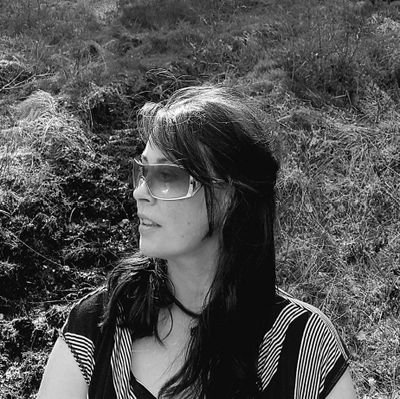 Hi, I’m Anne Fairley.





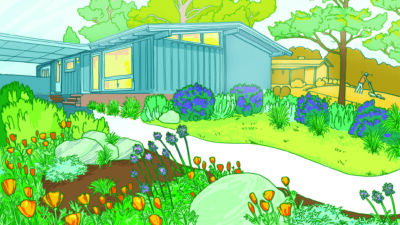
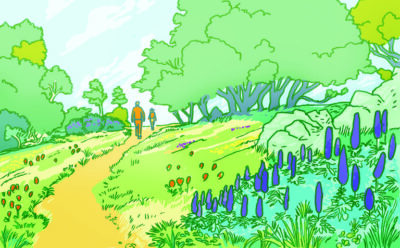 The great likelihood is that you’re going to be adapting to the conditions you already have. Those conditions might not appear to be “optimal” in the traditional horticultural sense. But plants grow in the wild without fertilizer. Survivors adapt, learning to love even marginal soil. They also forge relationships with other plants, animals, and the microbiology of the soil. These relationships become the foundation of a sustainable and resilient landscape.
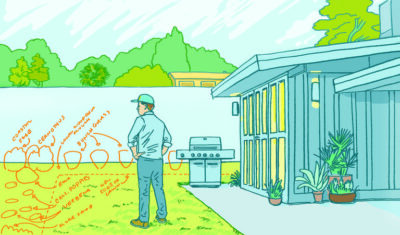 Now that you’ve observed, ask…What plants will thrive in my yard? In other words, what does nature want? And what do I want? Where these desires meet will be the foundation of your design.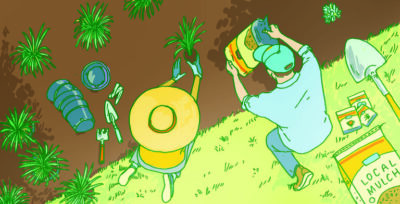
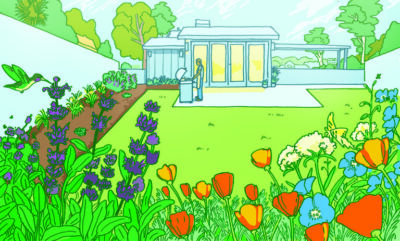 Watch how the landscape evolves. “Don’t be discouraged if some of the plants in your palette don’t do well, even though you did the research,” says Max Kanter, cofounder of Saturate, an ecologically minded gardening company in Los Angeles. Some might not be placed quite right, while others will thrive in ways you didn’t expect. “Start to practice the idea that the garden is a process,” he says. It’s not an installation or a transaction; it’s a relationship.
 Over the course of human history, scientists believe that humans have cultivated more than 6,000 different plant species. But over time, farmers gravitated toward planting those with the largest yields. Today, just three crops – rice, wheat and corn – provide nearly half of the world’s calories.
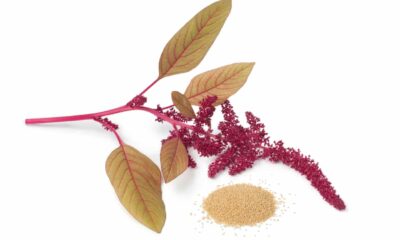 From leaf to seed, the entirety of the amaranth plant is edible. Standing up to eight feet tall, amaranth stalks are topped off with red, orange or green seed-filled plumes. Across Africa and Asia, amaranth has long been eaten as a vegetable – whereas Indigenous Americans also ate the plant’s seed: a pseudo-cereal like buckwheat or quinoa.
 For thousands of years, farmers across West Africa have cultivated fonio – a kind of millet that tastes like a slightly nuttier couscous or quinoa. Historically, fonio is considered to be Africa’s oldest cultivated cereal and was regarded by some as the food of chiefs and kings. In countries such as Senegal, Burkina Faso and Mali, fonio would be served on holy days, like at weddings and during the month of Ramadan.
 In the 1940s, more than 5m acres of cowpeas were grown in the US – the majority, as their name suggests, for hay to feed livestock. But long before cowpeas – also called southern peas or black-eyed peas – came to the Americas, they were grown for human consumption in West Africa. Although cowpea production has declined in the US in recent decades, the crop is hugely important in much of Africa. Nigeria is the world’s largest cowpea producer.
 In the tropics of Southeast Asia and Polynesia, taro has long been grown as a root vegetable, not unlike the potato. But as rising temperatures threaten cultivation of the crop in its natural habitat, farmers in the continental US are trying to adapt the tropical perennial to grow as a temperate annual, because it cannot survive the cold of US winters.
 While many alternative crops are just plants that were grown somewhere else in the world generations ago, others have been cultivated specifically to withstand climate change.