
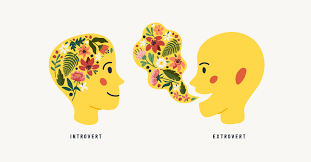
 Being the most talkative person in the room may be a good way to get people’s attention, but it doesn’t necessarily mean you have the best ideas.
As a neuroscientist, I’ve worked with large companies like Google and Deloitte on how to attract and retain top talent, and I’ve found that employers tend to favor extroverts.
But there are some surprising strengths that introverts bring to the table, and they shouldn’t be overlooked.
As bestselling author Susan Cain points out in her book, Quiet: The Power of Introverts in a World That Can’t Stop Talking: “Extroverts are more likely to focus on what’s happening around them. It’s as if extroverts are seeing ‘what is,’ while their introverted peers are asking ‘what if.’”
What sets introverts apart from extroverts
Don’t get me wrong: Both extroverts and introverts have wonderful qualities. But research shows that introverts may have the upper hand.
Here are four highly coveted skills that set introverts apart from everyone else:
1. Introverts think more.
Gray matter, which exists in the outer most layer of the brain, serves to process and release new information in the brain.
One Harvard study found that introverts’ brains work differently, and have thicker gray matter compared to extroverts. In people who are strongly extroverted, gray matter was consistently thinner. Introverts also showed more activity in the frontal lobes, where analysis and rational thought take place.
Another study that scanned brains of both introverts and extroverts found that, even in a relaxed state, the introverted brain was more active, with increased blood flow.
2. Introverts can focus longer.
When Albert Einstein — a known introvert — was a child, his teachers thought he was a quiet loner who seemed a million miles away, lost in his thoughts.
Einstein said: “It’s that I stay with problems longer.” This ability to focus intensely is a key characteristic of introverts, who often have more extended focus than extroverts.
Because they enjoy spending time alone, introverts tend to be more willing than extroverts to put in the hours alone necessary to master a skill.
3. Introverts are often “gifted” in a specific field.
On average, introverts and extroverts are the same in terms of intelligence. But statistics show that around 70% of gifted people are introverts.
People are considered “gifted” when they exhibit above-average intelligence or a superior talent for something, such as music, art or math.
If your workplace is dominated by extroverts who criticize those who prefer to work alone — or skip after-work cocktails — as “not team players,” it may inadvertently alienate gifted people.
4. Introverts do the right thing.
Introverts tend to be less swayed by external events and driven more by their inner moral compass.
A 2013 study on social conformity found that extroverts are more willing to go along with the opinion of the majority, even if it’s wrong. Extroverts are more likely than introverts to succumb to social pressure.
The researchers concluded: “The higher the pressure, a larger number of conforming responses are given by extroverts.” In contrast, “there is no difference in conforming responses given to high- and low-pressure levels by introverts.”
How to create a workplace where introverts thrive
Introverts are often exhausted in their workplace because many of their colleagues don’t know how to harness the power introversion.
 Here’s how managers can create an introvert-friendly workplace:
- Respect boundaries.It takes up to 23 minutes for a person to regain focus after they’ve been interrupted. Don’t expect people to answer every email or Slack message immediately.
- Brainstorm alone.Letting people shout ideas at each other in a room sounds like fun. But research shows that if you want to maximize creativity, let people generate ideas by themselves before sharing them in a group. Bonus: Your introverts will be far more comfortable sharing.
- Shorten meetings.Many introverts, as you can probably guess, are not fans of meetings. Let go of the idea that the entire office has to be invited to every meeting so that no one feels left out.
- Don’t force a certain type of communication.The introverts in your office may prefer emails, while the extroverts might enjoy handling business on the phone. Encourage people to decide how they want to communicate (e.g., turning cameras on or off), even if it differs from yours.
- Provide the option of privacy.Extroverts may love to see everybody all the time, but introverts tend to need privacy. The solution is a flexible work environment that provides silence and private space for introverts, and lively, interactive open space for extroverts.
As an introvert, my general message to employers is, “Let my people rest.” Like it or not, the future of work is all about more choices, autonomy, and a culture that embraces introversion.
Original article here
 For 30 years Isabelle Arnulf, head of the sleep disorders clinic at Pitié-Salpêtrière Hospital in Paris, has studied sleep and its associated disorders. During her career, Arnulf, who is also a professor of neurology at Sorbonne University in France, has researched a broad range of sleep conditions: sleepwalking, rapid eye movement (REM) sleep behavior disorder, lucid dreaming, sleep in Parkinson’s disease and hypersomnia, or excessive daytime sleepiness. As part of these studies, Arnulf investigated how these disorders affect dream states. In an interview with Scientific American’s French-language sister publication Pour la Science, the neurologist talks about whether depression or trauma affects dreaming and whether one should worry about recurring nightmares.
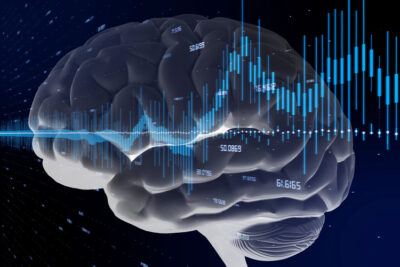 In depression, dreams are very negative, mirroring the mental state of depressed people during the day. This parallel was brought to light in the early 2000s by researcher Dieter Riemann and his colleagues at the University of Freiburg in Germany. By analyzing the dreams of depressed patients treated with antidepressants, they discovered that as the treatment began to take effect after several weeks, the content of these dreams became less and less gloomy, and the mood of the patients improved.
 For a long time, we approached recurring nightmares through the prism of psychoanalysis, [which explained them as] unresolved trauma that we would have to work to resolve. But the fact is: we don’t know.
 In February 2015, a Scottish woman uploaded a photograph of a dress to the internet. Within 48 hours the blurry snapshot had gone viral, provoking spirited debate around the world. The disagreement centred on the dress’s colour: some people were convinced it was blue and black while others were adamant it was white and gold.
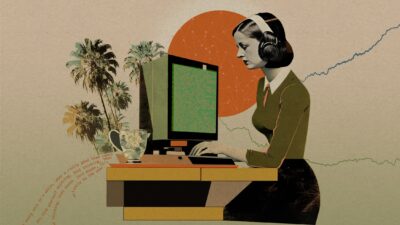
 Since last fall, artificial intelligence — in particular ChatGPT and its recently unveiled successor, GPT-4 — has taken center stage in conversations about the future of business, work, and learning. ChatGPT became the fastest-growing consumer application in history — outpacing Instagram and even TikTok — and Google lost $100 billion in market cap after a botched AI product demonstration raised questions about its ability to compete.
 Not getting enough sleep is detrimental to both your health and productivity. Yawn. We’ve heard it all before. But results from one study impress just how bad a cumulative lack of sleep can be on performance. Subjects in a lab-based sleep study who were allowed to get only six hours of sleep a night for two weeks straight functioned as poorly as those who were forced to stay awake for two days straight. The kicker is the people who slept six hours per night thought they were doing just fine.
 If you think you sleep seven hours a night, as one out of every three Americans does, it’s entirely possible you’re only getting six.
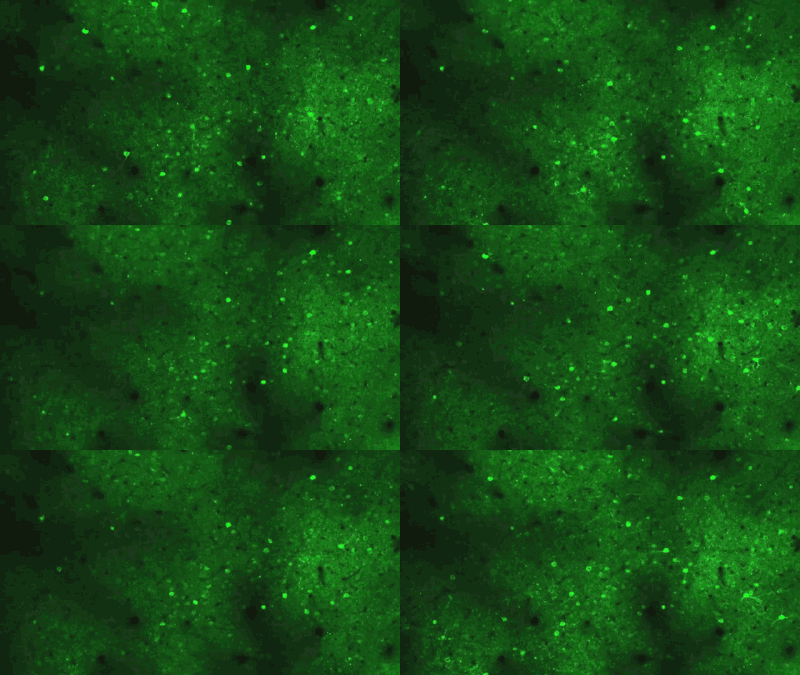 The brain seems to get it just right. “This is in a cool sweet spot in between,” said Eric Shea-Brown, a mathematical neuroscientist at the University of Washington who was not involved in the study. “It’s a balance between being smooth and systematic, in terms of mapping like inputs to like responses, but other than that, expressing as much as possible about the input.”
 Consciousness permeates reality. Rather than being just a unique feature of human subjective experience, it’s the foundation of the universe, present in every particle and all physical matter.
 Interest in panpsychism has grown in part thanks to the increased academic focus on consciousness itself following on from Chalmers’ “hard problem” paper. Philosophers at NYU, home to one of the leading philosophy-of-mind departments, have made panpsychism a feature of serious study. There have been several credible academic books on the subject in recent years, and popular articles taking panpsychism seriously.
 “The core features of social anxiety were not evident in loneliness,” Lieberz said. Those results suggest, she said, that treating loneliness simply by telling lonely people to go out and socialize more (the way you can treat a phobia of snakes with exposure) will often not work because it fails to address the root cause of the loneliness. In fact, a recent meta-analysis confirmed that simply providing lonely people with easier access to potential friends has no effect on subjective loneliness.
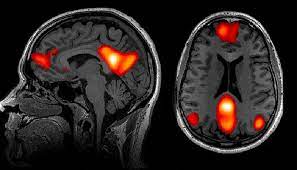
 Bzdok and his team showed that some regions of the default network are not only larger in chronically lonely people but also more strongly connected to other parts of the brain. Moreover, the default network seems to be involved in many of the distinctive abilities that have evolved in humans — such as language, anticipating the future and causal reasoning. More generally, the default network activates when we think about other people, including when we interpret their intentions.
 Primate studies and the results of the Neumayer III polar station experiment show that experience and social environment can exert a powerful influence on the structure of an individual’s brain, hard-wiring the changes that loneliness can cause. On the other hand, studies of twins have shown that loneliness is partly heritable: Almost 50% of the variation in individuals’ feelings of loneliness can be explained by genetic differences.