
I’ve been watching for how greatness shows up lately. For example, how Ryan Reynolds and Rob McElhenney sourced Wrexham AFC into super winners with such grace, generousity and community spirit, and how Iam Tongi is winning the hearts of so many on American Idol this year.
Here are some insights into what I’ve gleaned from my recent questing into greatness …
* Genuine authenticity and kindness matter. We are looking for super heroes who personify these traits along with greatness.
* People matter. Animals matter. The Earth and Nature matter. There is great Love in greatness for these things.
* Making the world a greater place is an exhilarating, high vibing, Joy-filled adventure. As Ryan Reynolds put it, it’s addictive.
* Once you surrender your smallness, greatness will flood you with everything you need to make it so. Ideas, innovation, great creativity, laughter, sunshine emanating from you and more.
* Saying YES to greatness is one of the best things we might ever do in our lifetime. It opens the door to adventure and super herodom, even if you might be the only one who knows it’s so. Because it’s not about fortune and fame, you see. It’s about contribution and being moved so profoundly that Life is forever changed by the very presence of greatness in our world.
About the Author:
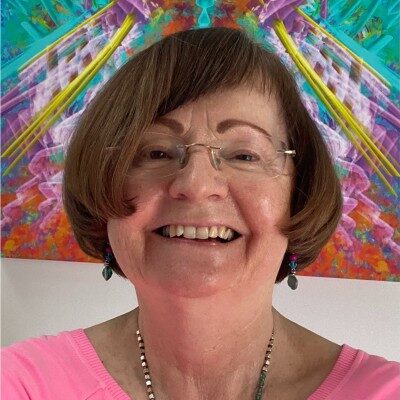
Soleira Green is a visionary author, quantum coach, ALLchemist & future innovator. She has been creating leading edge breakthroughs in consciousness, quantum evolution, transformation, innovation, intelligence and more over the past 25 years, has written and self-published eleven books, and taught courses all over the world on these topics.
 In the summer of 2021, I experienced a cluster of coincidences, some of which had a distinctly supernatural feel. Here’s how it started. I keep a journal and record dreams if they are especially vivid or strange. It doesn’t happen often, but I logged one in which my mother’s oldest friend, a woman called Rose, made an appearance to tell me that she (Rose) had just died. She’d had another stroke, she said, and that was it. Come the morning, it occurred to me that I didn’t know whether Rose was still alive. I guessed not. She’d had a major stroke about 10 years ago and had gone on to suffer a series of minor strokes, descending into a sorry state of physical incapacity and dementia.
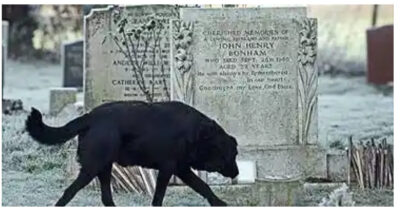 While some coincidences seem playful, others feel inherently macabre. In 2007, the Guardian journalist John Harris set out on ‘an intermittent rock-grave odyssey’ visiting the last resting places of revered UK rock musicians. About halfway through, he went to the tiny village of Rushock in Worcestershire to gather thoughts at the headstone of the Led Zeppelin drummer John Bonham, who died at the age of 32 on 25 September 1980, after consuming a prodigious quantity of alcohol. A Guardian photographer had visited the grave a few days earlier to get a picture to accompany the piece. It was, writes Harris, ‘an icy morning that gave the churchyard the look of a scene from The Omen’ and, fitting with one of the key motifs of that film, the photographer was ‘spooked by the appearance of an unaccompanied black dog, which urinates on the gravestone and then disappears’. ‘Black Dog’ (1971) happens to be the title of one of the most iconic songs in the Led Zeppelin catalogue.
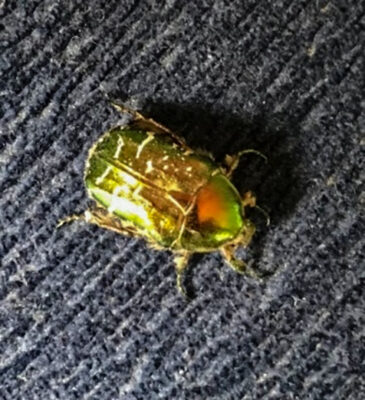 Jung was the first to bring coincidences into the frame of psychological enquiry, and made use of them in his analytic practice. He offers an anecdote about a golden beetle as an illustration of synchronicity at work in the clinic. A young woman is recounting a dream in which she was given a golden scarab, when Jung hears a gentle tapping at the window behind him and turns to see a flying insect knocking against the windowpane. He opens the window and catches the creature as it flies into the room. It turns out to be a rose chafer beetle, ‘the nearest analogy to a golden scarab that one finds in our latitudes’. The incident proved to be a transformative moment in the woman’s therapy. She had, says Jung, been ‘an extraordinarily difficult case’ on account of her hyper-rationality and, evidently, ‘something quite irrational was needed’ to break her defences. The coincidence of the dream and the insect’s intrusion was the key to therapeutic progress. Jung adds that the scarab is ‘a classic example of a rebirth symbol’ with roots in Egyptian mythology.
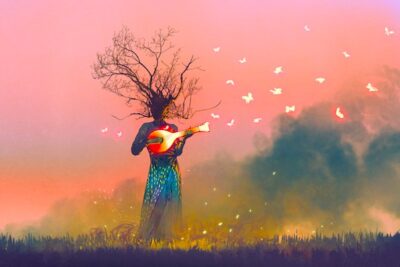 I have come far in my life, farther than I ever dreamed was even possible. And yet my dreaming continues, urging me ever onward.
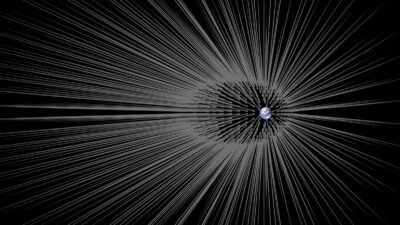 Consciousness permeates reality. Rather than being just a unique feature of human subjective experience, it’s the foundation of the universe, present in every particle and all physical matter.
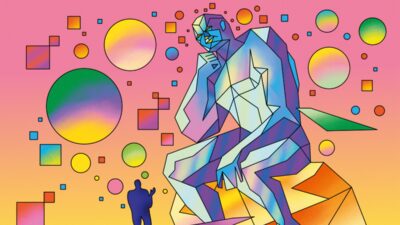 Interest in panpsychism has grown in part thanks to the increased academic focus on consciousness itself following on from Chalmers’ “hard problem” paper. Philosophers at NYU, home to one of the leading philosophy-of-mind departments, have made panpsychism a feature of serious study. There have been several credible academic books on the subject in recent years, and popular articles taking panpsychism seriously.
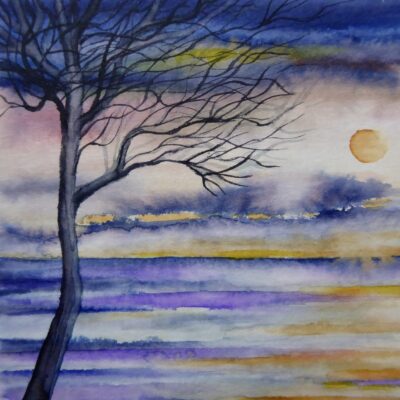
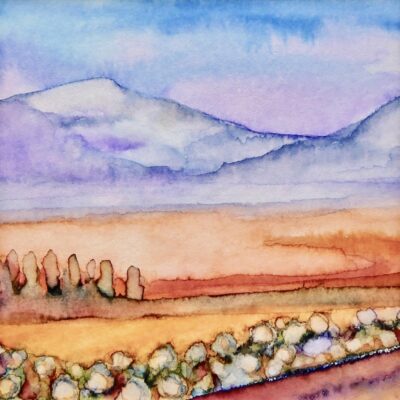
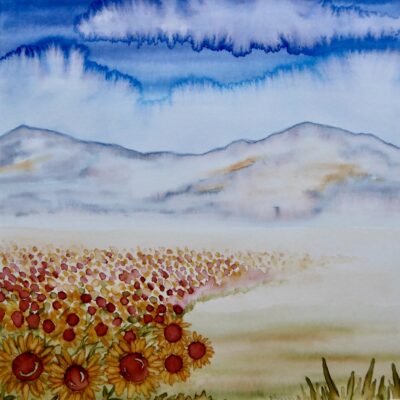
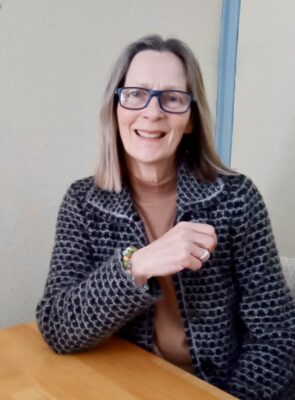 I’ve been artistic all my life, but I don’t think of myself as an artist. I mainly write spiritual poetry; exploring our shared human condition. I paint small watercolour and ink paintings to accompany them on my website.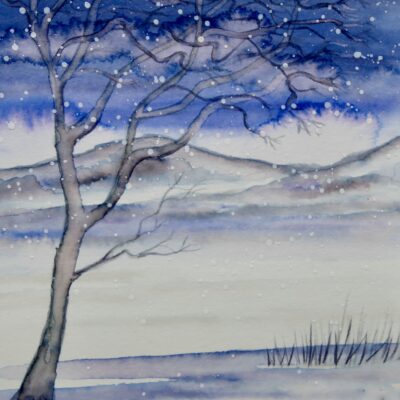
 The sky was a classic California cloudless blue. The light, February soft. The sea breeze, easy, fragrant, and chilly. The waves, mellow laps against the rocky arch at the Natural Bridges State Marine Reserve, about 75 miles south of San Francisco.
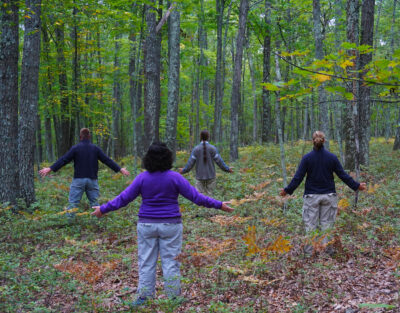 Doing it before school or work would be a beautifully irreverent and rebellious thing to do: to remind yourself that this is our most important work as human beings, rather than something that is done after our jobs or homework or housework are complete, and only then if we are not yet completely weighed down by exhaustion.
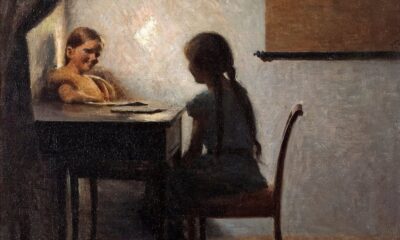 The good life is the simple life. Among philosophical ideas about how we should live, this one is a hardy perennial; from Socrates to Thoreau, from the Buddha to Wendell Berry, thinkers have been peddling it for more than two millennia. And it still has plenty of adherents. Magazines such as Real Simple call out to us from the supermarket checkout; Oprah Winfrey regularly interviews fans of simple living such as Jack Kornfield, a teacher of Buddhist mindfulness; the Slow Movement, which advocates a return to pre-industrial basics, attracts followers across continents.
 Somewhat paradoxically, then, the case for living simply was most persuasive when most people had little choice but to live that way. The traditional arguments for simple living in effect rationalise a necessity. But the same arguments have less purchase when the life of frugal simplicity is a choice, one way of living among many. Then the philosophy of frugality becomes a hard sell.