
 The day before I turned 55 I received a notice from my bank. The auxiliary checking account I’d opened for online transactions would shortly be assessed an $8 monthly fee unless I a) maintained a $1000 minimum balance, b) deposited $250/month, or c) used my ATM card at least ten times per month, none of which was feasible for me.
A bit put out by this parsimonious behavior from a bank I’d found very customer-centric until then, I approached the assistant manager. She skimmed the letter and said confidently, “We’ll find a solution.” After a couple of basic usage questions, she asked, “Are you 55?” I exclaimed, “My birthday’s tomorrow!” She said, “Then the account is free,” and scrawled, “55+ FREE” across the notice in red marker.
This was my first encounter with the unexpected perks of my seniority.
Sea Change in Consciousness
Coming of age as a member of the silver tsunami is a sea change from growing older in yesteryear. As the Boomer wave grays the globe, some members of this tribe have concocted playful descriptions: “chronologically gifted” and “over the speed limit” are two of my favorites.
Language matters, because, like the mirror, it reflects how we see ourselves. Cross-cultural anthropologist and author Angeles Arrien once shared how a child stroked her grandmother’s cheek, crooning, “Grandma, you have such pretty designs on your face.” Too young to “know better,” the little girl viewed her grandmother’s facial lines as fine art. Wrinkles can signify ripeness, wisdom, and a life lived by design, indeed.
Yet even as robustly alive as many of today’s elders are, I’m nowhere near ready for “Gran Central Station,” as I refer to the exuberant participants at a nearby senior center. And therein lies the conundrum.
“Forty is the old age of youth. Fifty is the youth of old age,” wrote French novelist Victor Hugo 150 years ago. Hugo lived to be 83, pretty “ripe old” for the 19thcentury. His observation is daunting to me, because I don’t feel remotely on the cusp of old age.
Marc Freedman agrees. Of the description “young old”, the author of The Big Shift: Navigating the New Stage Beyond Midlife asks, “Are most people in their 50s and 60s in anything resembling ‘old age’? Are they elderly? Senior citizens? (Why not child old for those in their 40s, infant old for the late-thirties set, and prenatal old for latter twentysomethings?)” Prenatal old. Love it!
This can be a juicy time. Visionary OB/GYN Christiane Northrup, MD, author of The Wisdom of Menopause, says midlife brings potential for regeneration. She cites research showing women in their 60s and 70s enjoy the best sex of their lives. Clean out emotional debris, claim your power — and it’s an erotic feast.
A Place of Passionate Possibility
Just as old age was reimagined as “the Golden Years” and retirement as a destination, Boomers are rapidly reinventing this time as a place of passionate possibility.
In The Big Shift, Freedman chronicles how Granville Stanley Hall publishedSenescence: The Last Half of Lifein 1922,when he was 76. Hall characterized this period as “a precious bud of vast potentialities” and urged older people to step up:
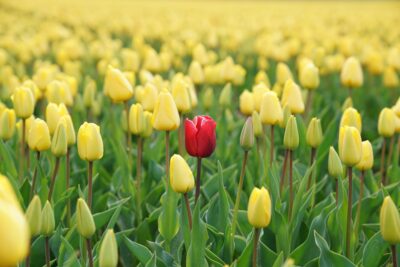 “We rarely come to anything like a masterly grip till the shadows begin to slant eastward, and for a season, which varies greatly with individuals, our powers increase as the shadows lengthen.” True to his teaching, Hall’s greatest creativity and achievement came after age 50.
One of my defining moments arrived while reading Deathing by Anya Foos-Graber, an uncommon guide to creating a spiritually informed dying process. The composite protagonist, Selma, in preparing for a grace-filled departure from this life, shares an inner vision of seeing people on a half-built bridge, “spilling into the sea, drowning in their own ignorance because they had no bridge, no reality construct to cross from this shore to the Other Side, from one reality to another.”
As a voice instructs Selma to “Build them a bridge,” I realized with chills of recognition that my recurring childhood dream of a train on an unfinished track jutting out into space was Spirit dispatching my mission statement: Become a world-bridger, build the bridge between mainstream and metaphysical. I was initially shown my life purpose in a dream at age eight, and only completely understood this early message at 55! I reveled in awe and gratitude for this belated awareness — even though I’ve been living “on purpose” for years.
How can we awaken to the clarion call of who we are, whatever our chronological age? Freedman says that by midlife, life has become a run-on sentence in dire need of punctuation, and he proposes a metaphorical semicolon to capture the sense of renewal and redirection.
Becoming An Elder of Excellence
Anthropologist Mary Catherine Bateson, author of Composing a Lifeand Composing a Further Life, calls for establishing “a midlife atrium”: a sabbatical of sorts that functions as an opportunity to let in more light and air — which is precisely how Kathy Bates describes this shift in the film Fried Green Tomatoes. When her perplexed husband asks his quintessentially evolving wife, “What’s changed?” she muses, “Oh, the air and the light.”
Bateson writes, “The doorway to this new stage of life is not filing for Social Security but thinking differently and continuing to learn.”
We all have the choice to become “Elders of Excellence,” a Louise Hay euphonic. (Hay’s classic, You Can Heal Your Life served as a template during my awakening journey.) Even the word “elder” confers an essence of wisdom and respect that seems lacking when we append “ly”, transforming the vibrant, vintage noun into a frail, forgotten adjective.
Rabbi Zalman Schacter-Shalomi, author of the wise guide, From Age-ing to Sage-ing, says we become elders not by accruing years, but by harvesting our wisdom in service to others — future generations, yes, but also our peers who may be aging fearfully.
Elders, he writes, “have an ongoing responsibility for maintaining society’s well-being…They are pioneers in consciousness who transmit a legacy to future generations. Serving as mentors, they pass on the distilled essence of their life experience to others. The joy of passing on wisdom to younger people not only seeds the future, but crowns an elder’s life with worth and nobility.”
Wonder and Wisdom
Perspective shifts as we do. I learned this profoundly from my lifelong friend Ellie, who lived alone after her husband’s transition until she was nearly 96. At 72 she began writing letters to the editor of her local newspaper, expressing strong opinions about the salient issues of the day. Most of her letters were published, and in 2009 the paper ran a front-page profile lauding Ellie’s 22 years of chirographic activism.
When I interviewed her at age 92, Ellie shared how she was a surrogate mom to “lots of young people.” I was 48 at the time and wondered what she meant, since to me “young people” were in their teens and early twenties. I was amused by her reply: “In their fifties.” By the time you’re 92, fifty is young.
Ellie’s enduring gift has been the joy with which she greeted each morning, her gratitude for “being accepted” by Source for one more day, keen to give it her best and create a little more beauty in the world. The last time I saw her, she scampered down three flights of stairs (yes, at 95) and pressed her nose against the glass prior to opening the door to her apartment building, causing me to giggle.
“I hope you never lose your sense of wonder,” sang Lee Ann Womack, and she might have been channeling Ellie. Although my friend never learned to drive a car, she lived over the speed limit in every sense of the phrase. As elders-in-training, we can all embrace this teaching: when you get the choice to sit it out or dance, DANCE!
About the Author:
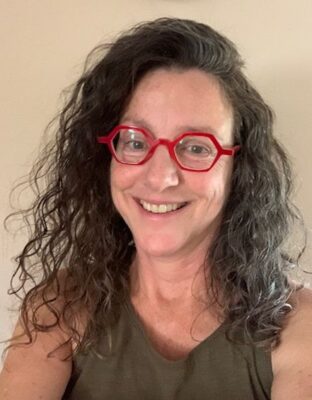
Ascension Lifestyle Managing Editor Amara Rose is a “midwife” for our global rebirth. She offers life crafting, e-courses, business alchemy and content creation to accelerate your evolutionary journey. Learn more at LiveYourLight.com, where you can subscribe to her resource-rich enewsletter, What Shines.

 I’ve spent over a decade in therapy, four years with a daily meditation practice, and two years in heavy spiritual study. In that time, I discovered much about my shadows, wounds, and potential. I also uncovered wisdom about listening to my intuition and aligning with my flow state.
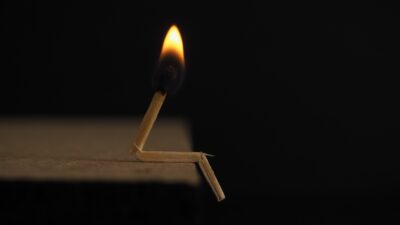 Manifestors are the only Type that can start ventures on their own. They can decide what to do without external input and go about doing it without needing external cues or invitations. However, Manifestors may not realize how this go-it-alone vibe might affect others. Thus, informing the people around them what they are planning to do is an essential skill for a Manifestor to learn.
 Like Generators, Manifesting Generators have consistent access to life force energy. They also have a warm, enveloping aura that magnetizes people to them when they live in alignment with what ignites their passion. Because of their similar aura or energy field, they are also here, like the Generator, to respond to life.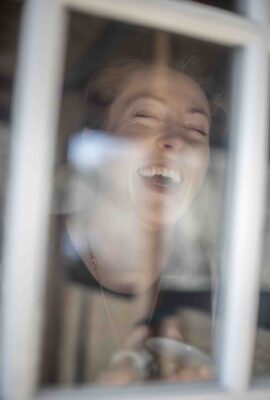
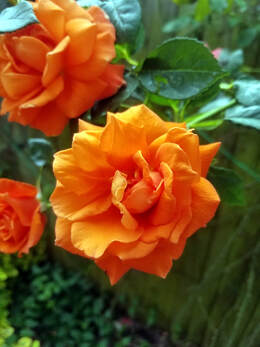 Today as I was preparing to go for my almost daily bicycle ride, I stopped to glance over at one of our two rose bushes. They are planted in a small strip of ground between our living room window and the fence, and in previous years they have not been doing so well. Poor weather is usually the culprit here in the British Isles, but forgetting the rose food is also another factor. However, during the past 3-4 weeks, they have not only been producing a prodigious number of blooms, but they’ve grown over 6 feet in height!
 I was talking with a new copywriting client whose principal markets — entertainment and politics — aren’t often predisposed to metaphysics. Since I’ve long advocated “speaking in the language your audience can hear,” we discussed how to slip transformative messaging under the radar, through intent and light (which is in-form-ation, bringing the unknown into form).
 When we’re paying attention, the synchronicities in our own everyday lives are strong, and point the way to greater awareness. Consider:
 Did you know “listen” and “silent” are anagrams? Living the both/and rather than the either/or expands our perception of possibility.


 At this point, I do not know what to say anymore. I am beyond words. Every experience that we go through, every downloaded message, each cosmic astrological event, every solar event or Mayan time portal, and cosmic gateway, it all keeps rising up to yet another inconceivable level in a matrix of spherical directions. Creation is simply unleashed, and we are riding a wild wave that is not controllable or containable as we once were. I feel I know nothing at all. As I feel like leaping out of myself and into the great unknown, I also feel “The Presence” saying “Wait for it … Please wait for it”. So I dance on the edge of wanting to toss it all and make a run for it.
 But back to this moment … Since the last full moon, it has been simply crazy and overwhelming and we feel lost in time itself. In this month, we are living through 5 retrogrades, with Saturn, Mercury, Jupiter, Neptune and Pluto, in this beyond anything we have experienced to date, solstice energy, (SUMMER SOLSTICE is June 20, 2021 at 11:32 PM EDT) all culminating with one of the most sacred days in the traditional Mayan calendar on June 28th (** More on this Mayan day WAJXAQIB BATZ below). In this collective soup filled with cognitive dissonance that we live in these days, the TRUTH is boldly rising without restraint. It will rise up out of all the noise around us, and a new balance will begin to manifest. I have been told that more “surprises” are to come. This is certainly an incredibly blistering fast time, and it will keep coming with little respite until late October, or later, from what I can see. So we have a good bit of work to do before we plateau again and have a much awaited rest.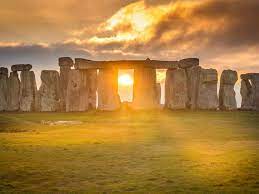
 Nurture is Nature…and is our nature. We ignore this at our peril. To nurture our thoughts towards a more loving way may be found in observing how Nature provides unequivocally for all creatures and living things. Yes, that reflects what Jesus is reported to have said; “behold, the lilies of the field, how they neither spin nor sow…” and other metaphors like that.