
 About 20 years ago, working for National Geographic, and with a grant from the National Institute on Aging, I started identifying and studying the longest-lived people, those who are in what we called the world’s Blue Zones. These are people who have eluded heart disease, diabetes, dementia, and several types of cancer.
My goal, in a sense, was to reverse-engineer longevity. Since only about 20% of the average person’s life span is dictated by genes, I reasoned that if I could find the common denominators among people who’ve achieved the health outcomes we want, I might distill some pretty good lessons for the rest of us to follow. I discovered nine powerful lessons—the power nine—that underpin all five Blue Zones. Here they are:
1. Move naturally.
The world’s longest-lived people don’t pump iron, run marathons, or join gyms. Instead, they live in environments that constantly nudge them into moving without thinking about it. They grow gardens and don’t have mechanical conveniences for house and yard work.
2. Find purpose.
The Okinawans call it ikigai and the Nicoyans call it plan de vida; for both it translates to “why I wake up in the morning.” Knowing your sense of purpose is worth up to seven years of extra life expectancy.
3. Downshift.
Even people in the Blue Zones experience stress. Stress leads to chronic inflammation, associated with every major age-related disease. What the world’s longest-lived people have that we don’t are routines to shed that stress. Okinawans take a few moments each day to remember their ancestors, Adventists pray, Ikarians take a nap, and Sardinians do happy hour.
4. Follow the 80% rule.
Hara hachi bu, the Okinawan, 2,500-year-old Confucian mantra said before meals, reminds them to stop eating when their stomachs are 80% full. The 20% gap between not being hungry and feeling full could be the difference between losing weight and gaining it. People in the Blue Zones eat their smallest meal in the late afternoon or early evening, and then they don’t eat any more for the rest of the day.
5. Eat mostly plants.
Beans, including fava, black, soy, and lentils, are the cornerstone of most centenarian diets. Meat—mostly pork—is eaten on average only five times per month. Serving sizes are 3 to 4 ounces, about the size of a deck of cards.
6. Drink wine at 5.
People in all Blue Zones (except Adventists) drink alcohol moderately and regularly. Moderate drinkers outlive non-drinkers. The trick is to drink one to two glasses per day (preferably Sardinian Cannonau wine) with friends and/or with food. And no, you can’t save up all week and have 14 drinks on Saturday.
7. Find belonging.
All but five of the 263 centenarians we interviewed belonged to some faith-based community. Denomination doesn’t seem to matter. Research shows that attending faith-based services four times per month will add four to 14 years of life expectancy.
8. Put loved ones first.
Successful centenarians in the Blue Zones put their families first. This means keeping aging parents and grandparents nearby or in the home. (It lowers disease and mortality rates of children in the home too.) They commit to a life partner (which can add up to three years of life expectancy) and invest in their children with time and love (and they’ll be more likely to care for you when the time comes).
9. Find the right community.
The world’s longest-lived people chose—or were born into—social circles that support healthy behaviors. For example, Okinawans created moais—groups of five friends that committed to each other for life. Research from the Framingham Studies shows that smoking, obesity, happiness, and even loneliness are contagious. So the social networks of long-lived people have favorably shaped their health behaviors.
To make it to age 100, you have to have won the genetic lottery. But most of us have the capacity to make it well into our early 90s and largely without chronic disease. As the Adventists demonstrate, the average person’s life expectancy could increase by 10 to 12 years by adopting a Blue Zones lifestyle.
Adapted from The Blue Zones Challenge: A 4-Week Plan for a Longer, Better Life (National Geographic/ Dan Buettner/ Pub: 12/7/21).
Original article here
 Have you ever gotten into bed at the end of the day and realised that you haven’t spoken out loud to anyone since the day before? Or simply found yourself feeling completely and utterly alone?
 “Those who are emotionally lonely will find it difficult to improve things without tackling the root of the problem,” says Dr. Spelman. “Emotional loneliness is not circumstantial but, rather, comes from within.”
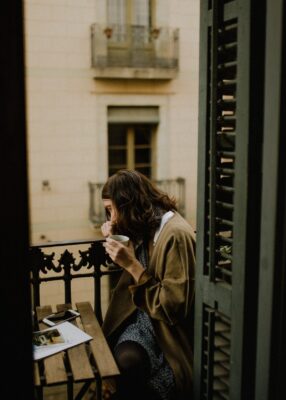 But situational loneliness doesn’t just arise in those who relocate alone, as social media editor Sarah discovered when she moved countries with her partner. Sarah left her Sydney home in March 2017 to join her partner in London, where he had arrived a month earlier to start a new job and find the pair a home to live in — although she admits that “didn’t mean it was smooth sailing”.
 “It was a really bewildering, lonely time,” she says. “The jump of being plonked into a huge arts school, in just one of hundreds of halls of residence in a sprawling city I didn’t understand, made me retreat into myself and I struggled to make friends in the face of it all.
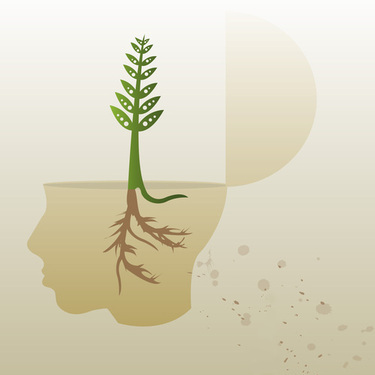 All over the world, people are awakening to the fact that we are more than bones and flesh. We sense that there is more to life than what we see. The word “consciousness” is losing its unreachable meaning, and we look for ways to go inside ourselves and find inner peace.
 There is so much angst in the air these days that we may all be feeling more sensitive, exhausted or even more despondent than usual. So much so, that I feel a lot of folks are at the end of their tether, overwhelmed by the vast onslaught of confusing emotions and free-floating anxiety in the telluric atmosphere.
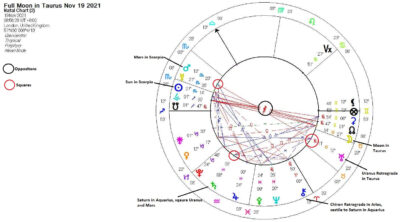 On Friday, November 19th, there will be a partial Lunar Eclipse in Scorpio-Taurus.
 The one message anger can have for us is that our Soul Core is alerting us to some person, situation or thing that violates our sense of Self, or our core values. As such, anger is then your friend, and an ally in helping you in choosing and activating healthy boundaries. In a climate such as we have now, people’s right to say “NO!” is even being taken away. To someone experiencing physical, mental or sexual abuse, we would be appalled if someone were denied the inherent right to say “NO!, that is does not feel good and I will resist!” This is when anger can give us the courage to stand up for ourselves and by saying “no” we are saying “yes” to what feels right and good for us.
 It was powerful beyond time to enter that great living pulsing stony timeless being of light. It was vast beyond my understanding, as it seemed to extend beyond the sky into the stars that night. As I stood in the entrance to the great pyramid giving thanks for being there I learned more in that 1 minute passing through the entrance of the great Pyramid then I had accumulated in my entire life. Everything was shown to me in an instant like a life review and then the slate was cleared empty, awaiting being filled again. I entered the Great Pyramid as pure as a Virgin stripped of everything she once knew herself to be. The empty chalice of me at that moment in timelessness was ready to fill with the gifts of the great pyramid, which were beyond my ability to fully consume.
 Everything on earth is defined by a numerical configuration. All life can be reduced and explained by numbers. The currents of these numerical sequences bring into alignment a series of new considerations that will help earth to adjust and balance. Each numerical infusion is tailored to fit the needs of each human. As the brain adjusts to these new energies a lifting occurs allowing the individual to exit the human/animal ratio and be lifted into the human/light equation. Numbers and humans go hand in hand. From the beginning of time known we have been defined by a numerical equation whether age, birth date, weight, or the number of wives and camels we have. Numbers have always seemed to be our not so silent partners.
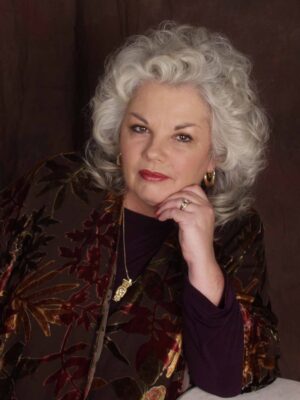 Gillian Macbeth Louthan is a Visionary, a Seer, born with the gift of knowing. She is a clairvoyant psychic with advanced channeling abilities since an early age. She has been a Metaphysical Teacher, Messenger and world known Trance-Channel, for over 40 years She works with the Councils of Light, Mary Magdalene, Merlin, White Buffalo Calf Woman, Mother Mary, the Pleiadians and many other energies of the Christ Light.
 Last year, I met an extremely gifted medium in California: Allie Barkalow. If you don’t know what a medium is, it’s a person who communicates with spirits from the other side. I heard about Allie from my dear friend, Carolyn Miller, who is a psychic and known for her amazing tarot and aura photography readings. Carolyn told me that Allie is one of the best psychics she knows, and I figured if she’s anything like Carolyn I had to meet her.
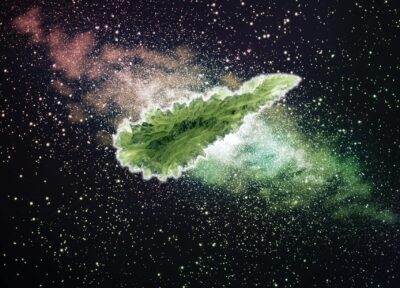 Moldavite is a member of the tektite group, a glassy mixture of silicon dioxide, aluminum oxide and other metal oxides, with a hardness of 5.5 to 6. Its crystal system is amorphous. The color of most specimens is a deep forest green, though some pieces are pale green and others, especially those from Moravia, are greenish brown. A few rare gem grade pieces are almost an emerald green.
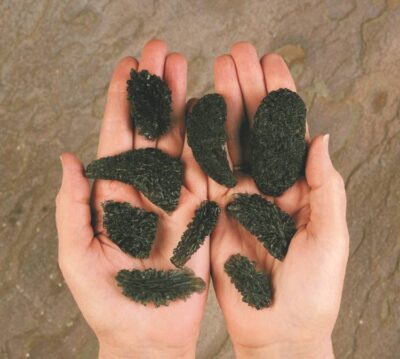 People who hold moldavite for the first time most often experience its energy as warmth or heat, usually felt first in one’s hand and then progressively throughout the body. In some cases, there is an opening of the heart chakra, characterized by strange (though not painful) sensations in the chest, an upwelling of emotion and a flushing of the face. This has happened often enough to have earned a name — the “moldavite flush.” Moldavite’s energies can also cause pulsations in the hand, tingling in the third eye and heart chakras, a feeling of light-headedness or dizziness, and occasionally the sense of being lifted out of one’s body. Most people feel that moldavite excites their energies and speeds their vibrations, especially for the first days or weeks, until they become acclimated to it.
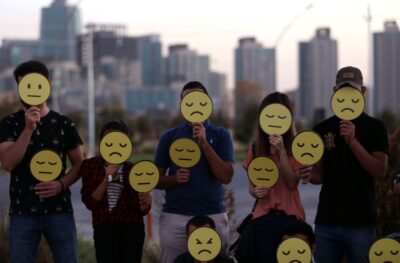 Much of modern economic theory is based around a simple idea: Human beings maximize utility. But what is utility? Many people think of it as happiness or pleasure; British philosopher Jeremy Bentham, the inventor of utilitarianism, conceived of it this way. But this isn’t how modern economists think of the concept. To an economist, utility simply means how much people want something. If an economist observes people working hard and making sacrifices to buy houses, then the conclusion is that houses must have lots of utility to those people.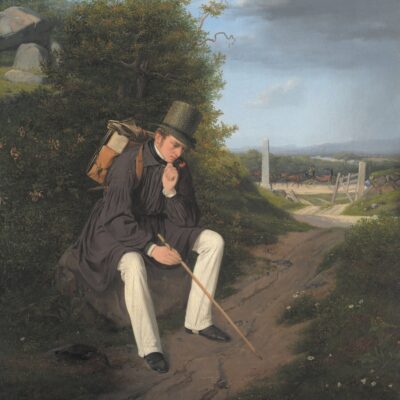
 Don Giovanni – the protagonist of Mozart’s opera Don Giovanni (1787), a legendary seducer who is also sometimes known as Don Juan – is, Kierkegaard suggested, the ultimate archetype of the aesthetic mode because he lives for immediate sexual gratification and sensuality. Don Giovanni is a player. He is handsome, seductive and exciting. Women find him irresistible: he has slept with more than 2,000 women whose names he records in his not-so-little black book. Don Giovanni seeks pleasure above all else, and dances through his hedonistic life.
 Kierkegaard’s leap was guided by the commandment to ‘love thy neighbour’. In Works of Love(1847), written under Kierkegaard’s real name, he proposes that universal love, or agapē, is the secret to happiness because it overcomes the fleetingness and insecurity of aesthetic and ethical relationships. Love is Ariadne’s thread of life because, as long as you love, as long as you commit yourself to being a loving person, you’ll be safe from being hurt and alone. Kierkegaard thought that this sort of unwavering faith reflects a supremely developed human being.
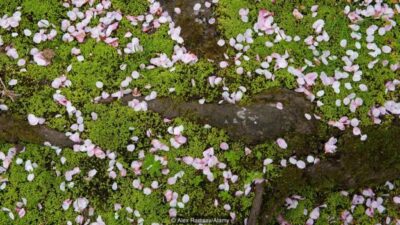 Withdrawing my hands reluctantly from the slowly spinning bowl, I watched its uneven sides slowly come to a stop, wishing I could straighten them out just a little more. I was in the ancient pottery town of Hagi in rural Yamaguchi, Japan, and while I trusted the potter who convinced me to let it be, I can’t say I understood his motives.
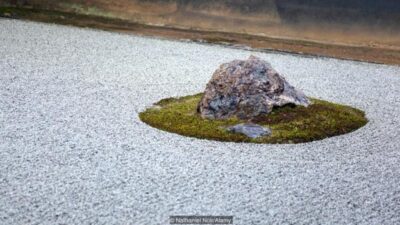 Wabi, which roughly means ‘the elegant beauty of humble simplicity’, and sabi, which means ‘the passing of time and subsequent deterioration’, were combined to form a sense unique to Japan and pivotal to Japanese culture. But just as Buddhist monks believed that words were the enemy of understanding, this description can only scratch the surface of the topic.
 It is the inevitable mortality embound in nature, however, that is key to a true understanding of wabi-sabi. As author Andrew Juniper notes in his book Wabi Sabi: The Japanese Art of Impermanence, “It… uses the uncompromising touch of mortality to focus the mind on the exquisite transient beauty to be found in all things impermanent”. Alone, natural patterns are merely pretty, but in understanding their context as transient items that highlight our own awareness of impermanence and death, they become profound.
 “You have different feelings when you’re young – everything new is good, but you start to see history develop like a story. After you’ve grown up, you see so many stories, from your family to nature: everything growing and dying and you understand the concept more than you did as a child.”