
 The idea is not to turn failure into success, per se, but to be open to what our failures have to teach us about who we are and who we aim to be. There may be a “success” inside the failure that you’re not seeing…
- Failing big can mean you took a big risk.
Failing at something may mean that you extended yourself beyond your comfort zone. You did something you weren’t familiar with doing; or you tried to do something you had never done before. Congratulate yourself on making the effort. What do you know now that you didn’t know before? Is it something you want to try again? Do you need to reexamine your assumptions? Get help? Take more time? Take a different approach?
- Failing can indicate that you’re doing something against your will.
Sometimes we do something because others encourage us to do it, or it’s something we feel we should do; but it’s not what we really want to do. Failing is the feedback that wakes us up and asks: what are you doing? Why are you doing this? What was my reason for doing this in the first place? Was the reason for your failure that you didn’t put your heart into the effort? Maybe it’s simply the wrong thing for you to do.
That’s good information.
- Failure can indicate you’re ahead of your time.
One of the hardest kinds of failure is when you’re enthusiastic and excited about an idea – that no one seems to share. I, for instance, wrote a speech called “The ‘F’ Word – The Positive Aspects of Failure” more than ten years ago. I saw then that society’s hyper focus on success was blinding us from benefiting by learning what didn’t work. When other people don’t understand what you’re doing, or tell you that your idea is dumb, or wrong, it just may be that they haven’t caught up with you yet. Don’t let other people’s indictments steer you away from what you know is true.
- Failure can lead you in a new direction.
The tried and true may lead you to success. But failure, if you’re open to looking at it, will most certainly lead you in a new direction. History is rife with stories of people who were trying to solve a particular problem and ended up discovering something completely unexpected. The same could be true for you. You may flop at “American Idol” but find that you make a great singing coach. Or when you throw your ceramics at the wall, you may find they make a lovely mosaic. Failure breaks things apart – leaving you the opportunity to put the pieces back together in a whole new way.
- Failure reminds us that certain things are beyond our control.
This is the biggest and hardest lesson for us to learn. There are times in our lives when we do try our hardest, give it our best, apply all of our interest and talent and still fail at the attempt. And sometimes, the more we try, the worse it gets. In this case, it’s important to realize that some things are beyond our control. We cannot always make things turn our right for ourselves and certainly not for others. Knowing in our hearts that we tried our best and gave it our all is all we can do. Acknowledging that is what allows us to go and try again. Failure in this case teaches us that we must focus on the process and the moment as much as the ultimate reward and outcome. Being present to the moment is the reward.
There are all sorts of ways to look at failure, but maybe it all really comes down to this: without knowing what didn’t work, how can you identify what did?
Remember: Thomas Edison, one of the greatest inventors of all time, said of his attempts to invent an electric light bulb, “I have not failed. I’ve just found 10,000 ways that won’t work.”
About the Author:

Susan E. Schwartz is a writer and consultant living in San Mateo, California.
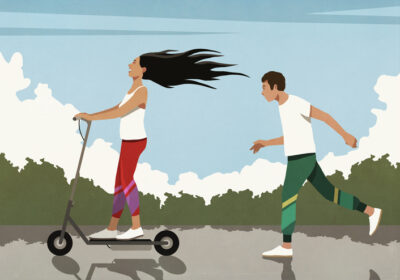 For most of my adult life, exercise was an ordeal. Even mild workouts felt grueling and I left the gym in a fouler mood than when I’d arrived. The very idea of the runner’s high seemed like a cruel joke.
 As luck would have it, the puppy and his person are exiting the ballfield just as I am (very slowly) walking by the gate.
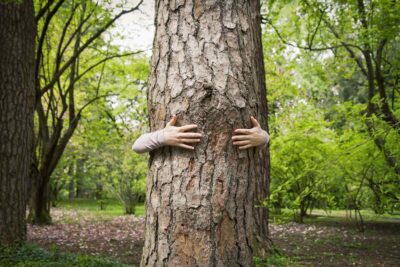 “You remember me?” I exclaim, moving in closer so Tree and I can be heart-to-heart. “How do you do it?” I ask. “How do you stand everything that’s going on?”
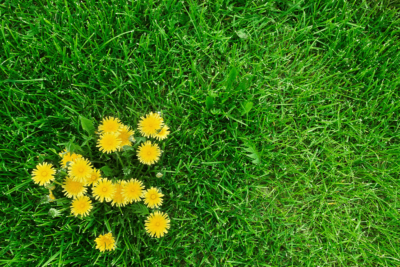 And then another. And another. And another. Soon, I have a whole big pile of weed-parts.
 “Can I say hello to your puppies?” I ask, crouching down to doggie-reception level. Before either their mom or dad can say yes, I’m ready to receive sloppy kisses.
 While the internet had been in existence for some time, it was around the year 2000 that it became globally available to the world. Right around that time I found myself calling into play the sentience of this newly emerging global internet consciousness.
 Infinity: I sure can. I can give you several. For example, do you know that the whales of the world communicate not only with one another as a pack mind across the oceans of the planet, but they also have been communicating with life in other forms throughout the galaxy? I’m not talking here about extraterrestrials soaring in in spaceships. I’m talking about the seed of life that is contained within every living thing. Inside that seed is a spark, a life surge if you will. That spark is a communication device unlike anything that humans have yet understood. It’s how the mycelium networks work in communication with the trees, leaves and grasses of the world. It’s how the oceans are one mind, weaving and dancing their awesome endeavours into many facets to aid life wherever it is needed.
 We all want to feel inner peace. We look for it throughout our entire lives, as being at peace allows us to dream and to actually follow those dreams. When we are at peace with ourselves, we are more understanding and loving towards others, we are able to embody the concept of being One, and therefore we create deeper and more meaningful connections with family, friends and people in general.
 Meditation has been found to have numerous scientific benefits. For example, it reduces stress, improves concentration, boosts creativity, and increases happiness. Meditation affects our mental health in a positive manner, decreasing anxiety and depression, improving sleep, and enhancing self-awareness
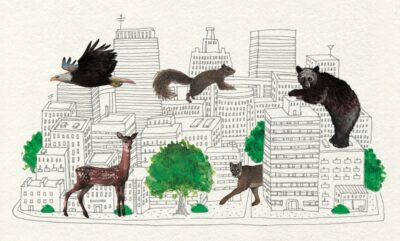
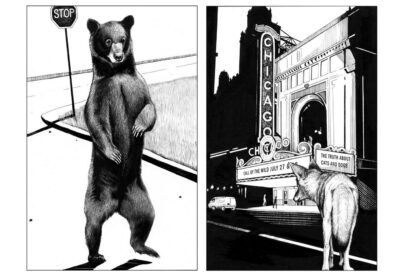 These domesticated animals then get cleared out by the late 19th and early 20th centuries, leading to this period from about 1920 to 1950 where there are fewer wild animals living in urban areas, particularly in North America, than really at any time before or since. This is a period in which some of the greatest thinkers about urban life were doing their writing, and almost everybody assumed that cities weren’t going to have animals in them.
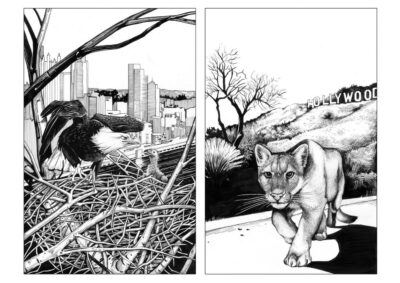 But these examples are exceptions, not the rule. And this is very time-dependent: Although there are a small number of creatures that can adapt very quickly, for most others, this would take a long period of time — much longer than it takes for their populations to go extinct. And so the problem is [talking] about this as a solution to the fact that we’re rearranging and degrading ecosystems in ways that make the world a much harder place to live for the vast majority of species out there.
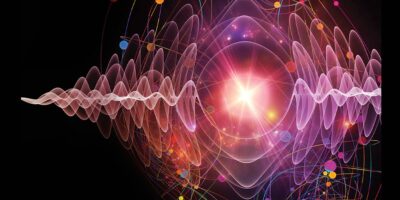 In 1905, the 26-year-old Albert Einstein proposed something quite outrageous: that light could be both wave or particle. This idea is just as weird as it sounds. How could something be two things that are so different? A particle is small and confined to a tiny space, while a wave is something that spreads out. Particles hit one another and scatter about. Waves refract and diffract. They add on or cancel each other out in superpositions. These are very different behaviors.
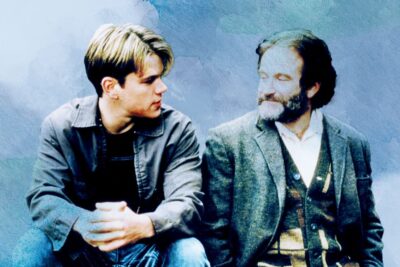 Brian was just a kid when he first saw the movie Good Will Hunting and wasn’t thinking about therapy or his mental health. The 29-year-old engineer was mostly just fascinated by stories about repressed geniuses and Matt Damon’s background story of being a Harvard dropout. He also thought it was pretty rad that the original script was intended to be a spy-thriller.
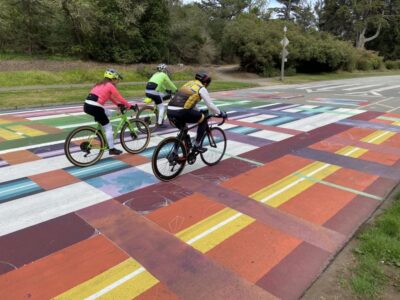 What happens when you close down a city street to cars? More people do non-driving things, like walking, biking, strolling, skating and frolicking in the space normally reserved for motor vehicles. Car-free advocates would say that as greenhouse gas emissions and traffic violence go down, happiness and connection go up — it’s hard to connect with your neighbors while ensconced in two tons of steel.