 Self-regulation, within the space of wellbeing, is actually emotional self-regulation. In other words, the capacity of managing our emotions on a daily basis. During the day, we experience a range of different emotions, from joy, love, and peace to anger, frustration, anxiety — and the way we respond to events will determine our state of being. The important point here is that we have a choice, we always have a choice: we can choose to give free rein to negative emotions and dwell on them, or we can choose to acknowledge these emotions, find a solution, and move on.
In my opinion, free will is the faculty of choosing what is best for us. Now, here is when we can start talking about self-mastery, because there is a slight difference between self-regulation and self-mastery.
What is self-mastery? According to the Merriam-Webster Dictionary, self-mastery is the ability to control one’s own desires or impulses. However, when we are talking about consciousness, the meaning of self-mastery becomes a bit broader, because it also means to have the ability to act in certain challenging situations in a controlled manner, peacefully and harmoniously. There are many techniques out there to help us with this process, because it really is a process. Self-mastery is not something that you are born with, it is a quality that you acquire through your life’s journey, and many of us never get it completely.
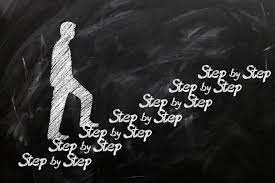
The first step to self-mastery is actually acknowledging that there is such a thing. People in general are pretty good at controlling themselves, at self-regulating themselves, but when it comes to basic emotions like anger, for example, only a few can say that whatever the situation they are in, they are able to remain calm and composed. Therefore, first we need to incorporate into our vocabulary the word self-mastery, and comprehend and experience its meaning.
The second step is to practice self-regulation to get closer to self-mastery, which is not an easy task. How do we do this?
There are a few steps you can take, for example:
- breathe deeply when confronting a difficult situation
- count to 10 to calm yourself
- go outside to get fresh air
- close your eyes for a while
- feel your heart beating and try to pace it, etc.
Now, you can certainly try all of these easy actions and not see results, or maybe you can find one or two that work, but not all the time. In these instances, keep trying until you find what is best for you.
 The third step is when consciousness comes into play. When I say “consciousness” I am talking about that inner awareness of being more than flesh, being part of something larger, where we are one and unique, where there is peace and there is freedom. As conscious beings we know that our inner self plays a role in our wellbeing, and if we are able to go to that internal place, then we can receive the benefits of understanding that everything comes from within and that we are in charge of our own life.
Several tools give us the power of self-mastery. The regular practice of meditation or any other techniques that awaken and elevate our consciousness will make our life in this physical field more masterful. The idea and intention is to become little Buddhas, remaining calm and composed in the face of adversity — and in happy times, too.
Find our own unique way to connect with the Source. You might call it Spirit, the Great Architect, Archetypal One, Origin, whatever you prefer, because when we are wired to those realms of consciousness we experience deep inner peace and harmony and we become co-creators, together with the Source. We then are attuned to the fields of superior perfection.
Let’s recap:
- Acknowledge that self-mastery is not only a concept, it is a way of being.
- Practice self-regulation techniques, which get you closer to self-mastery.
- Be aware of being more than a body, and that everything comes from within.
- Find a way to connect with the Source and co-create your daily life from this connection.
Through practice and discipline, we can face any situation in a state of inner peace and calmness. Sure, from time to time we might forget that we are here to learn to create with love, and that self-mastery is the most important component of this learning. However, I can assure you that if we are able to pause, rethink and change our ways of reacting, sooner than later we will achieve self-mastery and accelerate our process of ascension.
About the Author:

Veronica Sanchez De Darivas is Chilean-Australian, now living in the UK and a proud mother of teenage twins. A spiritual awakening teacher, bestselling author, pineal gland (third eye) activator and Certified Instructor for the Cyclopea Method, Veronica is currently the only instructor in the world teaching the Cyclopea Method in English.


 Last year, I had the pleasure and honour to meet His Eminence Shyalpa Tenzin Rinpoche, first via the platform Clubhouse, then via WhatsApp and phone calls. Finally, last September, H. E. Rinpoche stopped in the UK after touring the US.
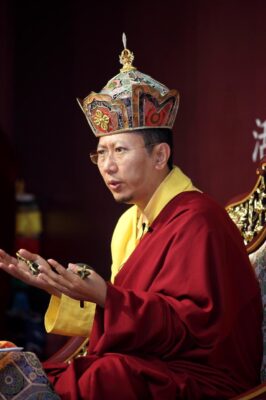 Veronica: Why is it important to build a Universal Peace Sanctuary and what is the inspiration behind this wonderful project?
 Many meditators, healers and people of goodwill are attracted to the idea of distant healing — that in meditation, contemplation and prayer we can help relieve suffering and pain at a distance.
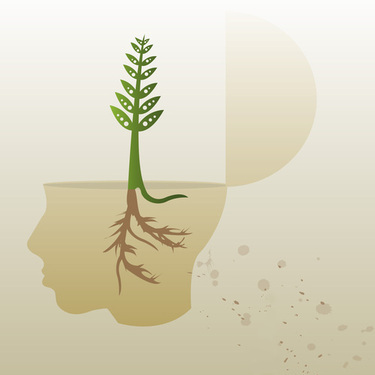 All over the world, people are awakening to the fact that we are more than bones and flesh. We sense that there is more to life than what we see. The word “consciousness” is losing its unreachable meaning, and we look for ways to go inside ourselves and find inner peace.
 Moldavite is a member of the tektite group, a glassy mixture of silicon dioxide, aluminum oxide and other metal oxides, with a hardness of 5.5 to 6. Its crystal system is amorphous. The color of most specimens is a deep forest green, though some pieces are pale green and others, especially those from Moravia, are greenish brown. A few rare gem grade pieces are almost an emerald green.
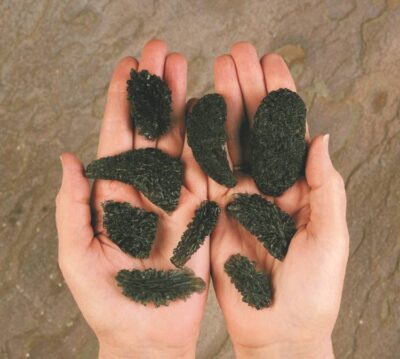 People who hold moldavite for the first time most often experience its energy as warmth or heat, usually felt first in one’s hand and then progressively throughout the body. In some cases, there is an opening of the heart chakra, characterized by strange (though not painful) sensations in the chest, an upwelling of emotion and a flushing of the face. This has happened often enough to have earned a name — the “moldavite flush.” Moldavite’s energies can also cause pulsations in the hand, tingling in the third eye and heart chakras, a feeling of light-headedness or dizziness, and occasionally the sense of being lifted out of one’s body. Most people feel that moldavite excites their energies and speeds their vibrations, especially for the first days or weeks, until they become acclimated to it.
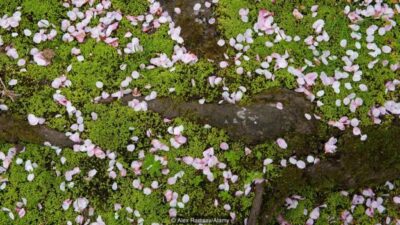 Withdrawing my hands reluctantly from the slowly spinning bowl, I watched its uneven sides slowly come to a stop, wishing I could straighten them out just a little more. I was in the ancient pottery town of Hagi in rural Yamaguchi, Japan, and while I trusted the potter who convinced me to let it be, I can’t say I understood his motives.
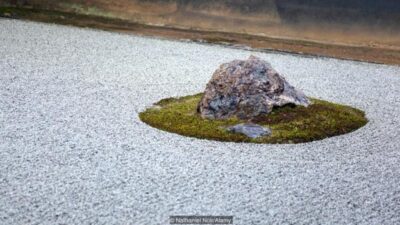 Wabi, which roughly means ‘the elegant beauty of humble simplicity’, and sabi, which means ‘the passing of time and subsequent deterioration’, were combined to form a sense unique to Japan and pivotal to Japanese culture. But just as Buddhist monks believed that words were the enemy of understanding, this description can only scratch the surface of the topic.
 It is the inevitable mortality embound in nature, however, that is key to a true understanding of wabi-sabi. As author Andrew Juniper notes in his book Wabi Sabi: The Japanese Art of Impermanence, “It… uses the uncompromising touch of mortality to focus the mind on the exquisite transient beauty to be found in all things impermanent”. Alone, natural patterns are merely pretty, but in understanding their context as transient items that highlight our own awareness of impermanence and death, they become profound.
 “You have different feelings when you’re young – everything new is good, but you start to see history develop like a story. After you’ve grown up, you see so many stories, from your family to nature: everything growing and dying and you understand the concept more than you did as a child.”
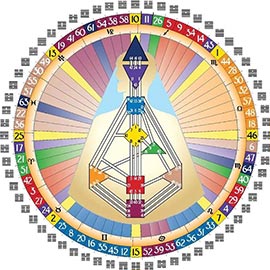 I’ve spent over a decade in therapy, four years with a daily meditation practice, and two years in heavy spiritual study. In that time, I discovered much about my shadows, wounds, and potential. I also uncovered wisdom about listening to my intuition and aligning with my flow state.
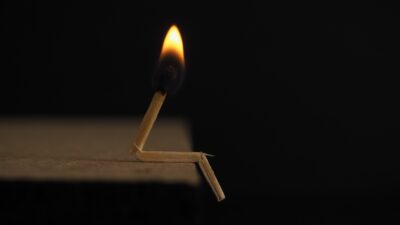 Manifestors are the only Type that can start ventures on their own. They can decide what to do without external input and go about doing it without needing external cues or invitations. However, Manifestors may not realize how this go-it-alone vibe might affect others. Thus, informing the people around them what they are planning to do is an essential skill for a Manifestor to learn.
 Like Generators, Manifesting Generators have consistent access to life force energy. They also have a warm, enveloping aura that magnetizes people to them when they live in alignment with what ignites their passion. Because of their similar aura or energy field, they are also here, like the Generator, to respond to life.