 Here we are, standing at long last smack dab in the new reality we’ve been dreaming of and co-creating for years now.
We’ve moved through normal to greater to masterful to infinite.
We’re just now emerging from a chrysalis into a brand new sense of who we are and what we’re capable of … god beings, infinite creators, I even heard the term “genesis illuminus” the other day to describe us as a new species of possibility.
Today, as I was winding myself from that 20 year chrysalis, I heard the term icon and I knew immediately it means many of us becoming living role models for a new way of being on planet Earth.
This is different from leadership, or from visionary even. You see in this new reality no one person has to lead. We are all equal masterful co-creators. In fact in this new way of being, one is perhaps …
- more collective than individual,
- more focused on calling forth the brilliance of everyone involved,
- more steeped in possibility than problem solving,
- more surrendered to the miraculous to surprise us and
- more universal than previously thought possible.
As an icon, this moves to the next level of exhilarating play as you …
- liberate from the past,
- create yourself in every moment,
- stand for something breath-taking to show up in us all.
- reinvent the possibility of being alive on planet Earth and
- stand as a nexus point of power for the NEW to pour through you in whatever way delights you.
As an icon of this new time, you are unleashed and remade, becoming a Pied Piper leading us into realms of reality we have long waited to see made real. I thrill to stand as this now, to represent the new’ness of us pouring into existence now. How about you?
About the Author

Soleira Green is a visionary author, quantum coach, ALLchemist & future innovator. She has been creating leading edge breakthroughs in consciousness, quantum evolution, transformation, innovation, intelligence and more over the past 25 years, has written and self-published eleven books, and taught courses all over the world on these topics.
 I am the mother of twins, a lovely daughter and a sweet son. They will be 19 years old in August. They are starting to live independent lives, one is going to university and the other one is already working.
 My spiritual path has allowed me to share with my kids those internal powers we all have, and I have made sure to repeat myself many times over. Of course, on several occasions I get those teenage looks and eyes rolling, but I know that one day, they will remember my words and tools and apply them.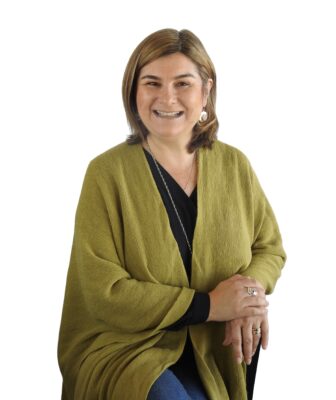

 During these times the views of Louis Pasteur and Dr. Antoine Bechamp came into heated confrontation with one other. Pasteur maintained the new epidemics were caused by microorganisms, or viruses (literal translation — poisons). Bechamp claimed that they were the result of unsanitary living conditions of the times — contaminated water supplies, bad waste management, poor diet, etc. The debate went quiet after Pasteur’s death, with most western medical authorities aligning with his theories. The French medical authorities probed Pasteur’s legacy and found most of his findings were based on prejudicial opinions and thin on facts and proof. Many of his experiment’s results were found to be fraudulent. On Pasteur’s deathbed he declared Bechamp’s Terrain theory as everything and his own theory “as nothing.”
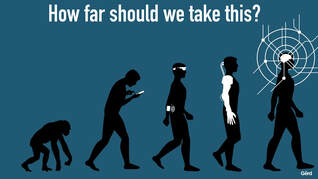 “The dream of the individual that his life could run automatically like an efficient machine, has begun to assume the proportions of a corporate nightmare in which automation unleashes its suffocating powers of standardization, over-regimentation, and depersonalization. Arthur Miller’s trenchant remark that we live in an “air-conditioned nightmare,” implies the unhappy co-existence of technological progress and spiritual regress. Like real nightmares, it takes place within a profound collective sleep therefore offering little chance of discovering either its cause or its cure. Technology can have an anaesthetic effect on man, dulling his moral consciousness and his capacity to enter fundamental, meditative thinking.”
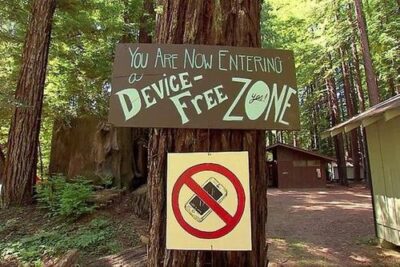 If you’re getting tired of the drudge of it all, then there is only one option. Opting out and going off grid. That may become a necessity as the new digital currency systems are rolled out, making all transactions trackable and not as anonymous as we are told. Everything will be stored in your digital I.D., and I do mean everything. Social credit systems are coming to the West courtesy of China’s experiment with it, and that is the stated agenda in the World Economic Forum’s “Great Reset”. It is possible to create a parallel economy, and it’s been done before, back before the 20th Century. The nightmarish artwork to the right was created by an A.I. program. It exemplifies everything that John Lash ascribes to Archontic consciousness…chaos is the agenda (link below). Is this what we truly want our lives to be ensconced in?
 Forgiveness is often viewed as the “happily ever after” ending in a story of wrongdoing or injustice. Someone enacts harm, the typical arc goes, but eventually sees the error of their ways and offers a heartfelt apology. “Can you ever forgive me?” Then you, the hurt person, are faced with a choice: Show them mercy — granting yourself peace in the process — or hold a grudge forever. The choice is yours, and it’s one many of us assume starts with remorse and a plea for grace.
 Enright defines forgiveness as a moral virtue. Moral virtues (like kindness, honesty, and patience) are typically focused on how they benefit others; these are things you do primarily for another person’s sake, regardless of whether or not they have “earned” it.
 Enright has studied forgiveness extensively. He says his research group at the University of Wisconsin Madison was the first to publish a scientific study on forgiveness, in 1989; in 1993, they became the first to publish a scientific study of forgiveness therapy. Their research has led to the development of a step-by-step process for forgiveness, which can happen in therapy (ideally with someone who is trained in forgiveness therapy), or through a self-guided process using his workbook.
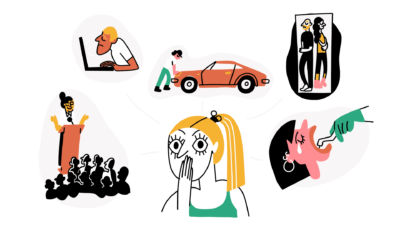 Let’s play a game of “would you rather.”
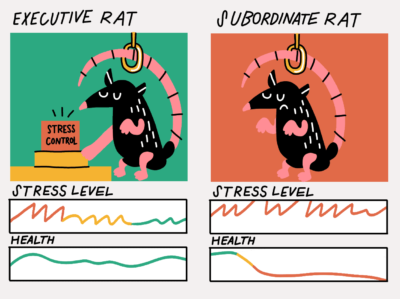 The rat with the lever in its cage is called “the executive rat,” because it has control. It has the power to turn off the electric current flowing through the cage. The rat with no control is called the “subordinate rat.”
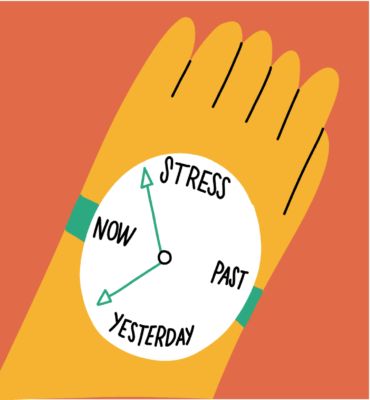 Are you facing the stress of an uncertain future? If so, it helps to focus on what you can control. Sometimes that means bringing the finish line closer by setting goals for today or this week instead of trying to figure out what you’ll do if you lose your job three months from now. Sometimes, it means making a list of 10 ways you can stay connected with friends and choosing the best one to put into action.
 For example, an entrepreneur who feels constantly pressed for time during her nine-hour workday might experiment with doing a 14-hour workday once per week for three weeks. Each of these long workdays is followed by a shortened workday of only six hours. In this case, she is stretching her sense of what’s possible by working longer than what feels comfortable. Then she recovers, taking it easy the next day.
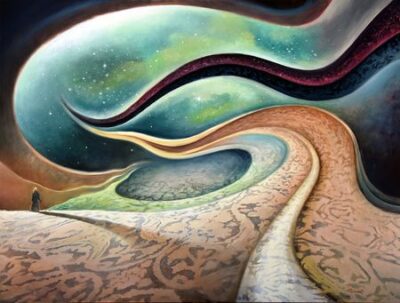 The world is full of outsiders: students away at a university far from home, immigrants to a new country, and people who go abroad for work or extended travel. Over the past year, more than 4.4 million American workers quit their jobs in the “Great Resignation,” and many of them became outsiders by joining a different company or moving to a new place, which they perhaps imagined might be friendlier to their personal needs and tastes.
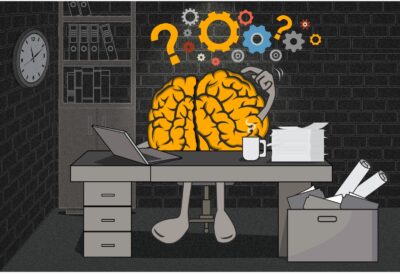 A friend of mine spends 20 to 30 minutes a day solving Sudoku puzzles. He says it improves his speed of mental processing and makes him, well, smarter.
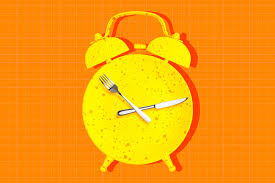 Fasting isn’t a new or trendy concept. The practice of restricting food for a certain period of time has been around for centuries. Most commonly used for religious purposes or cultural beliefs, fasting has recently become a tool for weight-management with proponents also claiming its benefits on controlling blood sugar, calming inflammation and protecting brain health. Emerging from that trend is a take on intermittent fasting, known as dirty fasting, that may make fasting easier. But what exactly is dirty intermittent fasting and is it healthy?