
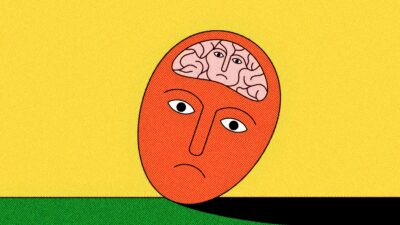
 Ever had someone tell you to just cheer up? Did it drive you crazy? Well, turns out that someone telling you to “be happy” isn’t just annoying—it’s also wildly unhelpful.
“‘Happy’ is a pretty useless word,” says Dr. Martin Seligman, psychologist and former President of the American Psychological Association. “If you tell someone to be happy, it doesn’t tell [him or her] what to do.”
Seligman compares being happy to falling asleep: it’s not something you can actively do—in the way you can get stronger by lifting more weights. It just kind of has to happen. And as the father of positive psychology—the study what makes a good or meaningful life—much of Seligman’s work has dealt with trying to help people figure how to make it happen.
Naturally, you might think he’s an optimistic guy.
“Half the world is on the low positive affective spectrum,” he says referring to positive affectivity, a trait that usually correlates with sunnier dispositions. “I’m part of it, and a lot of the justification for what I work on, and what I write, is to try to help half the world, who is not naturally positive affective, to be more positive and optimistic.”
What he has learned is that well-being can be broken into five elements: positive emotion, engagement, relationships, meaning, and accomplishment (PERMA). Improve those and you might find yourself closer to that vague idea of “happiness”. Unfortunately, that’s not so easy when half of us are low on positive affectivity. But Dr. Seligman learned how to be optimistic, and here, leaning on many of the ideas he explores in his book The Hope Circuit, he lays out how you can, too.
Why does it seem like we are wired for pessimism?
The species that [was] going through the Ice Ages had been bred, and selected, through pessimism. The mentality that said, “It’s a beautiful day in San Diego today, I bet it’ll be beautiful tomorrow” got crushed by the ice. What got selected for, in the Ice Ages, was bad weather animals, who were always thinking about the bad stuff that could occur. So what comes naturally to people is pessimism.
The problem about pessimism is that, to the extent [that] it’s gonna be a nice day in San Diego tomorrow, and you’re thinking all the time, “What a disaster it’s gonna be,” you can’t enjoy it. What needs teaching, because it doesn’t come naturally, is optimism.
When you look at pessimistic people, probably the single [most-telling] hallmark is they think that bad events are permanent and that they’re unchangeable. So what learned optimism is all about is recognizing that you’re saying that to yourself, and then realistically arguing against it.
[So if I say] “This interview is turning to shit,” [that’s] a typical pessimistic, catastrophic interpretation. I have to argue against it. And so I marshal evidence: “Well, when I talked about the Ice Age, he really got it and ran with it.” And then, “I’ve literally given a thousand interviews in my life, and they almost always turn out well.” It’s recognizing what you’re saying to yourself—how permanent and catastrophic it is—and then arguing against it.
So is this at odds with something like mindfulness, which argues you should be present in the moment? If you’re focusing on optimism, you’re also sort of missing the present moment, right?
Well, I think, if you look at what people are doing, and what you’re doing right now when we’re talking, you’re prospecting into the future. You’re not living in the moment of this interview. You’re saying, “What is Seligman saying that I can use, or write about?” More than half the time, adults are planning futures. And so, the notion that we should live more and more in the moment denies what, evolutionarily, we’re really good at.
What distinguishes human beings from all of the other animals is that we’re creatures of the future. We’re not Homo sapiens—”sapiens” is wisdom and knowledge. I’m not impressed by our wisdom and knowledge. But I am impressed [by] how much of our mental life is about the future. I’ve come to think of us as Homo prospectus. This is what human beings are good at, and it’s why we dominate the planet. Not because we live in the moment.
What do you say to someone who’s in a situation where they say, “No amount of thinking about this optimistically is going to get me out of it”?
People are not infrequently in dire circumstances and you don’t want them to unrealistically argue themselves out of it. That’s a message to change your life. It’s called the Dark Night of the Soul, and it’s not to be brushed off. When you realistically appreciate the hopelessness of the circumstances you’re in, that’s a message to change your life.
I’ve read a few people have said that you might be better off cultivating a sort of non-attachment to well-being: be mindful that a lot of life is going to be suffering, and if you can find contentment in that, you might be better off than seeking out happiness.
 I think the good thing about meditation—mindfulness, concentrating on the present, detaching—is as good anti-anxiety, anti-anger tools. But one of the costs of accepting fate, accepting that you can’t go on and do something good in the future, correlates highly with physical illness, shorter life span, less accomplishment at work. So, it’s a good anti-anxiety tool often, but it’s got a lot of costs as well.
A lot of it depends on what you care about. So, I meditated 40 minutes a day for 20 years. And what that did, essentially, was to cure my anxiety. And by age 40, I found out I wasn’t anxious anymore. But the big issue was depression. And that’s when exercise took over, because what depression is about is demobilization, and what exercise does it, it mobilizes you. So, depending on the issue in your life, there’s no cure-all here.
Of all the things you’ve studied, or learned, is there one idea you constantly find yourself encountering most frequently?
I think it’s hope. So, the basic theme of my thinking, and my life, is the development of hope—how important it was in my own life, for psychology, and now, how for human future. Positive human future is not gonna come about by accident, it actually needs hopeful people who plan for it, and make it happen.
How do you feel about where we are right now? It seems like we are struggling with optimism.
It’s very easy to get mired down in the mundane, bad events. Someone being President who you don’t like, and the like. But I think the great lesson is that since the Enlightenment, things are really getting better, and there’s long term cause for hope. We need to realize that human progress is what we’re riding on, and it projects into a good future.
And what are the things that would make us realize that?
There’s a big optimism gap between how people feel about their own lives—which is about 6.5 out of 10, on average—and how they feel about the world, which is much more like 4 [out of 10]. And I think the antidote is [to realize] that 100,150 years ago, the average lifespan was in the 40s; now it’s in the low 80s. Malnourishment; access to clean water; real income; literacy—that’s the stuff that tells you about human progress.
Why is it that we rate ourselves higher on the optimism scale than we do the world?
No one knows. I’ll speculate if you like: we know our flaws pretty well, but we know the world through media, and what media tell all the bad things that are happening at a much more rapid rate than the good things that are happening. We’re looking at the cavity, and not the good tooth. I think that’s why education is important, and why books like Steve Pinker’s Enlightenment Now, which take people through the statistics, are important. And we don’t do very well with those. But what we do well with is tragic stories on the headlines. The anecdote to “if it bleeds, it leads” is actually the statistics on human well-being, which, by every statistic I know, is much better than it was 200 years ago.
Original article here
 An estimated 23.5 million Americans, including my husband, suffer from an autoimmune condition — and their numbers are growing, though researchers don’t know why. You’ve likely heard of the most common autoimmune diseases — including type 1 diabetes, rheumatoid arthritis, multiple sclerosis, lupus, celiac disease, psoriasis, inflamatory bowel disease and Crohn’s disease — but you might be unaware that there are more than 80 named but lesser-known types. Through working as a nutritionist and living with my husband, I’ve learned the importance of diet in battling these disorders.
 Whenever I am faced with life’s uncertainty, I ask myself the following questions: Why is this happening? What can I do to make it go away? How can I navigate this effectively? What can I learn from this experience?
 The chorus of the theme song for the movie Fame, performed by actress Irene Cara, includes the line “I’m gonna live forever.” Cara was, of course, singing about the posthumous longevity that fame can confer. But a literal expression of this hubris resonates in some corners of the world—especially in the technology industry. In Silicon Valley, immortality is sometimes elevated to the status of a corporeal goal. Plenty of big names in big tech have sunk funding into ventures to solve the problem of death as if it were just an upgrade to your smartphone’s operating system.
 The researchers also found that with age, the body’s response to insults could increasingly range far from a stable normal, requiring more time for recovery. Whitson says that this result makes sense: A healthy young person can produce a rapid physiological response to adjust to fluctuations and restore a personal norm. But in an older person, she says, “everything is just a little bit dampened, a little slower to respond, and you can get overshoots,” such as when an illness brings on big swings in blood pressure.
 If you want to learn something about change there is no better place to look than evolution. Nothing represents a continuous and unrelenting cycle of order, disorder, and reorder on a grander scale. For long periods of time, Earth is relatively stable. Sweeping changes—warming, cooling, or an asteroid falling from space, for example—occur. These inflection points are followed by periods of disruption and chaos. Eventually, Earth, and everything on it, regains stability, but that stability is somewhere new.
 The more you define yourself by any one activity, the more fragile you become. If that activity doesn’t go well or something changes unexpectedly, you lose a sense of who you are. But with self-complexity, you have develop multiple components to your identity.
 The tantalising theory that a fifth force of nature could exist has been given a boost thanks to unexpected wobbling by a subatomic particle, physicists have revealed.
 In approximately one month and 10 days, I’ll be on my way to making one of the larger decisions of my adult life (so far, anyway); I’m moving to Austin, Texas, approximately 2,000 miles and one hell of a road trip away from my family and almost my entire friend group back in New York. While I have many questions about my move—chief among them, “How much should a mattress cost?” and “Will everyone hate me for being a Brooklyn transplant?”—nothing has loomed larger in my mind than the question of friendship, or, more specifically, how a full-grown adult goes about making new friends with no partner or kids to act as built-in buffers.
 For Hannah Smith, 27, friendship began at home—quite literally—when she moved to San Francisco in 2019 without knowing anyone. Smith sublet three different rooms through Craigslist before she finally signed a month-to-month lease in the perfect place (which she also found through Craigslist), eventually turning a roommate from her final apartment into one of her best friends. “Low-commitment living situations can be a great way to get to know people in a new place,” says Smith, although she adds that this strategy might be somewhat complicated by the ongoing effects of COVID-19.
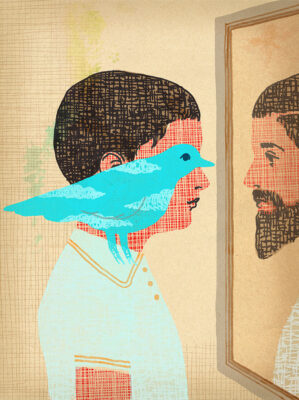 We called them fairy rocks. They were just colorful specks of gravel—the kind you might buy for a fish tank—mixed into my preschool’s playground sand pit. But my classmates and I endowed them with magical properties, hunted them like treasure, and carefully sorted them into piles of sapphire, emerald, and ruby. Sifting the sand for those mystical gems is one of my earliest memories. I was no older than 3 at the time. My memory of kindergarten has likewise been reduced to isolated moments: tracing letters on tan paper with pink dashed lines; watching a movie about ocean creatures; my teacher slicing up a giant roll of parchment so we could all finger-paint self-portraits.
 We’re surrounded by negativity everywhere we turn. The news we read, social media we peruse, and conversations we have and overhear. We absorb stress from our family, friends, and coworkers. And, it’s taking a toll.
 Watch what you say out loud. Negative language is particularly insidious and potent. Be mindful of what you’re thinking and saying. Yes, those around you influence you and your mood, but we have more control over our thoughts and feelings than anyone else. And what we say out loud also carries significant weight. According to Trevor Moawad, a mental conditioning coach who works primarily with elite athletes, it’s ten times more damaging to our sense of thriving if we verbalize a thought than if we just think it.
 Manage your energy. You can also increase your resilience in the face of negativity and encourage thriving by exercising, eating well, and getting enough sleep — all things we know we’re supposed to do but we often fail to when we’re bombarded with negativity. When we exercise, our muscles pump “hope molecules” into our bodily systems that are good for our mental and physical health. You can amplify these effects by exercising outside, with others, or to music.
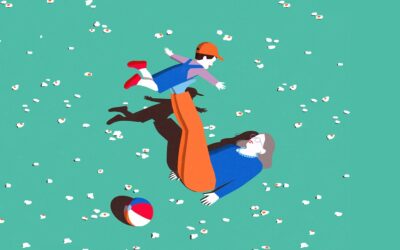 Pandemic life had a way of revealing our weaknesses. For those of us of a certain age, I mean that literally. If you are feeling like certain household activities — toting groceries, hoisting children, moving furniture, carrying laundry — are more difficult than they were in the past, you aren’t alone. And you aren’t imagining it.
 Why? Strength training improves your “economy of movement,” Metzl says, meaning the amount of energy you expend to complete a task, and it “offloads joints, so you can do the same amount of work with less pain and lower risk of injury. You’re essentially getting more juice out of your muscles.” Metzl is personally vested in this quest: He has run 35 marathons and competed in Iron Man triathlons, and he says he aspires, even as he approaches his mid-50s, “to keep going forever.”
 Both Stanforth and Metzl recommend building muscle by performing a high number of reps of a lighter weight — i.e., one you can lift at least 15 times before failure, the fitness term for can’t . . . do . . . one . . . more.