
Photo By Spencer Watson
Four Ways We Can Control Our Health & Balance
Many of us remain unaware of the essential processes of life until some devastating dysfunction or disease demands our attention. These essential processes include respiration, consumption, movement, and mental activity. These four functions work in unison to help avoid dysfunction and disease by regulating the body and keeping it in balance. Typically, imbalances begin as barely perceptible, but gradually increase from poor movement, shallow breathing, rushed eating, and negative thinking, all of which increases the imbalance, and eventually causing pain, structural misalignment, and disease. People these days need to reconnect with the natural principles of life through the interrelationship of respiration, ingestion, movement, and mental activity. These principles, promoted widely by the practice of Sotai, perfectly reflect the philosophy of Natural Mobility to re-establish an effortlessly natural relationship with our environment. Below is a list of the 4 functions of life
1) A long Breath Leads to a Long Life.
Respiration is the most vital function of life. We cannot survive for more than a few minutes without breathing! Deep diaphragmatic breathing is a key to good health; the healthier a person is, the deeper their breath is. Abdominal massage and diaphragmatic breathing before bed is a good way to relax the nervous system and prepare it for rest.
2) Its Not Just What You Eat, But How You Eat.
Diet is something that is unique to each person, and it should be taken as a personal responsibility to learn what foods agree with you, or what dietary system you find works best for your digestive system. The more important thing than what we eat, but how well the food is chewed and digested. If one is thinking about stressful things at mealtime, or watching something distracting, or eating on the move, it will affect digestion. Ingestion should be deliberate, there should be a mental preparation for eating, you should pay attention to your food at mealtime to that your body can prepare for what you are trying to digest.
3) Natural Movement Principles
Efficiency and balance in movement is key. The movement practice of Natural Mobility is its main focal point. The idea is to aim for ease and effortless movements, discovering the most efficient movement patterns to replace your imbalanced movement habits. The aim of movement therapy and mobility training is to release the abnormal tension and facilitate the recovery of functional and structural integrity. This is accomplished by learning to relax the body, breathe into your movements, and move in congruent ways rather than forcing things.
4) Mindfulness and Productive Thinking
Mindfulness and positive thinking may not be as obviously necessary as breathing, but it is equally important. If you are being mindful, you are focused in the moment, whereas negative thinking requires your thoughts to be fixated on a past that cannot be changed, or a future that has not yet happened. It is vital to deliberately focus our thoughts on the things that we love and cherish that are right in front of us, and be fully involved in our moment, our movement, our breathing. Our thoughts determine our circumstances, and we should be fixated on where we are, or where we want to go, not what we don’t want or what we fear.
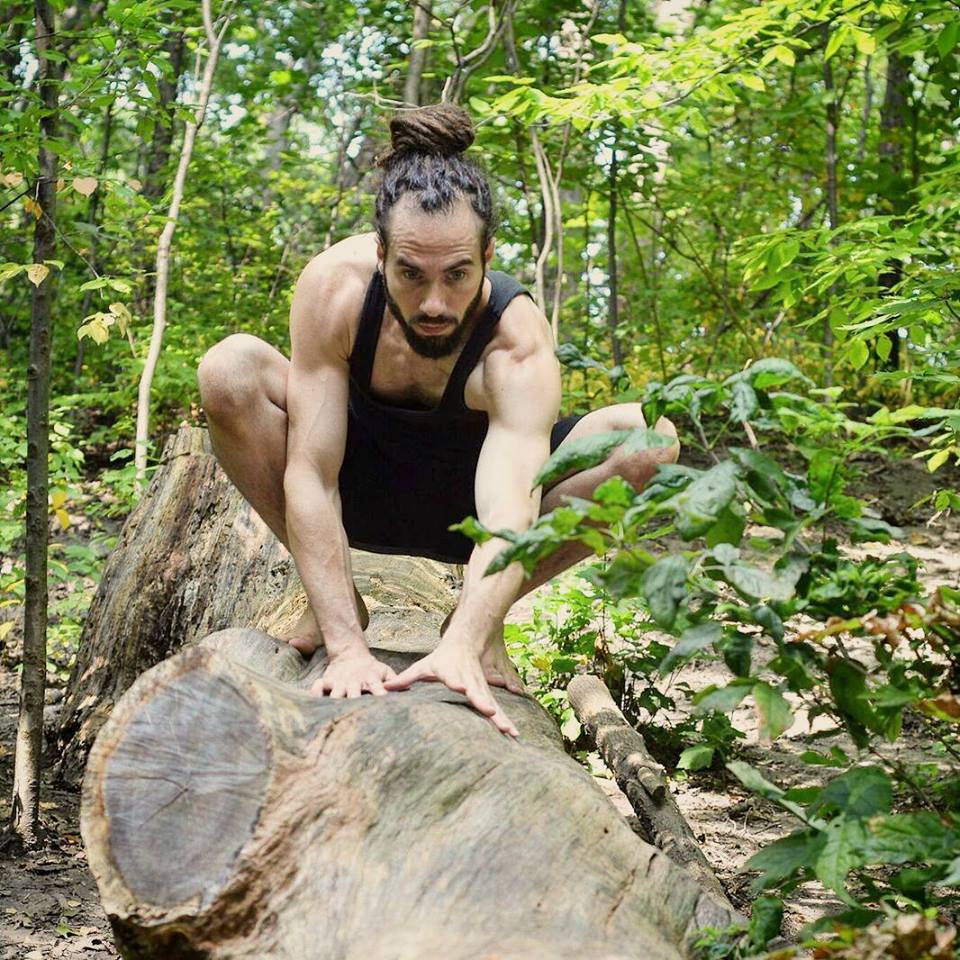 Movement is life. Whether in his healing arts, martial arts, or movement training, Alex was always drawn to systems that involved deep personal development practice. He has observed that self-care is a key component in the healing process, as is refining our daily movement patterns. Subtle movement inefficiencies in daily life, such as how he sit, stand, walk, reach for things, lift things, walk up stairs, hold our pen, even the way we breathe can cumulatively lead to weakness and distortions that eventually lay the foundation for injuries and chronic tension & pain. These habitual patterns are often what leads to the deterioration of our bodies, or a plateau in performance.
Visit Alex online at: naturalmobility.net




 “
“ , Rilke wrote:




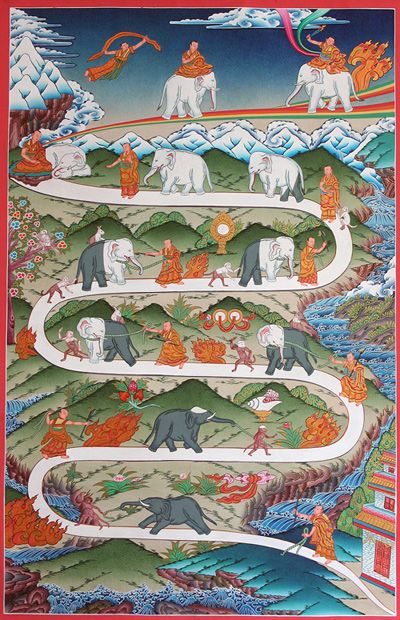
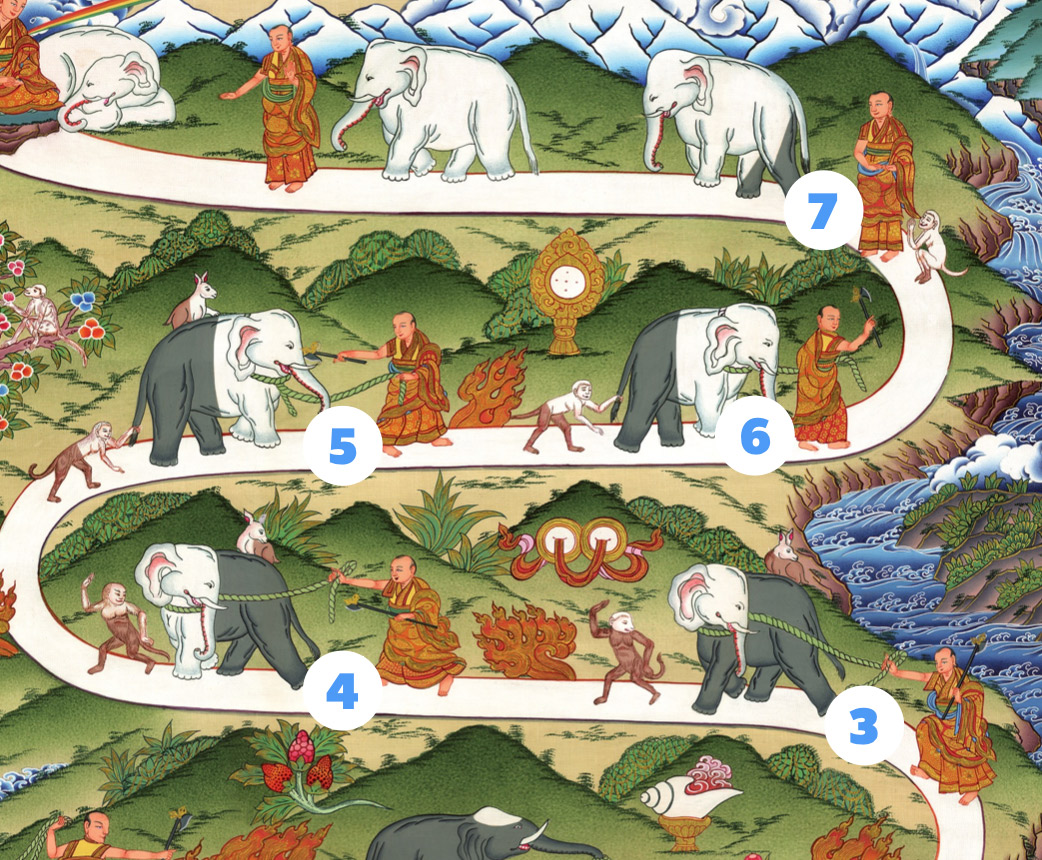
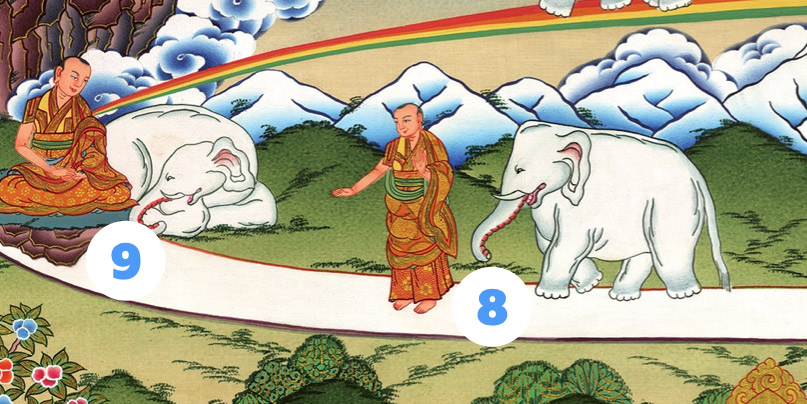
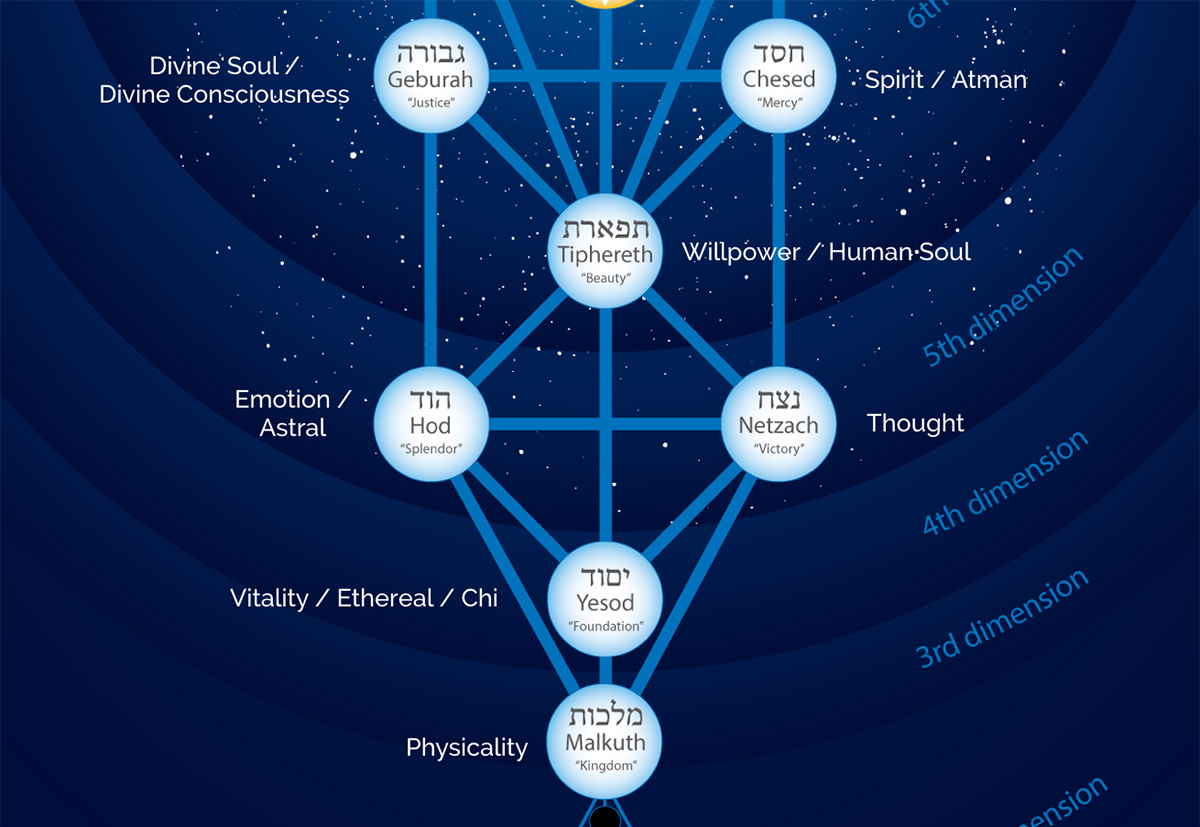

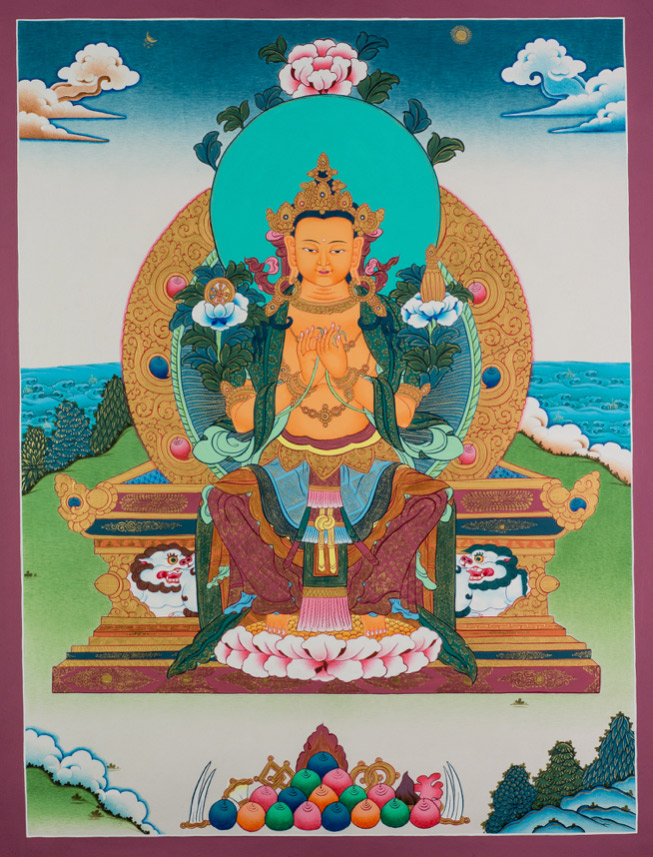
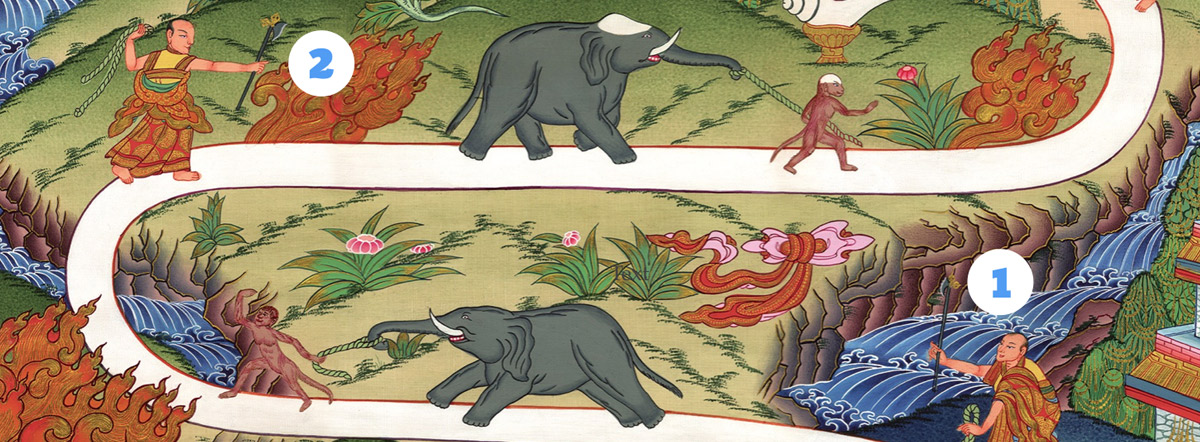
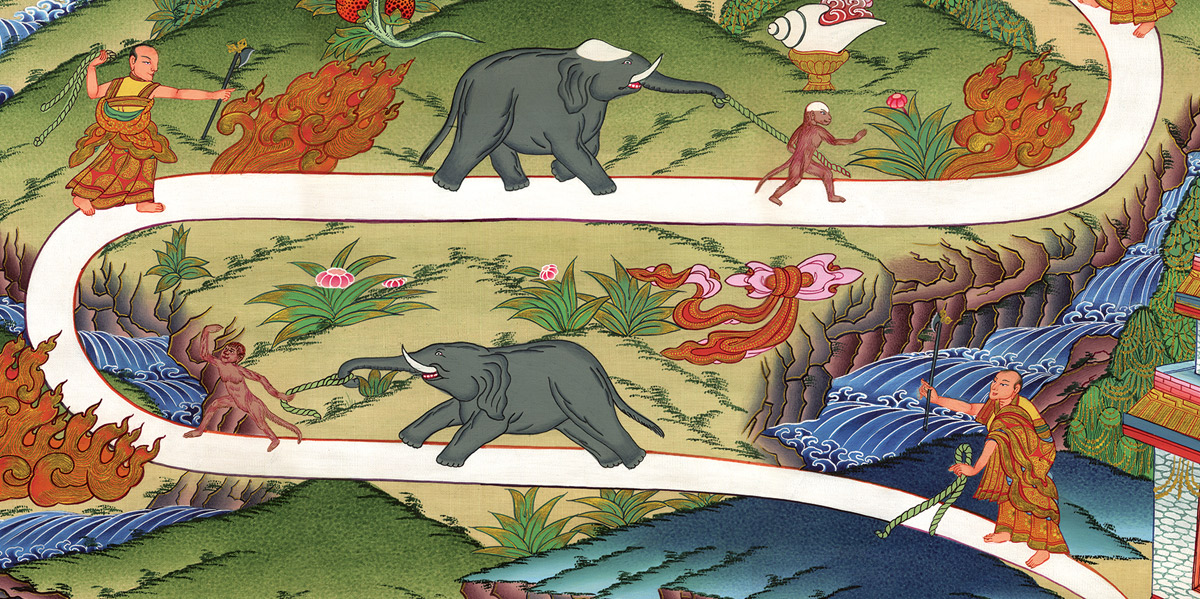
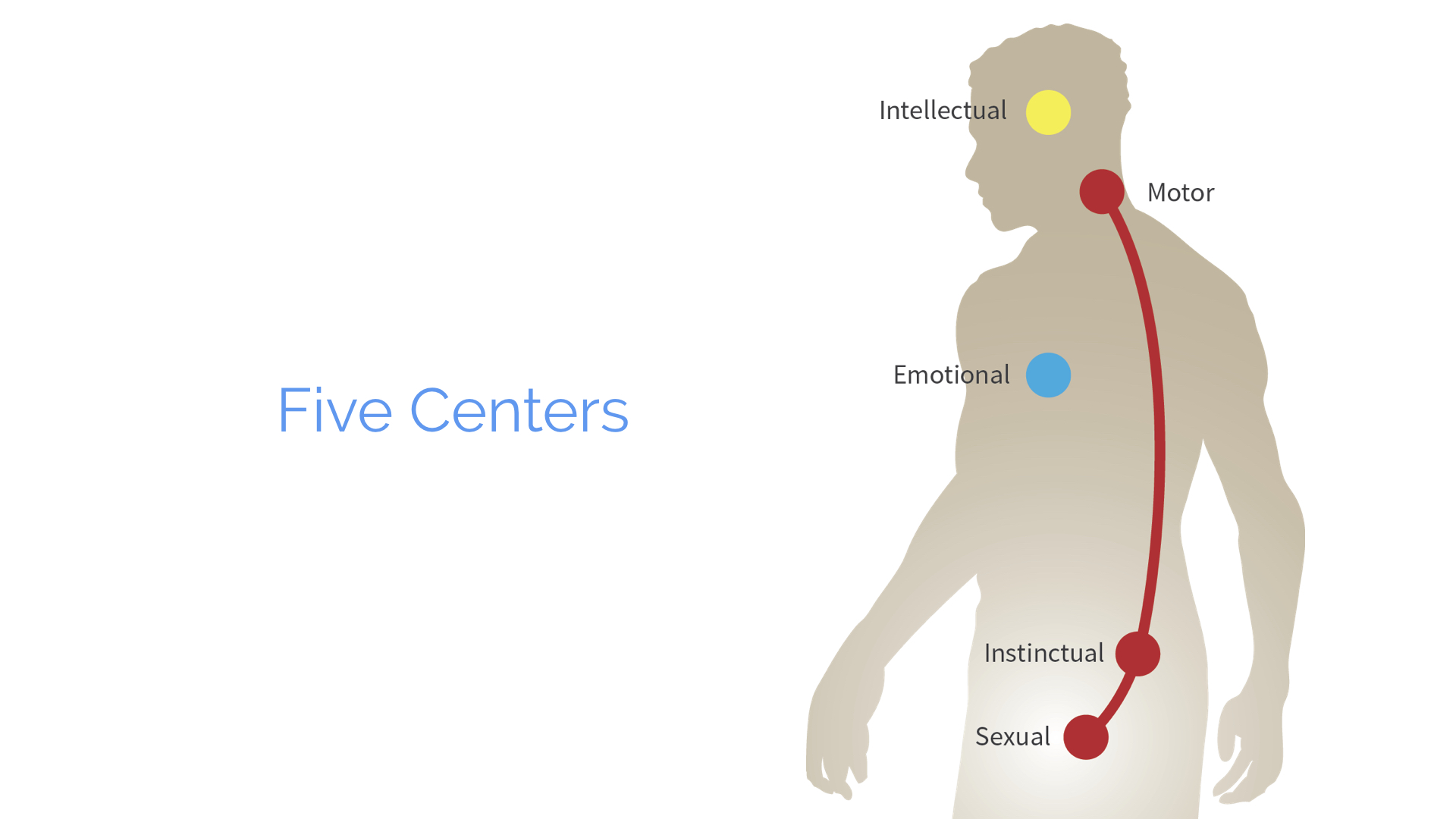
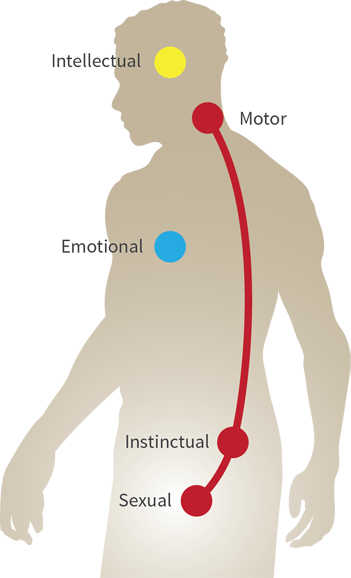 This image illustrates our five centers, also called three brains. These are psychological tools, machines that we are using all the time. However, we are not aware of them. We do not pay much attention to them.
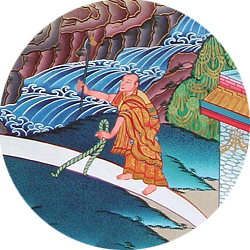 First is to have a place to live that supports our motivation and our spiritual life. That is represented in the graphic. At the very bottom right you see this temple and you see the monk, the renunciate, who is beginning the path. So the beginning of the path to reach a state of Meditation depends upon having a place that supports it. Most people read that “conducive dwelling,” and they only interpret it in the ancient traditional way, which was that one had to go to live in a cave or go live in a monastery in the wilderness and be isolated from society. But that is just external circumstances. The reason that they had to leave society was to isolate them from all their attachments: family, friends, love interests, alcohol, intoxicants, things to crave, things to chase after buying and selling, all the sorts of things that happen in society that keep the mind agitated. That is what is implied by “conducive dwelling” at its most fundamental level, and thus that is the real meaning: conducive dwelling means we should make steps to improve our environment. For example, keeping a very clean house has a big impact on your spiritual well-being, on your psychological well-being. Keeping yourself clean. Having a home that has a space, where you can practice, can really help you, even if it is just a corner, a room. I know somebody that made a closet into a Meditation chamber. If we can cultivate an environment that supports serenity, the more the better. If in your house you always have the TV on, the radio on, people are smoking, people doing drugs, people are sleeping around, if you live in a college dorm, this is going to be very difficult. This is because people in college dorms or in apartment buildings are surrounded by very intense psychological influences, very negative ones that are completely contradictory to achieving serenity. The effort, the work that is going to be required to overcome that is quite significant. A person in that circumstance may need to find some place that they can go to take a break, to have peace, such as a nearby church, temple, park, forest, lake; some place where they can go and be isolated from all of that; at least while they attempt to meditate.
 Effective posture primarily means that you are relaxed. This is the most significant thing. It has to be completely and fully relaxed; not just physically, but mentally and emotionally as well.