


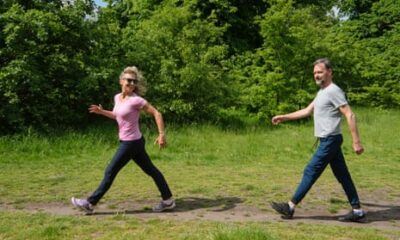
Walking has seen a surge in popularity over the past few years, thanks to a slew of research that’s found that it’s great for your overall health and longevity. Now, another study has found that you don’t need to log several miles to reap the benefits of walking. Instead, just a few minutes a day could provide a serious boost for your overall health.
So, what’s the deal with this study and why is walking so good for you? Here’s what we know.
What did the study find?
The meta-analysis, which was published in the British Journal of Sports Medicine, analyzed data from 196 peer-reviewed articles that involved more than 30 million people. The researchers specifically looked at the link between the participants’ physical activity and health.
After crunching the data, the researchers discovered that people who logged 75 minutes of moderate-intensity exercise (which includes brisk walking) per week had a 23 percent lower risk of early death.
When the study authors broke that down even more, they found that 75 minutes a week of moderate-intensity exercise lowered the risk of cardiovascular disease by 17 percent and cancer by seven percent.
Why is walking so good for you?
There are a few reasons why walking is beneficial. For one, it’s approachable.
“There’s no skill hurdle and people aren’t usually intimidated by it,” says Albert Matheny, R.D., C.S.C.S., co-founder of SoHo Strength Lab. You also don’t need extra equipment, meaning you can usually just walk out the door and go.
“Walking is great because it’s a cardiovascular exercise, but it’s also weight-bearing,” Matheny says. “That’s ultimately better for bone density and overall mobility.”
In addition to all of that, research has linked a walking habit with better moods, improvements in heart health, and a lowered risk of developing diabetes.
How much walking do you need to do per day to reap the benefits?
It really depends on your goals. This particularly study found that walking at a solid pace for just 11 minutes a day (a.k.a. 75 minutes spread out over the course of seven days) can give you all of those health perks mentioned above.
But that doesn’t mean you need to stop walking once you hit 11 minutes. “There’s no magic number,” Matheny says. “It’s not like if you walk less than 5,000 steps, you get no benefit.”
If you’re looking to take up a walking habit for fitness, he suggests aiming for 5,000+ steps a day. Ultimately, though, Matheny recommends just doing what you can.
How can I add more walking to my day?
There are so many ways to take up a walking habit, including making it a regular workout or finding ways to sneak it in, like walking to a friend’s house versus driving there. (You may need to upgrade your footwear to get a good walking shoe if you plan to ramp things up, though.)
“You can also just try to go outside and walk whenever you can,” Matheny says. “It’s good for your mind and body.”
Original article here

 You might not think about it as much as you do eating healthy, exercising, and getting enough sleep, but maintaining good circulation is one of the most important building blocks to keeping your health on the rails.

 Walking doesn’t require any special equipment or gym memberships, and best of all, it’s completely free. For most of us, walking is something we do automatically. It doesn’t require conscious effort, so many of us fail to remember the benefits of walking for health. But what happens if we stop walking on autopilot and start challenging our brains and bodies by walking backwards? Not only does this change of direction demand more of our attention, but it may also bring additional health benefits.
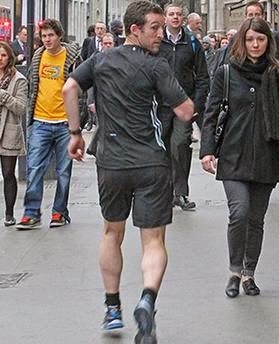 Sustained backward running decreases the energy we expend when we run forwards. These improvements in running economy are even beneficial for experienced runners with an already economical running technique.
 Chances are, you learned to walk when you were just a toddler and you haven’t really thought about it much since. It’s easy to nerd out on other fitness activities, like running or weight lifting. But, walking is something we often take for granted.
 Walking does great things for your mental health and cardiovascular fitness, but did you know that a good walk can also help you build the muscles in your legs and abs?
 What happens when you close down a city street to cars? More people do non-driving things, like walking, biking, strolling, skating and frolicking in the space normally reserved for motor vehicles. Car-free advocates would say that as greenhouse gas emissions and traffic violence go down, happiness and connection go up — it’s hard to connect with your neighbors while ensconced in two tons of steel.
 The effect of exercise on health is profound. It can protect you from a range of conditions, including heart disease, type 2 diabetes and some cancers. But the type and amount of exercise you should do changes as you age. To ensure that you are doing the right type of exercise for your age, follow this simple guide.
 Most people start to put on weight in their 40s. Resistance exercise is the best way to optimise calorie burning to counteract fat accumulation and reverse the loss of three to eight percent of muscle mass per decade. Ten weeks of resistance training could increase lean weight by 1.4kg, increase resting metabolic rate by 7 percent and decrease fat weight by 1.8kg.
 Typically, people accumulate more chronic conditions as they get older, and ageing is a major risk factor for cancer. Maintaining a high level of physical activity can help prevent cancers, such as post-menopausal breast cancer, colon cancer and cancer of the womb, and it reduces the risk of developing chronic conditions, such as heart disease and type 2 diabetes.