
If you’re a leader, it’s likely that not everyone who works with you will agree with the decisions you make — and that’s okay. Leadership involves making unpopular decisions while navigating complex relationships with colleagues, partners, and clients. But often, you will need to get buy-in from these constituents, and therefore you will need to convince them to change their mind.
There is little friction involved in convincing people who are your natural supporters. But trying to change the mind of a dissenter, or a detractor, is a different story. How do you go about convincing someone who, for one reason or another, doesn’t see eye-to-eye with you? Someone who gives you a flat out “no”?
In the recent research we completed for Laura’s book, Edge: Turning Adversity into Advantage, we observed, and then interviewed, more than 60 leaders who were trying to convince business associates and other constituents to change their minds on a course of action that they initially disagreed with. The leaders who were most successful in overcoming others’ skepticism were those who diagnosed the root of the fundamental disagreement before trying to persuade. They first asked themselves, “What’s driving my detractor’s resistance?” These leaders often pinpointed which aspects of their arguments elicited the most pushback and the most emotional reactions. Then, depending on the answer, they approached the situation with one of the following three targeted strategies.
The Cognitive Conversation
When to use it: The detractor may be opposed to your argument because of an objective reason. If they’ve clearly articulated a logical set of objections, and they don’t appear to be hiding ulterior motives, approach them with a cognitive conversation. This is especially useful when the detractor is known to have a no-nonsense attitude and can easily set aside emotions in their decision-making process.
How it works: A successful cognitive conversation requires two things: sound arguments and good presentation. Take, for example, a situation where you are pushing to switch suppliers and you’ve found one whose materials and products are superior to the current supplier, whose products have been causing numerous downstream issues. But your colleague is in favor of sticking with your current supplier with whom he has a long-standing relationship. He expresses his resistance to your proposal by pointing out the higher prices the new supplier charges. You want to prepare sound arguments that disprove the detractor’s objections. In this instance, you might point out that the new supplier is actually less expensive in the long run, when you take into account all the additional production costs cause by the current supplier. You also want to use a logical framework and clear storyline to force the detractor to reassess their thinking. For example, you can emphasize that the decision is based on cost, quality, and service, but above all, cost and quality.
Be cautious about not introducing emotions into the discussion, which could give the impression that you and your detractor are not on common ground. For example, you don’t want to make it seem as if you believe your colleague’s relationship with the former supplier is irrelevant. The goal is to show the person that, on an objective and factual basis, their initial stance on the situation isn’t as reasonable as your argument. Be warned, these detractors are not easily swayed by broad generalizations. Be ready to mentally spar with them and come prepared with facts that back up each aspect of your overall argument.
The catch: Don’t assume that getting a “yes” from this type of detractor signals a conversion into an everlasting supporter. You may have persuaded them on this specific issue, but they may disagree with you again in the future. If that’s true, expect to have another cognitive conversation on that separate argument.
The Champion Conversion
When to use it: When the detractor isn’t easily persuaded through cognitive arguments, or when they harbor a grievance in your relationship with them, engaging in debates may be futile. Take, for example, a management decision where you’d like to promote a qualified individual who performed brilliantly under your supervision, but a counterpart of yours argues that your subordinates often get promoted over hers. Even if your promotion candidate is objectively more deserving, others may still feel resentment and refuse to provide support.
How it works: Don’t jump in and try to convince the other person. Instead, invest time in personally learning about and building rapport with them. Here, it’s not about arguments or presentation, at least initially, but understanding their perspective and why they might feel personally affronted. For instance, you might ask questions about her team, and which team members she feels have the most potential. Gradually convert this detractor into someone who is your champion or advocate, perhaps by shedding more light on the qualities that you value in individuals, both on your team as well as your counterpart’s team, or showing how you value her leadership style. By the time the decision must be made, try to make sure you’re both on the same page as to which qualities matter for promotion decisions and that you’ve clearly articulated how your candidate exemplifies those qualities.
The catch: No matter how much of a champion the other person becomes, don’t expect them to agree with a decision that’s fundamentally illogical. You can’t rely on relationship alone; your stance still needs to be backed by clear logic. Additionally, these types of detractors can easily sense if you’re trying to manipulate the situation to get them on your side. Authenticity is key: allow the other person to see who you are so that they can more fully understand your point of view.
The Credible Colleague Approach
When to use it: There are times when the detractor’s deeply held personal beliefs make them fundamentally opposed to your proposal. Take, for example, a colleague who might disagree with you on the need to run a necessary clinical trial for a new product. Because they believe that the clinical trial might be harmful in some way or run counter to their values, they oppose the idea, even though the evidence shows that the benefits outweigh the harm. It’s sometimes tough to pinpoint where these personal beliefs stem from, but some combination of the person’s upbringing, personal history, and unspoken biases will, at times, make it seemingly impossible for them to accept a decision, no matter what logical or emotional argument you throw their way. In these situations, there isn’t much you can say or do to change their mind.
How it works: Rather than trying to argue with someone who seems resistant, bring in a credible colleague. A champion of your position from another part of the organization, whether they are a peer or superior, may be better suited to convince this detractor. This forces the detractor to disentangle who you are from what your argument might be and evaluate the idea based on its objective merits. If you and the detractor are at an impasse, the credible colleague might just tip the scales in your favor.
The catch: Calling in an external supporter is a double-edged sword. While it can achieve the outcome you want, it may exacerbate your detractor’s opposition, especially if the detractor feels that the credible colleague has forced them to take your side. It’s critical to find the right colleague who can tactfully advocate for your position while maintaining a cordial relationship.
It’s not easy to have detractors, and it’s even harder to change their minds. The key is to understand the source of their resistance and use a targeted strategy that best resonates with your particular detractor. You’ll have a much better chance of getting a “yes.”
Original article here





 In recent decades, however, Congress has not been good at addressing public concerns when the solutions would displease a powerful and deep-pocketed industry. Governors and state legislators have been much more effective, and their successes might let us evaluate how well various reforms work. But the bottom line is that to change norms, we’re going to need to do most of the work ourselves, in neighborhood groups, schools, and other communities.
 For most of my adult life, exercise was an ordeal. Even mild workouts felt grueling and I left the gym in a fouler mood than when I’d arrived. The very idea of the runner’s high seemed like a cruel joke.
 While the internet had been in existence for some time, it was around the year 2000 that it became globally available to the world. Right around that time I found myself calling into play the sentience of this newly emerging global internet consciousness.
 Infinity: I sure can. I can give you several. For example, do you know that the whales of the world communicate not only with one another as a pack mind across the oceans of the planet, but they also have been communicating with life in other forms throughout the galaxy? I’m not talking here about extraterrestrials soaring in in spaceships. I’m talking about the seed of life that is contained within every living thing. Inside that seed is a spark, a life surge if you will. That spark is a communication device unlike anything that humans have yet understood. It’s how the mycelium networks work in communication with the trees, leaves and grasses of the world. It’s how the oceans are one mind, weaving and dancing their awesome endeavours into many facets to aid life wherever it is needed.
 Amid the human crush of Old Delhi, on the edge of a medieval bazaar, a red structure with cages on its roof rises three stories above the labyrinth of neon-lit stalls and narrow alleyways, its top floor emblazoned with two words: birds hospital.
 I’d come to the bird hospital, and to India, to see firsthand the Jains’ moral system at work in the world. Jains make up less than 1 percent of India’s population. Despite millennia spent criticizing the Hindu majority, the Jains have sometimes gained the ear of power. During the 13th century, they converted a Hindu king, and persuaded him to enact the subcontinent’s first animal-welfare laws. There is evidence that the Jains influenced the Buddha himself. And when Gandhi developed his most radical ideas about nonviolence, a Jain friend played philosophical muse.
 In the West, consciousness was long thought to be a divine gift bestowed solely on humans. Western philosophers historically conceived of nonhuman animals as unfeeling automatons. Even after Darwin demonstrated our kinship with animals, many scientists believed that the evolution of consciousness was a recent event. They thought the first mind sparked awake sometime after we split from chimps and bonobos. In his 1976 book, The Origin of Consciousness in the Breakdown of the Bicameral Mind, Julian Jaynes argued that it was later still. He said the development of language led us, like Virgil, into the deep cognitive states capable of constructing experiential worlds.
 Crows are not among the shoulder-perchers, but Singh sometimes sees former crow patients hovering around the hospital. They might be looking for him. Crows recognize individual human faces. They are known to blare vicious caws at people they dislike, but for favored humans, they sometimes leave gifts—buttons or shiny bits of glass—where the person will be sure to notice, like votive offerings.
 The trail was only 50 miles from Gir National Park, where, the day before, I’d seen two Asiatic lions, nearly indistinguishable cousins of Africa’s lions. Once the region’s apex predator, the Asiatic lion almost went extinct during the British empire’s colonization of India, when no viceroy could visit a maharaja’s palace without a hunt in the local forest. Even today, the Asiatic lion still ranks among the rarest of the large feline predators, rarer even than its neighbor to the north, the snow leopard, which is so scarce that a glimpse of one padding down a jagged Himalayan crag is said to consummate a spiritual pilgrimage.
 The monk was a white dot some six switchbacks up by the time I hopped off the wall and continued the climb, my legs stiffened by the break. I reached the entrance to the temple complex with only 15 minutes to spare. Its marble courtyard shone brilliant white, as though bleached by the mountain sun.
 Visualisation is the process of creating an image of something or someone in our minds, according to dictionary definitions. Nowadays the word visualisation is everywhere, very much associated with the Law Of Attraction. However, visualisation is a tool in itself that has to be used wisely.
 There are many effects or influences occurring that we can observe in the world now.
 Thoughts, influences, and experiences shape our perceptions. If we are unawares of how we are aligning, or entraining to anything, then we may unknowingly behave as the creators of those influences wish us to behave. Marketing and advertising have achieved untold levels of leverage over human consciousness via digital means. We know that via documentaries such as “The Social Dilemma.” What we need to become even more aware of is how we are influenced or imprinted on other levels of our mind, even in our own bodies. Entrainment, resonance, and imprinting is the way mammals operate and learn from each other. Unfortunately, these beautiful traits are now being used against humanity.
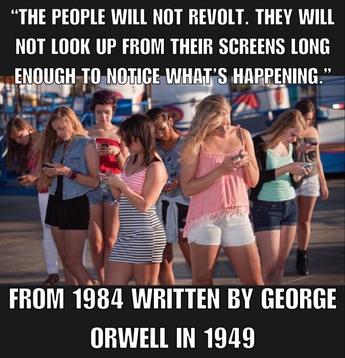 Witnessing the chaotic patterns and disintegration of patterns in our world now is difficult. So many seem so hypnotized, or plain lost. Millions have no other concern other than simply surviving. Did we really want it to be this way? Our understanding of how human consciousness works and interacts is the key to extricating ourselves. Creation is born out of chaos and resonance by informed choice, arrived at by meditation/spiritual hygiene, critical thought, and practical action, is necessary to reverse the direction we are now finding our world going towards. The disintegration of the old order must continue, even as there seems to be no new framework to rely upon to replace it. The old consciousness is simply unable to offer any solution to the problems it has created.
 Lastly, fastidiously monitor your interactions and usage of electricity and technology. Currently the Dual-Headed Gods are Science (orthodox) and Technology (digital), but they are false gods. How they came to dominate our world is a story for another time. Our task for now is to take responsibility for allowing it to happen thus far by compassionately understanding how we have been sleepwalking with it for so long…and then taking the necessary steps to change ourselves, and by extension, create the potential world we would all like to create and inhabit. Where everyone is healthy, where everyone thrives, where loving kindness, cooperation and creativity are paramount.
 She writes, “The mind analyzes — the heart synthesizes. The turning point is where the heart is awakening. Historically speaking, we are at this juncture. America’s motto, inscribed on the banner in the beak of the eagle of the Great Seal [of the United States], reminds us that America was founded on the principle of ‘E Pluribus Unum’ — ‘Out of the Many, One.'”