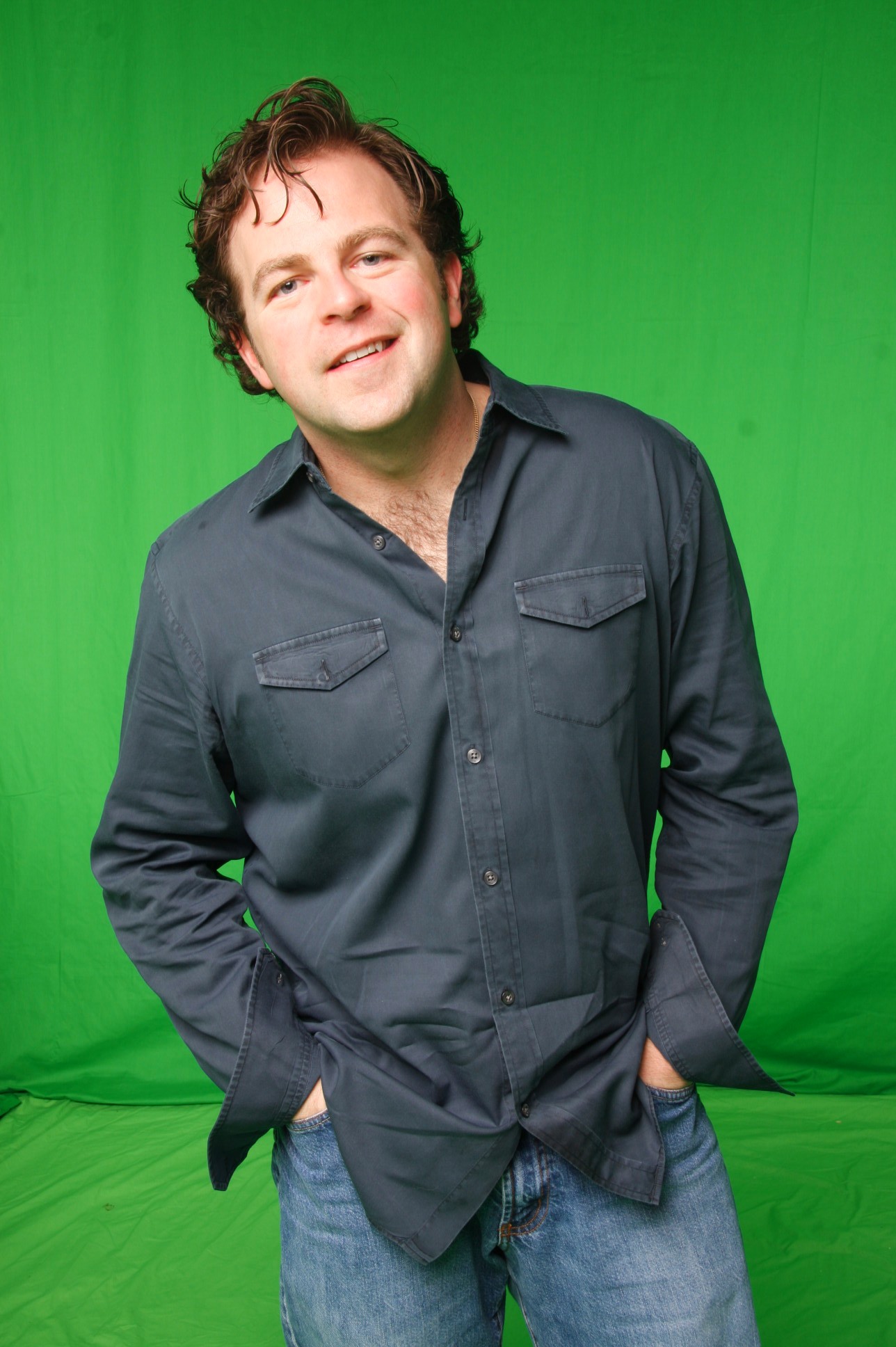

Just one week after he graduated from Yale Law School, while he was training for the 2008 Beijing Olympic Games, Seun Adebiyi was diagnosed with lymphoma and leukemia. This forced him to put his Olympic dreams on the back burner as he rethought his life plans.
Adebiyi knows all about mental toughness and resilience. After experiencing firsthand the difficulty of finding stem cell donors (the odds of finding a genetically compatible donor is less than 17 percent for those of African descent, compared to 70 percent for Caucasians), Seun took it upon himself to found Nigeria’s first national bone marrow registry–the second ever in Africa.
And Adebiyi did eventually participate in the Olympics, carrying the torch for Nigeria in the 2018 Winter Olympic Games. Today, Adebiyi is cancer-free, and he has become an entrepreneur. He’s currently a self-employed, freelance attorney with InCloudCounsel, a legal technology company that automates and enhances high-volume legal processes.
Here, according to Seun Adebiyi, are five ways to develop unbeatable mental toughness.
- Never confuse who you are with what you do.
The most common mistake people make is to confuse their self-worth with their accomplishments. Says Adebiyi, “I remember when I first missed the Olympics–fracturing my spine from overtraining just months before the 2000 Games. It was my first major setback as an athlete, and I completely crumbled mentally–all because I had made the mistake of tying my self-worth to my sense of accomplishment.” In reality, nothing could be further from the truth.
- Master your inner dialogue.
What you say to yourself matters more than what the entire world together says about you. When he was fighting leukemia with intensive chemo and full body radiation, Adebiyi refused to wear a hospital gown. Instead, he wore workout sweats and did walking lunges up and down the linoleum hospital floors, pushing his surgically attached IV pole next to him. Says Adebiyi, “Doctors and nurses looked at me like I was crazy, but I never accepted their perspective that I was a ‘cancer patient.’ In my mind, I was an Olympic hopeful who just happened to be overcoming cancer.”
- Learn to live in the moment.
Let’s face it, sometimes life just kicks you in the teeth. Trying to avoid suffering is like trying to cross the Atlantic in a rowboat without getting wet. When the storms of life start tossing you around like a toy, you need an anchor–something you can cling to when all seems hopeless. According to Adebiyi, “That anchor was my breath. I just focused on surviving from breath to breath, and repeated the following words over and over like a mantra: ‘This too shall pass.’”
- Fortify your village, then build a moat.
In many African countries, there’s a popular saying, “It takes a village to raise a child.” This is true in life as well. Learn to pick your associates carefully. Find the handful of people who will support you no matter what, invest your time and energy in strengthening those relationships. As Adebiyi explains, you may also need to distance yourself from the toxic people in your life who tear down your self-confidence. “This might involve some painful conversations, spending less time on social media, and ending a few relationships,” says Adebiyi. “But trust me, it’s virtually impossible to master your inner dialogue and develop inner resilience with someone whispering doubts in your ear.”
- Be prepared, be prepared, be prepared.
As someone once said, never let a good crisis go to waste. Often, the biggest opportunities for personal and professional growth are found in times of upheaval and uncertainty. The time to “hurricane proof” your life isn’t when the shingles start to fly off the roof, but when the sky is still blue and sunny. Suggests Adebiyi, “Work on your self-image, inner dialogue, present-moment awareness, and key relationships now. It doesn’t take much: You can practice visualization/meditation every day, affirm your key relationships, and minimize negative influences with just a few minutes each day.”
And when life comes knocking, you’ll be ready to rock.
Original article here
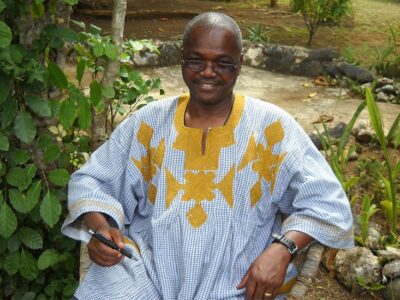
 Malidoma is from a collectivist society. Born into the Dagara tribe in Burkina Faso, he is the grandson of a renowned healer, who travels around the world but is based in the U.S. Malidoma sees himself as a bridge between his culture and the United States, existing to “bring the wisdom of our people to this part of the world.” Malidoma’s “career”—he chuckles at the term—is some combination of cultural ambassador, homeopath, and sage. He travels the country doing rituals and consultations, writing books, and giving speeches. He has three master’s degrees and two doctorates from Brandeis University. Sometimes he calls himself a “shaman,” because people know what that means (sort of) and it’s similar to his title back in Burkina Faso—a titiyulo, one who “constantly inquires with other dimensions.”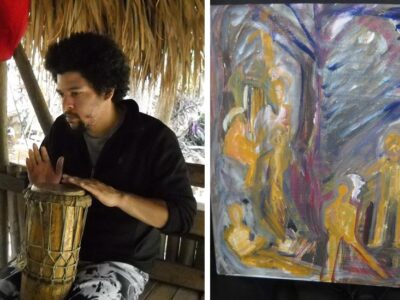


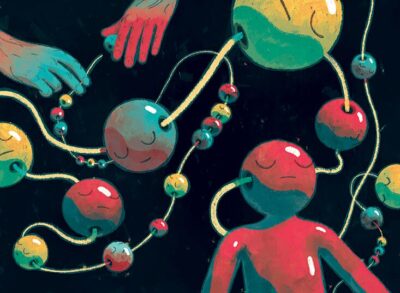
 For 30 years Isabelle Arnulf, head of the sleep disorders clinic at Pitié-Salpêtrière Hospital in Paris, has studied sleep and its associated disorders. During her career, Arnulf, who is also a professor of neurology at Sorbonne University in France, has researched a broad range of sleep conditions: sleepwalking, rapid eye movement (REM) sleep behavior disorder, lucid dreaming, sleep in Parkinson’s disease and hypersomnia, or excessive daytime sleepiness. As part of these studies, Arnulf investigated how these disorders affect dream states. In an interview with Scientific American’s French-language sister publication Pour la Science, the neurologist talks about whether depression or trauma affects dreaming and whether one should worry about recurring nightmares.
 In depression, dreams are very negative, mirroring the mental state of depressed people during the day. This parallel was brought to light in the early 2000s by researcher Dieter Riemann and his colleagues at the University of Freiburg in Germany. By analyzing the dreams of depressed patients treated with antidepressants, they discovered that as the treatment began to take effect after several weeks, the content of these dreams became less and less gloomy, and the mood of the patients improved.
 For a long time, we approached recurring nightmares through the prism of psychoanalysis, [which explained them as] unresolved trauma that we would have to work to resolve. But the fact is: we don’t know.
 Not getting enough sleep is detrimental to both your health and productivity. Yawn. We’ve heard it all before. But results from one study impress just how bad a cumulative lack of sleep can be on performance. Subjects in a lab-based sleep study who were allowed to get only six hours of sleep a night for two weeks straight functioned as poorly as those who were forced to stay awake for two days straight. The kicker is the people who slept six hours per night thought they were doing just fine.
 If you think you sleep seven hours a night, as one out of every three Americans does, it’s entirely possible you’re only getting six.
 We all want to feel inner peace. We look for it throughout our entire lives, as being at peace allows us to dream and to actually follow those dreams. When we are at peace with ourselves, we are more understanding and loving towards others, we are able to embody the concept of being One, and therefore we create deeper and more meaningful connections with family, friends and people in general.
 Meditation has been found to have numerous scientific benefits. For example, it reduces stress, improves concentration, boosts creativity, and increases happiness. Meditation affects our mental health in a positive manner, decreasing anxiety and depression, improving sleep, and enhancing self-awareness
 Brian was just a kid when he first saw the movie Good Will Hunting and wasn’t thinking about therapy or his mental health. The 29-year-old engineer was mostly just fascinated by stories about repressed geniuses and Matt Damon’s background story of being a Harvard dropout. He also thought it was pretty rad that the original script was intended to be a spy-thriller.
 Active people tend to overthink what food is doing for their body — Is keto good for endurance? What’s the perfect post-training macro spread? Butter or no butter in my coffee? — but underthink what it’s doing for their mind. Yet you’ve probably noticed that what you eat impacts what’s going on upstairs. We’ve all devoured a cheat meal and afterward felt off, not just physically but also mentally and emotionally. And new research suggests that the connection between diet and mental well-being is a little more nuanced than scientists once thought.