
I’ve been watching for how greatness shows up lately. For example, how Ryan Reynolds and Rob McElhenney sourced Wrexham AFC into super winners with such grace, generousity and community spirit, and how Iam Tongi is winning the hearts of so many on American Idol this year.
Here are some insights into what I’ve gleaned from my recent questing into greatness …
* Genuine authenticity and kindness matter. We are looking for super heroes who personify these traits along with greatness.
* People matter. Animals matter. The Earth and Nature matter. There is great Love in greatness for these things.
* Making the world a greater place is an exhilarating, high vibing, Joy-filled adventure. As Ryan Reynolds put it, it’s addictive.
* Once you surrender your smallness, greatness will flood you with everything you need to make it so. Ideas, innovation, great creativity, laughter, sunshine emanating from you and more.
* Saying YES to greatness is one of the best things we might ever do in our lifetime. It opens the door to adventure and super herodom, even if you might be the only one who knows it’s so. Because it’s not about fortune and fame, you see. It’s about contribution and being moved so profoundly that Life is forever changed by the very presence of greatness in our world.
About the Author:
Soleira Green is a visionary author, quantum coach, ALLchemist & future innovator. She has been creating leading edge breakthroughs in consciousness, quantum evolution, transformation, innovation, intelligence and more over the past 25 years, has written and self-published eleven books, and taught courses all over the world on these topics.
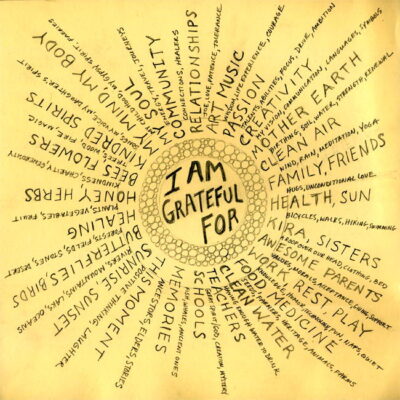 In Sidetracked: Why Our Decisions Get Derailed, and How We Can Stick to the Plan, Francesca Gino, an associate professor at Harvard Business School, explores a range of fascinating subjects, including how emotions influence decisions and the often-thorny matter of understanding the perspectives of others. Blending social science and real-world examples, Gino’s book also highlights the science of gratitude.
 A dear friend — a friend I admire for her ability to guide others — recently admitted to suffering from a bout of the “shoulds.” She pointed out that every time she told herself she “should” have done something or “should” be doing something, she was essentially flagellating and shaming herself.
 A propensity toward a “should” mindset can come from early neural imprinting within fear-driven cultures, says neuroscientist Tara Swart, author of The Source: The Secrets of the Universe, the Science of the Brain. “Cultures can mean family, society, school, or religion. Even in adulthood, the ‘shoulds’ are about the things you had to do to survive without punishment, which can be literal or be shame, guilt, or humiliation.” Telling ourselves we “should” be doing this or “should” be doing that subconsciously brings up the shame or guilt that would have been the punishment for not behaving as expected during childhood, says Swart.
 Barna Abel says, situation permitting, her first step in quelling the inner “shoulds” is to check in with herself and ask what would it look like to let go of what she thinks she should do and actually start to do what she wants to do. “It’s just stopping and being honest with yourself about your resistance. A lot of times, what gets stuck in the ‘shoulds’ are things that we’re not good at. There are things you may have been putting off because they aren’t things you really want to do, or are things that you may find difficult,” Barna Abel says. Then, actually plot out your options. “Ask yourself: If I knew I couldn’t fail, success was assured, and money was no object, what would happen? This gets you to open up in terms of possibility and alternate solutions,” she adds.
 We may be slowly returning to our offices (more or less), but the strains of the pandemic are hardly over. As we enter a transitional stage after almost two years of trauma and strain, more than ever we need ways to refresh our energies, calm our anxieties, and nurse our well-being. One potentially powerful intervention is rarely talked about in the workplace: The cultivation of experiences of awe. Like gratitude and curiosity, awe can leave us feeling inspired and energized. It’s another tool in your toolkit and it’s now attracting increased attention due to more rigorous research.

 She writes, “The mind analyzes — the heart synthesizes. The turning point is where the heart is awakening. Historically speaking, we are at this juncture. America’s motto, inscribed on the banner in the beak of the eagle of the Great Seal [of the United States], reminds us that America was founded on the principle of ‘E Pluribus Unum’ — ‘Out of the Many, One.'”