
What’s cooking with us all right now during this amazing period of solar flares and quantum leaps into new levels of ourselves?
1. We are becoming less fixed as human beings and more creatable as embodied greater beings. Our awareness of the constructs that trap us are disappearing as we learn to call the forces of Grace, Joy, Creation, etc. into ourselves.
2. There’s a surrender of ‘identity’ happening as we morph into something new and exciting. The letting go of our definitions of self is a huge leap forward into new horizons of possibility for us all.
3. We’re discovering the art of living in ‘the flow state’ of genius, high vibe creation and a belief in our own and others’ magnificence.
4. There’s a wonderful sense of connection with all life forms, Nature and the Earth. For me it’s a feeling of exhilaration and joy seeing dandelions so perky and yellow. Hearing bird song fill the air. Watching the green become GREENER. Did you know that you can call forth the miraculousness of Nature to fill the world with incredible breakthroughs?
5. Animals, forests, oceans are growing in sentient intelligence, reaching out to humans to show us a new way of being together on planet Earth. Our own intelligence is quantum leaping as well with sensory intelligence, quantum intelligence and infinite intelligence being added to the mix of brain centric intelligence.
6. We are learning to live in a greater understanding of how life can evolve, quantum leaping into new horizons of possibility, discovering the art of alchemical source creation to elevate all life now.
It is an incredible time to be alive right now. Be amazing. Be brilliant. Exhilarate life for the whole world to thrive today and always.
About the Author:
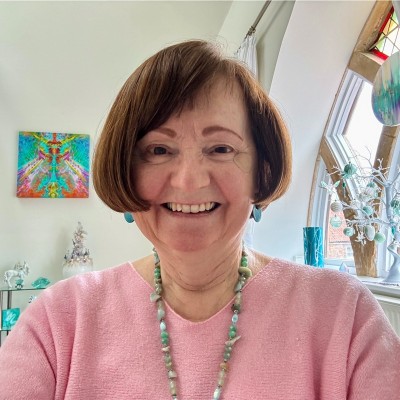
Soleira Green is a visionary author, quantum coach, ALLchemist & future innovator. She has been creating leading edge breakthroughs in consciousness, quantum evolution, transformation, innovation, intelligence and more over the past 25 years, has written and self-published eleven books, and taught courses all over the world on these topics.
 If you want to learn something about change there is no better place to look than evolution. Nothing represents a continuous and unrelenting cycle of order, disorder, and reorder on a grander scale. For long periods of time, Earth is relatively stable. Sweeping changes—warming, cooling, or an asteroid falling from space, for example—occur. These inflection points are followed by periods of disruption and chaos. Eventually, Earth, and everything on it, regains stability, but that stability is somewhere new.
 The more you define yourself by any one activity, the more fragile you become. If that activity doesn’t go well or something changes unexpectedly, you lose a sense of who you are. But with self-complexity, you have develop multiple components to your identity.
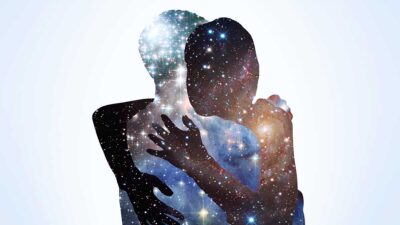 Tina was at a crossroads. Her daughter had recently left for college, and her husband had his own pursuits. And although she’d once enjoyed banking, she now bore little interest in her work. For some time, she had been asking herself whether she should quit. But what would her colleagues and bosses think of her?
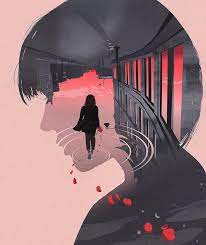 If there is too great a discrepancy between the “true” and the “false” self, it will make for a vulnerable sense of identity. And if we are unable to acquire a stable sense of identity—we may end up one day unraveling as Tina did. After a lifetime of complying to others’ expectations, Tina was experiencing what Erikson would call a delayed identity crisis. At a certain point in her life, it became difficult for her keep up the lie.
 Tina was at a crossroads. Her daughter had recently left for college, and her husband had his own pursuits. And although she’d once enjoyed banking, she now bore little interest in her work. For some time, she had been asking herself whether she should quit. But what would her colleagues and bosses think of her?
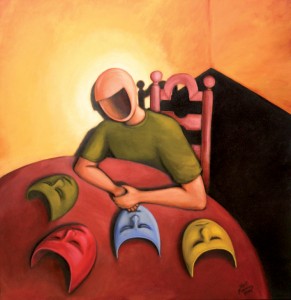 The idea of a “true self” and a “false” or “shadow” self has long preoccupied psychologists. For example, Carl Jung introduced the notion of the shadow side of our personality. He viewed “the shadow” as our unknown, dark side—made up of the primitive, negative, socially depreciated human emotions such as sexuality, striving for power, selfishness, greed, envy, jealousy, and anger. But although the shadow personifies everything that we fear, and therefore refuse to acknowledge, it remains a part of us. Jung believed that unless we come to terms with our shadow side, we are condemned to become its unwitting victim.
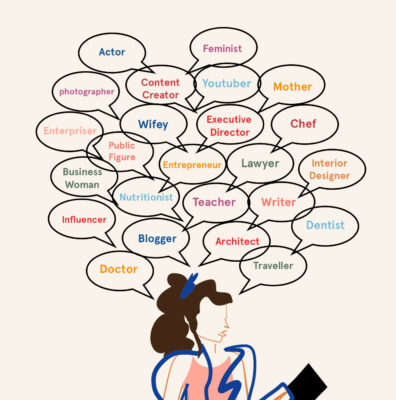 If there is too great a discrepancy between the “true” and the “false” self, it will make for a vulnerable sense of identity. And if we are unable to acquire a stable sense of identity—we may end up one day unraveling as Tina did. After a lifetime of complying to others’ expectations, Tina was experiencing what Erikson would call a delayed identity crisis. At a certain point in her life, it became difficult for her keep up the lie.