

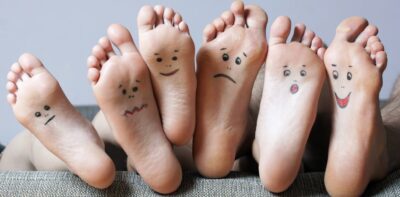
From skin to hair, scabs and even tears, the external appearance of the body can offer clues about the state of your health.
But there’s another part of the anatomy that’s often overlooked: the feet.
Feet are wired up to nerve fibre tracts from the brain so you can stand, balance and wiggle your toes. They’re also plumbed by blood vessels, which lead all the way from the heart.
The appearance and function of our feet, then, can indicate viral infections, diseases of the cardiovascular system and even neurological disorders. Here are a couple of examples.
Hand, foot and mouth disease (HFM)
Infectious diseases tend to affect different parts of the body.
Measles usually starts off on the face, or in the mouth, as little spots that look like grains of sugar. Pityriasis versicolor, a type of fungal infection tends to begin and stay on the torso. The reasons why they tend to affect these areas is not well understood.
HFM disease begins in exactly these areas. It’s caused by a virus known as coxsackie, and tends to produce raised pink-red spots, that can blister and weep. The name is a bit of a misnomer — the rash can also affect the legs and buttocks too. Noticing a new rash on the feet should prompt a doctor to consider HFM.
HFM is a common childhood illness that’s very contagious. Thankfully, it’s also usually short lived, clearing without treatment after a few days.
It shouldn’t be confused with foot and mouth – or better, hoof and mouth, however. Foot and mouth is a different virus from HFM that (mainly) affects cloven-hoofed animals, like cows and sheep. This is the disease that resulted in a UK epidemic back in 2001.
Heart, vessels and feet
Our circulatory system supplies blood to every part of the body – from the crown of the head, to the tips of the toes. By the time blood vessels reach these extremities, like twigs from a tree, they have branched and got much smaller in size.
At some point, we’ve all experienced the discomfort of icy cold feet, especially when going barefoot around the house or during chillier days. It’s normal for feet to feel cool to the touch, but they should not change colour from their usual skin colour to blue – nor should they ever get painfully cold.
Severe symptoms of discolouration and pain can point toward a phenomenon called blue-toe syndrome. It can be triggered by tiny little masses called micro-emboli, comprised of blobs of cholesterol. These emboli pass easily through large vessels but will struggle as they become smaller.
On reaching the smaller vessels of the feet, they finally become stuck, cutting off the blood supply. The tissues then become starved of oxygen causing the feet to change colour and become painful.
In serious cases, blue-toe syndrome can lead to tissue death, breakdown and the formation of gangrene, which may require amputation of toes – or even the whole foot.
This rare condition is sometimes called “trash foot”, because of the way in which the feet become so discoloured.
What’s the underlying cause of these tiny cholesterol fragments? Most likely aneurysms and atherosclerosis – vessels that have ballooned or hardened upstream of the feet. When trash foot does occur, it is often following surgical treatment for these conditions, such as aortic aneurysm repair. The procedures disrupt the vessel, which can cause emboli to break off.
As well as trash foot, there are other signs in the feet that can point towards cardiovascular disease. Raised red swellings appearing on the feet (as well as the hands) can indicate an infection of the heart called bacterial endocarditis. These can be painless – in which case we call them Janeway lesions – or sore, which are called Osler’s nodes.
The Babinski sign
The toes can signal issues with the nervous system too.
If you’ve ever watched ER or Grey’s Anatomy and heard one of the characters shout “upgoing plantars!” during a patient examination, you know they’re referring to the Babinski reflex. After finding the upgoing plantar, the doctor may then have creased their brow with worry – and for good reason.
The Babinski sign is a simple test which involves stroking the sole of the foot with a blunt ended instrument to check the response of the toes. This is the plantar reflex – plantar relating to the sole of the foot. Normally, when this reflex is triggered, the toes should curl under or flex downwards towards the sole.
It the big toe points upwards, and the smaller toes fan out, this is an “upgoing plantar” response – also known as the Babinski sign, named after the neurologist Joseph Babinski who first described it. It is normal to find this response in babies, whose nervous systems are undergoing development and not capable of all the motor functions of an adult.
In adults, however, finding the Babinski sign is an altogether different story. Most commonly, it signifies that a stroke is disrupting the normal brain circuitry that controls the feet.
Other causes include multiple sclerosis and (rarely) drug intoxication. In some otherwise healthy people, though, the Babinski sign can be observed during deep sleep.
The scope is much wider than just these conditions. Diabetes, kidney failure and even thyroid disorders can affect the feet. They are, therefore, important indicators of our health so regular checks are essential – and seek medical advice if you notice any pain, discolouration or rashes.
Original article here

 “The core features of social anxiety were not evident in loneliness,” Lieberz said. Those results suggest, she said, that treating loneliness simply by telling lonely people to go out and socialize more (the way you can treat a phobia of snakes with exposure) will often not work because it fails to address the root cause of the loneliness. In fact, a recent meta-analysis confirmed that simply providing lonely people with easier access to potential friends has no effect on subjective loneliness.
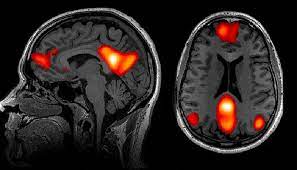
 Bzdok and his team showed that some regions of the default network are not only larger in chronically lonely people but also more strongly connected to other parts of the brain. Moreover, the default network seems to be involved in many of the distinctive abilities that have evolved in humans — such as language, anticipating the future and causal reasoning. More generally, the default network activates when we think about other people, including when we interpret their intentions.
 Primate studies and the results of the Neumayer III polar station experiment show that experience and social environment can exert a powerful influence on the structure of an individual’s brain, hard-wiring the changes that loneliness can cause. On the other hand, studies of twins have shown that loneliness is partly heritable: Almost 50% of the variation in individuals’ feelings of loneliness can be explained by genetic differences.
 The effect of exercise on health is profound. It can protect you from a range of conditions, including heart disease, type 2 diabetes and some cancers. But the type and amount of exercise you should do changes as you age. To ensure that you are doing the right type of exercise for your age, follow this simple guide.
 Most people start to put on weight in their 40s. Resistance exercise is the best way to optimise calorie burning to counteract fat accumulation and reverse the loss of three to eight percent of muscle mass per decade. Ten weeks of resistance training could increase lean weight by 1.4kg, increase resting metabolic rate by 7 percent and decrease fat weight by 1.8kg.
 Typically, people accumulate more chronic conditions as they get older, and ageing is a major risk factor for cancer. Maintaining a high level of physical activity can help prevent cancers, such as post-menopausal breast cancer, colon cancer and cancer of the womb, and it reduces the risk of developing chronic conditions, such as heart disease and type 2 diabetes.