

Despite our best efforts, we often find ourselves readily believing everything our friends post on their social media feeds.
Regardless of any nuance that may exist offline, our friends’ cheery, filtered posts show them feeling loved, seeing their loved ones every day, and never fighting or struggling to get their emotional needs met. They seem to move through the world with ease and community, having found their people when they were 2 years old and retained their friendships for the remainder of their lives. Therefore, those of us who have friendships that aren’t always as seamless feel like we are definitely failing.
What we forget when we do this is that there’s a social pressure to show each other that we belong, and that we are doing everything the “right way.” It’s not just you who feels that pressure. It’s also the very friends to whom we’re comparing ourselves. While we may know this on some level, once we start mindlessly scrolling—as these platforms encourage us to do as often as possible—we begin to take our friends’ posts at face value.
We forget that this post about a “perfect birthday party” might not be the whole story, because we’re not detectives looking for lies in the innocuous posts of our loved ones. But it’s important to remember they’re not “lies”; most people tend to project perfection and gloss over the hard stuff when they’re posting online. Unfortunately, what happens when people fall into that habit is that the rest of us feel like we’re failing in comparison—and we’re failing alone.
This feeling of comparison and the accompanying loneliness and shame that it brings inspired me to write my 2023 book, You Will Find Your People: How to Make Meaningful Friendships As an Adult. When my book was first published, I was shocked that so many people told me they felt this shame and loneliness too. They whispered to me, “I always think everyone but me has great friends they’ve known for 80 years and never struggle in their friendships. I didn’t know anyone else was feeling that way too.”
While it’s true that most of us are struggling, many people aren’t going to post when they’re crying at 2 a.m. over a friend breakup, when they’re having a fight with a friend, or when they’re hit with anxiety that a friend of theirs didn’t like their posts lately and must therefore be upset with them. They’re going to post when they see their friends in person (possibly for the first time in weeks or months) and are still riding that high from finally feeling connected to others. Still, we can’t know the complex backstory of that celebratory post. Our perception is that they’re succeeding and we’re failing. That may be because we haven’t met our people yet, or our friendships don’t look exactly like that, or our friendships are kind of weird and strained right now and we don’t have as much community as we need.
So, what can we do other than ask all our friends to include detailed facts about the overall health of “my girls,” and if they’ve ever had some seriously messy shit go down in their friend group that might make us feel a little better about our own friendships? The complex but simple answer is that we have to be kinder to ourselves when we’re scrolling. But how can we soothe ourselves when we’re scrolling and it feels like we’re really drowning and everyone else is sailing on a pristine yacht?
When I find myself in that space, I remind myself that I don’t know the detailed interactions between people and that only those who truly know their friendships are the ones within them. For all I know, that friendship is on its last legs or that group has two people in it who hate the other two. And while I absolutely don’t wish that on them, or hope someone is hurting, my point is that it’s important to entertain more than one possibility when we’re stuck in that comparison spiral.
Once we remove the shame of “they’re right, I’m wrong” from our brains, we have more space to nurture our own friendships and our own communities at our own pace. It’s hard to do that when you’re beating yourself up. So once you’ve talked yourself down from the ledge, ask yourself: How can I reach out to the friends I do have or want to have? How can I connect with them further? How can I find more joy in the friendships I have? How can I set more boundaries and communicate better with them? And perhaps: How can I let go of the friendships that aren’t making me truly happy?
As soon as we finally stop comparing ourselves to the limited view we’re getting from other people posting about their friendships, we can truly be free to take that energy and put it toward what we really want: not envying a picture-perfect friendship that might not exist, but to finally, bravely, cultivate deeply nurturing friendships that—even if they’re flawed—are absolutely real.
Original article here
 In approximately one month and 10 days, I’ll be on my way to making one of the larger decisions of my adult life (so far, anyway); I’m moving to Austin, Texas, approximately 2,000 miles and one hell of a road trip away from my family and almost my entire friend group back in New York. While I have many questions about my move—chief among them, “How much should a mattress cost?” and “Will everyone hate me for being a Brooklyn transplant?”—nothing has loomed larger in my mind than the question of friendship, or, more specifically, how a full-grown adult goes about making new friends with no partner or kids to act as built-in buffers.
 For Hannah Smith, 27, friendship began at home—quite literally—when she moved to San Francisco in 2019 without knowing anyone. Smith sublet three different rooms through Craigslist before she finally signed a month-to-month lease in the perfect place (which she also found through Craigslist), eventually turning a roommate from her final apartment into one of her best friends. “Low-commitment living situations can be a great way to get to know people in a new place,” says Smith, although she adds that this strategy might be somewhat complicated by the ongoing effects of COVID-19.
 “The core features of social anxiety were not evident in loneliness,” Lieberz said. Those results suggest, she said, that treating loneliness simply by telling lonely people to go out and socialize more (the way you can treat a phobia of snakes with exposure) will often not work because it fails to address the root cause of the loneliness. In fact, a recent meta-analysis confirmed that simply providing lonely people with easier access to potential friends has no effect on subjective loneliness.
 Bzdok and his team showed that some regions of the default network are not only larger in chronically lonely people but also more strongly connected to other parts of the brain. Moreover, the default network seems to be involved in many of the distinctive abilities that have evolved in humans — such as language, anticipating the future and causal reasoning. More generally, the default network activates when we think about other people, including when we interpret their intentions.
 Primate studies and the results of the Neumayer III polar station experiment show that experience and social environment can exert a powerful influence on the structure of an individual’s brain, hard-wiring the changes that loneliness can cause. On the other hand, studies of twins have shown that loneliness is partly heritable: Almost 50% of the variation in individuals’ feelings of loneliness can be explained by genetic differences.
 If you’ve ever tried to make new friends as an adult, you’ll probably see why loneliness is at an all-time high. Making new friends feels just plain hard.
 This won’t be news to many of us. When we have demanding work schedules, very involved family lives or a combination of the two, our time for investing in friendships drops. Even when we meet a promising new friend, it can be hard to carve out time to invest in it. This is a bigger problem for older adults, given most people find their obligations increase with age.
 Some people are incredibly likable because of the things they do. Some people are incredibly charismatic because of the things they do.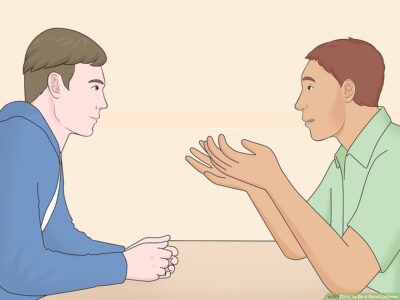
 About 20 years ago, working for National Geographic, and with a grant from the National Institute on Aging, I started identifying and studying the longest-lived people, those who are in what we called the world’s Blue Zones. These are people who have eluded heart disease, diabetes, dementia, and several types of cancer.
 Have you ever gotten into bed at the end of the day and realised that you haven’t spoken out loud to anyone since the day before? Or simply found yourself feeling completely and utterly alone?
 “Those who are emotionally lonely will find it difficult to improve things without tackling the root of the problem,” says Dr. Spelman. “Emotional loneliness is not circumstantial but, rather, comes from within.”
 But situational loneliness doesn’t just arise in those who relocate alone, as social media editor Sarah discovered when she moved countries with her partner. Sarah left her Sydney home in March 2017 to join her partner in London, where he had arrived a month earlier to start a new job and find the pair a home to live in — although she admits that “didn’t mean it was smooth sailing”.
 “It was a really bewildering, lonely time,” she says. “The jump of being plonked into a huge arts school, in just one of hundreds of halls of residence in a sprawling city I didn’t understand, made me retreat into myself and I struggled to make friends in the face of it all.