


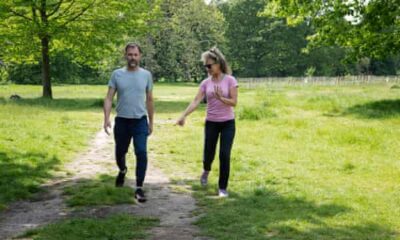
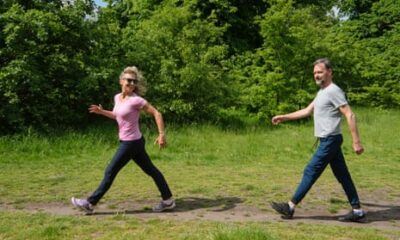
Walking has seen a surge in popularity over the past few years, thanks to a slew of research that’s found that it’s great for your overall health and longevity. Now, another study has found that you don’t need to log several miles to reap the benefits of walking. Instead, just a few minutes a day could provide a serious boost for your overall health.
So, what’s the deal with this study and why is walking so good for you? Here’s what we know.
What did the study find?
The meta-analysis, which was published in the British Journal of Sports Medicine, analyzed data from 196 peer-reviewed articles that involved more than 30 million people. The researchers specifically looked at the link between the participants’ physical activity and health.
After crunching the data, the researchers discovered that people who logged 75 minutes of moderate-intensity exercise (which includes brisk walking) per week had a 23 percent lower risk of early death.
When the study authors broke that down even more, they found that 75 minutes a week of moderate-intensity exercise lowered the risk of cardiovascular disease by 17 percent and cancer by seven percent.
Why is walking so good for you?
There are a few reasons why walking is beneficial. For one, it’s approachable.
“There’s no skill hurdle and people aren’t usually intimidated by it,” says Albert Matheny, R.D., C.S.C.S., co-founder of SoHo Strength Lab. You also don’t need extra equipment, meaning you can usually just walk out the door and go.
“Walking is great because it’s a cardiovascular exercise, but it’s also weight-bearing,” Matheny says. “That’s ultimately better for bone density and overall mobility.”
In addition to all of that, research has linked a walking habit with better moods, improvements in heart health, and a lowered risk of developing diabetes.
How much walking do you need to do per day to reap the benefits?
It really depends on your goals. This particularly study found that walking at a solid pace for just 11 minutes a day (a.k.a. 75 minutes spread out over the course of seven days) can give you all of those health perks mentioned above.
But that doesn’t mean you need to stop walking once you hit 11 minutes. “There’s no magic number,” Matheny says. “It’s not like if you walk less than 5,000 steps, you get no benefit.”
If you’re looking to take up a walking habit for fitness, he suggests aiming for 5,000+ steps a day. Ultimately, though, Matheny recommends just doing what you can.
How can I add more walking to my day?
There are so many ways to take up a walking habit, including making it a regular workout or finding ways to sneak it in, like walking to a friend’s house versus driving there. (You may need to upgrade your footwear to get a good walking shoe if you plan to ramp things up, though.)
“You can also just try to go outside and walk whenever you can,” Matheny says. “It’s good for your mind and body.”
Original article here
 I have a pain in my neck. Usually such a statement will open up the floor to all kinds of “witty” responses, but the truth is, I really do. My neck pain started at university, ahem, some years ago while typing my dissertation from bed (this makeshift desk was the norm, even in life pre-Covid) – which meant I would find myself looking down at my laptop for hours on end. Although my degree is now stowed away, gathering dust, the pain is not – and it’s continued to be a not-so-friendly companion in my everyday life.
 Pandemic life had a way of revealing our weaknesses. For those of us of a certain age, I mean that literally. If you are feeling like certain household activities — toting groceries, hoisting children, moving furniture, carrying laundry — are more difficult than they were in the past, you aren’t alone. And you aren’t imagining it.
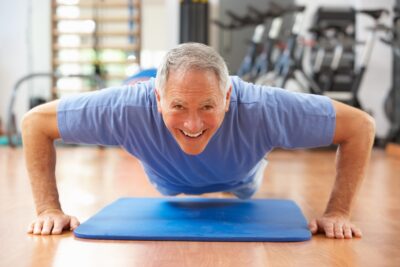 Why? Strength training improves your “economy of movement,” Metzl says, meaning the amount of energy you expend to complete a task, and it “offloads joints, so you can do the same amount of work with less pain and lower risk of injury. You’re essentially getting more juice out of your muscles.” Metzl is personally vested in this quest: He has run 35 marathons and competed in Iron Man triathlons, and he says he aspires, even as he approaches his mid-50s, “to keep going forever.”
 Both Stanforth and Metzl recommend building muscle by performing a high number of reps of a lighter weight — i.e., one you can lift at least 15 times before failure, the fitness term for can’t . . . do . . . one . . . more.
 Walking does great things for your mental health and cardiovascular fitness, but did you know that a good walk can also help you build the muscles in your legs and abs?
 For most of my adult life, exercise was an ordeal. Even mild workouts felt grueling and I left the gym in a fouler mood than when I’d arrived. The very idea of the runner’s high seemed like a cruel joke.
 At a conference in 2012, Luc van Loon was presenting some exciting data from a newly published study. After a heroic research effort that took 2.5 years and 500,000 euros, he and his colleagues had managed to shepherd a large group of frail, elderly subjects through a six-month strength-training program. Those who had taken a daily protein supplement managed to pack on an impressive 2.9 pounds of new muscle. Success! Old people could be strong!
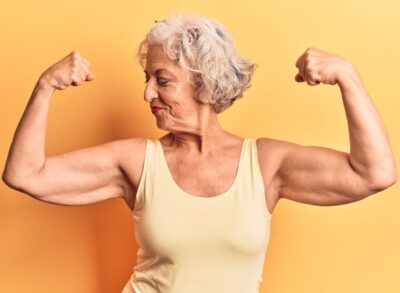 We often think of amino acids as the “building blocks” of muscle. That’s true, but the amino acids derived from protein actually play a dual role in muscle growth: In addition to being a source of raw materials, protein acts as a signaling molecule, triggering the growth of new muscle. One amino acid in particular, leucine, seems to be the most potent anabolic signaler, but you need all the amino acids together to effectively build muscle.
 The effect of exercise on health is profound. It can protect you from a range of conditions, including heart disease, type 2 diabetes and some cancers. But the type and amount of exercise you should do changes as you age. To ensure that you are doing the right type of exercise for your age, follow this simple guide.
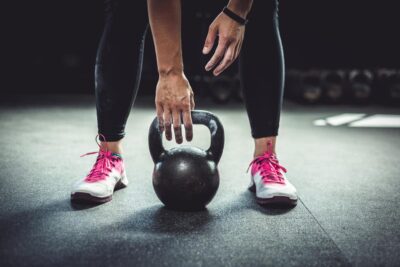 Most people start to put on weight in their 40s. Resistance exercise is the best way to optimise calorie burning to counteract fat accumulation and reverse the loss of three to eight percent of muscle mass per decade. Ten weeks of resistance training could increase lean weight by 1.4kg, increase resting metabolic rate by 7 percent and decrease fat weight by 1.8kg.
 Typically, people accumulate more chronic conditions as they get older, and ageing is a major risk factor for cancer. Maintaining a high level of physical activity can help prevent cancers, such as post-menopausal breast cancer, colon cancer and cancer of the womb, and it reduces the risk of developing chronic conditions, such as heart disease and type 2 diabetes.