
Our 206 bones do more than just keep us standing, walking, and singing through life. They also protect our organs, harbor bone marrow, and store minerals such as phosphorus and calcium. But just like your muscles, bones require maintenance work. Here’s how to keep them healthy for the long run.
Human bones don’t come ready at full strength. Instead, our bone density starts increasing shortly after birth and continues until we are about 30 years old. After that it plateaus until our 40s, when our skeleton begins to whither. For men, this process is a gradual one. For women, however, this occurs rapidly after menopause. If too much bone is lost, osteoporosis—a chronic disease that causes the body’s framework to become soft and brittle—can occur, and increase a person’s risk of bone fractures.
In the US, osteoporosis is responsible for more hospitalizations than heart attacks, strokes, and breast cancer combined. Invasive operations related to fractures, such as hip surgery, cause medical complications in older people. Nearly 20 percent of those on Medicare hospitalized a week after their fracture dies within a year.
“Osteoporosis is concerning because it’s chronic fracturing. Each break could drastically change your quality of life,” said Kyle Jeray, the chairman of the Department of Orthopedics at Prisma Health, a not-for-profit clinic in Greenville, South Carolina. “You may never be able to live on your own. You may become dependent on [a] walker. It’s a loss of independence.”
Because bone health declines later in life, the American Orthopedic Association recommends women 65 and older as well as men older than 70 should ask their primary care doctors for an osteoporosis evaluation. Those with a risk factor or a history of a fracture after the age of 50, regardless of the cause, should also be evaluated. Risk factors include severely low body weight, steroid use, rheumatoid arthritis, and other chronic diseases. For those concerned about osteoporosis, online risk assessment tests can be a helpful resource.
“It is a silent disease until it’s not. People don’t realize they have osteoporosis until they break something,” said Paul Anderson, the Vice Chair for Own the Bone, an American Orthopedic Association committee that encourages surgeons to take more ownership in the care of osteoporosis patients. “That is why we stress asking for evaluations.”
Half our body’s total calcium stores in women and two-thirds in men are made during puberty. This makes bone density difficult to rebuild past our 20s especially in women. But following a healthy, well-rounded diet can help maintain our skeleton’s strength. You’ve probably been told to drink milk for strong, healthy bones since you were little, and Anderson agrees. Foods like milk, cheese, kale, and sardines are rich in calcium—the building block of bones. Without adequate calcium, your body begins leaching it from the bone for other essential uses like heart and muscle functioning. That’s why the FDA recommends consuming between 1000 to 1200 milligrams of this vital mineral daily. Post-menopausal women and those with dairy allergies or dietary restrictions like veganism should be even more conscious of their calcium intake.
 Proper Vitamin D intake is also crucial to a calcium-rich diet. The vitamin helps the gut absorb calcium and helps the kidneys break down and reabsorb calcium that would otherwise be excreted through our urinary tracts. Without it, this bone-building mineral would pass right through our bodies. Vitamin D is rarely found naturally in food, so most people soak it up through sunlight. Those living in northern latitudes where sunlight is scarce such as Chicago, the Dakotas, or Canada can turn to vitamin D-fortified foods like cereal and milk. Whether it’s obtained by basking in the sun’s rays or enjoying an ice-cold glass of milk, the FDA recommends about 800 to 1,000 international units of vitamin D daily.
However, quantity is just as important as quality when it comes to our diet. Without proper caloric intake—especially in our adolescent years—our body is unable to build bone mass.
“You can eat the right amount of calcium and vitamin D and take supplements, but if you are not taking in the proper amount of fuel you can still potentially lose bone mass,” says Jennifer Maynard, a family physician and sports medicine specialist at the Mayo Clinic’s Jacksonville, Florida campus.
This can put people, such as those with a history of eating disorders, at an increased risk of osteoporosis. Think of it like a savings account. Each year of our youth, we invest a bit in our bone bank so that as we age and begin to lose bone, we have a hefty reserve to tap into.
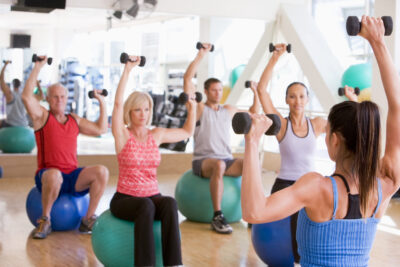
Here’s the other key component to good bone health: exercise, in any form. Bones, like muscles, respond to stress. As the saying goes, if you don’t use it, you lose it. When we don’t actively load our skeletons, calcium begins to leak from bones. Thankfully, just 20 minutes of weight-bearing exercises a day like walking or lifting weights can help maintain or even increase bone mass (though increases are likely minimal) according to Anderson.
Other than a healthy diet and exercise regimen, avoiding harmful toxins is essential for overall bone health. Anderson claims smoking tobacco causes calcium to escape via our urinary tract. It also causes an increase in cortisol, a hormone that’s known to breakdown bone. Tobacco isn’t the only toxin that can influence bone health; excess alcohol intake—defined as more than three standard drinks a day—is associated with chronic liver disease, a precursor to osteoporosis.
Even if you have osteoporosis, there are measures you can follow to avoid fractures. The National Osteoporosis Foundation found that 50 percent of repeat fractures could have been avoided.
Most fractures associated with mortality occur when older people, who have less stable muscles and bones, experience a bad fall. That is why Anderson recommends enrolling in a community-based fall prevention program. These programs focus on balancing exercises and advise participants on how to rearrange household furniture to prevent trips. For those a bit more adventurous, the CDC recommends Tai Chi as a great way to improve balance.
For serious cases of osteoporosis, medications such as bisphosphonates and anabolic agents can be prescribed. Bisphosphonates reduce the risk of fractures between 50 and 70 percent by stopping cells called osteoclasts from breaking down bone mass. Meanwhile, anabolic agents actually energize osteoblasts, the cells responsible for the construction of our skeletal framework.
Doctors and researchers are also trying to better understand the role genetics plays in our chances of developing osteoporosis, says Laura Bruce, a physician at the University of Nevada, Las Vegas who works with orthopedic patients. “[That knowledge] will only help us provide patients with more information.”
For now, getting in those extra steps or reps and getting regular checkups will help keep your bones strong as you age.
Original article here

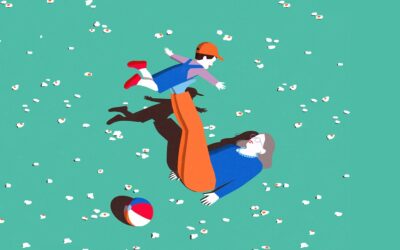 Pandemic life had a way of revealing our weaknesses. For those of us of a certain age, I mean that literally. If you are feeling like certain household activities — toting groceries, hoisting children, moving furniture, carrying laundry — are more difficult than they were in the past, you aren’t alone. And you aren’t imagining it.
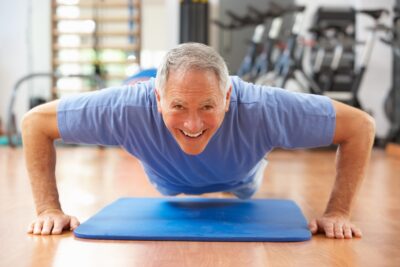 Why? Strength training improves your “economy of movement,” Metzl says, meaning the amount of energy you expend to complete a task, and it “offloads joints, so you can do the same amount of work with less pain and lower risk of injury. You’re essentially getting more juice out of your muscles.” Metzl is personally vested in this quest: He has run 35 marathons and competed in Iron Man triathlons, and he says he aspires, even as he approaches his mid-50s, “to keep going forever.”
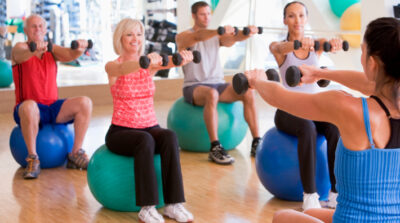 Both Stanforth and Metzl recommend building muscle by performing a high number of reps of a lighter weight — i.e., one you can lift at least 15 times before failure, the fitness term for can’t . . . do . . . one . . . more.
 For most of my adult life, exercise was an ordeal. Even mild workouts felt grueling and I left the gym in a fouler mood than when I’d arrived. The very idea of the runner’s high seemed like a cruel joke.
 At a conference in 2012, Luc van Loon was presenting some exciting data from a newly published study. After a heroic research effort that took 2.5 years and 500,000 euros, he and his colleagues had managed to shepherd a large group of frail, elderly subjects through a six-month strength-training program. Those who had taken a daily protein supplement managed to pack on an impressive 2.9 pounds of new muscle. Success! Old people could be strong!
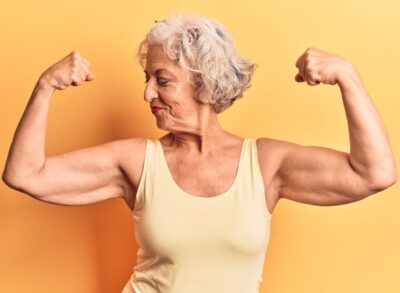 We often think of amino acids as the “building blocks” of muscle. That’s true, but the amino acids derived from protein actually play a dual role in muscle growth: In addition to being a source of raw materials, protein acts as a signaling molecule, triggering the growth of new muscle. One amino acid in particular, leucine, seems to be the most potent anabolic signaler, but you need all the amino acids together to effectively build muscle.
 The effect of exercise on health is profound. It can protect you from a range of conditions, including heart disease, type 2 diabetes and some cancers. But the type and amount of exercise you should do changes as you age. To ensure that you are doing the right type of exercise for your age, follow this simple guide.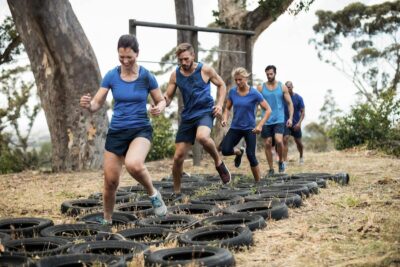
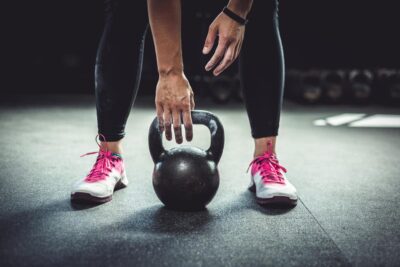 Most people start to put on weight in their 40s. Resistance exercise is the best way to optimise calorie burning to counteract fat accumulation and reverse the loss of three to eight percent of muscle mass per decade. Ten weeks of resistance training could increase lean weight by 1.4kg, increase resting metabolic rate by 7 percent and decrease fat weight by 1.8kg.
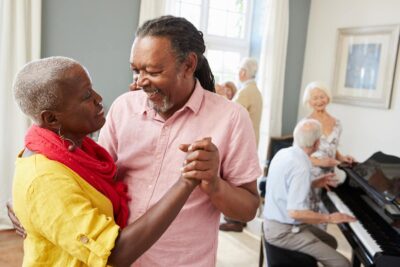 Typically, people accumulate more chronic conditions as they get older, and ageing is a major risk factor for cancer. Maintaining a high level of physical activity can help prevent cancers, such as post-menopausal breast cancer, colon cancer and cancer of the womb, and it reduces the risk of developing chronic conditions, such as heart disease and type 2 diabetes.