

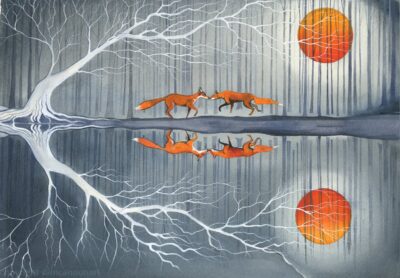
About the Artist:
I am an artist with a background in typographic design, often combining lettering with my artwork. I live and work in Southwest Dorset in the UK (near the seaside).
 I began selling locally at first back in 2012, and now sell more and more online with the help of social media.
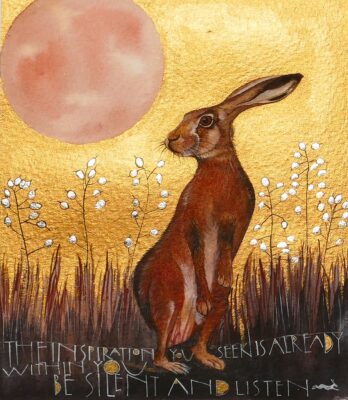
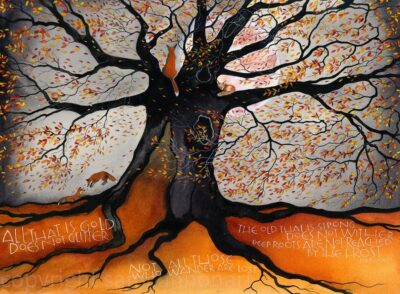
I love working with colour pencils, but it is my watercolours that I’m best known for. And though I have lots of local landscape paintings, my real loves are British mammals, birds and insects.
I really enjoy fine detail, paint with very tiny brushes and spend on average 30 to 40 hours on most paintings. And these days, for a bit of variety, I also paint straight onto little slates, pebbles and petal paper from Thailand. Once again, incorporating lettering.
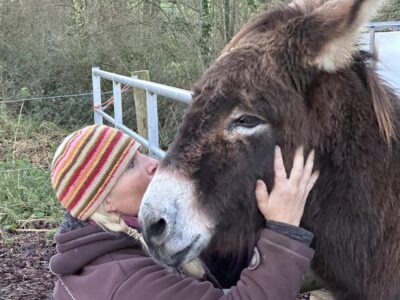
I love my work and am very lucky to get so much inspiration from the 8 acres of rewilded land that I share with my parents, my son and our three donkeys.
Website: www.samcannonart.co.uk
Twitter: @samcannonart
Instagram: @samcannonart
Facebook: @samcannonart
And my donkey’s page is @thethreedonkeyboys on Instagram
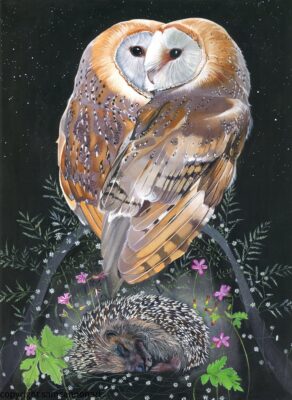
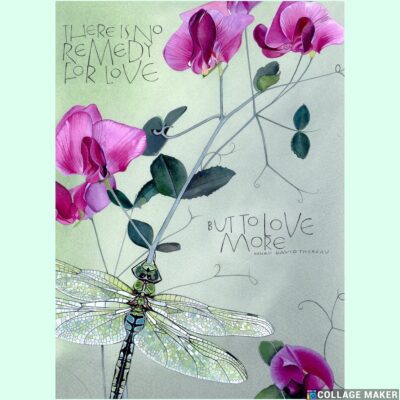
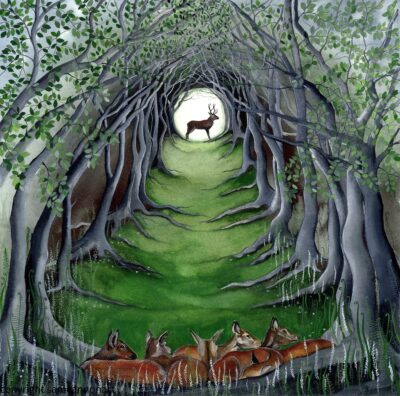
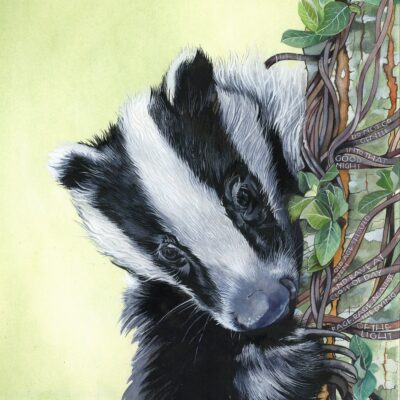
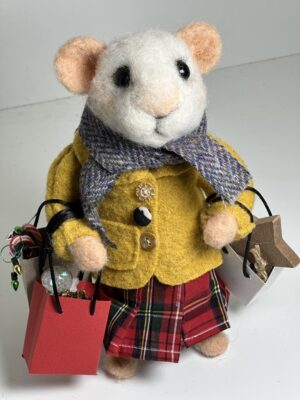
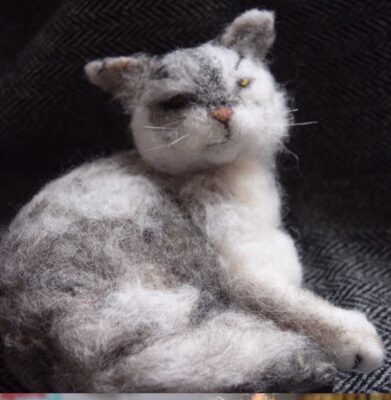
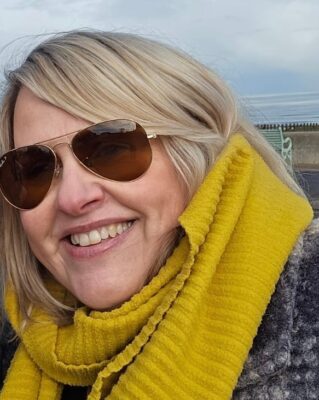 I have always loved art and gained a degree in illustrations and animation from Edinburgh College of Art. I started to work in finance but have always continued to draw, paint and craft.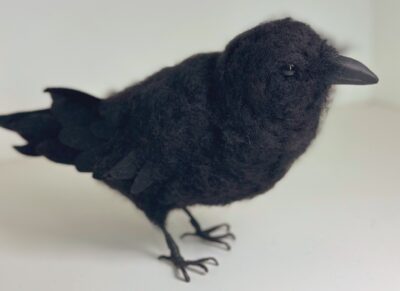
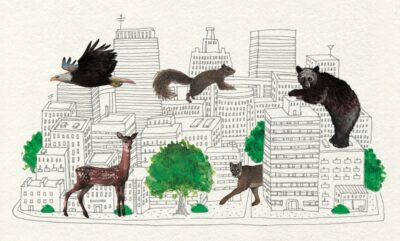
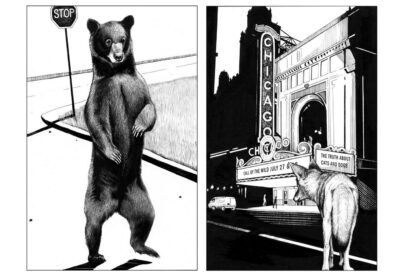 These domesticated animals then get cleared out by the late 19th and early 20th centuries, leading to this period from about 1920 to 1950 where there are fewer wild animals living in urban areas, particularly in North America, than really at any time before or since. This is a period in which some of the greatest thinkers about urban life were doing their writing, and almost everybody assumed that cities weren’t going to have animals in them.
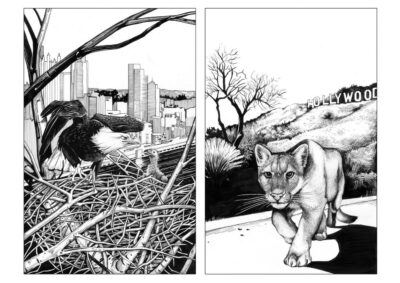 But these examples are exceptions, not the rule. And this is very time-dependent: Although there are a small number of creatures that can adapt very quickly, for most others, this would take a long period of time — much longer than it takes for their populations to go extinct. And so the problem is [talking] about this as a solution to the fact that we’re rearranging and degrading ecosystems in ways that make the world a much harder place to live for the vast majority of species out there.
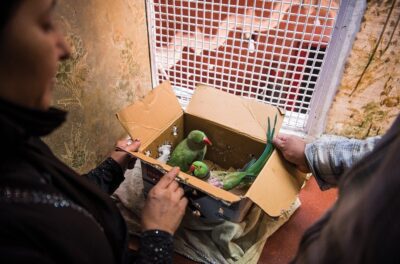
 Amid the human crush of Old Delhi, on the edge of a medieval bazaar, a red structure with cages on its roof rises three stories above the labyrinth of neon-lit stalls and narrow alleyways, its top floor emblazoned with two words: birds hospital.
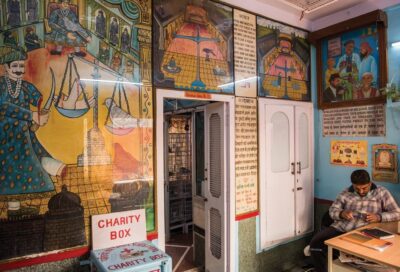 I’d come to the bird hospital, and to India, to see firsthand the Jains’ moral system at work in the world. Jains make up less than 1 percent of India’s population. Despite millennia spent criticizing the Hindu majority, the Jains have sometimes gained the ear of power. During the 13th century, they converted a Hindu king, and persuaded him to enact the subcontinent’s first animal-welfare laws. There is evidence that the Jains influenced the Buddha himself. And when Gandhi developed his most radical ideas about nonviolence, a Jain friend played philosophical muse.
 In the West, consciousness was long thought to be a divine gift bestowed solely on humans. Western philosophers historically conceived of nonhuman animals as unfeeling automatons. Even after Darwin demonstrated our kinship with animals, many scientists believed that the evolution of consciousness was a recent event. They thought the first mind sparked awake sometime after we split from chimps and bonobos. In his 1976 book, The Origin of Consciousness in the Breakdown of the Bicameral Mind, Julian Jaynes argued that it was later still. He said the development of language led us, like Virgil, into the deep cognitive states capable of constructing experiential worlds.
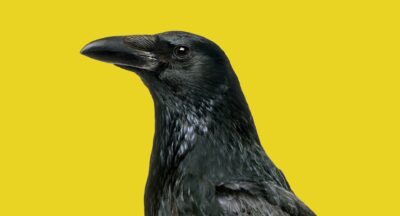
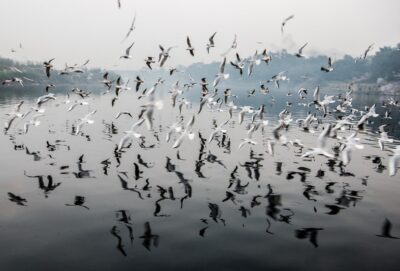 Crows are not among the shoulder-perchers, but Singh sometimes sees former crow patients hovering around the hospital. They might be looking for him. Crows recognize individual human faces. They are known to blare vicious caws at people they dislike, but for favored humans, they sometimes leave gifts—buttons or shiny bits of glass—where the person will be sure to notice, like votive offerings.
 The trail was only 50 miles from Gir National Park, where, the day before, I’d seen two Asiatic lions, nearly indistinguishable cousins of Africa’s lions. Once the region’s apex predator, the Asiatic lion almost went extinct during the British empire’s colonization of India, when no viceroy could visit a maharaja’s palace without a hunt in the local forest. Even today, the Asiatic lion still ranks among the rarest of the large feline predators, rarer even than its neighbor to the north, the snow leopard, which is so scarce that a glimpse of one padding down a jagged Himalayan crag is said to consummate a spiritual pilgrimage.
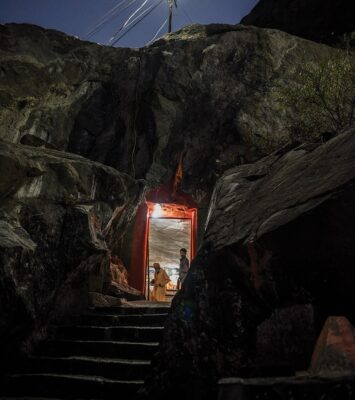 The monk was a white dot some six switchbacks up by the time I hopped off the wall and continued the climb, my legs stiffened by the break. I reached the entrance to the temple complex with only 15 minutes to spare. Its marble courtyard shone brilliant white, as though bleached by the mountain sun.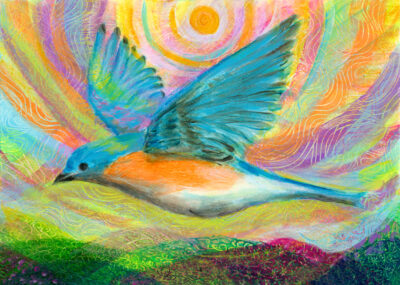
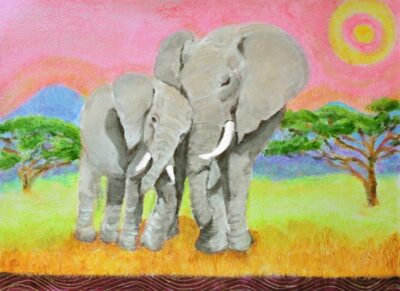
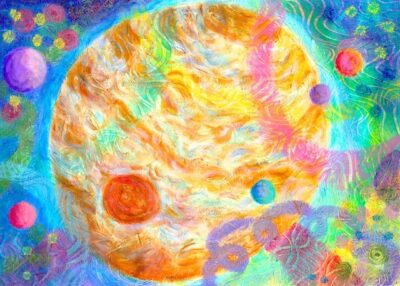
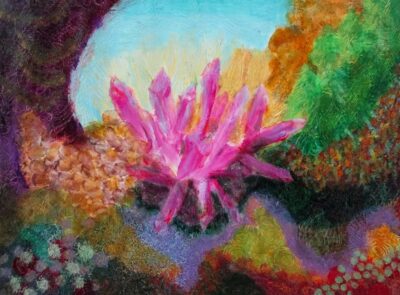
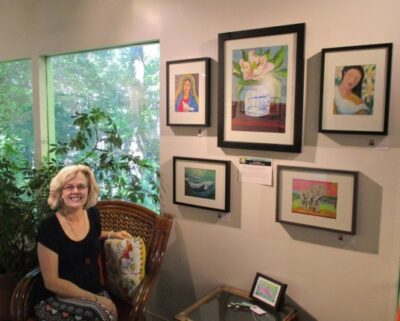 I am an Atlanta-based artist. I paint on watercolor paper using a process of layering acrylic paint and scratching back to reveal unique colors and textures in my paintings. The smooth absorbent paper allows me to bring out the light of the page and to play with layering colors.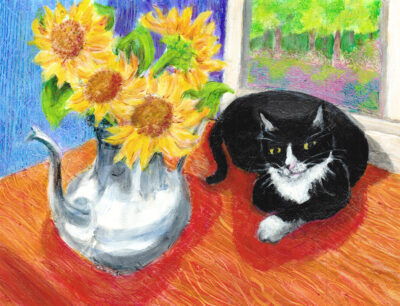
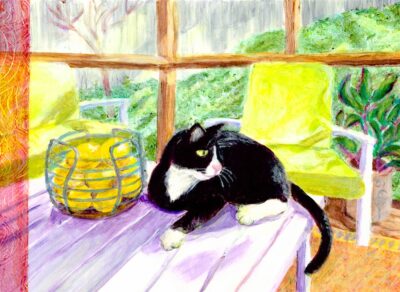
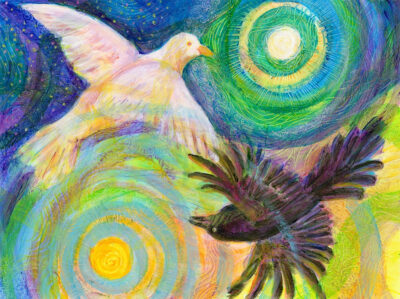
 When one of my co-workers found out about a tiny, orphaned kitten that needed a home a few months ago, he didn’t hesitate to adopt it. He says his new companion helped make the months of COVID-19 isolation at home much less stressful.
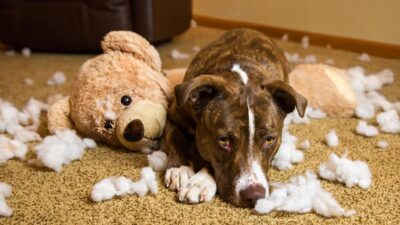
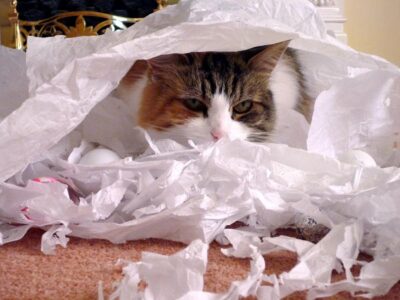 For this reason, punishment is never the answer. For one thing, your pet won’t connect the punishment with something that happened hours – or even a few minutes – earlier. And punishment may only exacerbate your pet’s anxiety and stress.
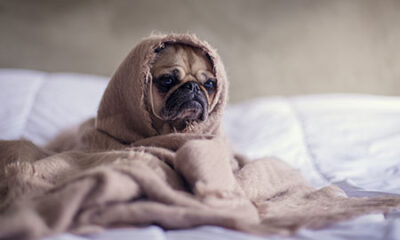 Boredom makes separation anxiety worse. Providing an activity for your pet while you’re gone, such as a puzzle toy stuffed with treats, or simply hiding treats around the house will make your absence less stressful. Other options for dogs and cats include collars and plug-in devices that release calming pheromones.