

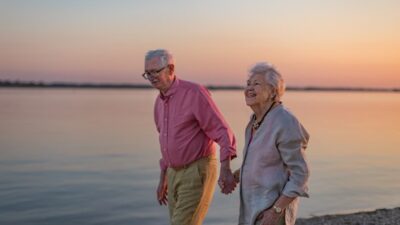
A global mental health crisis is on the horizon — dementia.
It is a condition that can be caused by a number of diseases that gradually destroy nerve cells and damage the brain, resulting in a decline in cognitive functions, according to the World Health Organization.
With the advancement of medicine, science and technology, people are living longer lives and the world’s aging population is growing at an unprecedented rate, raising the risk of a larger cohort of people living with dementia.
“As the global population of older adults continues to rise, the number of people living with dementia is also expected to grow, reaching approximately 139 million dementia cases by the year 2050,” according to a recent report. As of 2023, there were more than 55 million people with dementia globally, according to the WHO.
By 2050, the population of people aged 65 and older will double to 2.1 billion, according to the World Health Organization.
Dementia risks
“Dementia is currently the seventh leading cause of death and one of the major causes of disability and dependency among older people globally,” according to the WHO, with nearly 10 million new cases of dementia every year.
Although there is no cure for the condition, according to research published in 2023 by the WHO, psychologists and researchers are working to prevent its onset.
While age is still the strongest known risk factor for dementia, researchers have found a set of 12 “potentially modifiable risk factors,” according to The Lancet Commission’s 2020 report:
- Less education
- Hypertension
- Hearing impairment
- Smoking
- Obesity
- Depression
- Physical inactivity
- Diabetes
- Low social contact
- Excessive alcohol consumption
- Traumatic brain injury
- Air pollution
“Together the 12 modifiable risk factors account for around 40% of worldwide dementias, which consequently could theoretically be prevented or delayed,” according to The Lancet.
While socioeconomic status and education levels can impact the onset of dementia, particularly in early life, several other risks can be avoided, according to the study.
“What we currently know is — what’s good for your heart is good for your brain, and that’s because there are a lot of vascular risk factors for dementia,” Timothy Singham, clinical psychologist and adjunct senior lecturer at the National University of Singapore, told CNBC Make It.

So, a lack of physical exercise, eating unhealthy foods, not getting enough sleep, drinking alcohol excessively as well as smoking puts a strain on your brain and risks developing future impairments, just like these pose a risk to one’s heart, said Singham.
While a healthy body can mitigate dementia risks, a healthy mind is no less important.
“We do know [that] people who have cumulative mental health symptoms during their lifetime, actually [have] an increased risk of dementia,” said Singham.
“If we see symptomatic improvement [to one’s mental health] throughout the life course, then that can decrease your chances of having dementia eventually.”
How to cut risks
Here are five key “protective factors” or things people can do to help prevent the onset of dementia:
- Regular physical activity
- Eating healthy
- Building a healthy support network
- Having good sleep hygiene
- Find ways to regulate stress and emotions
It can be easy to get wrapped up in the quick pace of daily life, so it’s important to take breaks.
“Your mental health suffers really quickly if you’re not — physically active, you don’t get to breathe, you don’t get to see nature much, you’re cooped up in the office or at home all day,” Singham said.
Additionally, it is crucial to build a healthy support network, not just online, but also in-person.
“I think a lot of young people are [leaning on their] online social networks — but we need to not give up the face-to-face [meetups] with friends,” Ng Ai Ling, deputy director and principal counsellor at Viriya Community Services told CNBC Make It.
“The other thing I would encourage young people to do is have a very disciplined, good sleep hygiene because our brains really really need to rest,” Ng said. She suggests getting at least seven hours of sleep every night.
Lastly, finding ways to regulate emotions and stress is crucial. Finding professional help when required or leaning on your support network are ways to protect your mental health, in addition to the daily upkeep of maintaining a healthy diet, exercise and sleep.
Loved ones’ struggle
As dementia cases continue to rise, mental health professionals expect its impact to extend beyond just those who are directly affected.
“The caregiver themselves are struggling to understand the illness — you lose someone to the illness, and the person who you used to be able to relate to and communicate [with] is no longer the same,” Ng said.
Caregivers and loved ones may risk developing mental health problems such as anxiety, depression and insomnia, Ng explained.
“Suddenly — someone you’re familiar with, and that person is forgetting you, and [they are] unable to perform as [they did] before the illness … There is this emotional distress that you go through,” she said.
Given the challenging situation, it is also important for people around a dementia patient to take care of their own mental and physical health as well, experts said.
Original article here
 My friend Hannah, a single mother of two boys, ages 6 and 9, remembers the first time a teacher brought up her older son’s behavior at school. She had left New York City in the midst of his public-school kindergarten year to temporarily hunker down near family during the pandemic. A few months later, she enrolled him in an in-person private school near where they’d relocated. At an introductory play date there, a teacher, who had been at the school for 40 years, “very nicely said to me, ‘This is a young gentleman who needs to learn some boundaries.’” Now settled back in Manhattan, Hannah recently received a similar note about her younger son, who is in kindergarten. “I met with the school psychologist because I had noticed a lot of disrespect at home,” she said. The psychologist said the same thing as the small-town kindergarten teacher: The kid needed boundaries.
 The data are stark: the typical American diet is shortening the lives of many Americans. Diet-related deaths outrank deaths from smoking, and about half of U.S. deaths from heart disease – nearly 900 deaths a day – are linked to poor diet. The pandemic highlighted the problem, with much worse outcomes for people with obesity and other diet-related diseases.
 Expand access to dietary and lifestyle counseling







 Melissa is a Licensed Professional Educator with 7+ years of experience managing classrooms of 30+ students. She is an expert at creating, developing and implementing curriculum that encourages both academic achievement as well as social-emotional growth. Melissa earned her Bachelors in Elementary Education and then went on to obtain her Masters in Early Childhood Education and has worked for years in classrooms at both the preschool and early elementary grade levels. Striving to find out everything she could about the way children engage with education, Melissa has dedicated the most recent years of her career to researching child development and creating lessons that prioritize classroom relationships and social emotional wellness, and before joining the Origins family, she was the Curriculum Coordinator for an online early education platform focused on social and emotional development at the pre-k level. Using play as the driving force, Melissa hopes to encourage fun, excitement, and a lifelong love for learning in Origins students. Living in the North Carolina mountains with her husband, her toddler and her dog, Melissa finds her zen in books, iced coffee, and Mr. Sketch markers.